Foundations of Geometry
3. Parallel Lines and Transversals
Learning outcomes
- I can identify corresponding, alternate, and co-interior angles.
- I can determine whether lines are parallel using angle relationships.
- I can calculate missing angles formed by transversals.
- I can justify angle relationships using geometric reasoning.
- I can solve multi-step angle problems.
Parallel Lines and Transversals
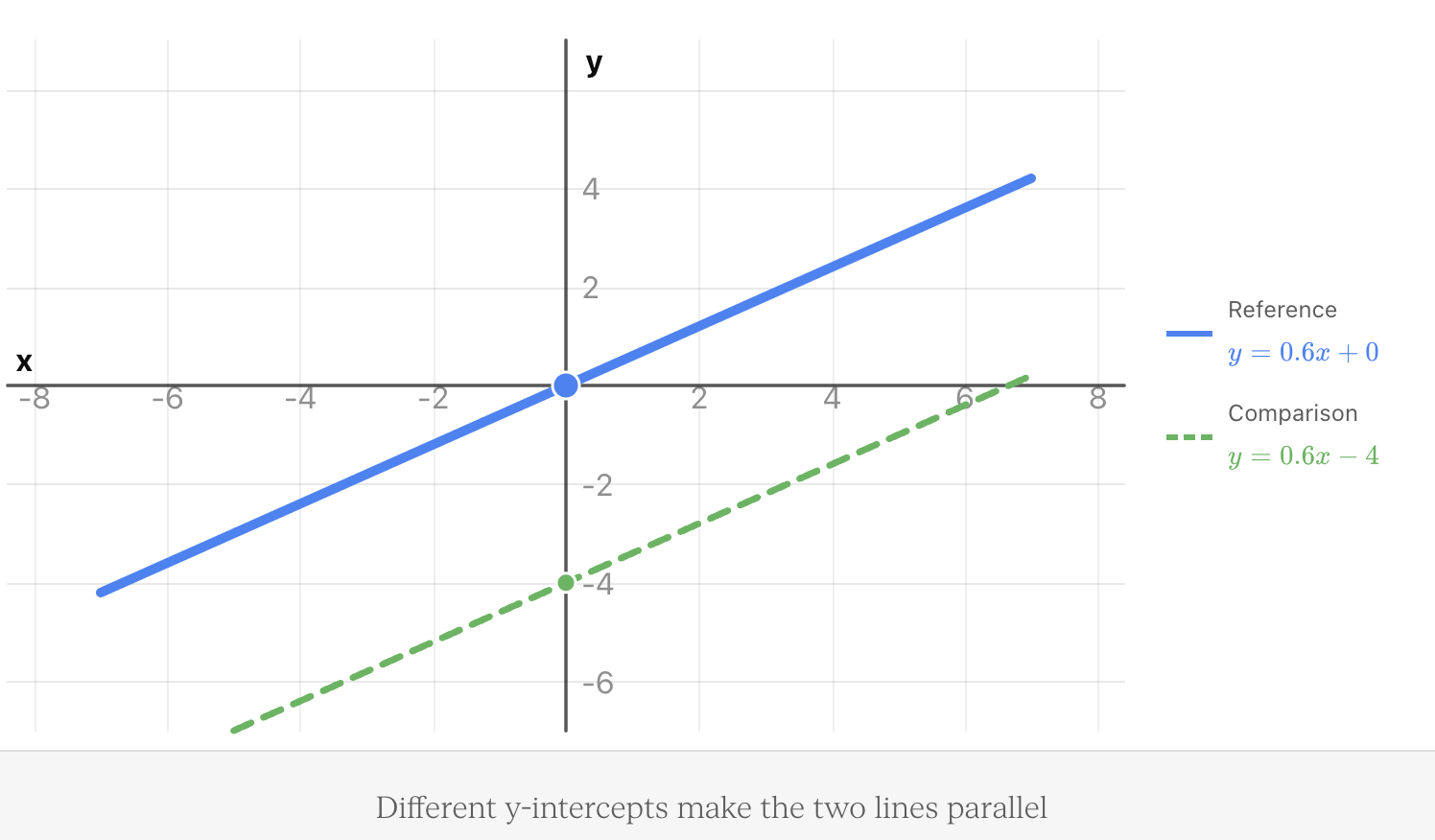
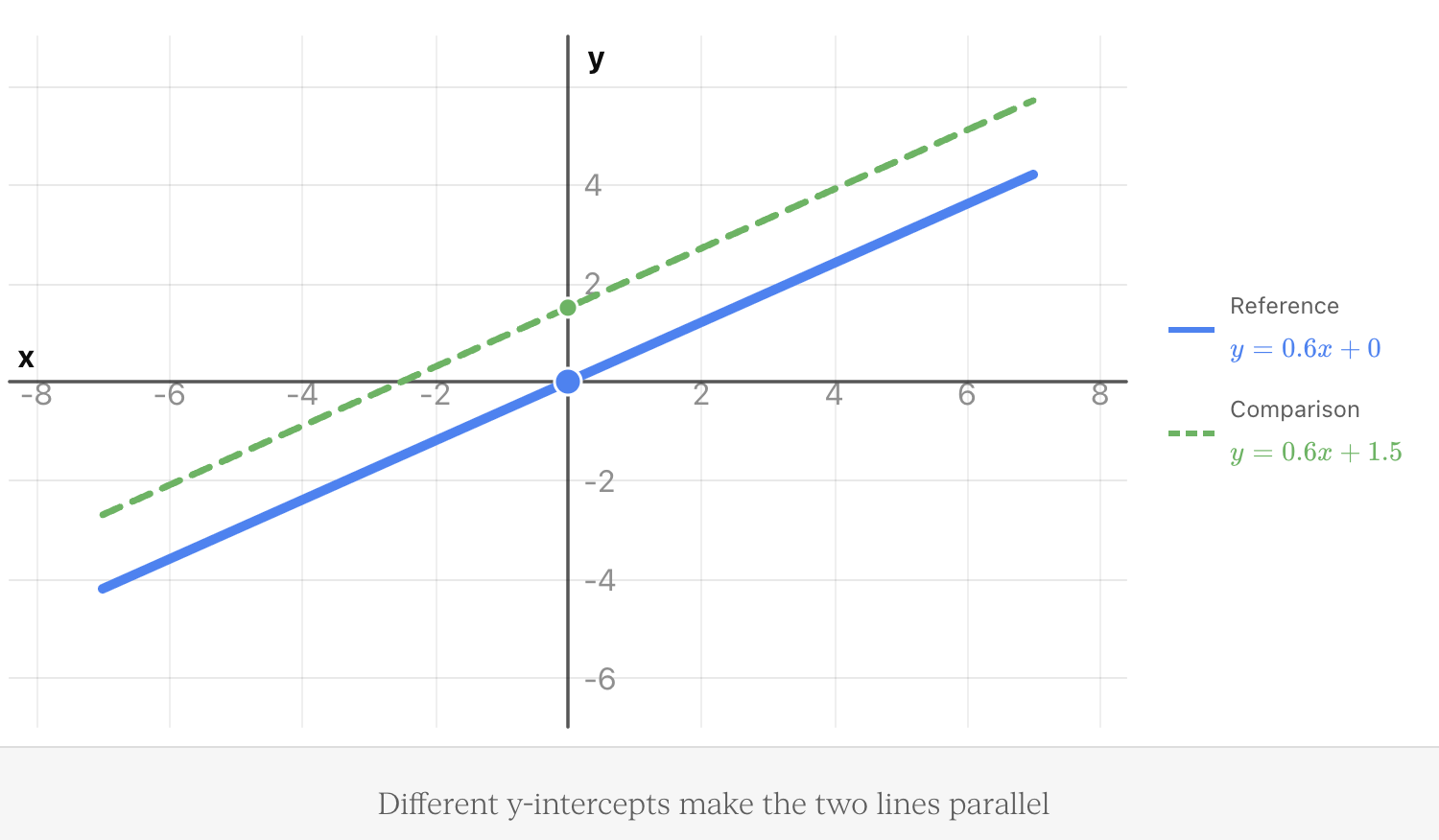
Parallel lines are lines in the same plane that never meet, no matter how far they are extended. When another line crosses two or more lines, the crossing line is called a transversal.
Understanding the angles created by a transversal allows us to calculate unknown angles and can even help us determine whether two lines are parallel.


Parallel Lines
Parallel lines:
- remain the same distance apart
- never intersect
- point in the same direction
Parallel lines are usually marked with matching arrow symbols on a diagram.
For example:
AB ∥ CD
The symbol ∥ means "is parallel to."
Parallel lines are common in everyday structures, including:
- railway tracks
- opposite edges of rectangular objects
- ruled notebook paper
- road markings
- beams and supports in buildings
The important feature is that the distance between the two lines remains constant.
What Is a Transversal?
A transversal is a line that crosses two or more other lines at different points.
When a transversal crosses two parallel lines, eight angles are formed.
These angles are not all different sizes. Their positions create predictable relationships that allow us to find unknown angles without measuring them.
There are three particularly important relationships:
- corresponding angles
- alternate angles
- co-interior angles
Corresponding Angles
Corresponding angles occupy the same relative position at each intersection.
A useful way to remember them is:
Corresponding = matching corners
When the lines are parallel:
Corresponding angles are equal.
Example
Suppose one corresponding angle is 68°.
The angle in the same position at the other intersection is also:
68°
So:
68° = 68°
This relationship works only when the two lines being crossed are parallel.
Alternate Angles
Alternate angles lie on opposite sides of the transversal and between the parallel lines.
A useful visual description is that they often form a Z-shape in the diagram.
When the lines are parallel:
Alternate angles are equal.
Example
If one alternate angle is 115°, its alternate angle is also:
115°
This relationship is especially useful because the two angles may look quite far apart on a diagram even though they are equal.


Co-Interior Angles
Co-interior angles are located between the two parallel lines and on the same side of the transversal.
They are sometimes called same-side interior angles.
Unlike corresponding and alternate angles, co-interior angles are not usually equal.
Instead:
Co-interior angles add to 180°.
Example
One co-interior angle is 124°. Find the other angle, x.
x + 124° = 180°
x = 180° − 124°
x = 56°
Therefore, the two co-interior angles are:
124° + 56° = 180°
Three Relationships to Remember
| Angle relationship | Rule | Helpful visual |
|---|---|---|
| Corresponding | Equal | F-shape |
| Alternate | Equal | Z-shape |
| Co-interior | Add to 180° | C/U-shape |
The letter shapes can be useful memory aids, but it is more important to understand the positions of the angles. Diagrams may be rotated, stretched, or drawn in unfamiliar orientations.
Other Angle Rules You Will Need
Problems involving parallel lines often require more than one angle rule.
Vertically Opposite Angles
When two lines intersect, angles directly opposite each other are equal.
If one angle is 72°, the vertically opposite angle is also:
72°
Angles on a Straight Line
Angles forming a straight line add to:
180°
If one angle is 133°:
x + 133° = 180°
x = 47°
Angles Around a Point
Angles around a point add to:
360°
These basic rules can be combined with parallel-line relationships to solve more complicated problems.
Calculating Missing Angles
Consider two parallel lines crossed by a transversal.
One angle is 63°. Find an angle that is corresponding to it.
Corresponding angles are equal.
Therefore:
x = 63°
Now suppose another angle forms a straight line with x.
x + y = 180°
63° + y = 180°
y = 117°
So:
y = 117°
Notice that two different geometric rules were required.
Multi-Step Example
Suppose two parallel lines are crossed by a transversal. One angle is 128°. Angle x is alternate to the 128° angle, and angle y forms a straight line with x.
Find x
Alternate angles are equal.
x = 128°
Find y
Angles on a straight line add to 180°.
y + 128° = 180°
y = 52°
Therefore:
x = 128°
y = 52°
This is a multi-step angle problem because one answer is used to determine another.
Determining Whether Lines Are Parallel
Angle relationships can also be used in reverse.
Instead of being told that two lines are parallel, you may be given information about their angles and asked whether the lines must be parallel.
For example, if two corresponding angles are both 75°, then the lines are parallel.
Similarly, lines are parallel if:
- corresponding angles are equal
- alternate angles are equal
- co-interior angles add to 180°
Example
Two lines are crossed by a transversal. A pair of alternate angles measure 47° and 47°.
Because the alternate angles are equal:
the two lines are parallel.
Justifying Your Answers
In geometry, calculating the correct number is only part of the solution. You should also be able to explain why your answer is correct.
Instead of writing only:
x = 72°
write:
x = 72° because alternate angles between parallel lines are equal.
Useful justifications include:
- corresponding angles are equal
- alternate angles are equal
- co-interior angles sum to 180°
- vertically opposite angles are equal
- angles on a straight line sum to 180°
- angles around a point sum to 360°
Worked Multi-Step Problem
Two parallel lines are crossed by a transversal. One angle is 38°. Angle a is vertically opposite this angle. Angle b corresponds to a. Angle c forms a straight line with b.
Find a, b, and c.
Step 1: Find a
Vertically opposite angles are equal.
a = 38°
Step 2: Find b
Corresponding angles are equal.
b = 38°
Step 3: Find c
Angles on a straight line add to 180°.
c + 38° = 180°
c = 142°
Therefore:
a = 38°, b = 38°, c = 142°
This demonstrates an important problem-solving strategy: find one angle at a time and write the reason for every step.


A Useful Problem-Solving Strategy
When solving a complicated diagram, first look for an angle whose value is already given. Then identify the relationship connecting that angle to the unknown.
Ask yourself:
Are the angles opposite each other?
Use vertically opposite angles.
Are they on a straight line?
Use 180°.
Are they in matching positions across parallel lines?
Use corresponding angles.
Are they inside the parallel lines on opposite sides of the transversal?
Use alternate angles.
Are they inside the parallel lines on the same side?
Use co-interior angles.
For multi-step problems, you may need to calculate an intermediate angle before you can find the final answer.
Common Mistakes
Assuming every pair of angles is equal
Only certain angle relationships produce equal angles. Co-interior angles, for example, add to 180° rather than being equal.
Using parallel-line rules when the lines are not parallel
Corresponding and alternate angles are guaranteed to be equal only when the lines are parallel.
Confusing alternate and co-interior angles
Alternate angles are on opposite sides of the transversal. Co-interior angles are on the same side.
Relying entirely on the appearance of the diagram
Geometry diagrams are not always drawn to scale. An angle that looks like 90° may not actually be 90°.
Giving an answer without a reason
When asked to justify your answer, name the angle relationship or geometric rule you used.
Key Terms
Parallel lines — lines in the same plane that never intersect and remain the same distance apart.
Transversal — a line that crosses two or more other lines.
Corresponding angles — angles in matching positions at two intersections. They are equal when the lines are parallel.
Alternate angles — angles on opposite sides of a transversal, between two parallel lines. They are equal.
Co-interior angles — angles between two parallel lines on the same side of a transversal. They add to 180°.
Vertically opposite angles — opposite angles formed when two lines intersect. They are equal.
Supplementary angles — two angles whose measures add to 180°.
Geometric reasoning — using established geometric relationships and rules to justify a conclusion.
Key Takeaways
- A transversal crosses two or more lines.
- When parallel lines are crossed by a transversal, predictable angle relationships are created.
- Corresponding angles are equal.
- Alternate angles are equal.
- Co-interior angles add to 180°.
- Vertically opposite angles are equal.
- Angles on a straight line add to 180°.
- Angle relationships can be used in reverse to prove that lines are parallel.
- Multi-step problems often require several angle rules.
- A complete geometric solution should include both the angle value and the reason.
Check Your Understanding
- Two parallel lines are crossed by a transversal. One angle is 64°. What is its corresponding angle?
- An alternate angle to an angle measuring 117° is labelled x. Find x.
- Two co-interior angles are 105° and y. Find y.
- An angle of 48° and angle x form a straight line. Find x.
- Two corresponding angles formed by a transversal are both 82°. What can you conclude about the two lines?
- Explain why corresponding angles cannot automatically be assumed to be equal if the two lines have not been shown to be parallel.
- One angle is 136°. Its vertically opposite angle is x. An angle corresponding to x is y. Find x and y if the lines are parallel.
- A pair of co-interior angles are (2x + 20)° and (4x + 10)°. Find x and then calculate both angles.