3. Zeros and Multiplicity

Learning outcomes
  • I can identify the zeros of a polynomial.
  • I can explain the relationship between zeros and x-intercepts.
  • I can determine the multiplicity of a root.
  • I can predict how multiplicity affects the graph.
  • I can sketch graphs using zeros and multiplicities.

Zeros and Multiplicity

The zeros of a polynomial are the values of x that make the polynomial equal to zero.

For example:

f(x) = (x − 2)(x + 3)

To find the zeros, set:

f(x) = 0

So:

(x − 2)(x + 3) = 0

This gives:

x = 2

and:

x = −3

These zeros are closely connected to the places where the graph meets the x-axis.

https://images.openai.com/static-rsc-4/ofpRu06Gvl7awyqUFta2IFku4oAhBS0sunsLmtQstsLSWz6biNYJs6EUpSqqrXXJZfghB03srgqG-1HhmiR2j46EjoYrre27VP326vQ8NCh-g9VOveohksu0MsQfFGQkdZYpNxofpAU1GUgcuG3C6FlBuxWa0vliWY5OGV_lHZuIE8EKVsU8pLgn6xfp-n_Z?purpose=fullsize
https://images.openai.com/static-rsc-4/MxZhFmN4DFS1Hcpu4sArihwuC6fHRyLtbQobIaXO1EaRj_Ka8PSspDNsw5a1GDYURJ--FWFr-DXq63TOjynyPfSnsCZE-rr201hnjgYVy2JW80lEFyTHMl_jUlxXjz97zSZ3smy76rkN0cSoaMrXsVtL3NEi7BWch-7fzyfxd9tHj_TDEHho7shWb2O3vEnh?purpose=fullsize
https://images.openai.com/static-rsc-4/f7c9Ncs71kswHsNsI3Xv0uLx9JeoMzaFGOD1fPwkKpkR2XlLG-bjIWe04_AEAYybnqfLi18XH41DIAPcoG-HiLG7NlRPkhgIWkFWgdLJUecEFKYHXLPMeRSVidf7f8oCdFMVPMa-X7jwFoNkgC_kb6PFvMhyBanKif3sHFkyQL2CB61OGQyAHXBv-QMdveay?purpose=fullsize
5

Learning Targets

  • I can identify the zeros of a polynomial.
  • I can explain the relationship between zeros and x-intercepts.
  • I can determine the multiplicity of a root.
  • I can predict how multiplicity affects the graph.
  • I can sketch graphs using zeros and multiplicities.

What Is a Zero?

A zero of a polynomial is a value of x for which:

f(x) = 0

Consider:

f(x) = x − 5

Set the function equal to zero:

x − 5 = 0

Therefore:

x = 5

So 5 is a zero of the function.

Other names commonly used for zeros include:

  • Roots
  • Solutions of f(x) = 0
  • X-values of x-intercepts, when the roots are real

Zeros and X-Intercepts

On the x-axis:

y = 0

Therefore, if:

f(a) = 0

the point:

(a, 0)

lies on the graph.

For example, if:

x = 3

is a zero, then:

(3, 0)

is an x-intercept.

https://images.openai.com/static-rsc-4/ofpRu06Gvl7awyqUFta2IFku4oAhBS0sunsLmtQstsLSWz6biNYJs6EUpSqqrXXJZfghB03srgqG-1HhmiR2j46EjoYrre27VP326vQ8NCh-g9VOveohksu0MsQfFGQkdZYpNxofpAU1GUgcuG3C6FlBuxWa0vliWY5OGV_lHZuIE8EKVsU8pLgn6xfp-n_Z?purpose=fullsize
https://images.openai.com/static-rsc-4/5e4LTVEWeXhwt2d4wmep3lCTsjmtMCB0Cb-L0paM43HfvmUME61qLsTvuXcc8kavtbFLBvqxEX21axN6eKHIQSX_fHvdKcGtPhVE1Kslm_SeCRjly-q-2pJt_tsF4b6ZgwPyagJ1H0bWsZ4nlOlLmrkRwawiQ-4J2BjFHkOcKn64wp3wUSD_pTjCDZr7A1k8?purpose=fullsize
https://images.openai.com/static-rsc-4/CV2QT_Hs6nakW2Pt4GXEW5mF4qzLJ-M-JWdvvRozCmf2WeXofMkQ3COKKlC8LhOUYMoGrAM0wCIfThVPYnIeaHSf49oblUIiJ6H6Uit7dyYBjGTRwmS8J8W1DAdciJ3_7ZlElXcaruFU0yt1VZ7jCV59MuOg729IscNVj1nUrFCnPDEG3dxzjPKwu2lmlHqQ?purpose=fullsize
5

This gives us the important relationship:

Zero: x = a

X-intercept: (a, 0)

The zero is an x-value, while the x-intercept is a point on the graph.


Finding Zeros from Factored Form

Zeros are particularly easy to identify when a polynomial is written in factored form.

Consider:

f(x) = (x − 4)(x + 2)

Set:

f(x) = 0

Then:

(x − 4)(x + 2) = 0

For the product to equal zero, at least one factor must equal zero.

So:

x − 4 = 0

giving:

x = 4

or:

x + 2 = 0

giving:

x = −2

Therefore, the zeros are:

x = −2 and x = 4


The Zero Product Property

The previous method works because of the zero product property.

If:

ab = 0

then:

a = 0

or:

b = 0

For example:

(x − 5)(x + 1) = 0

means:

x − 5 = 0

or:

x + 1 = 0

Therefore:

x = 5

or:

x = −1

This property is fundamental when finding polynomial zeros.


Worked Example — Finding Several Zeros

Find the zeros of:

f(x) = (x + 4)(x − 1)(x − 6)

Set each factor equal to zero.

First:

x + 4 = 0

so:

x = −4

Second:

x − 1 = 0

so:

x = 1

Third:

x − 6 = 0

so:

x = 6

Therefore, the zeros are:

−4, 1, and 6

The corresponding x-intercepts are:

(−4, 0), (1, 0), and (6, 0)

https://images.openai.com/static-rsc-4/f7c9Ncs71kswHsNsI3Xv0uLx9JeoMzaFGOD1fPwkKpkR2XlLG-bjIWe04_AEAYybnqfLi18XH41DIAPcoG-HiLG7NlRPkhgIWkFWgdLJUecEFKYHXLPMeRSVidf7f8oCdFMVPMa-X7jwFoNkgC_kb6PFvMhyBanKif3sHFkyQL2CB61OGQyAHXBv-QMdveay?purpose=fullsize
https://images.openai.com/static-rsc-4/RsvtOXRNVSPlEUwUsLHZaVcUg90ZCOqiZh6gJCJHLFXCozbLoKuLfJCUzHNM16-UkW6gCBXFvESqJICr_RqCwyPSvq2VlKe5N91ihwVOtxRpeXXFh-YSZ24ciptIUtuM_ecpN9_QXDMiVldLza78tF7cCVy8hZnsU7JuxgBOyWnAB08hOtNcbZmj4qIsfTHM?purpose=fullsize
https://images.openai.com/static-rsc-4/MxZhFmN4DFS1Hcpu4sArihwuC6fHRyLtbQobIaXO1EaRj_Ka8PSspDNsw5a1GDYURJ--FWFr-DXq63TOjynyPfSnsCZE-rr201hnjgYVy2JW80lEFyTHMl_jUlxXjz97zSZ3smy76rkN0cSoaMrXsVtL3NEi7BWch-7fzyfxd9tHj_TDEHho7shWb2O3vEnh?purpose=fullsize
5

What Is Multiplicity?

Sometimes the same factor appears more than once in a polynomial.

Consider:

f(x) = (x − 2)²(x + 3)

The factor:

(x − 2)

appears twice.

Therefore:

x = 2

is a zero with multiplicity 2.

The factor:

(x + 3)

appears once.

Therefore:

x = −3

has multiplicity 1.

Multiplicity tells us how many times a particular factor occurs.


Reading Multiplicity from Factors

If a polynomial contains:

(x − a)ⁿ

then:

x = a

is a zero with multiplicity:

n

For example:

(x − 4)³

gives:

Zero: x = 4

Multiplicity: 3

Similarly:

(x + 2)⁴

can be written conceptually as:

(x − (−2))⁴

so:

Zero: x = −2

Multiplicity: 4


Worked Example — Identifying Multiplicities

Consider:

f(x) = (x + 1)²(x − 3)³(x − 5)

For:

(x + 1)²

the zero is:

x = −1

with multiplicity:

2

For:

(x − 3)³

the zero is:

x = 3

with multiplicity:

3

For:

(x − 5)

the zero is:

x = 5

with multiplicity:

1

The sum of the multiplicities is:

2 + 3 + 1 = 6

Therefore, this polynomial has degree 6.


Multiplicity Affects the Graph

Multiplicity does more than tell us how often a factor appears.

It also affects how the graph behaves at the corresponding x-intercept.

The most important pattern is:

Odd multiplicity → graph crosses the x-axis

Even multiplicity → graph touches the x-axis and turns around

https://images.openai.com/static-rsc-4/CV2QT_Hs6nakW2Pt4GXEW5mF4qzLJ-M-JWdvvRozCmf2WeXofMkQ3COKKlC8LhOUYMoGrAM0wCIfThVPYnIeaHSf49oblUIiJ6H6Uit7dyYBjGTRwmS8J8W1DAdciJ3_7ZlElXcaruFU0yt1VZ7jCV59MuOg729IscNVj1nUrFCnPDEG3dxzjPKwu2lmlHqQ?purpose=fullsize
https://images.openai.com/static-rsc-4/5e4LTVEWeXhwt2d4wmep3lCTsjmtMCB0Cb-L0paM43HfvmUME61qLsTvuXcc8kavtbFLBvqxEX21axN6eKHIQSX_fHvdKcGtPhVE1Kslm_SeCRjly-q-2pJt_tsF4b6ZgwPyagJ1H0bWsZ4nlOlLmrkRwawiQ-4J2BjFHkOcKn64wp3wUSD_pTjCDZr7A1k8?purpose=fullsize
https://images.openai.com/static-rsc-4/2PTBDHv-Zqitr3vEOZZ1fcSHDW3g3KWBC4DQxLVBK01wcJbtJtJT9GweW8CWOlWSaBUAN2Z-QGS3LewcxqP3f_-SJYDA6GCawfxq2Vms1tBUnQmFI6uAC0XwTMu8m3yK4k5DZT2SrtKzhrx7oGoDe7_-fU6fpjMidnEVCYrfLEKK1tZ9UCjQ1bDC5arMr0kH?purpose=fullsize
5

This is extremely useful when sketching polynomial graphs.


Multiplicity 1

Consider:

f(x) = x − 2

The zero is:

x = 2

with multiplicity:

1

Since 1 is odd, the graph crosses the x-axis at:

(2, 0)

Multiplicity 1 usually produces a straightforward crossing.


Multiplicity 2

Consider:

f(x) = (x − 2)²

The zero is:

x = 2

with multiplicity:

2

Since 2 is even, the graph touches the x-axis and turns around.
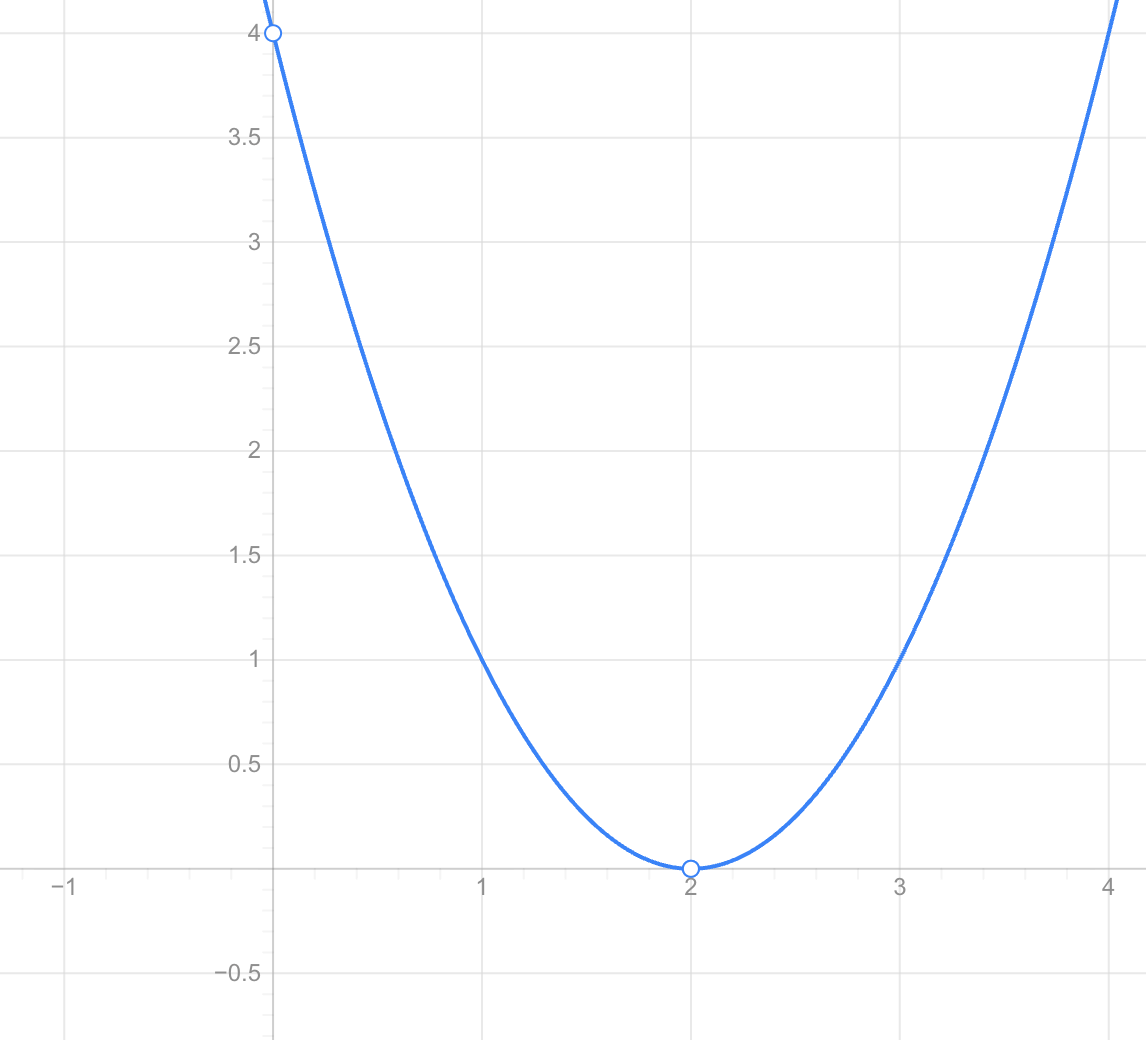
The graph reaches the x-axis but does not pass through it.

This behaviour is sometimes described as bouncing off the x-axis.


Multiplicity 3

Consider:

f(x) = (x − 2)³

The zero is:

x = 2

with multiplicity:

3

Because 3 is odd, the graph crosses the x-axis.

However, the graph becomes flatter near the root than it would for multiplicity 1.
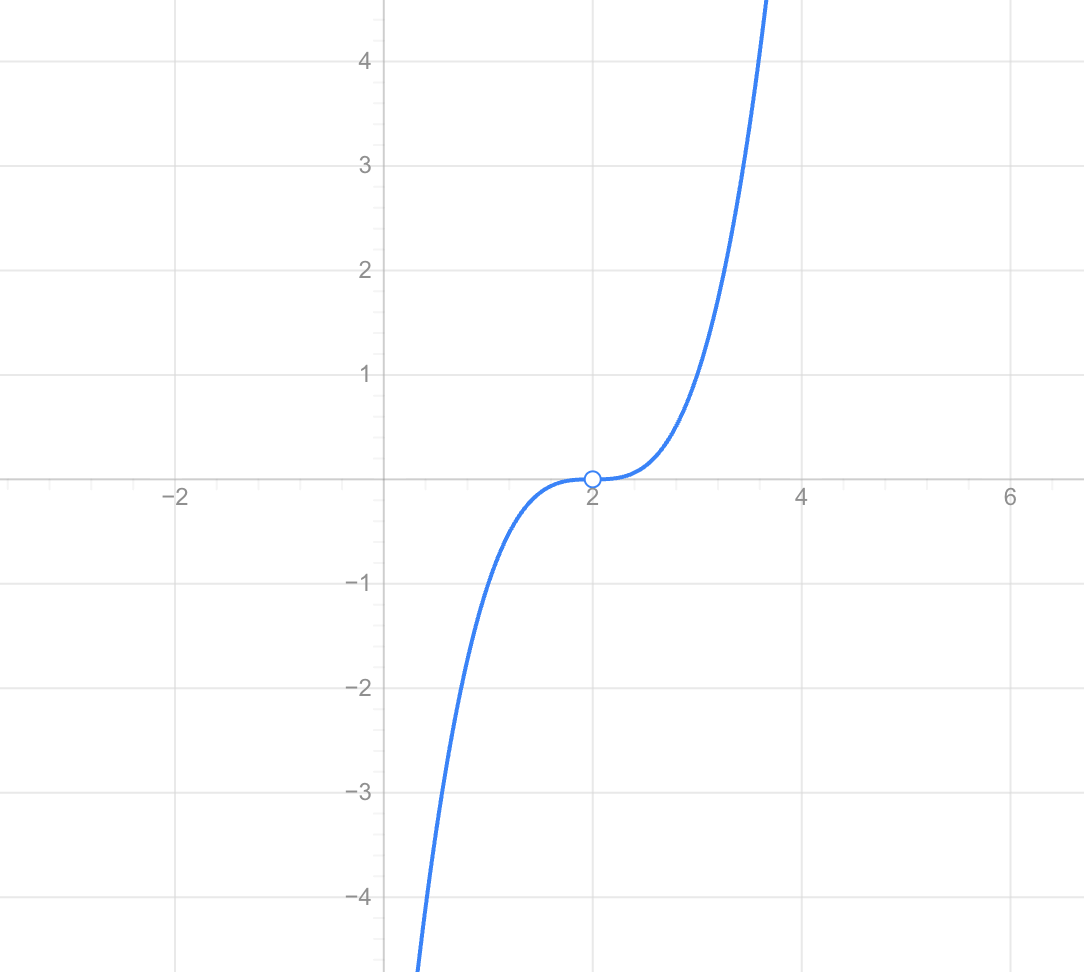
The graph still crosses, but it tends to flatten as it passes through the intercept.


Multiplicity 4

Consider:

f(x) = (x − 2)⁴

The zero is:

x = 2

with multiplicity:

4

Because 4 is even, the graph touches the x-axis and turns around.

Higher multiplicity also causes the graph to become flatter near the root.
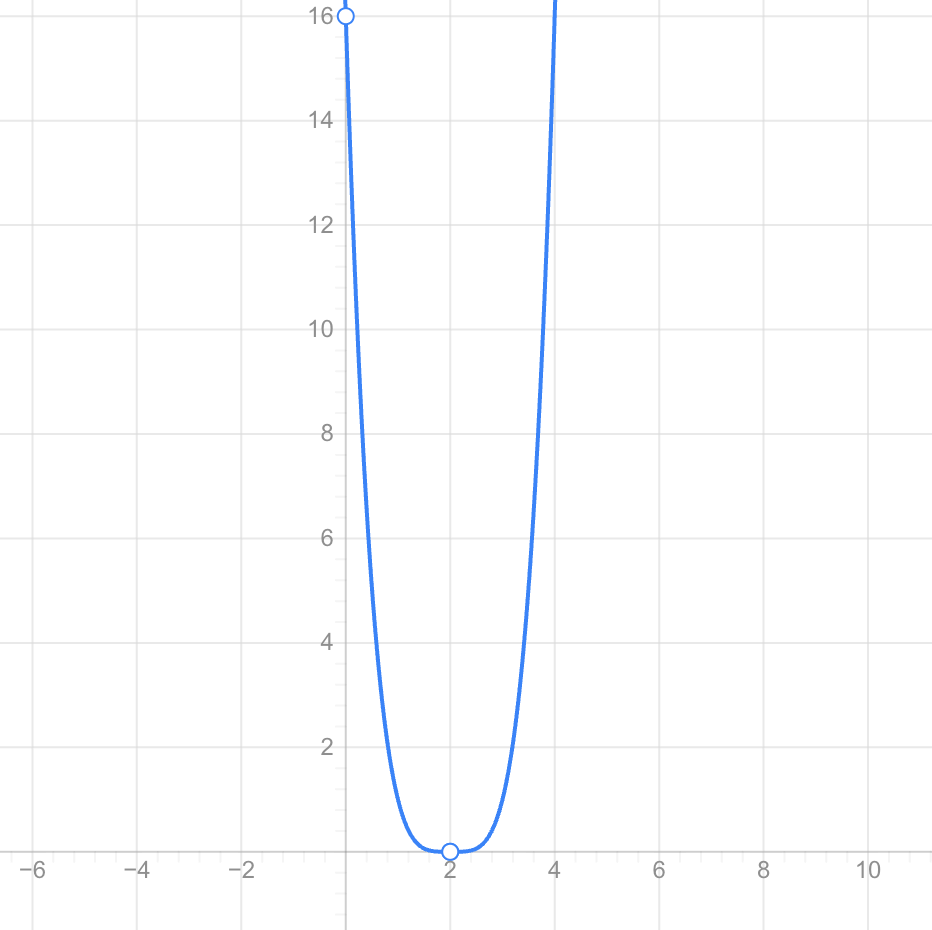
So multiplicity 4 behaves like multiplicity 2 in terms of crossing versus touching, but the graph is flatter near the zero.


Odd Multiplicity

Zeros with odd multiplicity cause the graph to cross the x-axis.

Examples include multiplicities:

1, 3, 5, 7, ...

The function changes sign as it passes through the root.

For example, it might change from:

negative → positive

or:

positive → negative

https://images.openai.com/static-rsc-4/SvcWThPPFqRG_u5Ex840sj5i4JnxGWzIg2dwryHLOuP4diUMYewpma6pM2rAZdcIUOzGVzDJY7E1wTXIu7golLl3_zZMDUV0Cp_I9oSBxA4QHKVcANj6E4_hk6JBD__kssIgZ_POF0-95B3PGbeRhlh7cdZBDQcGy4vQOaFuSsjxjXTwdygbky_c9cU4mC21?purpose=fullsize
https://images.openai.com/static-rsc-4/N9g0YP0eFNMjiBvjPBL1JNnfJKRoALrJ3phCP2LrWMH-6d69bozAnXW5gz40o9XFyoyPCBbFuydrmOlxG6spA_67SnwoXMN3dlHakfBtci5H6dpQNRw-oVapYRKB_VXjv0ciMh-binAeKjfwpVJrzqXdbkxhFkFIROP7OT5bVjirfKFUY2kEb6Kd0ctgT3G7?purpose=fullsize
https://images.openai.com/static-rsc-4/WXxtEISjPRVA0cs5lNkJOhOUqXccFcjUWIxyXqdJKWDrtBitzNk19O903IufdnF_aivYs0ORHHSiXmnHq8nwUZ2zZ5VDrGW0VZH-biLSaeF8mv1Tw9vm_3zXhczvI3FPXRE4_qCPowEaiGycDB1UoOxiu_tj4lRhiD1KPHkIkTywEdr2-jSLD9J5soeeysJ4?purpose=fullsize
5

Even Multiplicity

Zeros with even multiplicity cause the graph to touch the x-axis and turn around.

Examples include:

2, 4, 6, 8, ...

The function does not change sign at the root.

If the graph approaches the x-axis from above, it touches the axis and returns upward.

If it approaches from below, it touches the axis and returns downward.


A Useful Multiplicity Pattern

When sketching, remember:

Multiplicity 1 → crosses

Multiplicity 2 → touches and turns

Multiplicity 3 → crosses and flattens

Multiplicity 4 → touches, turns, and flattens

For higher multiplicities, the same odd/even pattern continues.

The larger the multiplicity, the flatter the graph tends to become near the root.

https://images.openai.com/static-rsc-4/Hm_iNPgJ1YcfO4E7pbqmJ9a4vlnHnYXGlavy5I9BIkNZHx359MJu_hENJ2hH2Y98VUXbFU0k3OovcUTR2VkXJMFt_Gy8ZpoKYO6fNWGTAxEkN4RxzgJinPbcthcB8JwDWPp1z9WR2cfK-y8x9n1z3TBCT-DCTB2fZ2GPIf0e2WXg1qCVennwtsRjjP21GsS3?purpose=fullsize
https://images.openai.com/static-rsc-4/jqDz34rWFHj8k8XOpt6CvP88aCuXnxXkyUnYmTeY_Vzh-zU1KwL95ySDz550KYettyysqcr4mbOPGKq872KTunugwejZ5LD2gpBLfLSggpnLhbxocecXF1I0w72jt3fqu3-PTEzwoT_CattJaaYQK96Uaz-XMn1pvCSZk9PRrSNOHLkx5uZPyo6PQGlJgZPR?purpose=fullsize
https://images.openai.com/static-rsc-4/ezqFflo8vfODds387k2utcBTiyjx7QQTwupr_9ytWzHmgbfhsnCBwO2cruvu9RK_3HmQCYsWYd1Nqh2QqDsZHQvHneZid2VDYxOnC2JkP9aV4mbH4fWlo6a69Y20FvSFs4sW7cW-yrJxH8v6Yk2dMXCZNa6vRSUcLWwD5Z6n9oLgs5NfAVfxOTgHD7dC8hL9?purpose=fullsize
4

Worked Example — Predicting Graph Behaviour

Consider:

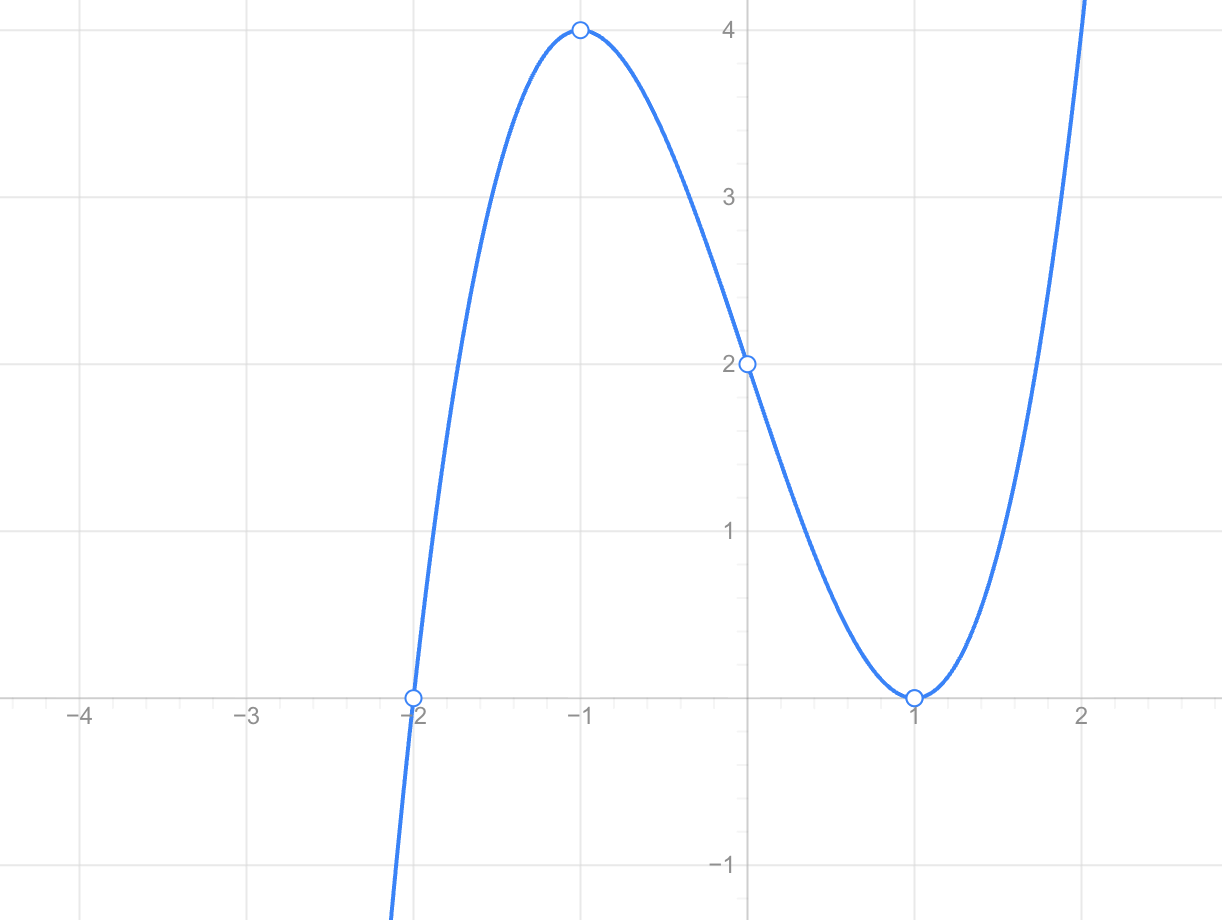
f(x) = (x + 2)(x − 1)²

The zeros are:

x = −2

with multiplicity:

1

and:

x = 1

with multiplicity:

2

Therefore:

At:

x = −2

the graph crosses the x-axis.

At:

x = 1

the graph touches the x-axis and turns around.

This information already tells us a great deal about the shape of the graph.


Degree from Multiplicity

When a polynomial is completely factored, the multiplicities can help identify its degree.

Consider:

f(x) = (x + 3)²(x − 1)³

The first factor contributes degree:

2

The second contributes degree:

3

Therefore:

Degree = 2 + 3 = 5

This is a fifth-degree polynomial.

The sum of the multiplicities is:

5


Multiplicity and End Behaviour Together

To sketch a polynomial successfully, we can combine information about:

  • Zeros
  • Multiplicities
  • Degree
  • Leading coefficient
  • End behaviour

Consider:

f(x) = (x + 2)(x − 1)²

The degree is:

1 + 2 = 3

So the polynomial has odd degree.

Its leading coefficient is positive.

Therefore:

Left end → down

Right end → up

At:

x = −2

the graph crosses.

At:

x = 1

the graph touches and turns.

Together, these facts give us the basic shape.


Sketching from Zeros and Multiplicity

A useful process is:

  • Write down all zeros.
  • Identify the multiplicity of each zero.
  • Plot each zero on the x-axis.
  • Determine whether the graph crosses or touches at each zero.
  • Determine the degree.
  • Determine the sign of the leading coefficient.
  • Predict the end behaviour.
  • Find the y-intercept if useful.
  • Connect the features with a smooth curve.

Polynomial graphs should be drawn smoothly, without sharp corners.


Worked Example — Sketching a Cubic

Sketch the general graph of:

f(x) = (x + 2)(x − 1)²

Zeros:

x = −2, multiplicity 1

x = 1, multiplicity 2

Degree:

3

Leading coefficient:

positive

End behaviour:

Left end → down

Right end → up

At:

x = −2

the graph crosses the x-axis.

At:

x = 1

the graph touches the x-axis and turns.
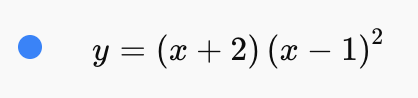
Notice how the multiplicities explain what happens at each x-intercept.


Finding the Y-Intercept

The y-intercept can help make a sketch more accurate.

To find it, set:

x = 0

Consider again:

f(x) = (x + 2)(x − 1)²

Then:

f(0) = (0 + 2)(0 − 1)²

f(0) = 2(1)

f(0) = 2

Therefore, the y-intercept is:

(0, 2)

Now we know another point through which the graph must pass.


Worked Example — Three Different Multiplicities

Consider:

f(x) = (x + 3)(x − 1)²(x − 4)³

The zeros are:

x = −3, multiplicity 1

x = 1, multiplicity 2

x = 4, multiplicity 3

At:

x = −3

the graph crosses.

At:

x = 1

the graph touches and turns.

At:

x = 4

the graph crosses and flattens.

The degree is:

1 + 2 + 3 = 6

The degree is even.

The leading coefficient is positive.

Therefore:

Left end → up

Right end → up

https://images.openai.com/static-rsc-4/igzfdI_9oCy76aUkWDj4hhJpDGptx3OYnluKCbq7fa_lxcs3CyZAkaEke9LL-N4Qh7ow65HFFfd6nI6Zt_fhPjCubkDtOEC4NVdYo2bI2ul0h45VrD41DbLKrOTHeFeWNX7NPRPS9mYL6x-qnZNP5XrmnksnewN8OxDZAM_lESJHohffwG09jx_YIFdvCS0t?purpose=fullsize
https://images.openai.com/static-rsc-4/CV2QT_Hs6nakW2Pt4GXEW5mF4qzLJ-M-JWdvvRozCmf2WeXofMkQ3COKKlC8LhOUYMoGrAM0wCIfThVPYnIeaHSf49oblUIiJ6H6Uit7dyYBjGTRwmS8J8W1DAdciJ3_7ZlElXcaruFU0yt1VZ7jCV59MuOg729IscNVj1nUrFCnPDEG3dxzjPKwu2lmlHqQ?purpose=fullsize
https://images.openai.com/static-rsc-4/N9g0YP0eFNMjiBvjPBL1JNnfJKRoALrJ3phCP2LrWMH-6d69bozAnXW5gz40o9XFyoyPCBbFuydrmOlxG6spA_67SnwoXMN3dlHakfBtci5H6dpQNRw-oVapYRKB_VXjv0ciMh-binAeKjfwpVJrzqXdbkxhFkFIROP7OT5bVjirfKFUY2kEb6Kd0ctgT3G7?purpose=fullsize
5

Reading Multiplicity from a Graph

Sometimes you are given the graph instead of the equation.

You can use the behaviour at each x-intercept to make conclusions about multiplicity.

If the graph crosses normally, the root likely has an odd multiplicity, often 1.

If the graph touches and turns, the root has an even multiplicity.

If the graph crosses while flattening, the root has an odd multiplicity greater than 1.

If the graph touches, turns, and becomes very flat, the root may have a higher even multiplicity.

However, the exact multiplicity is not always possible to determine from appearance alone unless additional information is provided.


A Graph Does Not Always Reveal Exact Multiplicity

Suppose a graph crosses the x-axis at:

x = 3

We can conclude that the zero has odd multiplicity.

But from a rough graph alone, we may not be able to determine whether the multiplicity is:

1, 3, 5, ...

Similarly, if a graph touches and turns at:

x = −2

we know the multiplicity is even, but it might be:

2, 4, 6, ...

This distinction is important when interpreting graphs.


Repeated Roots

A zero with multiplicity greater than 1 is often called a repeated root.

For example:

f(x) = (x − 5)²(x + 1)

has:

x = 5

as a repeated root.

The factor:

(x − 5)

appears twice.

Meanwhile:

x = −1

has multiplicity 1 and is not repeated.


Expanded Form Can Hide Multiplicity

Consider:

f(x) = x² − 6x + 9

It may not be immediately obvious that this polynomial has a repeated root.

Factor:

x² − 6x + 9 = (x − 3)²

Now we can see:

Zero: x = 3

Multiplicity: 2

Therefore, the graph touches the x-axis at:

(3, 0)

and turns around.

https://images.openai.com/static-rsc-4/0TGBsimLe3-5Z0-qKKsAnr85BDCrnYuy7Ww8EE8Zt-m1yvwVJhUzUuiTtD0INC_n4U-FiyS7tM4Q2jsCCbkRCWLpNFMon4d7VWzrAoyMeGAnFLtIFKTJw_FKUP93rjk1OHLl_JmaPQokocfIO0_7bODBj5s03sYuC--Z0zGuZ8Ol-TzffY2XAwQONGmNsJ-R?purpose=fullsize
https://images.openai.com/static-rsc-4/ZSUUvSQozI6ySsO_l8061gC0rskRSf9rrpzwoUOOMTaLVRP2cEq7EME53oUtTx-NRyGXKofTiZ5sx1dgoxOt0tcb11RNm7Qqv1hvYD7qmm4EOpFrxKxXJXMB8WMa679m6BHcGQy666ENPgAHt-l_VOu7KlBI0vW9aY7Xgyf0cwyBwf6p97xLaIR09CRZUi71?purpose=fullsize
https://images.openai.com/static-rsc-4/_NQJkzhwKQBlfxuZcAalA5Cd1_m7G9NtK9L_c7brRMnqCYIHoqbFnTKFtHz9-DK4IGoJN5IcvkUjOtoi5n2LReOVmsrwlrJPNKw0WJx9Ty939JHqkiUn3XkzkxX2fo4LQWG5xhOjMFGWNNaO3yK75toXqSvjY5hisN2hsvs8xJU4-snxRvir72mKQcPBjb_C?purpose=fullsize

Factored form often reveals information about zeros and multiplicities much more clearly than expanded form.


Comparing Two Polynomials

Consider:

f(x) = (x − 2)(x + 1)

and:

g(x) = (x − 2)²(x + 1)

Both functions have zeros at:

x = 2

and:

x = −1

But their graphs behave differently at:

x = 2

For f(x), the multiplicity is 1, so the graph crosses.

For g(x), the multiplicity is 2, so the graph touches and turns.

https://images.openai.com/static-rsc-4/t64ikKCae-VfxXdfx-aK8ENQvmCF0wjCvEm_4Itbtm5J76Hb4FHs2LvPlLUa2OvEzdv90CEn7p1VX5LNe1zxEn77p9dNfNyh99AGhILg8CMM-jLDDNuZE98L0h7kxLPd8yqA6qKRqqk6pGr5inZU6mb4AilfNUREPvJu5AyZp8Iet_ixhO5lt6w6RDe2ZH2H?purpose=fullsize
https://images.openai.com/static-rsc-4/yc8g93urZKAmQCKaWDqYsPwMcPj5X3xfJ2evwbSxeeHJyI_WsDAKcu80U66AH_EPJzogp59ZqFAiMBIfM4y8jagCp8_yVXt0eIz9qBLRGULMKM1fWWT96pL_BYTnXDNVZYTaS0YDBa1n-xVj4UnpWpxS-4mGLzKjnUSiSGZiHRiCI_Kpcz3wt5AeKnpcH0ju?purpose=fullsize
https://images.openai.com/static-rsc-4/hR8z2ojvwQPOPs9Vr9eHGQODQx0MbEJsAEzoaG6TUo7U6SH1IoMjxxXWXgYSGwDqfmu2kUrYFG8iS9V93Wx93Mcxjcgmix2aLuxlvcXtuofm_zW-rVROs6uBRlA041ZzSBHvtFknbVi8Isq27DAvRrQFjU66FN6JTJmhZL6ynFgQdWpUVVBNqAvQFeUwmRas?purpose=fullsize
5

The locations of the zeros alone are therefore not enough to determine the shape of a polynomial graph.

We also need their multiplicities.


Why Multiplicity Matters

Multiplicity connects the algebraic form of a polynomial with its graphical behaviour.

The factor:

(x − a)ⁿ

tells us three important things:

The graph has a zero at:

x = a

The exponent n tells us:

the multiplicity

The parity of n tells us whether the graph:

crosses or touches the x-axis

This is a powerful connection between algebra and graphs.


Common Mistakes

Mistake: Confusing a Zero with an X-Intercept

If:

x = 4

is a zero, the x-intercept is:

(4, 0)

The zero is a number; the intercept is a point.

Mistake: Getting the Sign of a Zero Wrong

The factor:

(x − 5)

gives:

x = 5

But:

(x + 5)

gives:

x = −5

Mistake: Ignoring the Exponent

For:

(x − 3)⁴

the zero is not four different values.

There is one zero:

x = 3

with:

Multiplicity 4

Mistake: Assuming Every Root Crosses the X-Axis

Even-multiplicity roots touch the x-axis and turn around.

Mistake: Assuming Every Touching Root Has Multiplicity 2

A touching root has even multiplicity, which could be 2, 4, 6, or another even number.

Mistake: Ignoring End Behaviour When Sketching

Zeros tell you where the graph meets the x-axis, but they do not tell you everything about the overall graph.

Use the degree and leading coefficient as well.


Key Terms

Zero – an x-value that makes a function equal to zero.

Root – another name for a zero.

X-intercept – a point where a graph meets the x-axis.

Factor – an expression multiplied by another expression.

Multiplicity – the number of times a particular root occurs as a factor.

Repeated root – a root with multiplicity greater than 1.

Odd multiplicity – causes a polynomial graph to cross the x-axis.

Even multiplicity – causes a polynomial graph to touch the x-axis and turn around.

End behaviour – the behaviour of a graph far to the left and right.

Leading coefficient – the coefficient of the highest-degree term.


Check Your Understanding

1. Find the zeros of:

f(x) = (x − 3)(x + 5)

2. State the corresponding x-intercepts for the function above.

3. Find the zeros and their multiplicities:

f(x) = (x + 2)²(x − 4)

4. What happens to the graph at:

x = −2

in Question 3?

5. What happens to the graph at:

x = 4

in Question 3?

6. Find the zeros and multiplicities:

f(x) = (x − 1)³(x + 5)²

7. Does the graph cross or touch the x-axis at:

x = 1

in Question 6?

8. Does the graph cross or touch the x-axis at:

x = −5

in Question 6?

9. A graph crosses the x-axis at x = 4. What can you conclude about the multiplicity?

10. A graph touches the x-axis at x = −3 and turns around. What can you conclude about the multiplicity?

11. Determine the degree of:

f(x) = (x + 2)²(x − 1)³(x − 5)

12. Predict the end behaviour of the function in Question 11 if its leading coefficient is positive.

13. Factor:

x² − 8x + 16

and determine the zero and its multiplicity.

14. Explain why knowing only the locations of the zeros is not always enough to sketch a polynomial accurately.

15. Describe how you would use zeros, multiplicities, degree, leading coefficient, and the y-intercept to sketch a polynomial graph.


Key Takeaways

  • A zero is an x-value that makes a polynomial equal to zero.
  • Real zeros correspond to x-intercepts of the graph.
  • A zero x = a corresponds to the x-intercept (a, 0).
  • Factored form makes zeros particularly easy to identify.
  • A factor (x − a)ⁿ gives a zero at x = a with multiplicity n.
  • Multiplicity tells us how many times a root occurs.
  • Odd multiplicity means the graph crosses the x-axis.
  • Even multiplicity means the graph touches the x-axis and turns around.
  • Higher multiplicities cause the graph to become flatter near the zero.
  • A repeated root has multiplicity greater than 1.
  • The sum of the multiplicities in a completely factored polynomial gives its degree.
  • Zeros and multiplicities provide important information for sketching polynomial graphs.
  • Degree and leading coefficient provide the end behaviour.
  • The y-intercept can provide an additional useful point.
  • A good polynomial sketch combines zeros, multiplicities, end behaviour, and intercepts.

Did You Know?

Multiplicity is one reason two polynomial graphs can have exactly the same x-intercepts but very different shapes. Knowing where a polynomial equals zero tells you where the graph reaches the x-axis, but multiplicity tells you what the graph does when it gets there—crossing through, touching and turning, or flattening as it passes through.