Understanding Fractions
Abschlussbedingungen
1. What Are Fractions?
Learning outcomes
- I can define a fraction as a part of a whole or a part of a set.
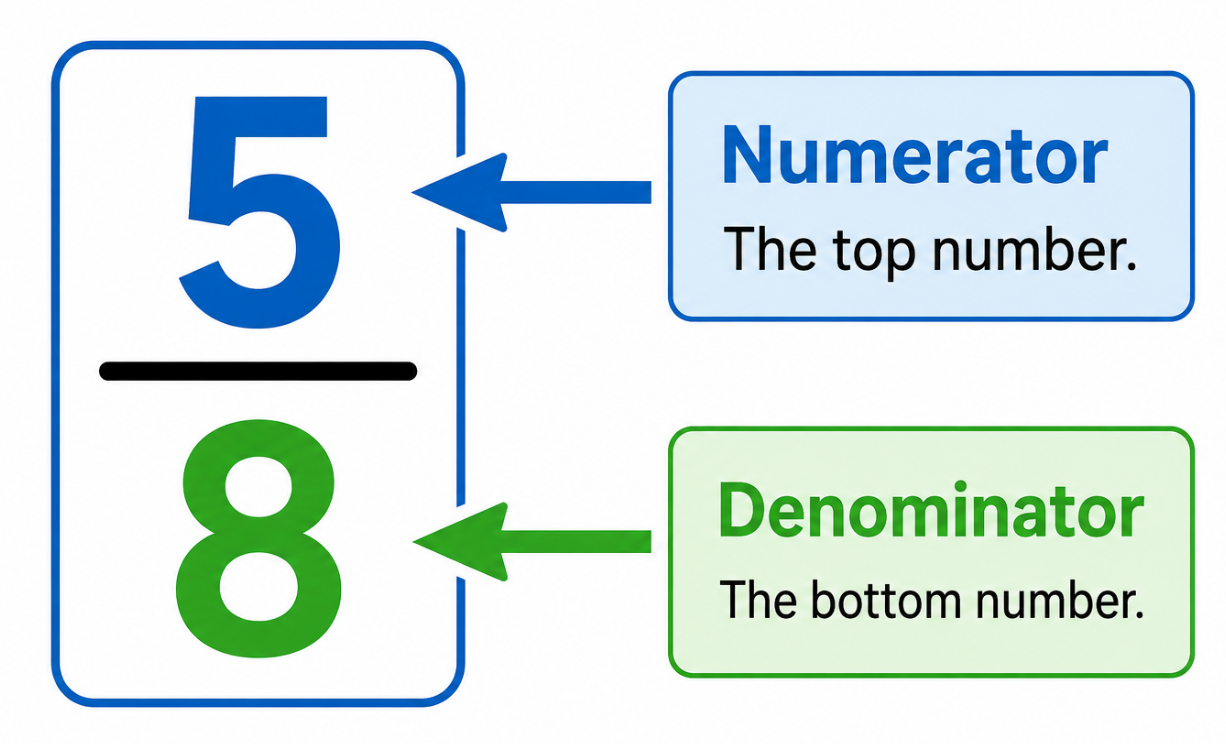
- I can identify the numerator and denominator of a fraction.
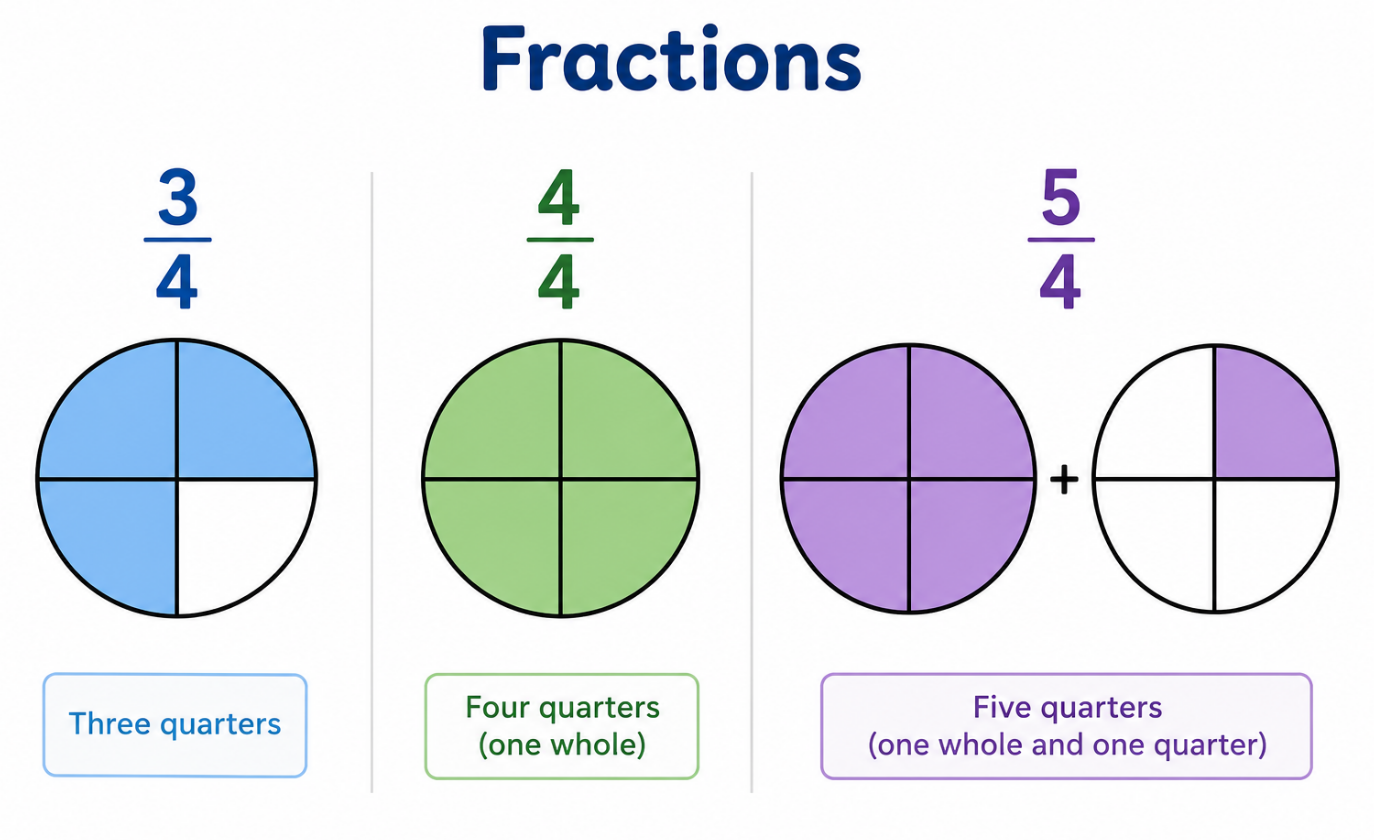
- I can represent fractions using diagrams, models, and number lines.
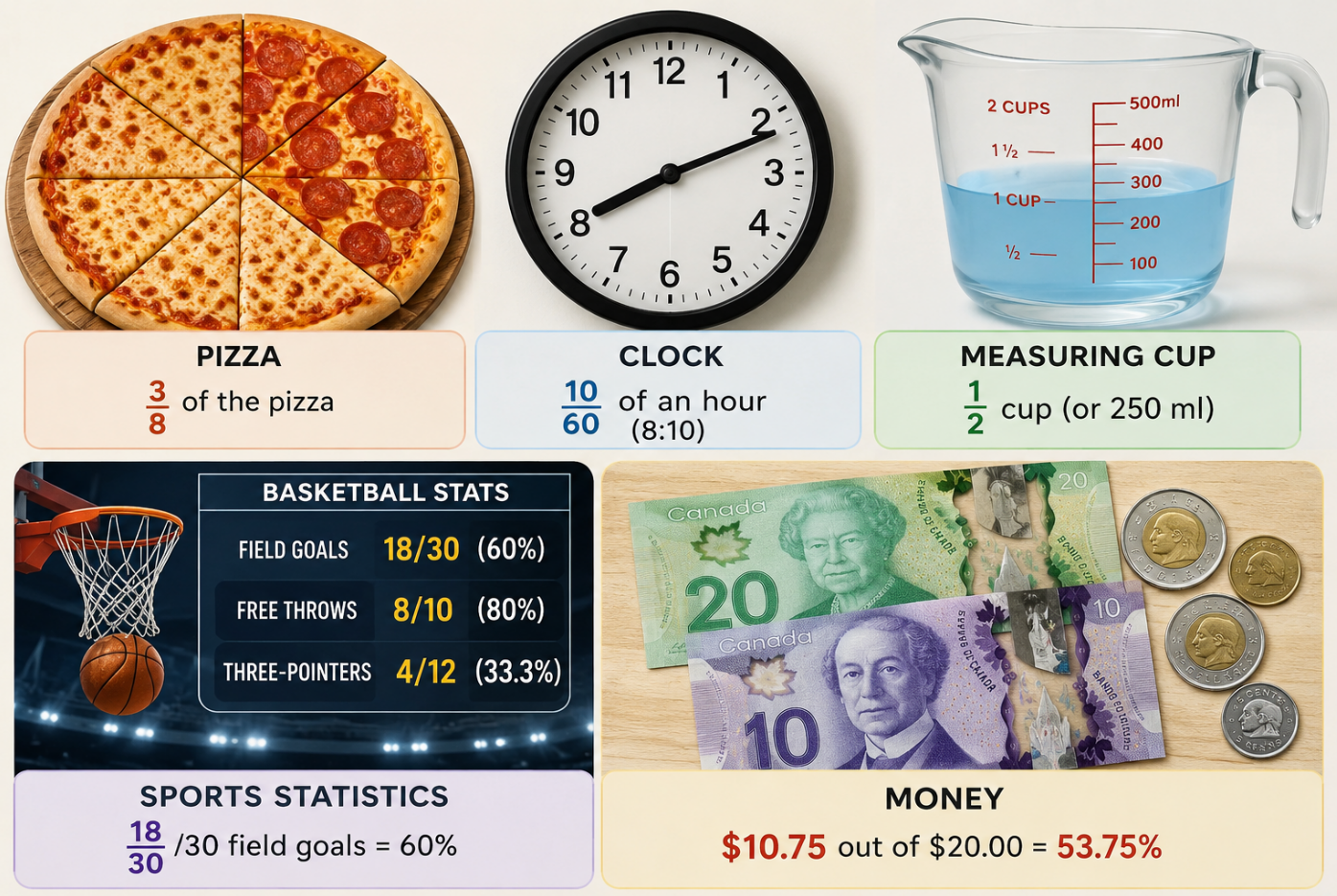
- I can explain the meaning of common fractions in real-life situations.
- I can recognize fractions greater than, less than, or equal to one.
Fractions are one of the most useful ideas in mathematics. They help us describe parts of objects, groups, distances, time, and many other real-world situations.
What is a Fraction?
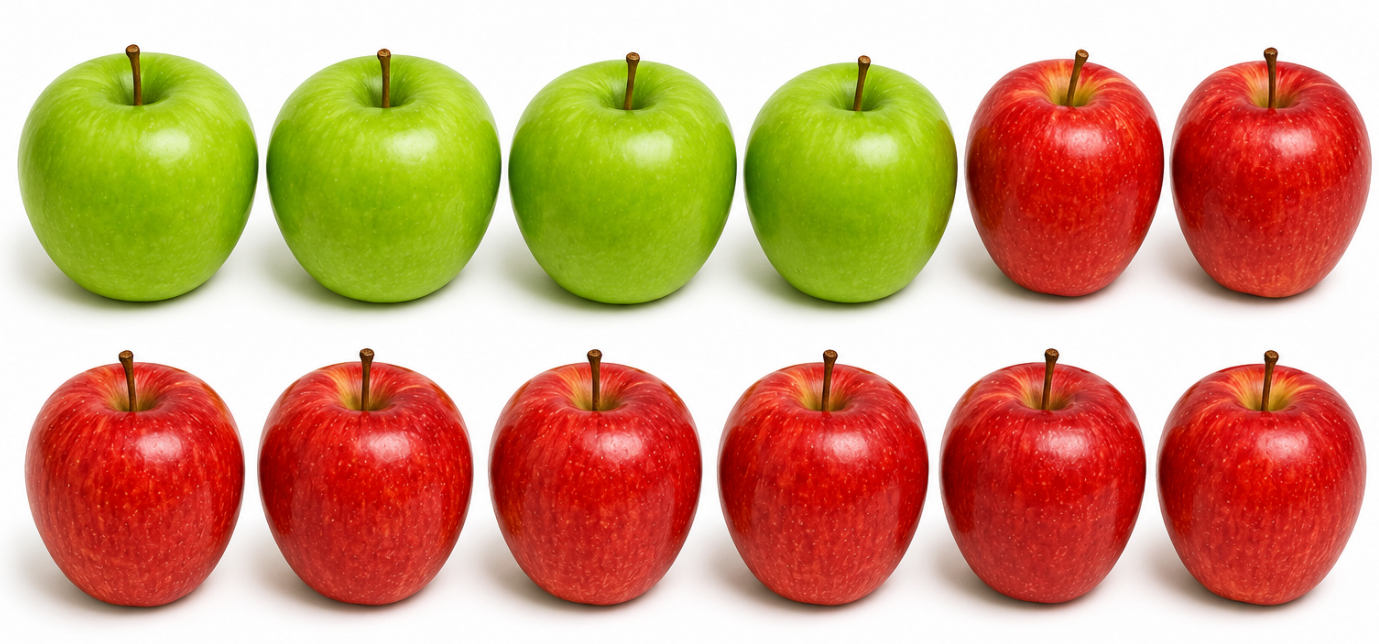
A fraction represents part of a whole or part of a set.
A fraction has two numbers:
\( \frac{numerator}{denominator} \)
For example:
\( \frac{3}{4} \)
- Numerator (3): tells how many parts are being considered.
- Denominator (4): tells how many equal parts make up the whole.
Think of it this way:
Numerator = How many you have.
Denominator = How many make the whole.