Review
1. Revision
Section A: Multiple Choice Questions (8 Questions)
1. Which subatomic particle has a positive charge?
a) Proton b) Electron c) Neutron d) Nucleus
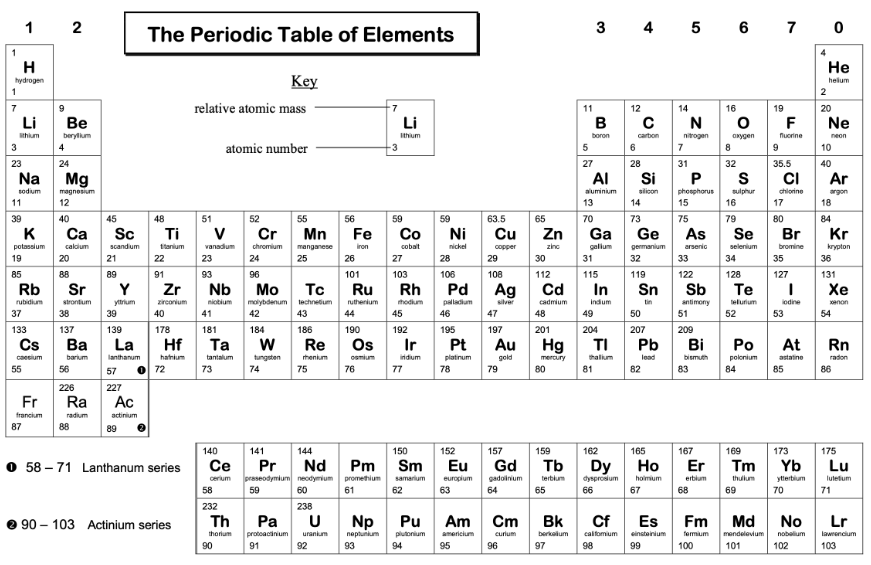
2. Which element has the electronic configuration 2,8,3?
a) Aluminium b) Magnesium c) Sodium d) Chlorine
3. Which subatomic particle has almost no mass?
a) Proton b) Neutron c) Electron d) Nucleus
4. Which statement about Dalton’s Atomic Theory is correct?
a) Atoms can be divided into smaller particles
b) Atoms of the same element are identical
c) Atoms of the same element have different masses
d) Atoms are created in chemical reactions
5. Which is NOT a property of ionic compounds?
a) High melting points
b) Conduct electricity when molten
c) Soft and easily melted
d) Form crystals
6. Which is the correct symbol for an ion with 17 protons and 18 electrons?
a) Cl⁺ b) Cl⁻ c) Cl²⁻ d) Cl²⁺
7. Which shell can hold a maximum of 8 electrons?
a) 1st b) 2nd c) 3rd d) All of these
8. What holds the ions together in an ionic bond?
a) Sharing of electrons
b) Electrostatic attraction
c) Covalent forces
d) Magnetic attraction
Section B: Fill in the Blanks (5 Questions)
9. Atoms are made of protons, ______________, and electrons.
10. A positive ion is called a ______________.
11. The number of protons in an atom is its ______________ number.
12. Sodium and chlorine form ______________ bonds when they react.
13. Ionic compounds form a ______________ structure.
Section C: Short Answer Questions (8 Questions)
14. Define atomic number and mass number.
15. Explain why atoms are electrically neutral.
16. State the relative charges and masses of protons, neutrons, and electrons.
17. Explain why ionic compounds have high melting points.
18. Define cation and anion with examples.
19. Describe the difference between an element, a compound, and a mixture.
20. Write the electronic configuration of sulfur (atomic number 16).
21. What information does the group and period number of an element give?
Section D: Diagram Questions (4 Questions)
22. Draw and label the structure of an atom of carbon.
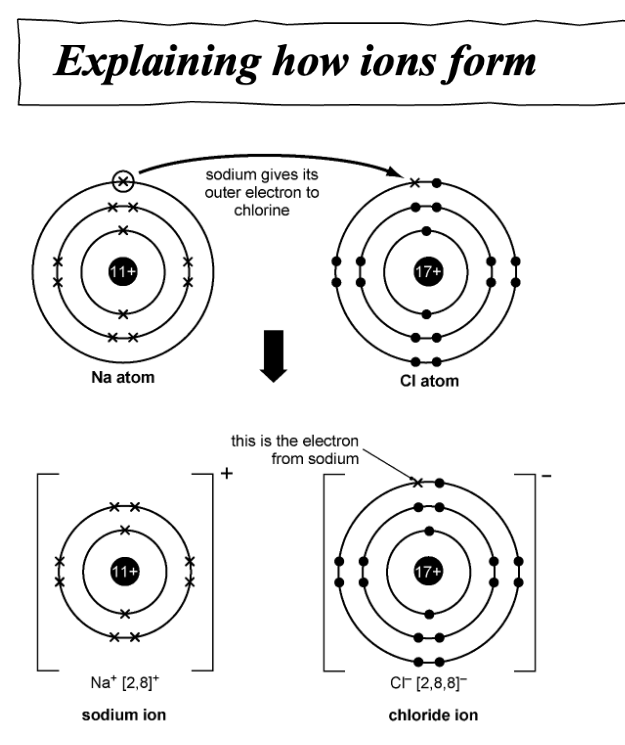
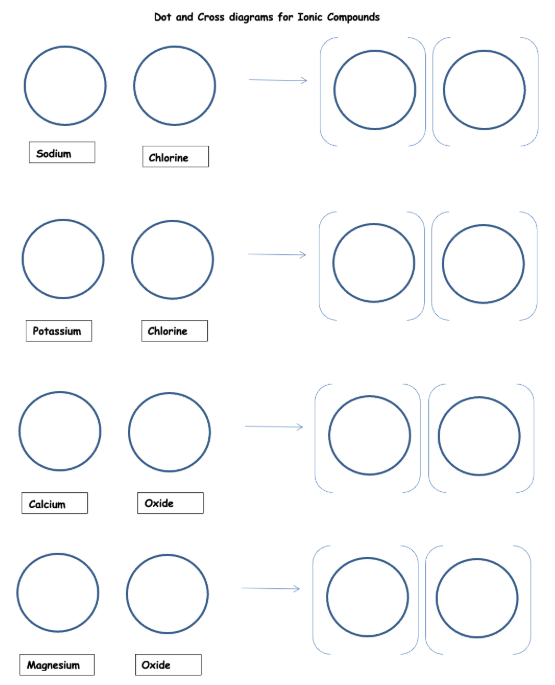
23. Show the dot-and-cross diagram for NaCl.
24. Indicate the number of protons, neutrons, and electrons in an aluminum atom (₁₃²⁷Al).
25. Draw the arrangement of electrons in a magnesium atom.
Section E: Application Questions (5 Questions)
26. Explain why ionic compounds do not conduct electricity when solid but do when molten or dissolved.
27. Magnesium forms Mg²⁺ ions while sodium forms Na⁺ ions. Which compound would have a higher melting point: MgO or NaCl? Explain why.
28. Why is it important for atoms to achieve a full outer shell of electrons?
29. Predict the formula of the compound formed between aluminium and oxygen. Explain your reasoning.
30. Explain why aluminium oxide has a higher melting point than sodium chloride.