Temperature and Matter
3. Particle Model
x
Learning outcomes
- I can describe the main ideas of the particle model of matter.
- I can explain how particle motion changes with temperature.
- I can compare the spacing, motion, and forces between particles in solids, liquids, and gases.
- I can use the particle model to explain physical properties such as density, compressibility, and diffusion.
- I can apply the particle model to explain everyday observations involving matter.
Matter behaves in predictable ways because all substances—whether solid, liquid, or gas—are made up of tiny particles that are constantly moving. This idea is known as the kinetic particle theory, and it helps explain many of the physical changes we observe in everyday life. According to this theory, the particles in solids vibrate in fixed positions, those in liquids move around each other more freely, and those in gases move rapidly in all directions. Even though we cannot see individual particles, their motion determines how each state of matter behaves, from the rigidity of a solid desk to the flow of water or the expansion of air in a balloon.
The movement of particles is directly linked to temperature, which is a measure of the average kinetic energy of the particles in a substance. When a substance is heated, its particles gain energy and move faster. When it is cooled, the particles lose energy and slow down. This speeding up and slowing down of particles helps explain why metals expand when heated, why gas pressure increases in a warm room, and why water freezes into ice when it becomes cold enough. Temperature is not just a number on a thermometer—it reflects the changing motion of billions of invisible particles.
These changes in particle motion also explain changes of state, such as melting, boiling, and condensing. When a solid is heated, the particles vibrate faster until they break out of their fixed positions, allowing the substance to melt into a liquid. If heating continues, the particles gain enough energy to escape from the liquid’s surface and become a gas, a process known as boiling. Even before boiling, some energetic particles can escape from the surface in a process called evaporation, which is why puddles shrink on warm, breezy days.
Cooling reverses these processes. As energy is removed from a gas, its particles slow down and move closer together, causing the gas to condense into a liquid. Further cooling removes even more energy, reducing movement until the liquid particles arrange themselves into fixed positions and freeze into a solid. Throughout every change of state, the particles themselves do not change—only their motion and the energy they possess. This highlights the power of the kinetic particle theory to explain how matter behaves under different conditions.
Understanding these ideas helps us make sense of many real-world phenomena. The formation of clouds, the melting of chocolate in warm hands, the fogging of a bathroom mirror, and the steam rising from a kettle all involve particles gaining or losing energy as they change state. By connecting temperature, particle motion, and changes of state, students can develop a deeper understanding of the physical world and the hidden particle-level processes behind everyday events.
Your task: create a 6–8 panel comic following a particle through different states and temperatures.
Instructions
Choose a character:
-
“Sally the Solid Particle”
-
“Liam the Liquid Molecule”
-
“Gary the Gas Atom”
—or create their own.
Tell a story in which the particle:
-
Starts in one state of matter
-
Experiences heating (moves faster)
-
Changes state based on kinetic particle theory
-
Continues into the next state
-
Cools and slows, condenses or freezes
-
Ends with a reflection panel (what they learned)
Each panel must include:
-
A drawing showing particle spacing + movement
-
A caption explaining the science
-
Speed lines / motion effects
|
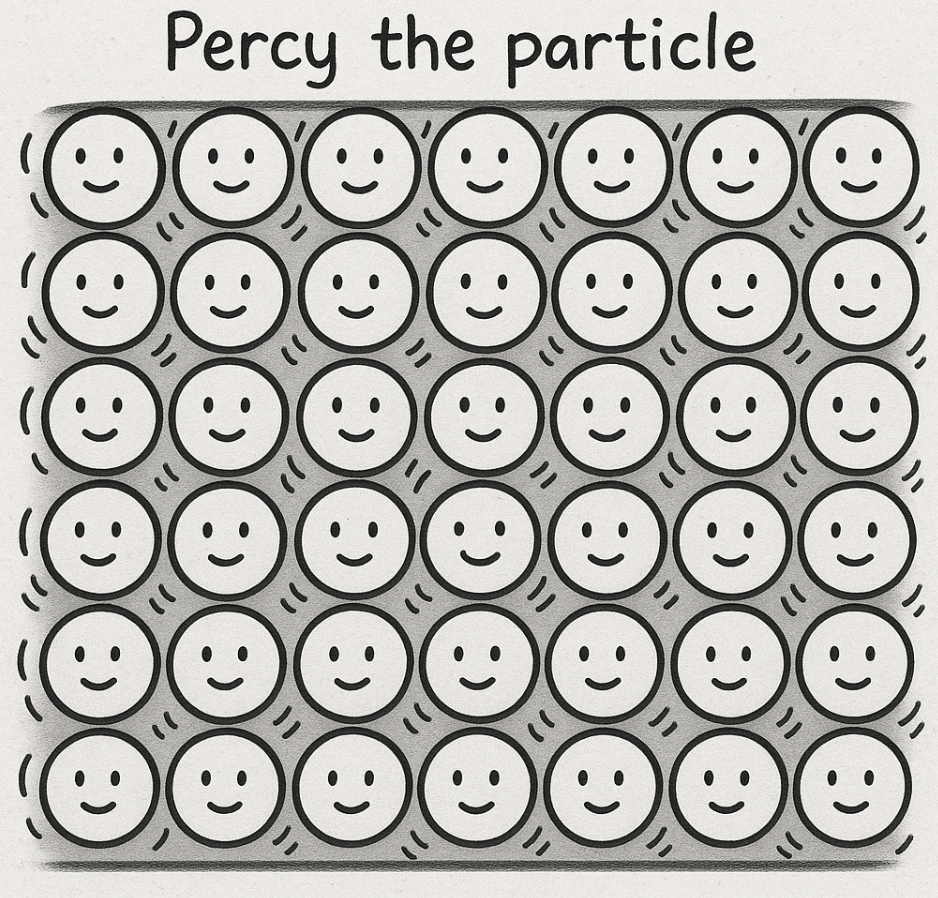
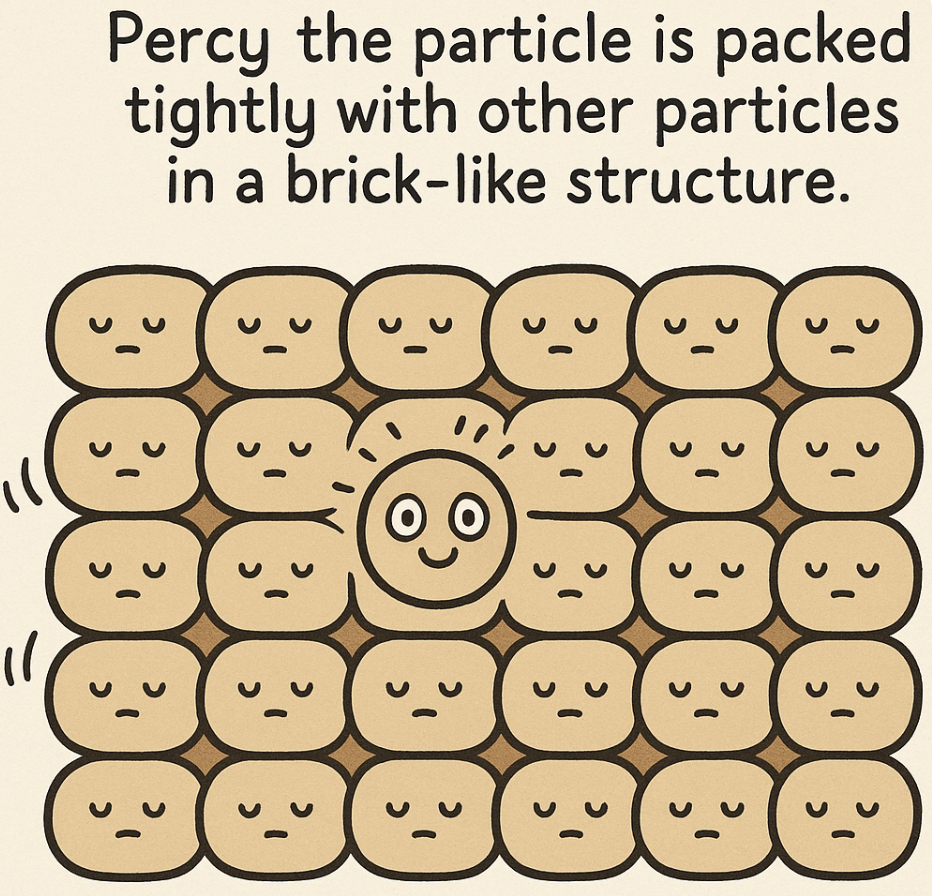
Hi! I’m Percy. I live in a solid, where we particles are packed tightly together.
“I can only vibrate—I can’t move around!” |
When the temperature increases, we gain kinetic energy!
“Whoa! I’m shaking faster!” |
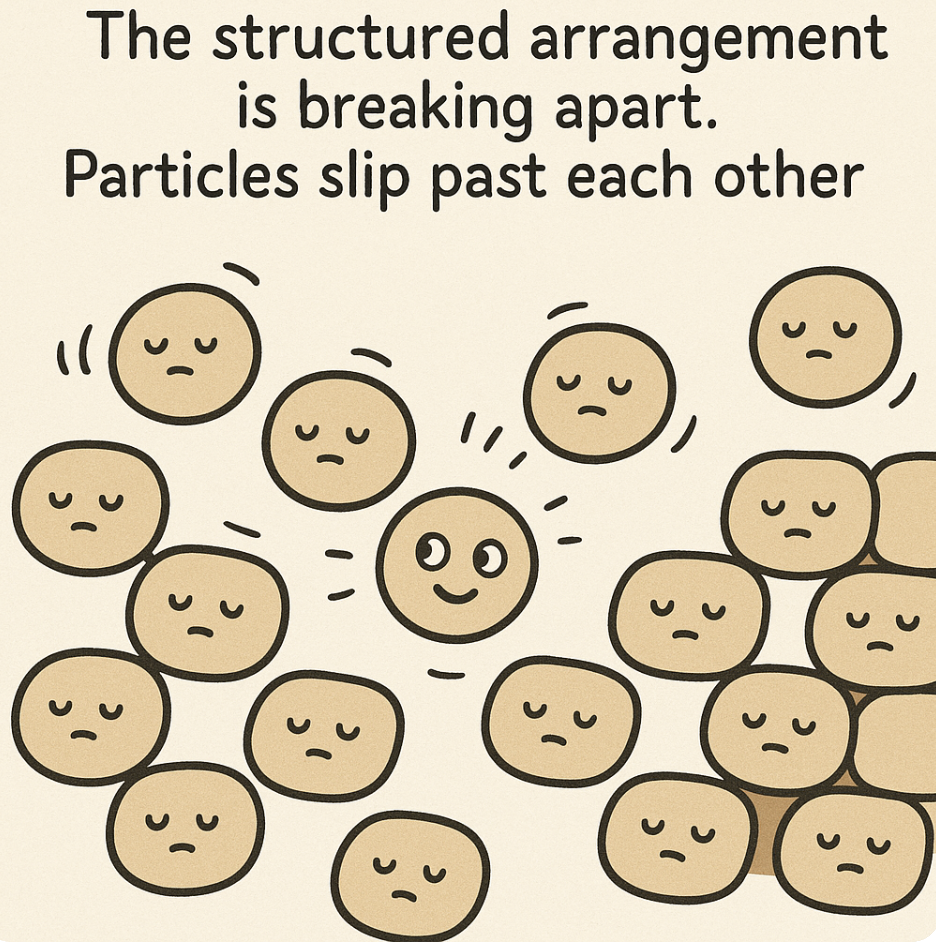
With enough energy, we break out of our fixed positions.
“We’re melting into a liquid!” |
|
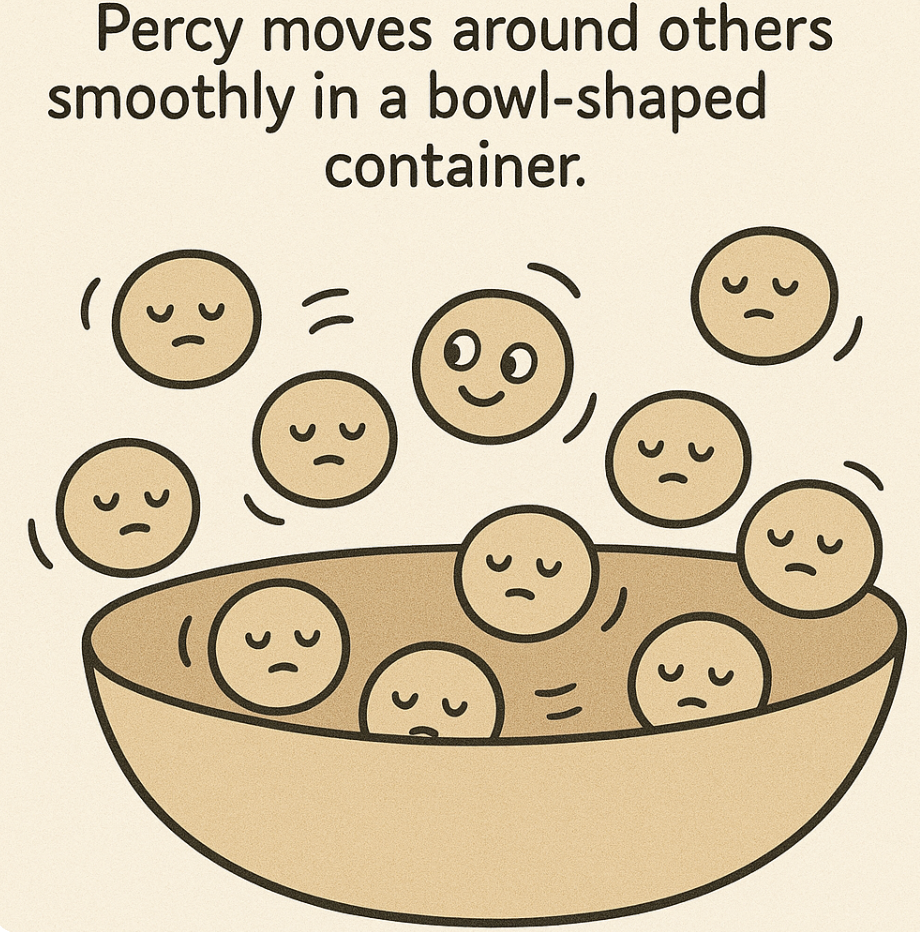
In a liquid, we’re close together but able to slide around.
“I can finally move, but I still stay near my neighbours.” |
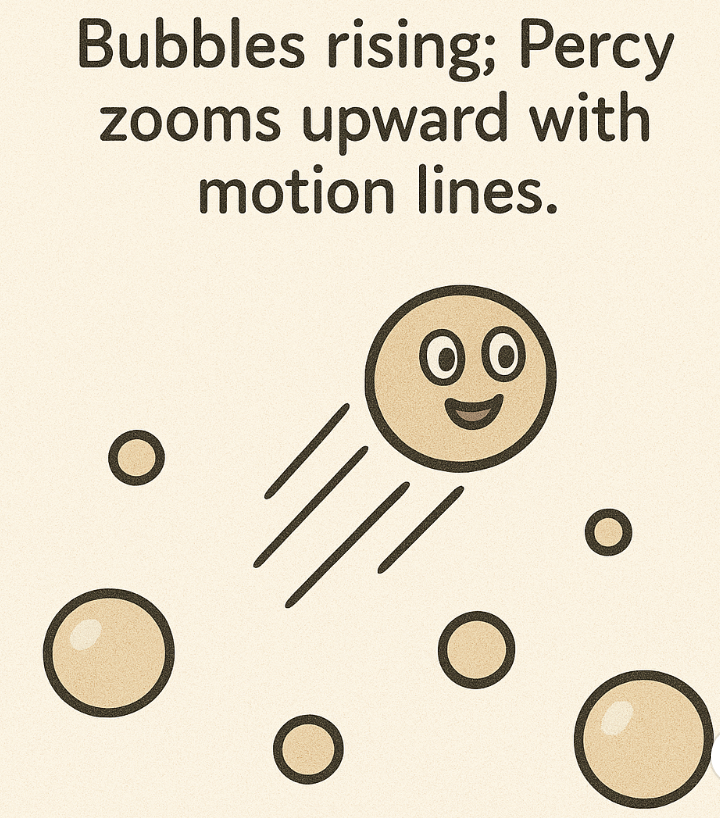
More heat means even more energy!
“I’m breaking totally free—boiling time!” |
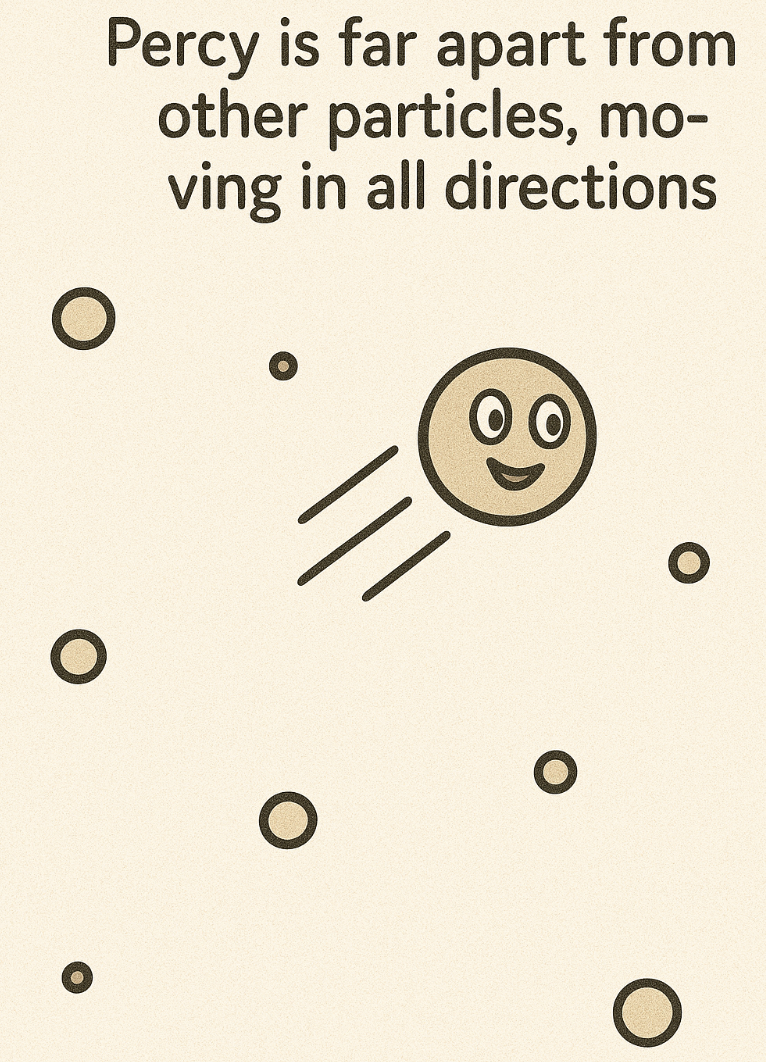
As a gas, we move quickly and spread far apart.
“I’m free! I can travel anywhere in this container!” |
|
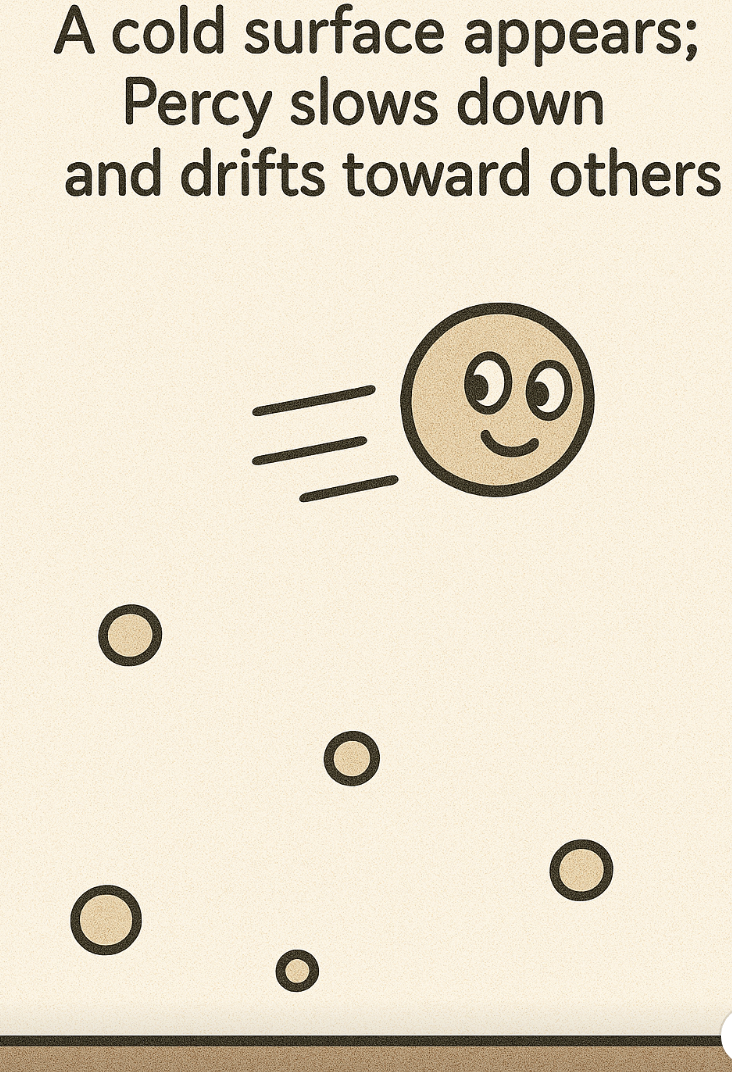
Cooling removes energy and slows us down.
“I’m losing speed… I can feel forces pulling me closer.” |
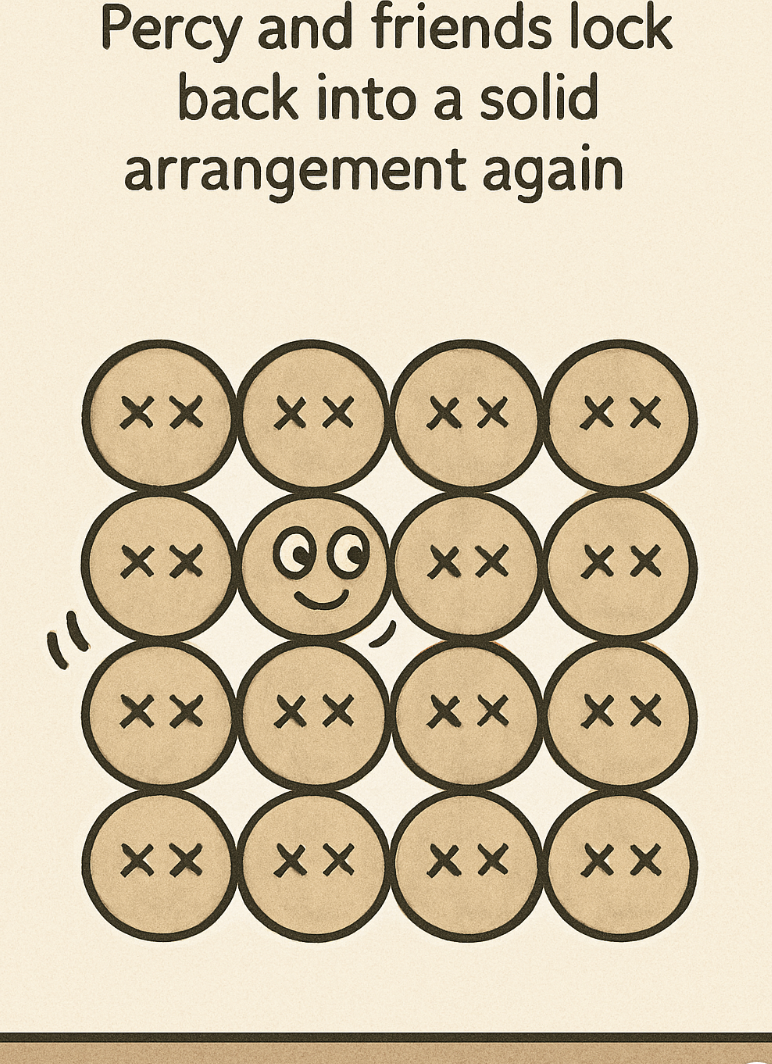
After even more cooling… we freeze back into a solid.
“What a journey! Temperature changes everything.” |
THE END! |
- Describe what happens to the motion of atoms as the temperature increases.
- Explain why it is easier to compress a gass than a liquid.
- Describe the arrangement of particle in:
- a) a solid;
- a liquid;
- a gas.
- What does the volume of a gas depend on?
- a) volume of container
- b) temperature
- c) pressure
- d) random motion
States of Matter & the Particle Model
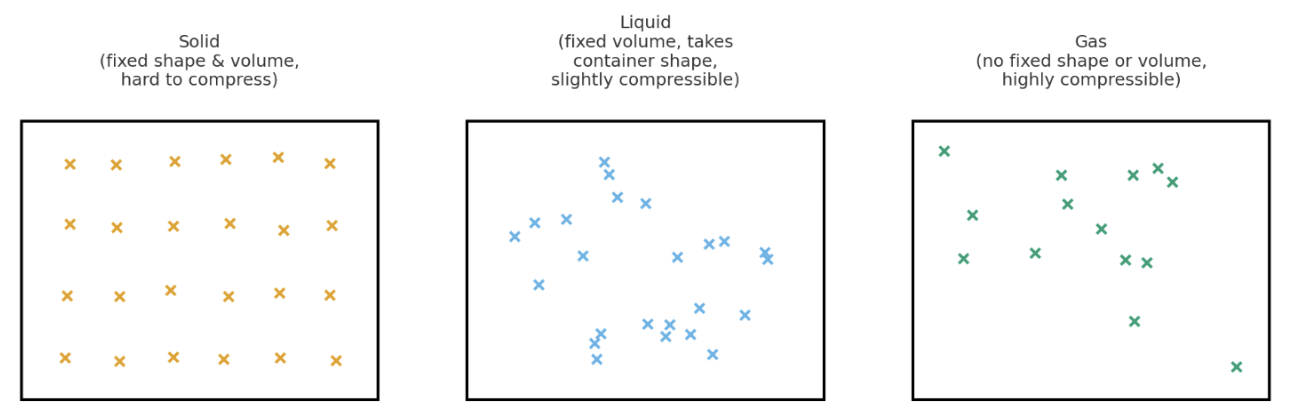
Matter shows three familiar states because of how its particles are arranged and how they move. A solid keeps a fixed shape and a fixed volume; it doesn’t flow and is very hard to compress because the particles are packed closely and only vibrate in place. A liquid keeps a fixed volume but not a fixed shape; it flows to fill the bottom of a container and is only slightly compressible because the particles are still close together but can slide past each other. A gas has no fixed shape and no fixed volume; it spreads out to fill any container and is easy to compress because the particles are far apart and moving quickly in all directions.
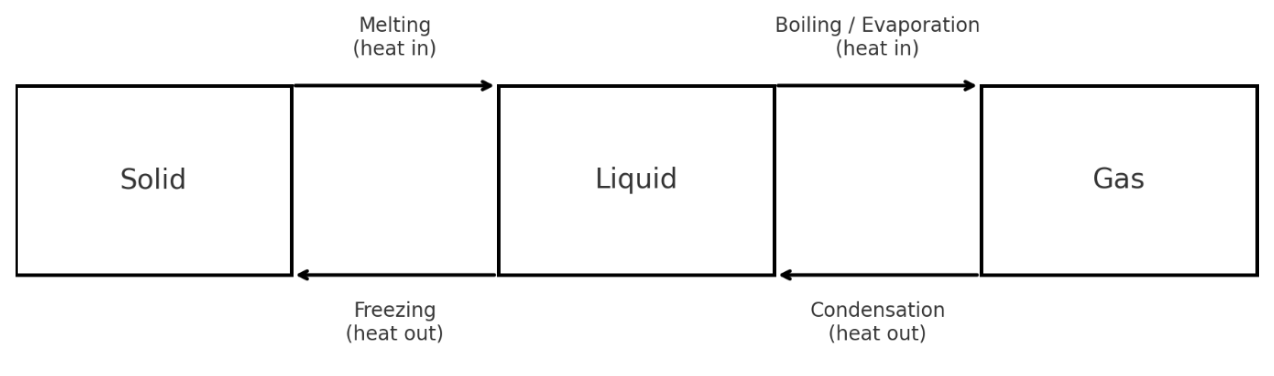
Changing state happens when energy is transferred to or from the particles. Melting is when a solid becomes a liquid as particles gain enough energy to vibrate more strongly and break some of the forces holding them in fixed positions. Freezing (or solidification) is the reverse as energy is lost and particles settle into an ordered arrangement. Boiling or evaporation turns a liquid into a gas when particles near the surface gain enough energy to escape; condensation is gas back to liquid as particles lose energy and come closer together. For this course you don’t need special names for gas→solid or solid→gas changes.
The particle model explains properties by looking at arrangement, spacing, and motion. In a solid, particles form a regular, tightly packed structure and only vibrate; this is why solids are rigid and hard to compress. In a liquid, particles are still close but arranged randomly and can move past each other; this is why liquids flow and take the shape of the container while keeping volume. In a gas, particles are widely spaced and move randomly and rapidly, colliding with the container and each other; this explains why gases expand, exert pressure, and are highly compressible. To sketch this, draw three same-sized boxes with about the same number of dots in each: for the solid, place the dots in neat rows with almost no gaps; for the liquid, cluster the dots irregularly with small gaps and some touching; for the gas, spread the dots far apart across the box to show large spaces.
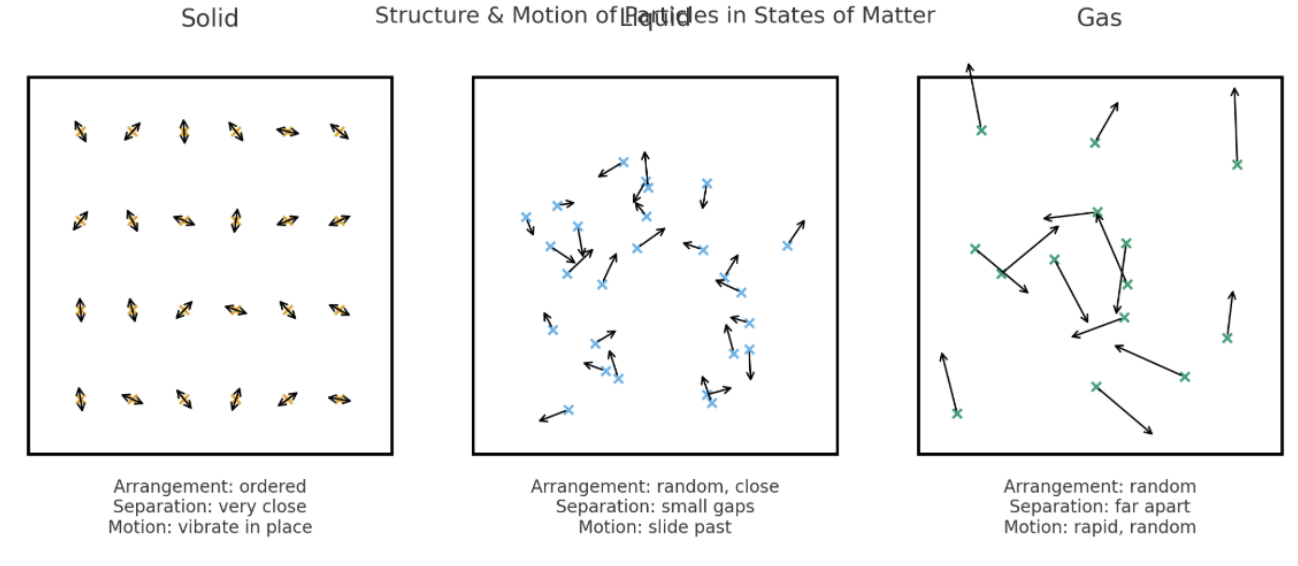
Temperature measures the average kinetic energy of the particles. When a substance is heated, particles move faster: vibrations in solids increase, sliding in liquids becomes quicker, and gas particles zip around faster, causing more frequent and forceful collisions. When a substance is cooled, the opposite happens: motion slows, particles come closer on average, and a change of state may occur if enough energy is removed.
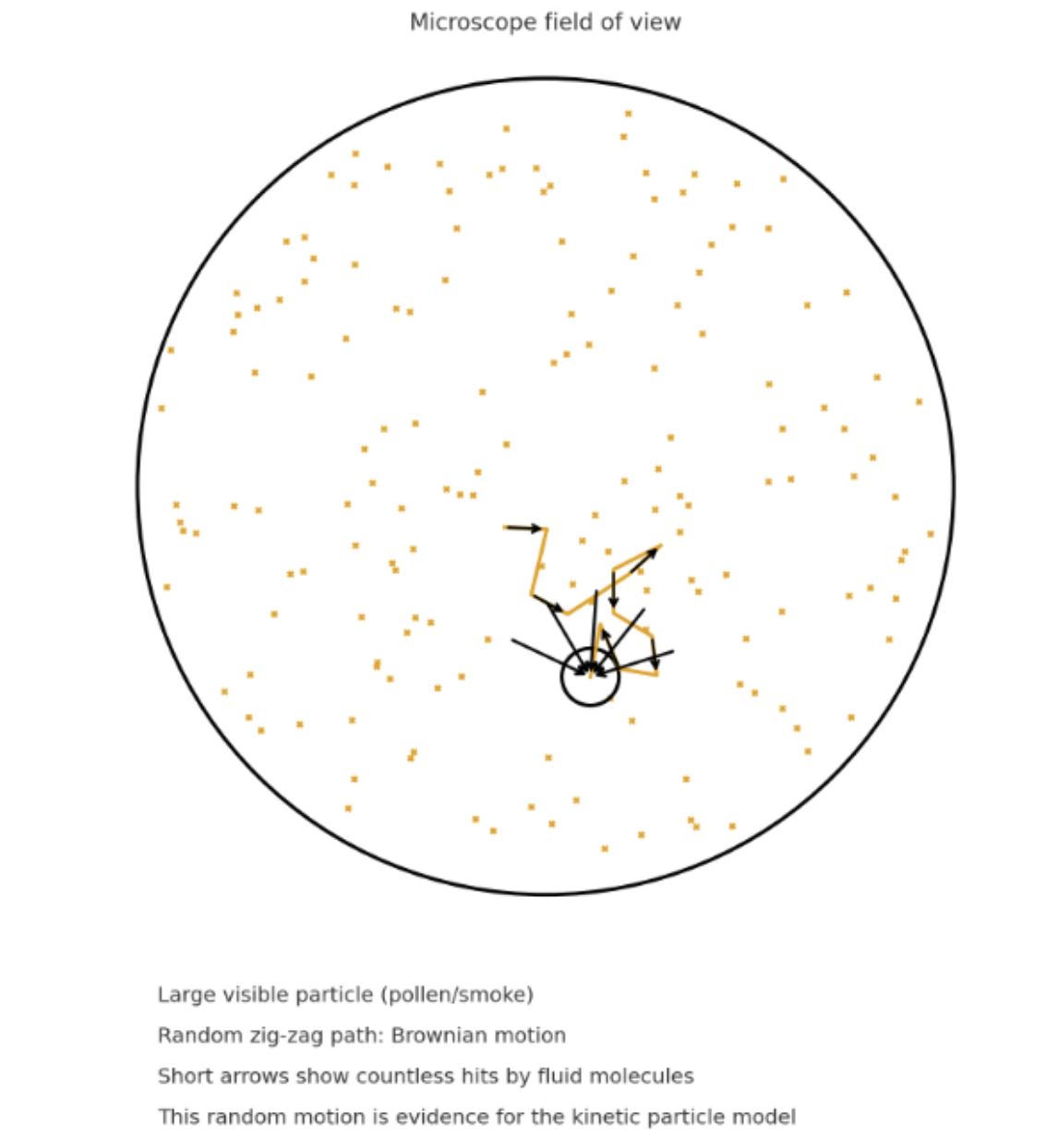
Random motion that you can actually see under a microscope provides strong evidence for the particle model. Tiny visible specks—like smoke particles in air or pollen grains in water—jiggle in a haphazard, zig-zag way called Brownian motion. They move like this because countless invisible fluid particles are hitting them from different directions at random. The fact that these small specks are constantly being knocked around supports the idea that matter is made of tiny particles in continuous motion.
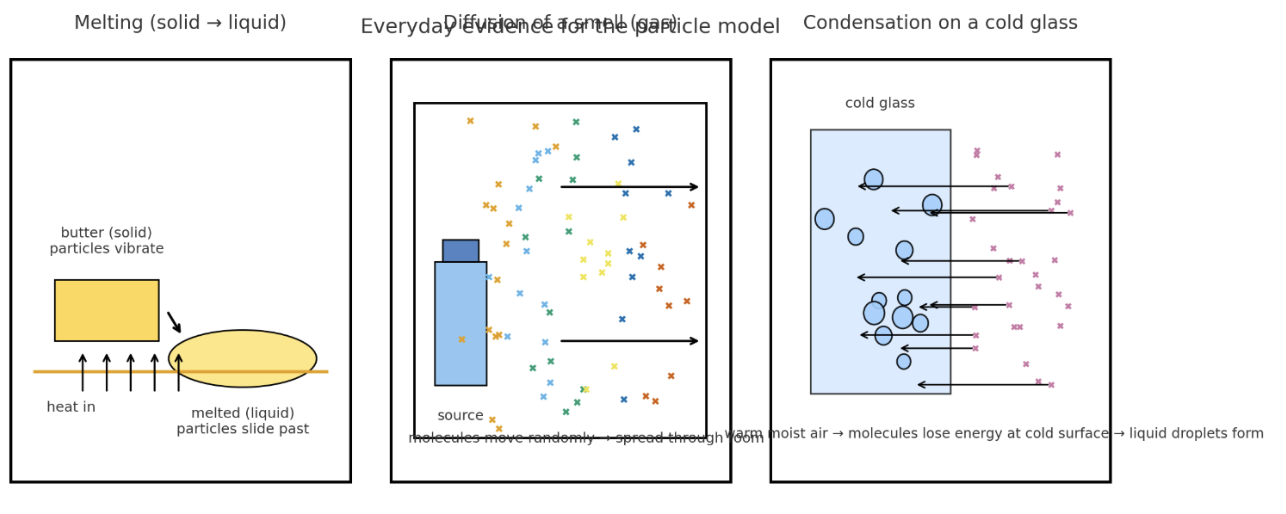
Everyday examples make these ideas real. Butter taken from the fridge is hard because its particles are low-energy and locked in place, but it softens and melts as they gain energy. A sweet smell spreads through a room because gas particles are far apart and moving randomly, so they diffuse until evenly mixed. Water droplets forming on a cold glass come from water vapour in the air losing energy at the cold surface and condensing into liquid.