plant and Nutrition Lessons
Leaves
Learning outcomes
-
Define an organ in biology.
-
Explain why a leaf is considered a plant organ.
-
Describe the main functions of leaves in plants.
-
Identify basic leaf structures and their roles.
1. Warm-Up (3 min) – What is an organ?
-
What is an organ in our body? (heart, lungs, etc.)
-
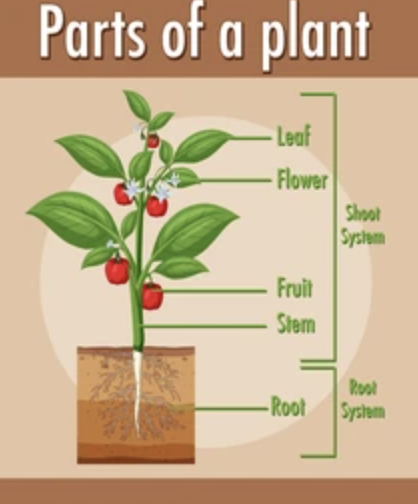
Plants have organs too. Roots, stems, leaves…
-
Definition: An organ is a part of an organism made of different tissues that work together for one or more main functions.
Introducing the Leaf as an Organ (5 min)
-
Show chart of plant organs: roots, stems, leaves, flowers.
-
Focus on the leaf:
-
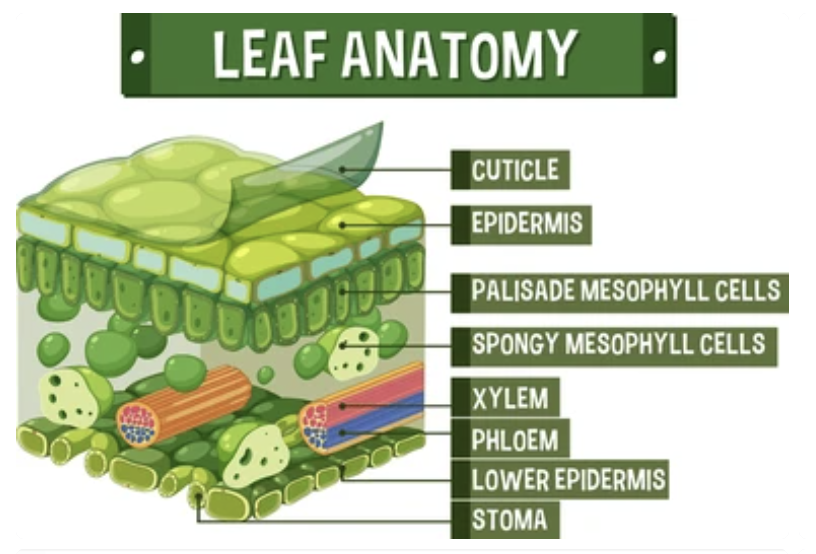
Made of different tissues (epidermis, mesophyll, veins).
-
Functions together for photosynthesis, gas exchange, and water regulation.
-
-
Hold up a leaf (or photo) and point out the parts: lamina (blade), veins, petiole (stalk).
Link to the Definition of Organ (5 min)
-
Recap definition: organ = different tissues working together for a function.
-
Leaf tissues:
-
Epidermis – protection, controls water loss.
-
Mesophyll – photosynthesis.
-
Veins (vascular tissue) – transport water, minerals, sugars.
-
-
Explain: Since a leaf has many tissues working together for photosynthesis and other functions, it is an organ.
Exam.net: Kg3bQE
Homework:
Leaf Functions Poster
-
Draw a leaf diagram.
-
Label at least four parts and write one sentence for each part describing its role.
-
Include a short answer: Why is the leaf an organ?