Density and the Properties of Fluids

Site: Young Education
Cursus: Fluid Mechanics
Boek: Density and the Properties of Fluids
Afgedrukt door: Guest user
Datum: vrijdag, 25 september 2026, 03:22

1. What Is a Fluid?

Learning outcomes
  • I can define a fluid and explain how fluids differ from solids.
  • I can describe the properties of liquids and gases as fluids.
  • I can explain why fluids can flow and change shape.
  • I can identify examples of fluids in everyday life.
  • I can compare the behaviour of liquids and gases under different conditions.

https://images.openai.com/static-rsc-4/GpU9fhXYgkNSn80F7047GV2q8jQAtoX5db0hR6omhOiD4CUO5t1ZXE8lI-ZQ_Fe05Q1cmFQzeABuaOBlP4lTZRv1yFrnkGRXtPwsuOXzyMp1qCkk4Icpi9fgd9AUCxqdvRP7dbb9tZa2bXSMP1tUiLcyFdWC-ldnDC9jG7rWlN8gIxRkc3WaJkLdNqVWON8v?purpose=fullsize
 
https://images.openai.com/static-rsc-4/ZJd6qWhnlioghh6D3nu7c7TZ5KvtMufeVwgYKFRo3TlP5ABzXriBg-FgxJAkz31QwKMlwLCp4HI8EWrtJMIDcIov1ls7RSBqgKAqW4ivwdE0dbIPGyKScmldDJ7MHpnlwGVI9hRwQPUObJptebtMHzAN4TXED8mtZ3Qo8326Qw3Z3fX8Iv_1vV5HkiSeyNZO?purpose=fullsize
 
https://images.openai.com/static-rsc-4/uz5BaYO77nHSAOfH_lVVfPfki0nTliQwH79UTpIYBMeQY1zPAnQx3nM970dwUDQFI-1EJTG_bER1XZ9NlAaDLzzkVchfV-kJOvApkjiGMTk0j34s6MJqHXxfneTIPsrwdtyP72tZd8vjXla2CvrxFVnvfuX1b-MTEf_NJDJU9Xhm1cFsG534IQIq6P4C7xM3?purpose=fullsize
 
5

What Is a Fluid?

A fluid is a substance that can:

flow and change shape.

The two main types of fluids are:

  • liquids
  • gases

Unlike a solid, a fluid does not maintain a fixed shape when a force is applied to it.

Instead, it can move and take the shape of its:

container.

Water, air, oil, gasoline, and steam are all examples of:

fluids.


Fluids Are Not Just Liquids

In everyday language, people sometimes use the word fluid to mean:

liquid.

In science, however, the term has a broader meaning.

Both:

liquids AND gases

are fluids because both can flow.

For example:

  • water flows through a pipe
  • air flows through a ventilation system
  • oil flows through an engine
  • natural gas flows through a pipeline

All are examples of:

fluid flow.


Solids, Liquids, and Gases

The three familiar states of matter behave differently.

Property Solid Liquid Gas
Fixed shape Yes No No
Fixed volume Usually yes Approximately yes No
Can flow No Yes Yes
Takes container shape No Yes Yes
Easily compressed No No Yes
Particle spacing Very close Close Far apart

Liquids and gases are grouped together as fluids because they can both:

flow.


Why Can Fluids Flow?

To understand fluid behaviour, we can use the:

particle model of matter.

Matter consists of particles such as atoms or molecules.

How these particles are arranged and how freely they move help determine whether a substance behaves as a:

solid, liquid, or gas.

https://images.openai.com/static-rsc-4/eZgZPIwdfWK1EaUH0PLMJAZTN86RL7YPuK94_2owILqyMnM8leEycKYzCmkBaKg8heMhELp3TUWZ9zrbyrGBRvdyHXsfcOt5i0vOixlNINFvaERr5pL2Rr1iBAC12E4rEUl43wExoEyXYc8L73yDbkOrUasxpY0aHUdMAKjYRCn7fBnl7QqlfuhsMAgOnGPP?purpose=fullsize
 
https://images.openai.com/static-rsc-4/F-gaTzIPn-Rzh-VFyLmPySIqJUpcMzwHBeTPqpDcjSuvB17x2ZAh3Nv0gp5JgZ4EPYgT93QLFnk2NA26BFvLI5-HXknF32QY5oI63FlHMJD3rD33h4cOOaINR_8PcpzuIed5lKz-83gOr4N2_B3DhzPMB0SUWp1kdJA5r2ourv0HSyuOIjg9X7rbYzWlRxFW?purpose=fullsize
 
https://images.openai.com/static-rsc-4/_31hYrlpMGLHSgGSYPIH6Vz1EeA7oIWMV1N8QMr_MvuDP3WZwoP-yorEpFXBjQ0GwJz9CYZcu9HXenQTEuloZVWrS3DRmtU9asjMJgPd4Q78D-7usgmtqh05m7S0pIBmjnzHQ_IgFEZqhQr8ibYhtVpqt0itBnXwZe0Q6YPDXntSZIn8OsLxct2bj4MONs-e?purpose=fullsize
 
6

Particles in a Solid

In a solid, particles are held in relatively fixed positions.

They can:

vibrate

but they do not normally move freely past one another.

This gives a solid:

  • a definite shape
  • a definite volume
  • resistance to flowing

For example, a steel block does not normally change shape simply because it is placed in a differently shaped:

container.


Particles in a Liquid

Particles in a liquid are:

close together,

but they are not locked into fixed positions.

They can move and:

slide past one another.

This allows a liquid to:

  • flow
  • change shape
  • take the shape of its container

However, because the particles remain close together, a liquid maintains an approximately:

fixed volume.


Particles in a Gas

Gas particles are much farther apart than particles in a liquid.

They move:

rapidly and randomly.

Because there is considerable space between the particles, a gas can:

  • flow
  • change shape
  • expand
  • be compressed
  • fill its container

A gas therefore has neither a fixed shape nor a fixed:

volume.

https://images.openai.com/static-rsc-4/j8UL7rAQt-krW2AFnteIErNkVAEQpWtEb1KyE3lg0KiJmbejogixw67TrIgN3M1yO9ds0rqEzEQBwgBLHd-ApKuL7bm27DeuCFyGyz-qyDVDJ7EEnDbkCEgn85oU3Iczy5MF6xYgcCC3ji9l-rMtRtYX1c0At2qaBpZQB6lS6w72cqtTD5X9kxJJbJB6Dm2h?purpose=fullsize
 
https://images.openai.com/static-rsc-4/AU-5NTAAk_v2BaBfXGTBgDFo7lcemKxHiJDDk0EI0XgwiTwkOYoP_hXFK-6gPyovxWf6zWuXLiJeeeajOTjSsSj0lvrTrwH7suT6gNJgNnECYxh4ITrD68wnxO9HpBLJLvAVavr-_2bZnIYz2uFeK93XhsXvvCyaeRspX76YG6HP4Pvrt5bHsQ_XPxH1YQ48?purpose=fullsize
 
https://images.openai.com/static-rsc-4/ILVYyXlRxF5Z1xBeZZIK8h_U8KkNMvU2v_rq4vkefoEtHZ-pRHpL9eU56dvA9MpOF91NV8symBJodE5HUQj_QKDn2grl2PywosQvt_RoEac2FBC8YvpudVw2JHZL8F1HUwa3X_iweXca1oR5XWE3rV8D1iR_ox9HeS86VhXZeE41LRVWl_4SzbWfzFt5gmc7?purpose=fullsize
 
5

Why Don't Fluids Have a Fixed Shape?

A solid can resist forces that try to continuously change its shape.

A fluid behaves differently.

When a force acts parallel to the surface of a fluid—a shear force—the fluid can continue to deform and:

flow.

This ability to continuously deform under shear is one of the more precise ways scientists define a:

fluid.


Liquids Have a Fixed Volume

Imagine pouring 500 mL of water from a bottle into a bowl.

The water changes:

shape.

However, assuming none is spilled or evaporates, its volume remains approximately:

500 mL.

Therefore:

liquid → variable shape, approximately fixed volume


Gases Have a Variable Volume

Now imagine releasing air into a larger container.

The gas particles spread throughout the available:

space.

The gas therefore changes both:

shape and volume.

Therefore:

gas → variable shape, variable volume


Liquids Form Surfaces

If you pour water into an open glass, the water occupies the lower part of the container and forms a:

free surface.

It does not normally expand to completely fill the glass.

This is a characteristic behaviour of:

liquids.

https://images.openai.com/static-rsc-4/PmZYAp7r5raEtjjYBvyXhVkbX5WUDVHFUd49MinHHS7K2uQkfdCN06hsZwOWFW7edYdxp-dvNp0En_3JwV_ioN96I8mnsdevbxDGldngCzP4jqu4iCzmDf3A9XVBMS2SiAIcl4vj7K9_9XYu_3J_LmdYd42D28v0_q6i8kkv84CdJVWFvauaGcQRRW9TphT0?purpose=fullsize
 
https://images.openai.com/static-rsc-4/MS-j9-AqNtmpUfUZ8gdOE3BagcRDAd9nku0kuqWSU2qxQfZ-HYSrxA_iG5BCSrANVMgpA1Ro7qksVTSwJO2s9Vl6SkYZ7T-vu-t_6snOvw6KbRFmsFU-PYUhwePevty-nfSvnEDjxCppuTyqtMhtRf4eSBH_VbxV1AjwXf7ZOXacSdL_n8IPMo5tcYm7a_oA?purpose=fullsize
 
https://images.openai.com/static-rsc-4/2N1yGc9ipJOJJFjl9r3foG-8fMuC1cQscD4lbsdyWsO4getv5QgkWO380p_4BMJqS157D5W3Ptws_zNjsa3iUzQQMWBUXhCHporGZFU0P3NYUybchxoK_c-cQlSNrzEJ8yU2iH9I08cUSGy7vO2VCCKb2TEW_XH1tPRpHmXE0wsmM5jByw1z5BCJ3Fko380d?purpose=fullsize
 

Gases Fill Their Containers

A gas behaves differently.

If air is introduced into an empty container, it spreads throughout the available:

volume.

Gas particles move in all directions and occupy the available space.

Therefore gases naturally:

fill their containers.


Compressibility

Compressibility describes how easily the volume of a substance can be reduced by applying:

pressure.

Liquids and gases behave very differently.

Liquids are difficult to compress.

Gases are relatively easy to compress.

This difference is extremely important in fluid science and engineering.


Why Are Liquids Difficult to Compress?

Liquid particles are already:

close together.

There is relatively little empty space between them.

Applying pressure therefore produces only a small change in:

volume.

For many everyday calculations, liquids can be treated as:

incompressible.

This is an approximation, because real liquids can be compressed slightly.


Why Are Gases Compressible?

Gas particles are separated by much larger:

distances.

There is plenty of space between them.

When pressure is applied, the particles can be forced:

closer together.

Therefore the gas volume can decrease substantially.

https://images.openai.com/static-rsc-4/N4TiSSukCxtmFA0Vjaslw5erJSASuliqF8bCcUva7dYIjqEj6nMhK2TEQRDaqkvBJYsTp65Nn6RkufYdIL540o4Vug5u7eLr2h68fIfYAx02BQKb8fgNxun_bK9WQcmKprM40r-zuTDpQDAwwk2MJ_dphXh0iCnr0vdR5n5CYGOsmuRmsjfEyD9pk1OnMPDp?purpose=fullsize
 
https://images.openai.com/static-rsc-4/H4Cs2vKjDbbI76__VfLc1s8eXzBr07H70YXvFCAKYfk3qLInHK0aD_3HYaEHmYL8lc7ryIlBWZq2rTD7QcR4YZHDKgtq4_hFUtX7eijuzE66TZ8UVYQ3aZsXtfBybI1RAxcgCG9aFRZTBNhBN-ACcOFQnkhOZBgXNJC8nSVmuGwBCizu2BSCHLHdbrIBFQil?purpose=fullsize
 
https://images.openai.com/static-rsc-4/OjcF4eU-W6jsztZlGS8tgK0USqKJCIluE6xpCs_1j8dOi8OwJ4Cdlp5KZaOm7td4sD_t4ySsn-1AjNuePT8jyvUff1P3uWkfEHe8TEYF-lF7syED4d4-vHUAQTq3aaYr7eI0YNXSVOLX9CZuYMV6bY1qiAxQilN0Z_CfiXwUToOgVO89UhQFrvdd6EjS46Az?purpose=fullsize
 
4

The Syringe Experiment

A simple comparison can be made using sealed syringes.

Imagine one syringe contains:

air.

Another contains:

water.

Seal the ends and push the plungers.

The air-filled syringe can be compressed noticeably because:

air is a gas.

The water-filled syringe changes volume very little because:

water is a liquid.

This demonstrates an important difference between the two types of fluids.


Pressure Can Change Gas Volume

When pressure on a gas increases, the gas particles can be pushed closer together.

The gas volume therefore:

decreases.

When pressure decreases, the gas can:

expand.

This relationship is important in:

  • pumps
  • compressors
  • breathing
  • pneumatic systems
  • scuba diving
  • weather
  • engines

Temperature Can Change Fluid Behaviour

Temperature affects particle motion.

When a substance is heated, its particles generally gain:

kinetic energy.

They move more vigorously.

Both liquids and gases generally expand when heated, although gases usually show much larger volume changes under common conditions.


Heating a Gas

Suppose a gas is contained in a flexible balloon.

If the gas is heated, its particles move faster and collide more energetically with the:

balloon walls.

If the balloon can expand, its volume may:

increase.

If the gas is trapped in a rigid sealed container instead, heating can cause its:

pressure to increase.


Cooling a Gas

Cooling reduces the average kinetic energy of gas particles.

Depending on the conditions, the gas may:

  • decrease in pressure
  • decrease in volume
  • eventually condense into a liquid

Gas behaviour therefore depends strongly on:

temperature and pressure.

https://images.openai.com/static-rsc-4/ZYFjRxcFdrrZvgsCPbsn-XfOShY2jQxhGr4b2z1BjVzZfEX0HhfOckkyTfUpmboe_JihuQxNV8XEwlgIJfke3LgScnjMNvGi5qN2bKUlzAq3b2kd_mmWFk6FX6yo0IQq3-8UwKWKF3X95KZfTbqaiLY8PE-tBFxna6dM7Kq5ba-HwGWPL4DRhwUsQqBz1kOz?purpose=fullsize
 
https://images.openai.com/static-rsc-4/1zCxFxKi8EJ_LN0XGCzpGjWwO39BFV9-rDjEzQNFEw4v-xK6G3RIgfyoIDq2P_bJhNsB1ZwjD65FUyLwkRa6EYrF-b-9nOlsl6HTkak0nlyUEPPohSp8uzi-sodt4FrTSB8Fo3ojm6iHv1gloARiZVTSqwqTPnTU1pKVvcvVO5MAFR_YNEUsBf19ivO_SCCd?purpose=fullsize
 
https://images.openai.com/static-rsc-4/Cmbh5JUTxgf4_jEXugy2bYLSoTd1NReHEE-FhQ7_zELC-QEwVD81ACWztqbNdircboaQYHXDHQoSf045HFz3uUqD54OkCIKT2E3epWbPDmR3mdN6kpNXDU3MrdWMzS2vNg1-gIbD_jr4fhoEtTEzAEAJP_3stgnjSpFxhok0OJkmqZbM-rrI1b1bkpbXerYe?purpose=fullsize
 
5

Fluids Have Density

All fluids have:

density.

Density describes the amount of mass contained in a particular volume.

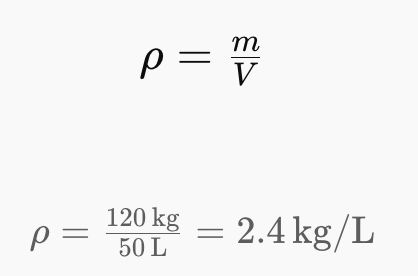
The equation is:

density = mass ÷ volume

or:

ρ = m / V

where:

ρ = density

m = mass

V = volume


Liquid and Gas Density

Liquids are usually much denser than gases because their particles are:

much closer together.

For example, at ordinary conditions:

liquid water is much denser than air.

Gas density can also change considerably when:

  • pressure changes
  • temperature changes

Liquid density generally changes much less under ordinary conditions.


Fluids Exert Pressure

Fluids can exert:

pressure.

Pressure is force acting over an area.

The basic equation is:

P = F / A

where:

P = pressure

F = force

A = area

Fluid pressure is important in:

  • hydraulic systems
  • atmospheric pressure
  • blood circulation
  • diving
  • dams
  • aircraft
  • weather systems

Pressure in Liquids

The pressure in a liquid generally increases with:

depth.

A point deeper underwater has more liquid above it.

This is why structures such as dams must withstand greater water pressure near their:

bottom.

https://images.openai.com/static-rsc-4/VxrBqF0UvZl6SCFzZ5yyCODrenkDe-GHbChyFC-HioxTL9cDwdlXPZTukEaCmOfctX4qNJi_RQg-xjS57cOgGbG28qKhwfZforgLqQtiulif6jYoHsbooz6042nH1nehZljsYSdrdvmSTtUAwK5hu5iiiG1JZpfPTmMaWW20QLNdJrCnthyU6w5Ty6J3Frk8?purpose=fullsize
 
https://images.openai.com/static-rsc-4/M3LWnVPfBnf60Be8XsynUTd60CCQ4n-C9ZE1Oqfsvg7g8P6M8Nw8-LKtchQTYkke0Q5Eck4YYnJMPmyDYdwN5N4NM16bnOFqJNB2-LRpnOk-zlBsJKjfVyU5ECk1YYWi7sSnYlvKFy-Sz9nJNROpLdoc-2tVKe7eASk4-VzhNFQY-tr4BQbqXPcMMZesSMSO?purpose=fullsize
 
https://images.openai.com/static-rsc-4/eWUw4PWuXsNwGpyyYKoPzjByQYnIXSUjQtP0gFVf1ZtdOksHrwdnAjgM-xsxF7Brf6jRjSZwN9yF3m-iFRzX-2KCWpOhVKOfCUTIGE5gpdAGIhm3hMC-18VkECsMTX5mpfv1Y8xIi9OB-LavQrJuhnPabPqkEWxAHAg9gU57umOn3Ep8cAFj8FXXUb5a0yp1?purpose=fullsize
 
6

Atmospheric Pressure

Air is a gas and therefore a:

fluid.

The atmosphere surrounding Earth exerts pressure called:

atmospheric pressure.

We do not normally notice it because our bodies and surroundings exist within this pressure all the:

time.

Atmospheric pressure is extremely important in:

  • weather
  • aviation
  • breathing
  • fluid movement
  • vacuum systems

Fluids Can Have Different Viscosities

Not all fluids flow equally easily.

Viscosity describes a fluid's resistance to:

flow.

A high-viscosity fluid flows more slowly under comparable conditions.

A low-viscosity fluid flows more easily.


Examples of Viscosity

Consider:

water

and:

honey.

Both are liquids.

Both are fluids.

However, honey usually flows much more slowly because it has a higher:

viscosity.

Other relatively viscous fluids include:

  • syrup
  • some oils
  • shampoo
  • molten materials
https://images.openai.com/static-rsc-4/DIiv1bamTuDAPL7jz-UzMVnCp4qyJ0nX9SBJjwUl8z8rzEGHo0hJckFF0J_c9brll1CFg9Nx5O_pxm7RRwGpGK3O1wileoBBiO3Y33oaSalgKcKzw32h6zQHltVNAoSQFGOJDrMshgetH6xtxl4kVd5Zg9TwT4xCFu_5WJgRMn6M_KqX4Ee02nIvT5WlQseu?purpose=fullsize
 
https://images.openai.com/static-rsc-4/aMm2av-seGR8SdOYETyj55BowZf-uAgVas-F4g1CY9k--GWJ80I4n6jPDu9aunRay6s-jQ2_0jdZxHjoWE95CMu0tHWtNcGDt1bNdWPVPFz1-9NG_TDPdJoez3hKVgNO3ugj9CVXyuI1d3kapntr0sBxN4Rp5fOOHcTS_8mbFDzrmoy3_kaBagiFYauXY0JG?purpose=fullsize
 
https://images.openai.com/static-rsc-4/MwBxC0gh4CeMU3W_j4myuxtN9klVqdP-y1dkcCRw6GCipkyP01k67zzB9zO382T9IR4tcmzkeTLkVSYdLXW3O_koPylP97gagfd7HSc3Cys672J60F3sedOZIrtMksR70XdXc2rx8Atc4dx2UT5EceNprjYnw59eW40So3qiN2nO3V4biB0z7ie62vZtVjiA?purpose=fullsize
 
6

Gases Also Have Viscosity

Viscosity is not limited to liquids.

Gases also resist flow because their particles interact and transfer momentum.

Air therefore has:

viscosity.

This becomes important in areas such as:

  • aerodynamics
  • ventilation
  • weather
  • aircraft design
  • gas pipelines

Fluids in Everyday Life

We interact with fluids constantly.

Examples include:

Water — drinking, washing, rivers and plumbing

Air — breathing, wind and ventilation

Blood — circulates through the body

Oil — lubrication and machinery

Fuel — transported through engines and pipelines

Milk — food and drink

Steam — heating and industrial systems

Natural gas — energy and manufacturing

Fluids are essential to both living systems and:

technology.


Blood Is a Fluid

Blood flows through:

blood vessels.

It transports:

  • oxygen
  • carbon dioxide
  • nutrients
  • hormones
  • waste products
  • heat

Blood is more complex than a simple liquid because it contains cells suspended in:

plasma.

Nevertheless, it behaves as a fluid and can be studied using principles of:

fluid mechanics.

https://images.openai.com/static-rsc-4/woW1b9hYQWKupgUOLGnjSY2gf6d7O9JUJrzqM1UMIHxMaVIIox-qISrmQusnAzCxVHECSsZ8ycVR7bUTb3NkBY1pTvKXvAq1JA4vVFgM1OcaalABtHIaRg4f3J7NdLLMBvEYTbPmue25nWByX1WwUv1pGLjvn0WN7F7Z4rvmY-i4JzXPkDxRRaJf7DIaMEnO?purpose=fullsize
 
https://images.openai.com/static-rsc-4/drOtrSHBNJ2Cu6opxvUtOcflY3dv9aIVyo-KxBtT1qyz0icESqkHSLSjUhvDQOzhzbIzdFVpUzndxkXZdkuEHWOJybP2MzPC0qP5ipy5v_FBo587K2291aqrYOfZ0lmrGtcSKWZX_e6PlpLJI6qbz3W0inPPyYsOGWVTOyCxsu0C4pIs35tp-ganihd7tbuH?purpose=fullsize
 
https://images.openai.com/static-rsc-4/uAOk0r7NTp5OKPXlcaHgkP2XsjBy-FXnYVb5zG781n-xb9_xjht1RZhWbxqc_wuFzoXT2bjlx8u1mbojitPrFikpqbir_IZ7OC50D8RgLZexzE3fYeSmenELUf00aM_9WjfWzyZmD6wupQB7JF1hXgHbCYcvlTE4tFADpb_2I3iFcbToZNxePg7Mjr2ZnN93?purpose=fullsize
 
5

Air Is a Fluid

Air may not look like a fluid because we cannot normally:

see it.

However, air can:

  • flow
  • exert pressure
  • change shape
  • change volume
  • move around objects

Wind is simply:

moving air.

Therefore wind is an example of:

fluid flow.


Fluids and Aerodynamics

When an aircraft moves through air, the air flows around its:

wings and body.

Engineers study this flow to understand:

  • lift
  • drag
  • pressure
  • turbulence

Because air is a fluid, aircraft design is an application of:

fluid mechanics.

https://images.openai.com/static-rsc-4/NkRQjr3YVxXbIy9MO2w1TxKzc5-fQxImRl1LZCdWg1D3lCEpGazWwhp8B0ujD8lXA52QzWoQoCSyz_NAmclzUAWdwytKcCIJJIQWOJfFPRuOKqR7ak_yPB_0Jm9_h2KAZ3-dK_3bkdwEbGtbpHBGht2wQRvkjqoTANYndYwuq2l5Lnjg-YXuGDpZMk3YnWby?purpose=fullsize
 
https://images.openai.com/static-rsc-4/ws3DjRfqr8rrgcRo3uIg-7gK59S1XYwnMBeWEFd4fdRP9RN5u7e8Rs3R8Gfeh1kwf7P_lav2PanK71oOpBBrHRTkTNRt4r5SXOqOzSB7SGS8AU_TJutlikSTKvBI-ofRX12fSvFWtsbfXB9i9wTTaiBKuG2roCFc_Uds5nHVwB4jMjKDRucZiE4sfbcwfKgq?purpose=fullsize
 
https://images.openai.com/static-rsc-4/XkKVQH78m-HoGnrhiwIWcw9hAOQB9ZbDadcZ11U6QvjkJHns0G5kqx9dlQExuyjZCCQarvT1UkuGUMNVyqpwZI19sQ53Kxyll8CVFQcz394uqbVNiQtN_wWAJmwPHlZiTdygSb5GwuJEsyLu95_vjEbpLsCKIh0fXUK_qR_p0cnnbvK4FTM-jdCkI9pYKWe0?purpose=fullsize
 
5

Fluids and Hydrodynamics

The study of moving liquids is often called:

hydrodynamics.

Examples include:

  • water flowing through pipes
  • rivers
  • ocean currents
  • blood circulation
  • water around ships
  • pumps

The broader study of liquids and gases is called:

fluid mechanics.


Laminar and Turbulent Flow

Fluids can move in different ways.

In laminar flow, the fluid moves in relatively smooth layers.

In turbulent flow, the motion contains irregular fluctuations, mixing, and swirling structures.

https://images.openai.com/static-rsc-4/AodYCAXTsdO7_RKs1NapIbRclUt-FTPHq93VgnUxTK2XkP_Vp5loT-cK8XcQ-1W4opgb9kggBZukIHX1yyhCN3Mjecrq77jBLTLv4DMqx27uZEe8guBcQjdNeU1r6Nix_Q5CGkWhI2j3ztiLFpJYM3zfpNtuuJbkuL_gZ4c1dsJlKOTuDrXqsWK-HvjRAB1q?purpose=fullsize
 
https://images.openai.com/static-rsc-4/XZSkZtVo5_269KIwb6yvk0x_6lCRvzsLnHAmfy-XDt_-lowYCmPxudpF-JAHO0UU0X0HIuiua6izVVdQBgat8pubIuL9QTCdgaFEG9hz5B04F-OwRRMuRL5EmulZUGgJBu8PGypeivxITQjBkuKg5ZjiqU_Nkq506Zatk9VvVE8AfLyiINr1IkRjaaTNOrfB?purpose=fullsize
 
https://images.openai.com/static-rsc-4/RBhnG6bxhEInZupD29abXYbI-bBNcxNTdXgaqPMiFXKbuNzlq0QT-nJCrwQaBg4c7HxLe03dUMkmezxAMX0bv-yDvFJxJrCnXfCpQSuMaqimjKICwLGy5INPwojCEwWMlOH_Was8nat4li5LN59NzwmhEGAkn7TCmpxtqQ-0KPL_fKLhj0C7ojMFh4U_2h49?purpose=fullsize
 
4

Turbulent flow commonly occurs when fluids move rapidly or around complicated:

obstacles.

Both liquids and gases can show laminar and turbulent flow.


Changing State

A substance can change between different states of matter.

solid → liquid = melting

liquid → solid = freezing

liquid → gas = vaporization

gas → liquid = condensation

When a substance changes from solid to liquid, it gains the ability to:

flow.

When it changes from liquid to gas, it becomes much more:

compressible.


Is Steam a Fluid?

Yes.

Steam is water in the:

gas state.

Because gases can flow and change shape, steam is a:

fluid.

Liquid water and water vapour are both fluids even though they have very different:

properties.


Is Ice a Fluid?

Under ordinary conditions, ice is a:

solid.

It maintains its shape and does not continuously deform like a liquid when a small shear force is applied.

Therefore ordinary ice is not classified as a:

fluid.

Over very long times and under large stresses, some solids can deform and flow slowly, but this does not change their normal classification as solids.


Is Toothpaste a Fluid?

Some substances do not behave like simple liquids.

Toothpaste can flow when sufficient force is applied, but it may remain nearly stationary when left alone.

Materials with more complicated flow behaviour are called:

non-Newtonian fluids.

Other examples can include:

  • ketchup
  • paint
  • blood
  • mixtures of cornstarch and water

Newtonian and Non-Newtonian Fluids

A Newtonian fluid has a viscosity that remains approximately constant at a given temperature and pressure as the rate of deformation changes.

Examples include, approximately:

  • water
  • air
  • many simple oils

A non-Newtonian fluid changes its apparent viscosity depending on how it is:

stressed or moved.

https://images.openai.com/static-rsc-4/nsWFe9vmyi7r1YHY1MS6AzxvK6Lw1CRfzUGestNMDi-1CN5txC04RN-HHAyjahDKR4bZ-EkkaHigDQmqRR-dQCtQnH4Xp9Hp7x7lrPHq9PFiPdi7WAB13tRbd8zZ9F7zG4K_irXSv96Y3wZ9f2OEsK7znV5V45v9x-aHWA96OV1mM3pXR8twxXhGhTqBJCyW?purpose=fullsize
 
https://images.openai.com/static-rsc-4/05Tzt7DCA3iy0kPrwyYu-3liBWqPQRCmcvv8e5ggjem12FI1hd6TecBPdS77qo4eL0792Raya6TOASZR8WyX6SAlaiZHPUu76CA3nvq_hcmJuuNFtrmJKSD61RE0QCzlWMaR-wyBHb5ph1BqUQf8OX82JHTXbRnk9zgGZAo7S3Az0HbIkEBQRQbo55WNxH6p?purpose=fullsize
 
https://images.openai.com/static-rsc-4/54aq4-f6hS9khcBN6j7CPdweRAsA-bhuHo7sG5QlFWCK0VbicEHIbpAeWH51dnj7mHcEqS-b-Z1MgWaSm2gCUwrMmnuICTeKSpHyDlLVobEIWU3kg4PaxyHdJ6bcPJ_lL3wioRJlqDKwmpmbsv1q6vNdcpH_T58eJI23NSSLIUO7ExNhvpmIvC-72p9vj3g4?purpose=fullsize
 
6

Oobleck

A mixture of cornstarch and water is often called:

oobleck.

When moved slowly, it can flow.

When struck or squeezed rapidly, it can temporarily resist deformation much more strongly.

This demonstrates that some fluids have much more complicated behaviour than ordinary:

water or air.


Comparing Liquids and Gases

Liquids and gases are both fluids, but their behaviours differ significantly.

Liquids

  • flow
  • take the shape of their container
  • maintain approximately fixed volume
  • are difficult to compress
  • have closely spaced particles
  • can form a free surface

Gases

  • flow
  • take the shape of their container
  • expand to fill the container
  • are easily compressed compared with liquids
  • have widely spaced particles
  • do not form a stable free surface in the same way

Example: Water in a Bottle

Pour water into a bottle.

The water takes the shape of the:

lower part of the bottle.

It maintains approximately the same volume.

Therefore water demonstrates typical:

liquid behaviour.


Example: Air in a Bottle

A bottle that appears empty actually contains:

air.

The air occupies the available space throughout the bottle.

If the air is transferred into a larger container, it spreads out and fills the new:

volume.

This demonstrates typical:

gas behaviour.


Example: A Bicycle Pump

A bicycle pump contains:

air.

When the handle is pushed, the air is compressed into a smaller volume.

Its pressure:

increases.

This works because gases are:

compressible.


Example: Hydraulic Brakes

Hydraulic braking systems use:

liquid.

Because liquids are difficult to compress, pressure applied in one part of the system can be transmitted through the:

fluid.

This makes liquids useful in many:

hydraulic systems.

https://images.openai.com/static-rsc-4/vhRh-rdQXfxdmLGZTuUI4oNecxhXyG34TgeHzKSJeFRknWtINUvCEyMDOHXDhO7UdxPoVyJ8hjpiFVL8Q0V-5fa-LddWM_v2P-FEcy4vJaHiVKn9fFguwuWEQYUj0-u7v0AZOcST5NIhk7-OAkOmSb8aqwFod4O1xJR2xJ6zjrRCPFPnDGqK3xcX0JA7Zb4w?purpose=fullsize
 
https://images.openai.com/static-rsc-4/gZo13RvZJiTypQ9RFv4XE6tjaJBGwXNW-UsqmPWfL1ObZ589_PKLzPXuAJqdllKQ4_HE5l5-TgqwO18QDcv4jXx3mdPNbLRkUbQkeJxCJk8tTUhNtdl3oH-NSzl9nQUTd8yEk9K71uPDmTwq8Vg3fSXtUYQ9EXG5lzOOQKyOlvOIsLAO2mbZu8hwjoZ7DZi5?purpose=fullsize
 
https://images.openai.com/static-rsc-4/ZzNB0iT5cp9gBup5cyr7op4PlkccLqduGAuKgUcSXTQdkT4da_9lpMvBfYF5FBl9KQfWNfGvG1JMuh8rdwwdVwvaDLuClmLxuyeC_N6QDnXrstO6is9jmDYN_yIr3iYt3rsp7i0blrfjpCAKl5skUGXVvi8_QhUgWi6fyVGdTD7e2h2IkxgGxG6OjyM3BHbK?purpose=fullsize
 
5

Example: Pneumatic Systems

Pneumatic systems use compressed:

gas, usually air.

Compressed air can store energy and produce movement.

Pneumatic systems are used in:

  • tools
  • factory equipment
  • vehicle systems
  • control systems

The compressibility of gases is essential to how these systems:

operate.


Comparing Hydraulic and Pneumatic Systems

Hydraulic systems

use:

liquids.

Liquids are difficult to compress.

Pneumatic systems

use:

gases.

Gases can be compressed significantly.

Therefore the different properties of liquids and gases determine how they can be used in:

technology.


Worked Example 1

A substance flows and takes the shape of its container.

Can it be a fluid?

Yes.

Both liquids and gases can behave this way.

More information would be needed to determine whether it is specifically a liquid or:

gas.


Worked Example 2

A substance has a fixed volume but changes shape when moved to another container.

What state is it most likely in?

Liquid.

Liquids have approximately fixed volume but no fixed:

shape.


Worked Example 3

A substance expands until it fills its entire container.

What state is it most likely in?

Gas.

Gases have neither fixed shape nor fixed:

volume.


Worked Example 4

Why can water flow?

Water molecules are close together but are not fixed permanently in position.

They can:

move past one another.

Therefore water can change shape and flow.


Worked Example 5

Why can air be compressed more easily than water?

Air is a gas.

Its particles have relatively large spaces:

between them.

Water particles are already much closer together.


Worked Example 6

A sealed syringe containing air can be pushed inward.

Why?

The gas particles can be forced:

closer together.

The gas therefore occupies a smaller volume.


Worked Example 7

Why does water not fill the entire volume of an open bottle?

Water is a liquid and has an approximately fixed:

volume.

It takes the shape of the lower part of the container and forms a:

free surface.


Worked Example 8

Why is blood considered a fluid?

Blood can:

flow and continuously change shape.

It therefore behaves as a fluid even though it contains suspended cells and has more complicated flow properties than water.


Worked Example 9

Why is air considered a fluid?

Air can:

  • flow
  • change shape
  • exert pressure
  • fill a container

Therefore air meets the definition of a:

fluid.


Worked Example 10

Water and air are placed under increased pressure.

Which will normally show the larger decrease in volume?

Air.

Gases are much more compressible than liquids because their particles have much greater:

spacing.


Common Mistake: Fluid Means Liquid

In everyday language this is common.

In physics:

liquids and gases are both fluids.


Common Mistake: Gases Have No Mass

Gases are made of particles and therefore have:

mass.

Air also has:

density.

A container filled with compressed air has slightly more mass than the same container after some of that air is released.


Common Mistake: Gases Have No Pressure

Gas particles collide with surfaces.

These collisions exert:

forces.

Force distributed over an area creates:

pressure.


Common Mistake: Liquids Cannot Be Compressed at All

Liquids can be compressed slightly.

However, compared with gases, they are:

very difficult to compress.

Treating liquids as incompressible is often a useful approximation.


Common Mistake: All Fluids Flow at the Same Rate

Different fluids have different:

viscosities.

Honey, water, and air all flow, but they do not respond identically under the same conditions.


Common Mistake: A Fluid Must Be Visible

Air is usually invisible, but it is still:

matter.

It has mass, occupies space, exerts pressure, and flows.

Therefore it is a:

fluid.


Check Your Understanding

  1. Define a fluid.
  2. Name the two main states of matter classified as fluids.
  3. Why is a liquid considered a fluid?
  4. Why is a gas considered a fluid?
  5. Why is an ordinary solid not considered a fluid?
  6. Compare the particle arrangement in solids and liquids.
  7. Compare the particle arrangement in liquids and gases.
  8. Why can liquid particles move past one another?
  9. Why can gas particles move freely?
  10. Which states have a fixed shape?
  11. Which states have approximately fixed volume?
  12. Which states can flow?
  13. What happens to the shape of water when it is poured into a new container?
  14. What happens to its volume?
  15. What happens when a gas is placed in a larger container?
  16. Why does a gas fill its container?
  17. Define compressibility.
  18. Which is more compressible: a liquid or a gas?
  19. Explain why gases are compressible.
  20. Explain why liquids are difficult to compress.
  21. Describe a syringe experiment that compares liquid and gas compressibility.
  22. What happens to a gas when its pressure is increased?
  23. How can heating affect a gas?
  24. What can happen when a gas is cooled?
  25. Define density.
  26. Write the density equation.
  27. Why are liquids generally denser than gases?
  28. Define pressure.
  29. Write the pressure equation.
  30. Why does a fluid exert pressure?
  31. How does pressure change with depth in a liquid?
  32. What is atmospheric pressure?
  33. Define viscosity.
  34. Which has greater viscosity under ordinary conditions: water or honey?
  35. Do gases have viscosity?
  36. Give five examples of everyday fluids.
  37. Explain why blood is considered a fluid.
  38. Explain why air is considered a fluid.
  39. What is laminar flow?
  40. What is turbulent flow?
  41. What happens to fluid behaviour when a substance melts?
  42. Is steam a fluid? Explain.
  43. Is ice normally classified as a fluid? Explain.
  44. What is a non-Newtonian fluid?
  45. Give two examples of non-Newtonian fluids.
  46. Compare the shape and volume of liquids and gases.
  47. Explain why hydraulic systems usually use liquids.
  48. Explain why pneumatic systems use gases.
  49. Compare how water and air respond when pressure increases.
  50. Explain, using the particle model, why liquids and gases are both fluids but behave differently.

Key Terms

Fluid: Substance that can flow and continuously change shape when subjected to shear.

Liquid: State of matter with approximately fixed volume but no fixed shape.

Gas: State of matter with neither fixed shape nor fixed volume.

Flow: Continuous movement and deformation of a fluid.

Particle model: Model explaining matter in terms of moving particles.

Compressibility: Measure of how easily a substance's volume can be reduced by pressure.

Density: Mass per unit volume.

Pressure: Force acting per unit area.

Viscosity: Resistance of a fluid to flow.

Laminar flow: Smooth fluid motion in which neighboring layers move in an orderly manner.

Turbulent flow: Fluid motion containing irregular fluctuations and mixing.

Hydraulics: Use of liquids to transmit forces and energy.

Pneumatics: Use of compressed gases to transmit forces and energy.

Non-Newtonian fluid: Fluid whose apparent viscosity changes depending on how it is stressed or deformed.

Fluid mechanics: Study of fluids and the forces acting on them.


Key Takeaways

  • A fluid is a substance that can flow and continuously change shape.
  • Both liquids and gases are fluids.
  • Solids normally maintain their shape because their particles cannot freely move past one another.
  • Liquid particles remain close together but can move past each other.
  • Gas particles are widely separated and move rapidly in all directions.
  • Liquids have approximately fixed volume but no fixed shape.
  • Gases have neither fixed shape nor fixed volume.
  • Liquids take the shape of their containers but do not normally fill the entire available volume.
  • Gases expand to fill their containers.
  • Gases are much more compressible than liquids because there is much more space between their particles.
  • Both liquids and gases have mass, density, pressure, and viscosity.
  • Fluid behaviour can change with temperature and pressure.
  • Fluids are essential in biological systems, weather, transportation, engineering, and everyday life.
  • Hydraulic systems make use of relatively incompressible liquids, while pneumatic systems make use of compressible gases.
  • Understanding how liquids and gases behave provides the foundation for studying pressure, buoyancy, hydraulics, aerodynamics, and fluid flow.

2. Density

Learning outcomes
  • I can define density as mass per unit volume.
  • I can use the density equation to calculate density, mass, or volume.
  • I can explain how density affects the behaviour of materials.
  • I can compare the densities of different substances.
  • I can predict whether one substance will float on another based on density.


https://images.openai.com/static-rsc-4/92Xx59TeDAMKnI_9c04V844T2jJgxIbtC1LrEnjC07i5fF7r8AvPrBPKvNQMuM1aDOXb2i-mDbVsKLy-NjY_IgDy1KkaJrvhiAqXYiCP6v4M6bcpUaF3xutzNLYdqtILQzc_gvSNuuXpyvO0y-ajsaYkfY7S2FoNlHlIXHWv8gTQ21_qK6Q0SGH3AtynYgW1?purpose=fullsize
 
https://images.openai.com/static-rsc-4/jmWaQoSwmMCSVzWieGF9a4ajUgsSJF-EZIOmI_QLwUPygfZXzOZR7t_1WkM52PXdtv-QYE7nmgZhpQUFHGL5JAYZtseNBYSqK9QttKG7LYsXcpVhf1x70FDh7Xh8PFWGewnkOmy2R0S5ge-O_MmJE1cDnExXTLBvvUHecohOOXa3aadrC3TRptGjWt1gXnpg?purpose=fullsize
 
https://images.openai.com/static-rsc-4/Jgv0VBlDknKFslgLZBvv70fLbGXSD3hsryheuIkzSiGV0UX-MtKZCgFQ9MsTFnJw8ctzBgVXkvhZa1nyVhpiYF9IkGQJ6uaoWBKfTsdpDnbOM5IyKdO5aLV2SkBqnMrLhE8_wWMzAjli_bXBiovC7HsIwm9dzZYX6JNbGM47p3URGutEOsC6KiZ6Llz0HDvC?purpose=fullsize
 
6

What Is Density?

Why does a small piece of metal often feel much heavier than a similar-sized piece of wood?

Why does oil float on water?

Why can an enormous steel ship float while a small steel bolt sinks?

All of these questions involve:

density.

Density describes how much mass is contained in a particular volume of a substance.

A material with a large amount of mass packed into a small volume has a:

high density.

A material with relatively little mass in the same volume has a:

low density.


Mass, Volume, and Density

To understand density, we need to distinguish three quantities.

Mass tells us how much matter an object contains.

Volume tells us how much space the object occupies.

Density compares the object's mass with its volume.

For example, two blocks could have exactly the same volume but very different:

masses.

The heavier block has the greater density.

https://images.openai.com/static-rsc-4/C7DpEUfnBn62j5IB9kEA3DDIKH76Moxq_ypSB-UaozQalP0gV4qu7iHyZ7l4QOwGcn4LDWoaAxg1HYQytq9dTmiWcKxMbaGu-fCQzMA0N1MjqJasw_Hner6rzccT3tUUXVYY2BptJU7LHVoDRFmDWPLMzMUOSCKYwtRLKmItzYGI8hipdp57ui_7u6UYp-RD?purpose=fullsize
 
https://images.openai.com/static-rsc-4/ItBeyNgMv9asuzgOE0HWeyvWOqH9z1XfxHy3mzzNSDq7HAQCJ4k4woXQktFMbHgrK1ro-pkBExs8sGhdTr3cIdZnYW6BNIRG3hdjURacnPHwVK86J62VYWrejQAEVToq2NzoCaMizhLfM-ub2xfQgB7bJaCj36lObaIa2xQRISjZGYZwmXI9pLk6LaBXBVo1?purpose=fullsize
 
https://images.openai.com/static-rsc-4/0YPPSavPNrMiOg11nF-3NP5ercYFnbouzrL1khpW2xzRjgUzpuQC1eT8nmKMZ6HimAdU44N7nVugOGNhSSYFLBQJYO0SMmF7svFb29xvk5Gh08uwNQPmpTzB2qXi8nqgEmqym6JUYXnjlC2y39FV9KVceVaOnayLI28O0Ubyv2mgBxouCgH2H_htTTfIX0R2?purpose=fullsize
 
5

The Density Equation

Density is calculated from mass and volume.

where:

ρ = density

m = mass

V = volume

The Greek letter ρ, pronounced rho, is commonly used to represent:

density.


Units of Density

Common units for density include:

g/cm³

g/mL

kg/m³

For solids, density is often expressed in:

g/cm³.

For liquids, it is often convenient to use:

g/mL.

In SI calculations, density is commonly expressed in:

kg/m³.


Cubic Centimetres and Millilitres

An important relationship is:

1 cm³ = 1 mL

Therefore:

1 g/cm³ = 1 g/mL

This makes it easy to compare densities measured using cubic centimetres and:

millilitres.


Density of Water

The density of pure water is approximately:

1.0 g/cm³

or:

1.0 g/mL

near ordinary laboratory temperatures.

In SI units this is approximately:

1000 kg/m³.

Water provides a useful reference when predicting whether many materials will:

float or sink.


Understanding High and Low Density

Imagine two cubes with exactly the same dimensions.

Cube A has a mass of:

20 g

Cube B has a mass of:

80 g

Because they have the same volume, Cube B has:

four times as much mass packed into the same space.

Therefore Cube B has the greater:

density.


Density and the Particle Model

Density can also be considered using the particle model.

A substance may have greater density because:

  • its particles have greater mass
  • its particles are packed more closely
  • or both

A substance with less mass within the same volume has a lower:

density.

https://images.openai.com/static-rsc-4/ILDe5S4qOXyEEggaqMkMWdQC0ffywejxHhk42XaUjVY-jmzp9LUYsyt6fnefktBiDNzTleu-OlgLUj0R7kzk6uWahElc38Vgw-c1oo3sJ_D2X5mjin_cJieNB6xUjB5E00ywwtHkQKo0hrcZlqKbnmBR9OBpfZ2X5bpLDHCyNHkH8nuqf6wxqiOdisuxhIeY?purpose=fullsize
 
https://images.openai.com/static-rsc-4/zqn6bEAyTGFBwxU9EmhkQQxUHtqbv7ZqfSOcZmgzNS6iHQA_LjLCWiv7x4vLJRQ0_eKm9LpzDgRGeaZfZlF3W8yQIQG3jKL3qFtED59hY8ppEgPDeIkT1xVl1gUHxzeETJYdn8qhZTFCFrvBILz5IywBTJhrtY7OBpHxLAdKY_Rk8QvM1L1L5W9hQAqqOqxN?purpose=fullsize
 
https://images.openai.com/static-rsc-4/xCeMcI18F08jWjw_oQSeymR_q8j0fgF-Q05VDqHwMEuF25BUa-cHnSYzT8Okf36X1OcfN4N60iIQwtDeby-hnWeRli6nwH5buQ_LvV9uvdUl9FsN6mxGQTOKFRq_bAXD6RqjajcCkumuDZSz6nNPaK7iwfUDLdQYDf4-YcN1LDA8L5z4cEarVztdcv3uIDfG?purpose=fullsize
 
5

Density Is a Property of a Substance

Density is an important characteristic property of a:

material.

Suppose you cut a uniform aluminum block in half.

Its mass decreases.

Its volume also decreases.

But the ratio of mass to volume remains approximately the:

same.

Therefore the density remains approximately unchanged.


A Large Sample Does Not Necessarily Have Greater Density

A common mistake is to think:

bigger object = greater density.

This is not necessarily true.

A huge block of foam can have more total mass than a tiny steel ball.

But the steel can still have a much greater:

density.

Density depends on the ratio between mass and volume, not simply the object's size.


Calculating Density

Suppose a block has:

mass = 120 g

volume = 50 cm³

Density:

ρ = 120 ÷ 50

ρ = 2.4 g/cm³

Therefore the density of the block is:

2.4 g/cm³.


Worked Example 1

A rock has a mass of 180 g and a volume of 60 cm³.

Calculate its density.

ρ = m ÷ V

ρ = 180 ÷ 60

ρ = 3.0 g/cm³

Answer: 3.0 g/cm³


Worked Example 2

A piece of wood has a mass of 150 g and a volume of 250 cm³.

ρ = 150 ÷ 250

ρ = 0.60 g/cm³

The density of the wood is:

0.60 g/cm³.

Because this is less than the density of water, the wood would generally be expected to:

float on water.


Rearranging the Density Equation

Sometimes density is known, but mass or volume is missing.

From the density relationship we can rearrange to calculate:

mass = density × volume

and:

volume = mass ÷ density

It is important to choose the equation that matches the quantity you are trying to:

find.


Finding Mass

Suppose a metal has:

density = 8.0 g/cm³

and:

volume = 15 cm³

Mass:

m = ρV

m = 8.0 × 15

m = 120 g


Worked Example 3

A liquid has a density of 0.80 g/mL and a volume of 250 mL.

Calculate its mass.

m = ρV

m = 0.80 × 250

m = 200 g

Answer: 200 g


Finding Volume

Suppose an object has:

mass = 270 g

and:

density = 2.7 g/cm³

Volume:

V = m ÷ ρ

V = 270 ÷ 2.7

V = 100 cm³


Worked Example 4

A metal sample has a mass of 624 g and a density of 7.8 g/cm³.

Calculate its volume.

V = m ÷ ρ

V = 624 ÷ 7.8

V = 80 cm³

Answer: 80 cm³


Measuring the Density of a Regular Solid

To determine the density of a regular solid such as a rectangular block:

Step 1 — Measure the mass

Use a:

balance.

Step 2 — Calculate the volume

For a rectangular block:

V = length × width × height

Step 3 — Calculate density

Use the measured mass and calculated volume.

https://images.openai.com/static-rsc-4/mfIQ97snXSTQNpsSTmg0xIk7ro8wfP86FqSWdQbL3RmCFCrv2Q2Joeuvm8zYwY0cvP5YINb2_LVn6arQVOEvk3jzVIKyVlWICxtrYT6qUnbNebPJgbMkiOTlr4Vp7A_NJSCQB3A1r3ygU5bXc4P5DRUQkhkswnCc_rM6IltauCJorMei3aMFirExg8AMWCqW?purpose=fullsize
 
https://images.openai.com/static-rsc-4/I0YtAvx2rdYwN-moQXMPPBlm5-O1HEFen1cSI4L48bW1z1DRJYGLsLC56flx6PGsVLkWy07ZNqcQtbf4SDEOnZXB1RX2ifyxfqd0k15gn1dbBJrQYFjtKwiPhp48IwKhOWStsxCL6I8ASkGJC4wkp5ry5kcUfipRcSl__oeOgd8Isn5YuQ4G53XOFGMh3ZCf?purpose=fullsize
 
https://images.openai.com/static-rsc-4/t5DWs18jZl2wnkJrPbJA2BG_V8rUcwECvSdItKImofNkSi_emEulP9zNdypkVkh9-Uj7_nNx7kmwcfVRn27fwGlfQGJyM4i9UyxCBPPg1764ksR4Gb06IWcPDBooWWlAGQ_fq05Enumy_5z676qqgCulflF--sdDGaCmY3RT6oB19m6Eegt5xgyDN-79vY7p?purpose=fullsize
 
5

Worked Example 5 — Regular Solid

A block measures:

5 cm × 4 cm × 3 cm

Its mass is:

162 g

First calculate volume:

V = 5 × 4 × 3

V = 60 cm³

Now calculate density:

ρ = 162 ÷ 60

ρ = 2.7 g/cm³


Measuring an Irregular Solid

What if the object is a rock or another irregular shape?

Its volume cannot easily be calculated using length × width × height.

Instead, we can use:

water displacement.

https://images.openai.com/static-rsc-4/4nxyT7iwj-B6h_rLLo_UdQ9kXLv_8W6xgcvkwi1qIOw8HRs_zakwabCZERk_RxSQdIac-rv3MdZjKjXEOjCUzoauIBHqndR2Y0X3YdNUskQK1Scjy0mlmKMpxlYOoaOLarn8rBy0sJ13ldYepIU7KS8iD2S6hLrssnMC1TNal40HuU8ZHI-RnqkhmlNeB9ZE?purpose=fullsize
 
https://images.openai.com/static-rsc-4/7mN9jLfuzlvuhk5BtDH_BS1IuSOjpWuQ_XUzeEnFKjg47d6RXZBYHE_VErnBR2TmmMQqBjiJ2uozEd4MWY4v6IA6ChtJZ6k9VZp0ruafTT_NbajR_ikTE70nzfWWy4IT_ywV8Cc3KK8crh30Xtg82_zhRVF7lhUpDovwnTAtEEtUE5ogluBYdZusaQFHf5II?purpose=fullsize
 
https://images.openai.com/static-rsc-4/eDibZjl1HxxVENv7SEVPMaj_p-VrVGFMky9tVzEvp5Uthcg5tsre8nhjdAX07tAe3in0QLtaG4Uh_bbOV6ND8OccOyjfxq5LVCMx1QcOUvBAWhK8DQI6i4-aGDiUtRIeXm5AJLVAUFjuRG7QFb1s8bBo46MquxIDvhzsynpxD6He0D9md3i5MrwPxg4GvEj-?purpose=fullsize
 
5

Water Displacement

Suppose the initial water level is:

50 mL

After a rock is submerged, the water level becomes:

72 mL.

Volume of rock:

72 − 50 = 22 mL

Because:

1 mL = 1 cm³

the rock's volume is:

22 cm³.

If its mass is known, its density can then be calculated.


Worked Example 6 — Irregular Solid

A stone has a mass of:

66 g.

Water rises from:

40 mL to 64 mL.

Volume of stone:

64 − 40 = 24 cm³

Density:

ρ = 66 ÷ 24

ρ = 2.75 g/cm³

Answer: 2.75 g/cm³


Measuring the Density of a Liquid

The density of a liquid can also be measured experimentally.

Step 1

Measure the mass of an empty container.

Step 2

Add a known volume of liquid.

Step 3

Measure the mass of the container plus liquid.

Step 4

Subtract the mass of the empty container.

This gives the mass of the:

liquid alone.

Step 5

Calculate its density.

https://images.openai.com/static-rsc-4/Hg9lTbhosrXlyh4nQos00zhIUW3GyEdUi-xisuzYfa3VlVs5_Pag0mMu-NCho3LDNucrGNrOYjI2suJQAWq5MXz6JDLAWykb-ruvmIeeKGb3E_90aFdhsgretRqUdHOTh4I8FjCblCMhRNpizs6GAdNSNVMHVFeHXUDg86-GbRKFyGsrjQFObddhBvHAsnRD?purpose=fullsize
 
https://images.openai.com/static-rsc-4/_lpD8LYhNggj56G2dFP7sU4bk4EUKWPx-pvZEIzXLHEydzLdqOrfumbqkv6vLwz1Gg4mt_qkmdvMhN-OV92Yh6ugX5RM2FScdzy2cbU5rryqDy9OWkxdgFwYJ6EXpVlRyGPX6A7sXHsqH7Cn9VR0bzh7rkPr-1yDe6T-b01UAmt7_7_y2EKuctccevGBCh_J?purpose=fullsize
 
https://images.openai.com/static-rsc-4/pg5_9Ju9Wbjr0xE9C8L16EcGzofSQG5QoxMHrGLIbmEAGK_-T-_tYJ2BdduCjosj6aiRmRB5Ts-Ijfgdkkh-M0Yg1q2nMwP5MydJ-w1WqdLUwhjhhyu48HKjYUnq7oeGIyDvpXjJD5rz9gLhSnomml81lfHpwN1XAPEpum01G12ka941l1UlM1JW2shskl-p?purpose=fullsize
 
6

Worked Example 7 — Liquid

An empty measuring cylinder has a mass of:

45 g.

With 50 mL of liquid, its mass is:

85 g.

Mass of liquid:

85 − 45 = 40 g

Volume:

50 mL

Density:

ρ = 40 ÷ 50

ρ = 0.80 g/mL


Comparing Densities

Different substances have different characteristic densities.

Approximate values include:

Substance Density
Air 0.0012 g/cm³
Cork 0.24 g/cm³
Ice 0.92 g/cm³
Vegetable oil ~0.9 g/cm³
Water 1.0 g/cm³
Aluminum 2.7 g/cm³
Iron 7.9 g/cm³
Copper 9.0 g/cm³
Lead 11.3 g/cm³

Exact density can depend on factors such as:

temperature and composition.


Density and Floating

Density helps us predict whether one substance will float on:

another.

For an object placed in a fluid:

average object density < fluid density → tends to float

average object density > fluid density → tends to sink

average object density = fluid density → can remain suspended under suitable conditions

https://images.openai.com/static-rsc-4/1ve2wBY15ILSiBg0Xu-PL8htqsHZO89dEB5dVzV404z1dR_zIW-QRPPMoPMnGY7hWF_65mZvItAhAndJuiH0gU2DZb5zKMYVcxz1cft4uVRWpy4dJ1uwJN6zdEMnRSQdvhBiknuUFco_ebycQnl9-HuOW9akTp6Cg8NpV2b2grsxgowi-BXxrEwpi3dSlEFS?purpose=fullsize
 
https://images.openai.com/static-rsc-4/VB_eBIYP76UBPlqlFmOWfmvb_ARwD4x0BHyJlmSNmwAaVSEl4P5A56aCAogy_-8g524TQWoiooMwdfepq6GZqxjQvPwJIVnMDSYRs5c64l_F2PcEO8zbBVHtvbgHEKOE45_yxCzBCP9vss-NeyQC73tYRd1zAXzii3jMh0r1UYCwtbWIJZ4aOmRNPnv0K2R0?purpose=fullsize
 
https://images.openai.com/static-rsc-4/szatw5iw6Go7E5AwKovbyfVZV47OlgFtXA08aZ8DOeXymuzA52IWWx4mcGW38QvMSuypGH_o6KyZX2o880cDxrAfozjYbQaHunZHs3ckiv67EhKx8wv_o42KyFqxADkcPLL09YwnyStyJVQRoymgYENtI6HjnmON0PODDr1kp6eQfz4-ynxotw8AGBPh8PxA?purpose=fullsize
 
5

Example — Wood in Water

Suppose wood has a density of:

0.70 g/cm³.

Water has a density of approximately:

1.0 g/cm³.

Since:

0.70 < 1.0

the wood is less dense than water.

Therefore it tends to:

float.


Example — Iron in Water

Iron has a density of approximately:

7.9 g/cm³.

Water has a density of:

1.0 g/cm³.

Since:

7.9 > 1.0

a solid piece of iron will normally:

sink.


Why Does Ice Float?

Ice is unusual because solid water is less dense than liquid water.

Ice has a density of approximately:

0.92 g/cm³.

Liquid water is approximately:

1.0 g/cm³.

Therefore:

ice floats on water.

https://images.openai.com/static-rsc-4/h0hoA00cob_rHExOTJmF1AvCm6yr07araVz6v_NcaVZuYnwePjVgeA1hfywdh9JHcVVAKbnsCE9nkZOlhkLWrM4lPPGjeHJQihF257XFelBYpEAKhhlKbjLwb9tvMr9RIDvbTDKANDd3uFtQIkT9UsDC9NX7QxjhAvgBxNfgz35pbR9RRBHm0pTAa1jiwc4u?purpose=fullsize
 
https://images.openai.com/static-rsc-4/lzlPYVLhMmfGNm_rEz5oteBTu4PJGU3XMhyHhYN8fQC4RPpnzdnBpM4WeMAMPg_NlKJe1UUwETYPL4uBMW1qUqfry-3YNdwJYoDFC4BKhoGnBzpOSamqVM1Wm5W3DQ9BHkHE07J6xfAiNanh7I2j_b_5Vi9dpJoSykJekK35KIAdB7oA_7bMr_7mgk7dqzud?purpose=fullsize
 
https://images.openai.com/static-rsc-4/UksS8ddEEyM2E9-GELj_yIuKOQ_AKmMHObuoLMDbr5kibxBQUyLEQ9mAblpM2Epu3ZXZGx1UJjJ7PnnDCo_c_095aVfAL919VhxlLrs1ML22zkoe7lmdwW1kcYcO5WwfllSG7O8g9_ThQhjBVBG9RTSkgbfAnIOirmhQs0wYtXCmm0t9ZZ7pmRyrbjOCmg3H?purpose=fullsize
 
5

Why Is Ice Less Dense Than Water?

When water freezes, its molecules arrange into a more open:

crystal structure.

The molecules occupy more volume than they did in liquid water.

The mass does not increase, but the volume does.

Since density depends on mass divided by volume, the density:

decreases.


Why Does Oil Float on Water?

Many common oils have densities around:

0.8–0.9 g/mL.

Water has a density of approximately:

1.0 g/mL.

Therefore many oils are less dense than water and form a layer:

above the water.

Oil and water also do not mix readily, making the layers easy to observe.

https://images.openai.com/static-rsc-4/f4j-CHaZlRZlJwiVfg5UKTKiXslNEhpCjXbtuG_NZXJkvFnZnzzydcjNd_vMj23usmlh2kmrLhBAZgZ7jJ2wZSfyOYGewVX5foUrzwHNdm3DJxSBE0fj_w5A0khwk8W5vgU47FpHSfHR9YBbmOehHkVUIZzALOqa6SX1At8IbwGJaEWCNx0OUOpb4OJqkIIq?purpose=fullsize
 
https://images.openai.com/static-rsc-4/qL7aIezVwx3MSLK1JToB9jLbiY9JsdZ92MKt_3Dt3aZBAsix15BgWe4kOHWSGD4IjhVyyU1cJguUBF4P_kka1mbnKW34lxgoXQy5eMoJIsR9u9nZqzxmCr2wrDyBtEWIOXPClwceG51Ybqegs536DcYxHtnG9kzcMqiFBsDav4r39-5lntswEZEa1NRyeBUx?purpose=fullsize
 
https://images.openai.com/static-rsc-4/Z5aVmQbF7nEDBD2Y37FdOZ0R7urUS3Q7KQRqnOUS7ErA-CKKlSBky550pgGfuFzwTZziPmSqNhxQshM9Mlddxqq6v7XaJFGl_fDxYJKBSNvXZ7QAWjf17EYJqW-oR_T1QtgK4tR0IK4J1nn4IJRRpXJzTUGTMbY1k2B3migIcXYIr2y5nuGna-wi8Q-a2E3G?purpose=fullsize
 
5

Density Columns

Several liquids with different densities can form layers.

If the liquids do not mix significantly, the:

most dense liquid settles toward the bottom

and the:

least dense liquid remains toward the top.

A possible density column might contain:

honey → water → oil

from bottom to top.

This provides a useful visual demonstration of:

relative density.


Predicting Floating Between Two Liquids

Suppose:

Liquid A density = 0.80 g/mL

Object density = 0.90 g/cm³

Liquid B density = 1.00 g/mL

The object is denser than Liquid A, so it sinks through:

Liquid A.

But it is less dense than Liquid B, so it floats on:

Liquid B.

The object may therefore settle at the:

boundary between the liquids.


Worked Example 8 — Float or Sink?

An object has:

mass = 75 g

volume = 100 cm³

Density:

ρ = 75 ÷ 100

ρ = 0.75 g/cm³

Since:

0.75 < 1.0

the object should generally:

float in water.


Worked Example 9 — Float or Sink?

A rock has:

mass = 540 g

volume = 200 cm³

Density:

ρ = 540 ÷ 200

ρ = 2.7 g/cm³

Since:

2.7 > 1.0

the rock should:

sink in water.


But Ships Are Made of Steel!

Steel is much denser than water.

So why can a steel ship float?

The important quantity is the:

average density of the entire ship.

A ship contains a large volume of:

air.

The hollow structure greatly increases its total volume without adding an equally large amount of mass.

Therefore the ship's overall average density can be low enough for it to:

float.

https://images.openai.com/static-rsc-4/MOVWor4ttrxmIrWBCWXiAWfNUmbavWruGd3cQdX3RQZtVfiRCH6WWXoIQCVeWmFrUVnR6behEdQPJvMrUus4CW9EVWDRJa7h9MrYMxsXLGIp4rpZyK9yPFtMXPDNc1a_Vwl4K6kdBGl5c4UtdtPOci7EcKMoRrltrXB2RsNefX0qlatQgr6P3UXvhcw7CIgL?purpose=fullsize
 
https://images.openai.com/static-rsc-4/amRRcjmDAV9FAD1qGy2PZWEW_f5NQdLHD8s6hf-2Ukg4ZKu-lqwQUEVfY-1ftockccuU-t46TjDoALfQX0YWV0SKix8oIne3LhTlCG9jaSrdoxm3YbsQyiMDe16TtY6_MEuLwJsY_zFbDAwKMLfF8Lj4ZjFqhvL2qbci009tIo9q8ePKbZRuzoDXDJSZWlCV?purpose=fullsize
 
https://images.openai.com/static-rsc-4/g1OybqPmfuU4S6SGmzQNOsBh6OZXSXZvhkSeWKEWiXSo90FeFmhqGlNWfmwLjGNHwBmYKHOnlfu9R-T1BjsgQBTeAuRzBX6L7qM2aiHz0CKpDqGvsCwLgPrbb4YUEIKMoFWjIdNQAoY0DhIgdQGl4IGG4haor5STQYJOSuzpJQch0PLFAErSIdYZwhrTpPcD?purpose=fullsize
 
4

Density and Buoyancy

Floating also involves an upward force called:

buoyant force.

When an object is placed in a fluid, it displaces some of that fluid.

The fluid exerts an upward force on the object.

Whether the object floats or sinks depends on the relationship between:

its weight and the buoyant force.

Density provides a convenient way of predicting the result for many simple situations.


Floating Objects Are Partly Submerged

A floating object does not necessarily sit completely above the liquid.

It sinks into the liquid until it displaces enough fluid for the buoyant force to balance its:

weight.

A denser floating object generally needs to displace more fluid and therefore sits:

deeper in the liquid.


Salt Water and Fresh Water

Salt water is denser than:

fresh water.

Dissolved salts add mass to the water without increasing its volume proportionally.

Therefore people, boats, and other objects generally float slightly higher in:

salt water.

https://images.openai.com/static-rsc-4/qM4gk7kWRUQjwMTx6VAWsOjP68rex23JlhvP-Gn-woQQQ-a6g2pYSOU9plqxo69mA7Zq6aIen94iz0hr-Lh3_3bZk9t477E4KU-xBQKQ8ekwMbkUEBZL6eoZH70rzcp6AHacjmmy3rkC14hvH8q5Hc-IjW62G7tLWUDQqDRCUv5wNtY-LV9B_t6VyaZz1Nmh?purpose=fullsize
 
https://images.openai.com/static-rsc-4/0knC13WVMO_q755zbv2_Yy9xziOZGiVWxKxAK6cog_aLF3CBt_CzAX3owIy8tBwmIx85pLzC2bmKnt0dwff_qDQ_IvbjsNCPT8vHiN7hlffJDs8lgamigV1izcg-YXW49a7CpXmyFhYeG5bEGUUsWD5sO2inaoCz3ExHIztNbHbxfse3womi1WzeryXf-Uk0?purpose=fullsize
 
https://images.openai.com/static-rsc-4/AQI2VEJXzO4EnrrRiMvqLrrrNkfhu9VNjAbxAgW4CRm6cOYH79Xnu-4LTZlhRntEhEqp1AN7_Xe0qXh9v6NiF68dlNfM7_x8iaqr8VBVpAe2lPKcGbIeT5MgO-crZwrz-gCahYeivGK17cHbnCHhqUkK6IhgalTXxPZUIcARBGbaCih0nj0jmAt3PEK8_GGc?purpose=fullsize
 
5

The Floating Egg Experiment

An egg may sink in ordinary fresh water.

If enough salt is dissolved in the water, the water's density:

increases.

Eventually the salt solution can become denser than the egg.

The egg then:

floats.

The egg itself has not necessarily changed.

The density of the surrounding:

fluid has changed.


Density and Temperature

Density can change when temperature changes.

Heating usually causes substances to:

expand.

If mass remains constant while volume increases:

density decreases.

Cooling often causes substances to contract, increasing their:

density.

Water behaves unusually near its freezing point, so its behaviour is more complicated than this general pattern.


Warm and Cold Fluids

Warm fluids are often less dense than cooler fluids of the same substance.

This density difference can cause:

convection.

Warmer fluid rises while cooler, denser fluid sinks.

This contributes to:

  • ocean currents
  • atmospheric circulation
  • boiling water
  • heating systems
https://images.openai.com/static-rsc-4/cJoVAm64rGOR1FcUN40cd8ZoZdIqHH2GcI-7dw1Db00SgV5L2n2w-AWyo_sgL-a6EZm525LmVLEh9i4Ji5sLGd3XqkugNNib5vR53kc9gAEBahcbZXR-kJt8BOP0E09cewcxzS22kLGynnTL93H5DwUz4TFCOlZ81DFSBYqrp6Uzc5JxWyhy5KLZX8HtN1Br?purpose=fullsize
 
https://images.openai.com/static-rsc-4/sFw85xUVCwDnFUREiAQVkP5w_17RvIfN6f0fOViuXcr5SQygvNi6OiTKGkKCCWeER4x30D9TFRlTU2NviyY0PL9eFhBxQ1LMcx2zNO_avPxdpbox7FaHZkQ8rzeoQzrCq2erMJCfAC4g4nNIIWAbvxe9RBrca9I9u4jIRHrdA8Z7kz8REfZW1qOcQUdtPrle?purpose=fullsize
 
https://images.openai.com/static-rsc-4/kzsqJRhXwNrGjCfow3svo0TUAEO_lTH0ijTdE61lLS6ESkbwQ14m3HFj17cGr_Sa_H_cAHC4fU1KeaNsOBGYDO_fluzQ9EW35opQf8nUGBRgcdBPChnFG0RzNTOnaPOJAxwPsaDiyn7mcwcUI9d1Ggy3bbP4QMuFibLtycS0iFL8aH3GjayBYdBBnSUtY7L4?purpose=fullsize
 
5

Density in the Atmosphere

Warm air expands and usually becomes less dense than surrounding cooler air.

The less-dense warm air can:

rise.

Cooler, denser air can move downward.

Density differences therefore play an important role in:

weather and atmospheric circulation.


Density in Oceans

Ocean water density depends strongly on:

  • temperature
  • salinity

Colder water is generally denser than warmer water, while saltier water is generally denser than fresher water.

Density differences contribute to large-scale:

ocean circulation.


Density and Material Identification

Because pure substances have characteristic densities under specified conditions, density can help identify an:

unknown material.

Suppose an unknown metal has a measured density of:

2.7 g/cm³.

This is consistent with the approximate density of:

aluminum.

However, density alone may not always provide certain identification because different materials can have similar densities.


Worked Example 10 — Identifying a Material

An unknown metal has:

mass = 178 g

volume = 20 cm³

Density:

ρ = 178 ÷ 20

ρ = 8.9 g/cm³

This is close to the density of:

copper.

The density measurement therefore provides evidence that the sample may be copper.


Unit Conversion

Sometimes density values are given in different units.

A useful relationship is:

1 g/cm³ = 1000 kg/m³

Therefore:

2.7 g/cm³ = 2700 kg/m³

and:

0.80 g/cm³ = 800 kg/m³.

Always check that the units in a density calculation are:

compatible.


Worked Example 11 — Unit Conversion

Convert:

7.9 g/cm³

to:

kg/m³.

Multiply by 1000:

7.9 × 1000 = 7900 kg/m³

Answer: 7900 kg/m³


Density vs Weight

Density and weight are not the same thing.

Weight is a force caused by gravity.

Density is mass per unit volume.

A large piece of low-density material can weigh more than a tiny piece of high-density material.

Therefore:

heavy does not automatically mean dense.


Density vs Mass

Mass tells us the total amount of matter in an object.

Density tells us how concentrated that mass is within a given:

volume.

Two objects can have equal mass but different densities if they have different:

volumes.


Worked Example 12 — Same Mass, Different Volume

Object A:

mass = 100 g

volume = 50 cm³

Density:

2.0 g/cm³

Object B:

mass = 100 g

volume = 200 cm³

Density:

0.50 g/cm³

Both have the same mass, but Object A is:

four times as dense.


Common Mistake: Bigger Means Denser

An object's size does not determine its density.

Density depends on:

mass relative to volume.

A huge piece of foam may be less dense than a tiny piece of metal.


Common Mistake: Heavier Means Denser

An object can have greater mass simply because there is:

more of it.

To compare density fairly, both mass and volume must be considered.


Common Mistake: Anything Heavy Sinks

Floating depends on the object's average density compared with the density of the:

fluid.

Large ships can have enormous masses and still float because their overall volume is also enormous.


Common Mistake: All Liquids Have the Same Density

Different liquids can have very different densities.

For example:

oil < water

for many common oils.

Density differences allow some liquids to form:

layers.


Common Mistake: An Object Always Floats or Always Sinks

Whether an object floats depends on the:

fluid as well as the object.

An object that sinks in one fluid may float in a denser fluid.


Common Mistake: Density Changes When You Cut an Object

If a uniform substance is cut into smaller pieces, both its mass and volume decrease proportionally.

Its density remains approximately:

unchanged.


Check Your Understanding

  1. Define density.
  2. What two quantities are needed to calculate density?
  3. What symbol is commonly used for density?
  4. State the density equation.
  5. Give three common units of density.
  6. What is the relationship between 1 mL and 1 cm³?
  7. What is the approximate density of water in g/cm³?
  8. What is the approximate density of water in kg/m³?
  9. What does a high density mean?
  10. Can two objects with the same volume have different densities? Explain.
  11. Can two objects with the same mass have different densities? Explain.
  12. Why is density considered a characteristic property of a material?
  13. Calculate the density of a 200 g object with a volume of 50 cm³.
  14. Calculate the density of a 90 g object with a volume of 120 cm³.
  15. Calculate the mass of 30 cm³ of material with a density of 4.0 g/cm³.
  16. Calculate the mass of 500 mL of liquid with a density of 0.80 g/mL.
  17. Calculate the volume of a 270 g object with a density of 2.7 g/cm³.
  18. Calculate the volume of a 500 g substance with a density of 5.0 g/cm³.
  19. How would you determine the density of a rectangular block?
  20. How would you determine the density of an irregular rock?
  21. Explain water displacement.
  22. Water rises from 35 mL to 58 mL when a stone is submerged. What is the stone's volume?
  23. How would you measure the density of a liquid?
  24. Why must the mass of the empty container be subtracted?
  25. What determines whether an object tends to float or sink?
  26. What happens if an object's average density is less than the fluid density?
  27. What happens if its average density is greater?
  28. Predict whether an object with density 0.65 g/cm³ will float in water.
  29. Predict whether an object with density 3.2 g/cm³ will float in water.
  30. Why does ice float on water?
  31. Why does oil commonly float on water?
  32. Explain how a density column works.
  33. An object has density 0.90 g/cm³. It is placed between liquids with densities 0.80 and 1.10 g/mL. Predict where it will settle.
  34. Why can a steel ship float?
  35. What is meant by average density?
  36. What is buoyant force?
  37. Why does a floating object sit partly below the water surface?
  38. Why do objects generally float higher in salt water than fresh water?
  39. Explain the floating egg experiment.
  40. How does heating usually affect density?
  41. Why does warm air tend to rise?
  42. Explain how density differences can cause convection.
  43. Name two factors affecting seawater density.
  44. How can density help identify an unknown substance?
  45. Why might density alone not prove the identity of a material?
  46. Convert 3.5 g/cm³ into kg/m³.
  47. Convert 0.85 g/cm³ into kg/m³.
  48. Explain the difference between mass and density.
  49. Explain the difference between weight and density.
  50. A material has a mass of 360 g and volume of 400 cm³. Calculate its density and predict whether it would tend to float in water.

Key Terms

Density: Mass contained per unit volume.

Mass: Amount of matter in an object.

Volume: Amount of space occupied by an object or substance.

ρ (rho): Symbol commonly used for density.

Water displacement: Method for determining the volume of an irregular object by measuring how much liquid it displaces.

Buoyant force: Upward force exerted by a fluid on an immersed object.

Average density: Total mass of an object divided by its total volume, including hollow spaces.

Float: Remain supported at or near the surface of a fluid because buoyant force balances weight.

Sink: Move downward through a fluid when weight exceeds the available buoyant force.

Convection: Movement in a fluid driven partly by density differences.


Key Takeaways

  • Density is mass per unit volume.
  • Density depends on both mass and volume, not simply how heavy or large an object is.
  • Common density units include g/cm³, g/mL, and kg/m³.
  • 1 mL = 1 cm³.
  • Water has a density of approximately 1.0 g/cm³.
  • The density relationship can be rearranged to calculate density, mass, or volume.
  • The volume of a regular solid can be calculated from its dimensions.
  • The volume of an irregular solid can be measured using water displacement.
  • Density is a characteristic property that can help identify substances.
  • An object less dense than a fluid tends to float.
  • An object denser than a fluid tends to sink.
  • Ice floats because it is less dense than liquid water.
  • Many oils float because they are less dense than water.
  • Steel ships can float because their hollow structures give them a sufficiently low average density.
  • Salt water is denser than fresh water, so objects generally float higher in it.
  • Temperature can affect density by changing the volume of a substance.
  • Density differences in fluids can produce convection currents.
  • Understanding density provides an important foundation for studying buoyancy, pressure, fluids, weather, oceans, and engineering.

3. Measuring Density

Learning outcomes
  • I can measure the mass of an object using an appropriate balance.
  • I can determine the volume of regular and irregular objects.
  • I can calculate density using measured data.
  • I can record measurements with correct units and significant figures.
  • I can evaluate sources of error in density measurements.

https://images.openai.com/static-rsc-4/Dt8lPpPlyNQwXb5-GzlQMTMg0utBtFJSzOAa0UlgN2RhSespLjD8tiMck3kGID9wCV6TZ2I8ueV6oiH9VjBbr580kfqnAH0s_gf64NWFsniYWj5j8KZX3urx9opxVIq6y1Bh8nJT6ayr1A9sS5K66CZ0B9ABJ8YxmOwO7rlJmKvk7PoyUZJbDEZkkO9SLiCM?purpose=fullsize
 
https://images.openai.com/static-rsc-4/hWA8ueDQ2A8ZKG4Z0-1X4B0iZgvRgSIWDdnmlSDoj8CFx5xJuBznnln2C0kQ4eZm-PR7nIK5q0IFY6DIMcAzKq_BPPKSmBahG3irKSRPGyW08sYvyXgIyA3daGkLh-V9vcH5N6Bzq0KovpMYT5AGGCBh716Ift_2nVyU7ILHfh_ptxsD-dCCJ6foArqmLHux?purpose=fullsize
 
https://images.openai.com/static-rsc-4/6hbuBPKOHAiVA5yHGmihaG2Rl-Rdewzf_AV9SQf9M4tTaDyt5uZLBrGzmnmG2HlrojfUn0P07JpZ1xJWG-mT8W1UdP83B0y1wRpKgsIdBqKN84mGHbt9YCnJwNZDy6-wnZ2fL3PN9FiGOY2Bb8hl6OtnOzvUFL78MYLWjvWOFUbRiQQ9eXLRgcOenIhzNLpW?purpose=fullsize
 
4

Measuring Density

Density is not usually measured directly.

Instead, we measure two quantities:

  • mass
  • volume

We then use these measurements to calculate:

density.

The quality of our density result depends on how accurately we measure both mass and volume.


The Density Equation

Density is defined as:

density = mass ÷ volume

or:

ρ = m / V

where:

ρ = density

m = mass

V = volume

Common units include:

g/cm³

g/mL

and:

kg/m³


A Basic Density Investigation

To determine the density of an unknown object:

1. Measure its mass.

2. Determine its volume.

3. Calculate its density.

4. Record the answer with appropriate units and precision.

The method used to determine volume depends on whether the object is:

regular or irregular.


Measuring Mass

Mass is measured using a:

balance.

Common laboratory balances include:

  • digital balances
  • electronic top-pan balances
  • triple-beam balances

For most school laboratory investigations, an electronic balance provides a quick and precise measurement.

https://images.openai.com/static-rsc-4/aRY1be1Y26LPGgF5M8Qb7ZkLUaGW8-aw4PQz7JWWc3CLQhA8x2Wsh-5u7zlnnNGJkaZfMmCPkeSD82-NKoXvlsDfUkFpd_co2uzJL2Rznc82MKjsiijMFH9b5ZHxKqu1c-V90LRZLceekHuWt_Ek6jZUJjtU7AZd70XNkTbPeCQ6yRFEpCAdNh-bB9SoZpcO?purpose=fullsize
 
https://images.openai.com/static-rsc-4/j3SxCsw6NGv-annxo-VQy7ZGOpbvCCHDbicOyC8ZbSVK3MYTZopnn_SyXp2HRDC8YE5qcqBp5x_DtHaV0g5zDjYLBgQpHzry8ZMyIFnASJsTrIBsgrfVqVagjt_9k3iy6GY5FSApHDmAcm42M9ZV0KWr3QonddvE75uFfRJYcP4zGKthrfdnVQcttsfVuToL?purpose=fullsize
 
https://images.openai.com/static-rsc-4/Wxky3Tmlmws8HocOnnvwsfvQsmtEoi28eQ_0eNGNRGoJ5DKnSnbKkHMRDyl5oHtpOa_S-I9IFMDdk3Oj64b6-RBIpT1ScOepqBTbSty_n1BTKnAXMwFIubS1IpbWYPTvNrClrSFFBWPacm5fuvjui0ugJffsxKHiIlyQdKg5dbSlU689DyT2DFGfWhPV1P89?purpose=fullsize
 
5

Using a Digital Balance Correctly

A good procedure is:

  1. Place the balance on a stable, level surface.
  2. Switch it on.
  3. Check that the display reads 0.
  4. If necessary, press tare or zero.
  5. Place the object gently on the balance.
  6. Wait for the reading to stabilize.
  7. Record the measurement and its unit.

For example:

Mass = 56.4 g

Do not record simply:

56.4

A measurement without a unit is:

incomplete.


What Does "Tare" Mean?

The tare function resets a balance to zero while something is sitting on it.

This is useful when measuring a substance inside a:

container.

Suppose an empty beaker is placed on the balance.

The balance reads:

82.6 g.

Press tare.

The display returns to:

0.0 g.

Now add the liquid.

The balance displays the mass of the:

liquid alone.


Measuring the Mass of a Liquid

Liquids cannot normally be placed directly onto a balance.

Instead:

  1. Place an empty container on the balance.
  2. Record its mass.
  3. Add the liquid.
  4. Measure the combined mass.
  5. Subtract the container mass.

For example:

Mass of empty container = 42.3 g

Mass of container + liquid = 87.8 g

Mass of liquid:

87.8 − 42.3 = 45.5 g

Alternatively, use the tare function before adding the liquid.

https://images.openai.com/static-rsc-4/WZTDVcSaiAT7huONgK78-DLd6P_u2cLgkNgkApJGCh4k39NUDk-2jkkhCu8t2ibMvTHIYy_GvG6tU5NmDx-VBfLVdnDcunLTxKRxOGGy3cfYQMZGRpnE6AZvj_ruET2ppKDEQUHS1mLDkPhcqJBtkZ-7Quw9H7Jfnk36mDO1pHDcUj8CWyhclrtx96hdZyw4?purpose=fullsize
 
https://images.openai.com/static-rsc-4/Y4cUrNHEZhUE_J-jdXhHWOjB7SfSvtuwo0d9ftWbxdP7Mv_CUn7RFJy6HJnwyKkRNA__sS4d8Drz58xUk8ArNcJTFcHt_Vhi6leYzQy8jtbY-swbYoSyQ3uz5fdaoet2SZFDiBCdEdMSoi3K5QCSuh_9UZmmJdXjZ4e1jxI2vEEr8GAhQkZ-OXFlxmyiYklg?purpose=fullsize
 
https://images.openai.com/static-rsc-4/JWIb9Pw1TAJv3HjGTwhsywUEWVJhJCwluy8mYCKaUnmlLNhtvTHmdQXkplbVK-67Qeqpa3IG7NmGPYJv0_QjYq5UP-Xd6l3q9cyDmZ4suJiSxxcY5J22zrC3921K7MMHSSayyK-lGBu8r4B-plZZAbcUkJB88np7zPMN_rFFO0SbXSaiTlMZh7OvsXFFgIrF?purpose=fullsize
 
6

Choosing the Correct Balance

Not every balance has the same:

precision.

One balance might measure to:

1 g

another to:

0.1 g

and another to:

0.01 g.

For a small object, a balance capable of measuring smaller mass differences usually provides a more useful result.

However, the object must also be within the balance's:

maximum capacity.


Measuring Volume

Volume is the amount of space occupied by an object or substance.

The method used depends on the:

shape and state of the material.

We can divide measurements into:

regular solids

irregular solids

and:

liquids.


Measuring a Regular Solid

A regular solid has a shape whose volume can be calculated using a mathematical formula.

Examples include:

  • rectangular blocks
  • cubes
  • cylinders
  • spheres

For these objects, measure the necessary dimensions using a ruler, meter stick, or:

caliper.

https://images.openai.com/static-rsc-4/7yPq8Hd9yKsaJbr0te-XeQ2pY-kE8tnz35gmGV-WYrJJUWMB-LWzwLCXvdHzJUFYuUBnI85Q0TTvpy5Vw2POBtLE0ON1Vjc0HhQiHnO0iTuhf8NlZjuRQhxNtvh5pkyKLjelqOu_S0LPxn5lRju582wQUz7hKA7wfhEuHyfaTeuOLrjBiNjnjb5TJqrO-vzn?purpose=fullsize
 
https://images.openai.com/static-rsc-4/cxqYe9Uo6QM7ZU70lSxYWCf1GveHxKuqflcmjsLVc94bMLNzxJ_VzYjEfb8V-HnJwnQo7Q1njlwqUkUk9BF8qxELW7oJ8EEdZVhkXXA-XXcGtIDDY0gSB-jSbfm61DwlPkD-CaDAgi3o7zABX-VchKjwWPl_RCel67w3F8penbS-B9E0PWT0_hdOb4QYXcHu?purpose=fullsize
 
https://images.openai.com/static-rsc-4/_wCM2BGudxtiLSb9s9O0Sok87EwuQtUC0wgidUiOmei30iasLnPrmaBZCczMBL1yXpETrhmj8wcmNhWLmwibJcwyV0dZ2Lb4v9CZ53jx0HwBWW8w__Dcq_XZBsjI2Pk6zKGnWKkqPw1zBDsQ_oKMu8A4QXhnsnLj69Ua9JACv0nrRa6TnJw0d6vUX5PZm9Q_?purpose=fullsize
 
5

Rectangular Objects

For a rectangular block:

Volume = length × width × height

or:

V = l × w × h

Suppose:

length = 5.0 cm

width = 4.0 cm

height = 2.0 cm

Then:

V = 5.0 × 4.0 × 2.0

V = 40 cm³


Worked Example 1 — Regular Block

A block has dimensions:

6.0 cm × 3.0 cm × 2.0 cm

Its mass is:

97.2 g.

First calculate volume:

V = 6.0 × 3.0 × 2.0

V = 36 cm³

Then calculate density:

ρ = 97.2 ÷ 36

ρ = 2.7 g/cm³

The measured density is:

2.7 g/cm³.


Measuring Cylinders

For a cylindrical object:

V = πr²h

where:

r = radius

and:

h = height.

The diameter can be measured and divided by 2 to determine the:

radius.

A caliper can often measure diameter more precisely than an ordinary ruler.


Worked Example 2 — Cylinder

A cylinder has:

radius = 2.0 cm

height = 5.0 cm

Mass = 188 g

Volume:

V = π(2.0)²(5.0)

V ≈ 62.8 cm³

Density:

ρ = 188 ÷ 62.8

ρ ≈ 2.99 g/cm³

With appropriate significant figures:

ρ ≈ 3.0 g/cm³


Measuring an Irregular Solid

Some objects do not have a simple geometric shape.

Examples include:

  • rocks
  • metal bolts
  • keys
  • irregular mineral samples

Their volume can often be measured using:

water displacement.

https://images.openai.com/static-rsc-4/ve_LnxZzWi6JgdK5WbR7oEp3RzDWAGWV0EtoW5b1L4sC49Qj-l30_zR7-B9z_7CybDAk0YSuM6VLCUafpKjN9xLGUNn60CyWj0v3Gv6syOobYNrSMFaqULlsZS_EJCWO2CCQFUlKUBDatnl5noMwRwIYAu0pXDy4SkiQkZMRAp7cG55iuJQ5cqdS8Cqfcr6M?purpose=fullsize
 
https://images.openai.com/static-rsc-4/T8Vu2h8xIIJfYZPX8MUWCLetDl0Bzy6gxTM45IYKGwBAFGI4FtZ-252ma5Z031DfjNOCCOlY7bqv3KQBqrWprx3XoI9FK-eBLYO05W0YnHIXoUFTfx3g9uBb6ygHguKUWK31PUDAMUSYf4uiXwuNgEcrCmlFztuzjXxZkPn7otU6LlR85EU1nwMdVbK-5yO_?purpose=fullsize
 
https://images.openai.com/static-rsc-4/Kuf4I_Y6D0q_IJFGnvMccimpP4zPl-JlnDM09m3-4fOkb0oMxwHf1-SALEGh5lbSaWbDgakG9qnTl-1DUL0OL17_Np4ILGq-8qB1pbyhSzKjvX0TyYq60dyfSdju7jQeBqMEN4EI6nQ_eiWnUkwsZrOr_6R39T_W23ScfikjtKw3f88xrVQ-HL1EtEA0O34h?purpose=fullsize
 
5

Water Displacement

The method is based on a simple idea:

A completely submerged object displaces a volume of water equal to the object's volume.

For example:

Initial water level = 45 mL

Final water level = 68 mL

Object volume:

68 − 45 = 23 mL

Because:

1 mL = 1 cm³

the object's volume is:

23 cm³.


Water Displacement Procedure

Step 1

Add enough water to a graduated cylinder to completely cover the object.

Step 2

Record the initial volume.

Step 3

Carefully lower the object into the water.

Step 4

Make sure it is completely submerged.

Step 5

Record the final volume.

Step 6

Calculate:

Object volume = final volume − initial volume


Worked Example 3 — Irregular Rock

A rock has a mass of:

74.6 g.

Initial water level:

50.0 mL

Final water level:

78.0 mL

Volume:

78.0 − 50.0 = 28.0 mL

Therefore:

V = 28.0 cm³

Density:

ρ = 74.6 ÷ 28.0

ρ = 2.66 g/cm³


Reading a Graduated Cylinder

Correctly reading a graduated cylinder is important.

For many liquids, including water, the surface curves slightly.

This curved surface is called the:

meniscus.

For water, the volume is normally read from the:

bottom of the meniscus.

https://images.openai.com/static-rsc-4/u1Jy0kYffAGiP6KEC6K0DzYo-oVlMdQrXM5Ro7Yr_ZeQgqzMwmd0RGBvQuwpcajoDAgWsHPkgXUjSTrEhn2hb4qL4zG-Nz9M2fTJLi7bnHKNwwG-bbuV2RdPrzOYH4mE39QdDJ5c_bBRT5eonNIuDJrXFEu_NIj4q_fbqHQ3KbMZvgcHhwm146XAmOSOTtyy?purpose=fullsize
 
https://images.openai.com/static-rsc-4/OvYfJrhsY74GVby2v3tonsCVXSHqC2cFDphRz3u2djCo6oefWw6CyTzW8sG1bpDDuExgo_SgRs9ovxj0SsDeO19RgeZOCvFatXPs7pl3szys1aRvnpEikce6aZIMKWf9V-QldiPlmgJp4DBCVEsBg1cmD3uI6TtS_bRJjfGu1zn-pBDfsPsWF4WZ4GPHCdhs?purpose=fullsize
 
https://images.openai.com/static-rsc-4/mNthdRfkbidghJ1NeUtQjExRd52jo3bcCSB8y8ljfMWeRr5-YatgLPqTK99vmgQ1S23FgKTqRYF-cCW_lqHXnjsrfifoajOelwQ_v-WcQXJIP1cVLSnnYHFoC6oOi-Ur3VYZm7PgfnVuR-lcCWnDd5SFI8wk270D9FnHSrNJ21o5iDBd2tQDE_2od1R9V37C?purpose=fullsize
 
5

Avoiding Parallax Error

Your eye should be:

level with the meniscus.

Looking from above or below can make the liquid appear to line up with the wrong scale marking.

This creates:

parallax error.

Correct:

eye level with the meniscus

Incorrect:

looking down or up at the scale.


Choosing an Appropriate Measuring Cylinder

Suppose you need to measure approximately:

25 mL.

A 50 mL graduated cylinder may give a more precise measurement than a 1000 mL cylinder.

Why?

The smaller cylinder usually has:

finer scale divisions.

Choose measuring equipment that provides sufficient precision for the quantity being measured.


Measuring Liquid Volume

The volume of a liquid can be measured directly using equipment such as:

  • graduated cylinders
  • pipettes
  • burettes
  • volumetric flasks

For a basic density investigation, a:

graduated cylinder

is usually suitable.


Measuring Liquid Density

To measure the density of a liquid, you need:

mass of the liquid

and:

volume of the liquid.

https://images.openai.com/static-rsc-4/Hg9lTbhosrXlyh4nQos00zhIUW3GyEdUi-xisuzYfa3VlVs5_Pag0mMu-NCho3LDNucrGNrOYjI2suJQAWq5MXz6JDLAWykb-ruvmIeeKGb3E_90aFdhsgretRqUdHOTh4I8FjCblCMhRNpizs6GAdNSNVMHVFeHXUDg86-GbRKFyGsrjQFObddhBvHAsnRD?purpose=fullsize
 
https://images.openai.com/static-rsc-4/E72EZCYX2e3JLf-TeMPhaU62Clr1wHOfoLg_GSC9icN3e99weld-WqFouFyT-nFKw8k6rC9p8BZZ1y9uruhxCskT2YjcQptkEm_739N55mncJKTxMmfLTSPb-bIF3v9CeDDZG9lXVY6bW6VI1B6vgqUP92oEvOl5huU8CPqN0LPxKOcnOyj5ofHtK0PvXdgm?purpose=fullsize
 
https://images.openai.com/static-rsc-4/Mtd6tvUvjQmjk02TcwRKNnJJo72iPoxDb_Bp2SEDjPMianh-ov9vAVZNp0zKldaZObXAs0vPTchhWfk2nbrflqm4UJiMluig7RGWQv_79HSyMFlWnVlmg14ec9C5-wXM3DjUvrYYLDBcpD7nmMUwyLnCsCkfs2Rp6L8u_fvgGbRtVOxBt0vuW28g8lhXtlOb?purpose=fullsize
 
4

A simple method is:

  1. Measure the mass of an empty graduated cylinder.
  2. Add a measured volume of liquid.
  3. Measure the mass of the cylinder and liquid.
  4. Subtract the empty cylinder mass.
  5. Calculate density.

Worked Example 4 — Liquid Density

Mass of empty cylinder:

36.2 g

Mass of cylinder + liquid:

76.7 g

Liquid volume:

50.0 mL

Mass of liquid:

76.7 − 36.2 = 40.5 g

Density:

ρ = 40.5 ÷ 50.0

ρ = 0.810 g/mL


Recording Measurements

Good scientists do not simply write down numbers.

They record:

quantity + numerical value + unit

For example:

Measurement Value
Mass 48.6 g
Length 5.2 cm
Width 3.1 cm
Height 2.0 cm
Volume 32 cm³
Density 1.5 g/cm³

A well-designed data table makes measurements easier to:

interpret and check.


Put Units in Table Headings

Instead of repeatedly writing:

48.6 g

51.2 g

47.9 g

a scientific table can use a heading such as:

Mass / g

Then the data column contains:

48.6

51.2

47.9

This makes the table clear and avoids unnecessary repetition.


Significant Figures

Measurements are limited by the precision of the equipment used.

Significant figures communicate the precision of a measured or calculated quantity.

For example:

4 g

4.0 g

4.00 g

do not communicate the same measurement precision.

The extra zeros indicate that the quantity was measured to a finer:

precision.


Identifying Significant Figures

Examples:

23.4 → 3 significant figures

5.62 → 3 significant figures

0.0045 → 2 significant figures

2.00 → 3 significant figures

1500 can be ambiguous unless additional notation is used.

Scientific notation can remove this ambiguity:

1.5 × 10³ → 2 significant figures

1.500 × 10³ → 4 significant figures


Significant Figures in Density Calculations

Suppose:

Mass = 24.6 g

Volume = 9.2 cm³

Calculator result:

24.6 ÷ 9.2 = 2.673913...

It would be inappropriate to report:

2.673913 g/cm³

because the original measurements were not that precise.

The least precise measurement has:

2 significant figures.

Therefore report:

2.7 g/cm³.


Why Calculator Displays Can Be Misleading

A calculator might display:

3.428571429

That does not mean your experiment measured density to ten significant figures.

The precision of the final answer depends on the precision of the:

measurements.

The calculator cannot make experimental data more precise.


Precision and Accuracy

These terms are related but different.

Accuracy describes how close a measurement is to the accepted or true value.

Precision describes how closely repeated measurements agree with each other and, in another common sense, the resolution with which a measurement is recorded.

https://images.openai.com/static-rsc-4/tO5fk65A29zOVJ4eJoKHel7gevHMuxq0a6stTB6vZjwOPH-BZQzgvGT4pGx9YCb8TN4bdVAH5h04Yk3jzzdtguPDuFCFjlTdZ6le_ET_j-56LTrumnb9sJInAb_4gMaMD6zs654aFZVv0Zrf0C09CtPJReJhoQHia6EkNEylADJLJ5XNteSKsKE_3nRy3ECT?purpose=fullsize
 
https://images.openai.com/static-rsc-4/s2c6_cAwWzFmcRXUmUwzN0KieiSZG3JxRKFfwPko_PyprrjfRHfwSf9j__phxwAkgN0L0RNFC18w_LR6ks8n9QlIv1Q2DefrOkySdILf66e1NSvIaEfZFIaJ3TjZQ9tazanuNFvCXTjBVtIfSibwmXrn7PGnlgjzhp8Rv3uCWgVOILDsZY98pjKSVbGAvcrX?purpose=fullsize
 
https://images.openai.com/static-rsc-4/VwNuG1zL4bOfSUEEhp2aGUL_i7nqT4vgBRSXr4-ZoMgVde4O-gMrSN8bW6KNx66BnY2gV-XgbHxndmT0dQ6eDVxL0FeeOcuRPzgpQPmXU-kr3ZBp23wdXh4BLapWVjtu1FjfVRL6Eom-3fYIrKnk9pH4Bxl5P4MG73wJeZMK5BHjxNwDwTbw87deFLhPWWsR?purpose=fullsize
 
4

A set of measurements can be:

  • accurate and precise
  • accurate on average but not very precise
  • precise but inaccurate
  • neither accurate nor precise

Repeated Measurements

One way to improve the reliability of an investigation is to take:

repeated measurements.

For example:

Trial Density (g/cm³)
1 2.68
2 2.71
3 2.69

These measurements are very close together.

An average can be calculated:

Mean = (2.68 + 2.71 + 2.69) ÷ 3

Mean ≈ 2.69 g/cm³

Repeating measurements can help identify:

random variation and anomalous results.


What Is Measurement Uncertainty?

No experimental measurement is perfectly exact.

Every measuring instrument has a limit to how precisely it can:

measure.

For example, a ruler marked every millimetre cannot reliably provide unlimited decimal places.

Similarly, a balance displaying to:

0.1 g

cannot justify reporting mass to:

0.0001 g.


Sources of Error

A good density investigation should include an:

evaluation.

Evaluation means considering what could have affected the results and how the investigation could be:

improved.

Several common sources of error can affect density measurements.


Error 1 — Balance Not Zeroed

If the balance does not read zero before measurement, every mass measurement may be:

shifted.

This could make the calculated density systematically too high or too low.

Improvement

Check the balance and:

tare or zero it before measuring.


Error 2 — Incorrect Meniscus Reading

Reading the liquid level from the wrong position can produce an incorrect:

volume.

Improvement

Read the bottom of the water meniscus at:

eye level.


Error 3 — Parallax

Looking at a scale from an angle can make the reading appear:

different.

Improvement

Position your eye directly level with the measurement mark.


Error 4 — Air Bubbles

When an irregular object is submerged, air bubbles may become trapped on its:

surface.

https://images.openai.com/static-rsc-4/PR46Po9_SVpgf8xClZVPxkXmWWz2LjZtqBvUUGTmYOAEzqpBb_HLSBwRuE9puhjkcbpeoTBU4FWr1803pQEBgb-_Me8QJwkHzuqD1h7yxLKknJQZWbJV1VZwMBQ2qeDRoh8FhaeFXCQM69PW6MOSl7dPjf5ikfM9EyW5JIz6KkyLBB2ku0OEKSBxA_TDU0t4?purpose=fullsize
 
https://images.openai.com/static-rsc-4/egLAkg_ztxhB92TMZmkWwAkNdXMJcCKFZP-ZL9TkXp-zGl2BeXHTeCq1f2waEHmentzUNSH7ErhMkLsY02CjWICgpjuOpwJy94P88GqPTqhP8M6cWguie1TnYp8boAQG_meiP4k-TXAwVd20bx0IlBK7AKO2aGKcBnvvwvS3ntB2SyN8th-ylYpgkVEqDLJa?purpose=fullsize
 
https://images.openai.com/static-rsc-4/eDibZjl1HxxVENv7SEVPMaj_p-VrVGFMky9tVzEvp5Uthcg5tsre8nhjdAX07tAe3in0QLtaG4Uh_bbOV6ND8OccOyjfxq5LVCMx1QcOUvBAWhK8DQI6i4-aGDiUtRIeXm5AJLVAUFjuRG7QFb1s8bBo46MquxIDvhzsynpxD6He0D9md3i5MrwPxg4GvEj-?purpose=fullsize
 

The bubbles also displace water.

This can make the measured object volume appear:

too large.

If volume is too large, the calculated density becomes:

too low.

Improvement

Gently move or tap the object to release trapped bubbles before taking the final reading.


Error 5 — Object Not Fully Submerged

If part of an irregular object remains above the water, it will not displace its full:

volume.

The measured volume will be too small.

The calculated density will therefore be:

too high.

Improvement

Ensure the object is completely submerged.


Error 6 — Water Absorption

Some materials, such as certain rocks, woods, or porous materials, may absorb:

water.

This can affect both the object's mass and the apparent displacement measurement.

Improvement

Choose a suitable method for the material or minimize the time it remains submerged.


Error 7 — Water Remaining on the Object

If an object is weighed after being removed from water, droplets may remain attached.

This makes its measured mass:

too high.

Improvement

Dry the object appropriately before measuring its mass.


Error 8 — Poor Dimension Measurements

For a regular object, inaccurate measurements of length, width, or height affect the calculated:

volume.

Because several dimensions may be multiplied together, small measurement errors can influence the final result.

Improvement

Use appropriate equipment and measure carefully.


Ruler or Caliper?

A ruler may be suitable for a large rectangular block.

For a small object, a:

vernier caliper

or digital caliper may provide greater precision.

https://images.openai.com/static-rsc-4/UyBRZPMo-h9oN2s9GKOc4DMrTFZb79kfDxcs2DVZsGpk3_6Bc9qjcz4Nqzc_gsunCh1rK673YaTMrL_0GAsiNV2idXNORl8aIABZPmKe3lNuQ7kOKl22TCU-LuyF0Lxbtfeym-nw6p-4wkIs-fBqmedO9X9m43n-i8i-4oBpxSclhk2PVAFLddXpNlFaGjr9?purpose=fullsize
 
https://images.openai.com/static-rsc-4/m9oKlt3NKYHEOFJbyf9NeZRcSSPWiekdRp9Z0zw0SazjyPKiLV9l4A0FRgO5hpiNXK5SCBURjtuFOiTpXVRFoadqCEWS07BTrbsDnvLMwLfcqxCxNXDJDjAt6Cvh6Kcieh-f4pYQfEDWYdckYvnBT5V6zUU6uUEzJrPO_pmf7chHWOFzvAFcWg_4TEGx4UIf?purpose=fullsize
 
https://images.openai.com/static-rsc-4/yRqp5xDPKy_YxFk3O1Op9lBXfnvQdc1bgLZIxTcKjdG1roB6OjZt39q3qcxssMrRmudkAEW4WvcQiJqpmG4x1UbFOizKd4bsE9y2eQ7DfEZ5QNeSHOh-kF6WO8h8EC6NqbNnd5uaWOLsWl7VDSfWupefkH3uxZ09Y4S1QxlQ-th04z0kzJIUYLDnBItWIN19?purpose=fullsize
 
5

The best instrument depends on:

  • object size
  • shape
  • required precision
  • available equipment

Error 9 — Spilling Liquid

If liquid is spilled during an experiment, the measured mass and volume may no longer represent the same:

sample.

Improvement

Transfer liquids carefully and repeat the measurement if a spill occurs.


Error 10 — Limited Instrument Resolution

Suppose a graduated cylinder has markings every:

10 mL.

Trying to measure a volume change of only:

2 mL

would produce a large relative uncertainty.

Improvement

Use a smaller cylinder with finer graduations or use a larger sample.


Why Larger Samples Can Help

Suppose an instrument has an uncertainty of roughly the same absolute size in every measurement.

An error of 1 mL is very significant when measuring:

5 mL.

It is much less significant when measuring:

100 mL.

Using a suitably larger sample can therefore reduce the:

percentage uncertainty.


Percentage Error

If an accepted value is known, experimental accuracy can be evaluated using percentage error:

Percentage error = |experimental − accepted| ÷ accepted × 100%

The vertical bars mean we use the:

absolute difference.


Worked Example 5 — Percentage Error

Experimental density:

2.62 g/cm³

Accepted density:

2.70 g/cm³

Difference:

|2.62 − 2.70| = 0.08

Percentage error:

0.08 ÷ 2.70 × 100

≈ 2.96%

Rounded appropriately:

≈ 3.0%


Systematic and Random Errors

Experimental errors can often be considered in two broad categories.

Random errors

These vary unpredictably between measurements.

Examples include:

  • slightly different meniscus readings
  • small changes in positioning
  • minor fluctuations in balance readings

Repeating measurements and calculating a mean can reduce the influence of:

random error.

Systematic errors

These consistently shift measurements in one direction.

Examples include:

  • a balance that is incorrectly calibrated
  • a ruler with a damaged zero point
  • consistently reading a scale incorrectly

Repeating measurements does not necessarily remove:

systematic error.


Evaluating an Experiment Properly

A weak evaluation says:

"There may have been human error."

This is too vague.

A stronger evaluation identifies:

the specific error + its effect + an improvement.

For example:

Air bubbles may have remained attached to the rock. This would increase the measured displaced volume and make the calculated density too low. The object should be gently moved underwater to remove trapped bubbles before recording the final volume.

This demonstrates scientific:

reasoning.


Error Direction Matters

Good evaluation should consider whether an error makes a result:

too high or too low.

Suppose:

density = mass ÷ volume.

If measured mass is too high:

calculated density is too high.

If measured mass is too low:

calculated density is too low.

If measured volume is too high:

calculated density is too low.

If measured volume is too low:

calculated density is too high.


Error Analysis Table

Measurement problem Effect on measurement Likely effect on density
Balance reads too high Mass too high Density too high
Object not fully submerged Volume too low Density too high
Air bubbles attached Volume too high Density too low
Water on object during weighing Mass too high Density too high
Final water level read too high Volume too high Density too low
Dimensions measured too large Volume too high Density too low

Being able to predict these effects is an important experimental:

skill.


Designing a Good Density Investigation

A strong procedure might include:

  1. Select an appropriate object.
  2. Choose suitable measuring equipment.
  3. Zero the balance.
  4. Measure mass.
  5. Determine volume using the appropriate method.
  6. Repeat measurements where practical.
  7. Record data systematically.
  8. Calculate density.
  9. Report appropriate units and significant figures.
  10. Compare with an accepted value if available.
  11. Identify uncertainties and sources of error.
  12. Suggest realistic improvements.

Example Data Table — Regular Solids

Object Mass (g) Length (cm) Width (cm) Height (cm) Volume (cm³) Density (g/cm³)
A 54.2 4.0 2.5 2.0 20 2.7
B 31.5 5.0 3.0 3.0 45 0.70

A good table clearly identifies:

variables and units.


Example Data Table — Irregular Solids

Object Mass (g) Initial Volume (mL) Final Volume (mL) Object Volume (cm³) Density (g/cm³)
Rock A 72.4 40.0 67.0 27.0 2.68
Rock B 45.5 50.0 67.0 17.0 2.68

Notice that two objects can have different masses and volumes but still have the same:

density.


Worked Example 6 — Complete Investigation

A student investigates an irregular metal sample.

Mass:

156.2 g

Initial water volume:

40.0 mL

Final water volume:

60.0 mL

Step 1 — Determine volume

V = 60.0 − 40.0

V = 20.0 cm³

Step 2 — Calculate density

ρ = 156.2 ÷ 20.0

Calculator:

7.81 g/cm³

Step 3 — Report result

The sample has a density of:

7.81 g/cm³

The result is close to the density expected for some types of:

iron or steel.


Worked Example 7 — Spotting a Problem

A student records:

Mass = 65.2 g

Volume = 24 cm³

Density = 2.7166666667 g/cm³

What is wrong?

The calculation itself is reasonable, but the answer contains:

far too many significant figures.

Because the volume is recorded to only two significant figures, an appropriate result would be:

2.7 g/cm³.


Worked Example 8 — Evaluating Air Bubbles

A student measures a rock using water displacement.

Several air bubbles remain attached to the rock.

What happens?

The bubbles displace additional:

water.

Measured volume becomes:

too large.

Since:

density = mass ÷ volume

the calculated density becomes:

too low.


Worked Example 9 — Incomplete Submersion

A rock is only partly submerged when the final water level is recorded.

The measured displaced volume will be:

too small.

Therefore the calculated density will be:

too high.


Worked Example 10 — Selecting Equipment

A student needs to measure the volume of a small metal cube approximately 1 cm wide.

Would a ruler marked only in centimetres be ideal?

No.

The object is small, so the relative uncertainty would be large.

A:

caliper

or ruler with millimetre divisions would provide a more precise measurement.


Common Mistake: Forgetting to Zero the Balance

Always check:

Does the balance read zero before measurement?

If not, zero or tare it.


Common Mistake: Forgetting the Container Mass

When measuring liquid mass:

mass of container + liquid ≠ mass of liquid.

Either subtract the container mass or:

tare the balance first.


Common Mistake: Reading the Top of the Meniscus

For water and many common liquids in glassware, read the:

bottom of the meniscus.


Common Mistake: Looking Down at the Cylinder

Read the liquid level at:

eye level.

This reduces parallax error.


Common Mistake: Using Final Volume as Object Volume

Suppose:

Initial = 40 mL

Final = 65 mL

The object's volume is not:

65 cm³.

It is:

65 − 40 = 25 cm³.


Common Mistake: Reporting Too Many Decimal Places

Your calculator may display many digits.

Your experimental measurements do not justify all of them.

Report the final value using appropriate:

significant figures.


Common Mistake: Saying "Human Error"

An evaluation should be specific.

Instead of:

"Human error affected the results."

identify:

  • what happened
  • which measurement was affected
  • whether the density became too high or too low
  • how the method could be improved

Practical Investigation — Density Detective

This topic is especially suitable for a laboratory investigation.

Equipment

  • digital balance
  • graduated cylinder
  • water
  • ruler
  • caliper if available
  • several regular objects
  • several irregular objects
  • paper towels

Challenge

Determine the density of each unknown object and use a reference table to suggest what material it might be made from.

https://images.openai.com/static-rsc-4/aYk8CZ7tGTqv8LGJozy4Ezta96_2tIJ3jIEXZ_tRNQ-s50s73AZ7HMCa44WdIsz26Ok61qJre7cNPR-BZNcrYb4Nnlj32jOZrKxTSe0s7d8x4qy37UiuIrSJvvdmv0cmzOSnUaK5w7-JUB-k8Ad_IJ7Kdxq0ekgHOWKQLO20REAfBVLehZqwDCH76ZWQPHsp?purpose=fullsize
 
https://images.openai.com/static-rsc-4/t5DWs18jZl2wnkJrPbJA2BG_V8rUcwECvSdItKImofNkSi_emEulP9zNdypkVkh9-Uj7_nNx7kmwcfVRn27fwGlfQGJyM4i9UyxCBPPg1764ksR4Gb06IWcPDBooWWlAGQ_fq05Enumy_5z676qqgCulflF--sdDGaCmY3RT6oB19m6Eegt5xgyDN-79vY7p?purpose=fullsize
 
https://images.openai.com/static-rsc-4/CgFmQi8DhC7Y0o_3-HvwKVf3GkGUBRqVtL2w1aTL8_NzVR5ScvPhhOMpo6hd8J6VtYAs-lnYwg4rtdIk8gb-8gNUAcK-lUterAZF-IIN3OykfJhn7knALDL6Wn0BDTMgBXOjc_jwzsr8_tGRL6H9pZM8ZmPS40b_f6tL86aqfJMsyeq-KIhTAN3FoqIEm6VZ?purpose=fullsize
 
7

For each sample, students should record:

mass

volume

density

measurement method

possible material

and:

sources of uncertainty.


Extension — Which Method Is Better?

For a regular metal cylinder, you could determine volume in two ways:

Method A: Measure its dimensions and calculate volume.

Method B: Use water displacement.

Perform both methods and compare the calculated densities.

Ask:

  • Are the results identical?
  • Which method is more precise?
  • Which measurements have the greatest uncertainty?
  • Which method is easier?
  • What experimental errors affect each method?

This turns a simple density calculation into an investigation of:

experimental quality.


Check Your Understanding

  1. What two measurements are needed to calculate density?
  2. What instrument is used to measure mass?
  3. What does the tare function do?
  4. Why should a balance be zeroed before use?
  5. How can you measure the mass of a liquid?
  6. Why must the container mass be considered?
  7. How can you determine the volume of a rectangular block?
  8. Write the volume equation for a rectangular prism.
  9. How can the volume of a cylinder be calculated?
  10. Why might a caliper be better than a ruler for a small object?
  11. How can you determine the volume of an irregular rock?
  12. Explain the principle of water displacement.
  13. Water rises from 36.0 mL to 59.0 mL. What is the object's volume?
  14. Why is 1 mL equivalent to 1 cm³?
  15. What is a meniscus?
  16. Where should the water meniscus normally be read?
  17. Why should your eye be level with the liquid surface?
  18. What is parallax error?
  19. Why should you choose an appropriately sized graduated cylinder?
  20. Describe how to measure the density of a liquid.
  21. A block has a mass of 81 g and volume of 30 cm³. Calculate its density.
  22. A rock has mass 54.6 g. Water rises from 25.0 mL to 45.0 mL. Calculate its density.
  23. An empty cylinder has mass 40.2 g. With 50.0 mL of liquid it has mass 82.7 g. Calculate the liquid's density.
  24. Why must units always be recorded?
  25. What are significant figures?
  26. How many significant figures are in 4.52?
  27. How many significant figures are in 0.0062?
  28. How many significant figures are in 3.00?
  29. Why should a calculator result not automatically be copied in full?
  30. Explain the difference between accuracy and precision.
  31. Why are repeated measurements useful?
  32. What is measurement uncertainty?
  33. What happens if a balance is not correctly zeroed?
  34. How can air bubbles affect a water-displacement measurement?
  35. How would air bubbles affect calculated density?
  36. What happens if an object is not completely submerged?
  37. How would incomplete submersion affect calculated density?
  38. Why can water absorption cause problems?
  39. How can water droplets affect a mass measurement?
  40. Why can poor dimension measurements strongly affect calculated volume?
  41. What is a random error?
  42. What is a systematic error?
  43. Can repeated measurements eliminate a systematic error? Explain.
  44. Why is "human error" a weak evaluation?
  45. Give a specific error and explain its effect on calculated density.
  46. How could you improve a density experiment involving a very small object?
  47. What is percentage error?
  48. Why might a larger sample reduce percentage uncertainty?
  49. Design a method to determine the density of an unknown irregular metal object.
  50. Explain how you would evaluate the quality of your final density result.

Key Terms

Balance: Instrument used to measure mass.

Tare: Reset a balance to zero, often while a container is on it.

Volume: Amount of space occupied by an object or substance.

Density: Mass per unit volume.

Water displacement: Method for determining the volume of an irregular object using the change in liquid level.

Meniscus: Curved surface of a liquid in a container.

Parallax error: Measurement error caused by viewing a scale from an incorrect angle.

Significant figures: Digits used to communicate the precision of a measured or calculated value.

Accuracy: Closeness of a result to an accepted or true value.

Precision: Closeness of repeated measurements to one another, or the level of detail/resolution in a measurement.

Random error: Unpredictable variation between repeated measurements.

Systematic error: Consistent error that shifts measurements in the same direction.

Uncertainty: Range associated with the limitations of a measurement.

Percentage error: Difference between experimental and accepted values expressed as a percentage of the accepted value.


Key Takeaways

  • Density is determined by measuring mass and volume.
  • Mass should be measured using an appropriate balance.
  • Always check that the balance is zeroed or tared.
  • Regular solids can have their volume calculated from measured dimensions.
  • Irregular solids can often be measured using water displacement.
  • Object volume = final water volume − initial water volume.
  • Liquid volume should be measured using appropriately sized equipment.
  • Water should normally be read at the bottom of the meniscus at eye level.
  • Always record measurements with the correct units.
  • The number of digits reported should reflect the precision of the measuring equipment.
  • Calculators do not increase the precision of experimental measurements.
  • Repeated measurements help identify random variation and improve reliability.
  • Common density errors include incorrect balance zeroing, parallax, trapped air bubbles, incomplete submersion, poor dimension measurements, and inappropriate measuring equipment.
  • A strong evaluation identifies the specific error, its effect on the result, and a realistic improvement.
  • Understanding measurement quality is just as important as calculating the correct density.


4. Floating and Sinking

Learning outcomes
  • I can explain why some objects float while others sink.
  • I can compare the density of an object to the density of a fluid.
  • I can predict whether an object will float, sink, or remain suspended.
  • I can describe how changing an object's volume can affect its buoyancy.
  • I can apply density concepts to real-world examples of floating and sinking.

https://images.openai.com/static-rsc-4/wNDhF-WbiiJWxcOC-WB8KAjEvHOGjAgAKwntFfC8Pxp0HeEWuqyxAvRaaXeq4X8WviZoz8uHG8pac0fsZs0Bn32pD4teEZy3zOJmqOvtyH5bewX9HAc_Ce6ND3IddhpejKkSxjSie1dseV-N4BsugfEe3V1YkgPWifyc7lHVIdXq4lDCsNXYdnXwurOz10nN?purpose=fullsize
 
https://images.openai.com/static-rsc-4/VB_eBIYP76UBPlqlFmOWfmvb_ARwD4x0BHyJlmSNmwAaVSEl4P5A56aCAogy_-8g524TQWoiooMwdfepq6GZqxjQvPwJIVnMDSYRs5c64l_F2PcEO8zbBVHtvbgHEKOE45_yxCzBCP9vss-NeyQC73tYRd1zAXzii3jMh0r1UYCwtbWIJZ4aOmRNPnv0K2R0?purpose=fullsize
 
https://images.openai.com/static-rsc-4/8O-zQnTQGoFVt0b0A7QS_Wot-arHVUTQ6luUMCmHntVWAPuB3zzRUC3OvvfiZtQsbr9yDKDzikgxRnVO3PTYRGGjCNcoGJYtkxMg5qiCeH84_hOHadAu0TIMdqJceUDa2kvu_ToboYzSnz0eRIjglIMo86dEfkqvkpqC7mNMCbhcj_DHmaOY0UXo6Gvt5-SK?purpose=fullsize
 
6

Why Do Some Objects Float?

Drop a stone into water and it usually sinks.

Drop a piece of wood into the same water and it usually floats.

Why?

The answer involves two important ideas:

density

and:

buoyancy.

An object's behaviour in a fluid depends on the relationship between the object's average density and the density of the surrounding:

fluid.


Density and Floating

Density describes how much mass is contained in a particular:

volume.

To predict what happens when an object is placed in a fluid, compare:

density of the object

with:

density of the fluid.
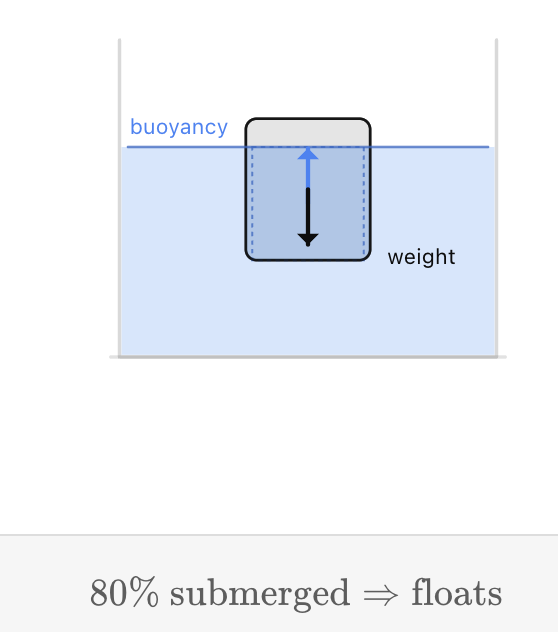
For simple situations:

Object less dense than fluid → floats

Object denser than fluid → sinks

Object with the same density as fluid → can remain suspended

This relationship is one of the most useful ways to predict:

floating and sinking.


Example: Wood and Water

Suppose a piece of wood has a density of:

0.70 g/cm³

Water has a density of approximately:

1.00 g/cm³.

Since:

0.70 < 1.00

the wood is less dense than water.

Therefore it:

floats.


Example: Rock and Water

Suppose a rock has a density of:

2.6 g/cm³.

Water has a density of:

1.0 g/cm³.

Since:

2.6 > 1.0

the rock is denser than water.

Therefore it:

sinks.


What Does "Suspended" Mean?

An object can sometimes remain within a fluid without rising or sinking.

This is called:

neutral buoyancy.

For this to occur under simple conditions, the object's average density must be approximately equal to the density of the:

fluid.

https://images.openai.com/static-rsc-4/yAu2bCZsmzZMoPLW7EGI8sWQoDS02YQcA199skUxVag6tA_r19SB5skxfO4rBZxIGwa8L_8IpUdOsa3kfMvnOtyIKZuARD64zTUgdt3mr2PiH2y4HBaazH8xOEk-IozP0EjVNOBk7plHtkQdxV1LL39qAlK92pJOCFBlcxxtIDc1CzDeg8GMdc5axVzuYUto?purpose=fullsize
 
https://images.openai.com/static-rsc-4/WWc-u1kk8VHJ94YuKvM0YXntFITZ3QLHTswksSTv1MfNpbjo2KrFUzWKcpS3MwtN8NuHwTRnOaLXcCm2TehF7PHgxuqnZkDhdxy7kwMNaOMgaJKAzAWwSbb-k8lPHL3EBM-UshdZj4itdf4G-tK9cf6wc0DJhbl0ffFxZTWfNY_NubNbQvjLU3yKxUEbrUbn?purpose=fullsize
 
https://images.openai.com/static-rsc-4/Xgdv0UtbtoBkf-RpAU-Nye_dMe-Tl00Zl-g7kMeFm51_GLpIOJoa6TDwKNciByMnQo5227trmumBdGYQcAs-ARmd7Fd3ZtydeY2JZIsW-srCwxbNLbe5wluwa5tUXE9KOmK80TolDCGgc6nY8ZF7byX_zO7aKfSDEkVUnoIwbDJMmZ_-crW2vX1Xe1hXeSA4?purpose=fullsize
 
5

If:

ρobject = ρfluid

the object can remain:

suspended.

This is important for:

  • submarines
  • scuba divers
  • fish
  • underwater robots

It Is Not Just About Weight

A common misconception is:

heavy objects sink and light objects float.

This is not correct.

A huge ship can float while a tiny metal ball can:

sink.

The important comparison is not simply weight.

It is the relationship between:

density and buoyant force.


What Is Buoyancy?

When an object is placed in a fluid, the fluid pushes on the object.

Fluid pressure acts in:

all directions.

Because fluid pressure generally increases with depth, the upward force acting on the bottom of a submerged object is greater than the downward force acting on its top.

The result is a net upward force called:

buoyant force.

https://images.openai.com/static-rsc-4/yHYLIXw5EbyA6iR77M-iCMe8WvECtoZ9KfyXsCu6oxaFiCdrxX1DgC7RFNy55wcJNgfj4Yfg7q7_oyU9oKmvaReXfMbcQqM-sHJXbqC_3No2Z-BuHQuSh3ItLPa6crLYZ6B_7EooGW22ll2Dd2mselyxN58U-WLamii5H-H5lpmCbF4vDoJSRG5BITdq8_ld?purpose=fullsize
 
https://images.openai.com/static-rsc-4/JX5Ks34WtaIcUICUdi1lx-9CFT-1Kfq-MDqKUdPlzjM_THFqEBCrk0TEh-m0532DOVnpGd1wI3H9prMDHyOD-zR4hg-XFoJNptrHu19yeYLYreKMFVhcAVeO1B00lQu8c6cZztLOJOBu6t6GaRBBZ3YQtxQ5hu8-ND6URqNCdV7HtUXsVPuGwkGckRNlZDv_?purpose=fullsize
 
https://images.openai.com/static-rsc-4/UdMCBM7uEswjBwVhEuKSKQA2yU_ISGkbgmG_ESnhtRKNr-HlKBfCQGuw7f-C6ZmJWa6A5jV2ImUWXkP14vAMGlCy7ym72Cc6RiJ99SYK7DK9gFJXMqqsPew7Lqx-xsWMxT7hACucMnwzNGJKmutii4eluHn4xKu9jTUB9FNMDCtDpNPQP28omBHUnJDgIdTX?purpose=fullsize
 
6

Two Important Forces

For a simple floating or sinking object, two forces are especially important:

Weight acts downward.

Buoyant force acts upward.

We can compare these forces.

If:

buoyant force > weight

the object accelerates upward.

If:

weight > buoyant force

the object accelerates downward.

If:

buoyant force = weight

the object has no vertical acceleration.


Why Does Buoyant Force Exist?

Consider a cube completely underwater.

Water pushes:

  • downward on the top
  • upward on the bottom
  • sideways on the sides

The bottom of the cube is deeper than the top.

Pressure is therefore greater at the:

bottom.

The upward force exceeds the downward force.

This creates the net:

buoyant force.


Archimedes' Principle

The relationship between displacement and buoyancy is described by:

Archimedes' principle.

It states:

The buoyant force acting on an object equals the weight of the fluid displaced by the object.

This means that the more fluid an object displaces, the greater the potential:

buoyant force.

https://images.openai.com/static-rsc-4/l_qawkJP6SfRpuPsBdnMjvGfs5SExvbXWUaL-y2-wdvgMuDWcmFulWyQWDD6rt5FJmaljooi6Pe-O9EDuTef4R6FK7zjHUSXog47U1V7kHEoif0JINEPbiPiZqDjrfLOLMaq9ffDU71YI5HueScNFJ4dIaQEQdFPzdRJhT6kgGEBLK3mBGTHN8J2cDb5cdrk?purpose=fullsize
 
https://images.openai.com/static-rsc-4/pYmmaF2X5-TruR73ODamHhkfSy753JAxg-QOINwpC-BmtkAMrVUHbxHuh9Ieh567XwVX9dt0jiiLSOZjrKsTpjJGSKoCNfHCppA-rLx1pCegLIBlDrSB7DTVy_MN5-EICFcGtyDx7XPVlpRXnUso_Xys1z4R5UpWzEuuD5XSIetKydaGUJW04v5mru7o-Ek0?purpose=fullsize
 
https://images.openai.com/static-rsc-4/8g0TmqAAmd08YivKvf-A65E5Hq1mJRu49nBangeeT41TaimdecvekmwumTO189GRY8WKMGo7lrcYeV_f6sJTdQxPGqcQ3W6HxYNtTi5e0HSZ4DKtLUrFSnbIxiOlRHxeM89ctD3qff8NswDczRqM-WuF8L5RMRbrWVouhWpC8EmjY4PJ3qyujBw5tudq9V3g?purpose=fullsize
 
5

What Does "Displace" Mean?

To displace fluid means to push it out of the space that the object now:

occupies.

Place an object into a completely full container of water.

Some water may overflow.

That water has been:

displaced.

The object's interaction with this displaced fluid determines the:

buoyant force.


Why Does a Floating Object Stop Rising?

Imagine a block rising toward the surface.

Eventually part of it emerges from the water.

As less of the block remains underwater, it displaces:

less water.

The buoyant force therefore decreases.

The block reaches equilibrium when:

buoyant force = weight.

At that point it floats at the:

surface.


How Much of an Object Is Submerged?

The density of a floating object affects how much of it must be:

submerged.

A very low-density object needs to displace relatively little water to support its weight.

A denser floating object must displace:

more water.

Therefore it sits deeper.

https://images.openai.com/static-rsc-4/EJ-iWnx706P60_g4Yhcssk1f7elmLzO8QAvfbg7PYvyOuTqZzqHgMa3GvehRgUNKApYaL8QOra7mSxESlGgHdJIHOQn_raY_Nkth5CQhyuumIk9wK9ItiPYqpDbQ4YD2mnJ2lAmfYnk_lJbUKh5mInrKroA1sB6uY30S2N8pn-60rB_0MolAdrLO2Pl05upz?purpose=fullsize
 
https://images.openai.com/static-rsc-4/f0teBDNGWLgoE9pnbmeyV3JiEDEKE48Ork9avLtOkto1c1NcB2KMix7vXK55U6lCHPeRmxgsz01bbkRCXNGzRbAuvFQX8sZBFaPS_n0KSXaJ4OYpWdruEc60vGRNsng0NWM_4Plh9fDQmZvvUa4i_qxAn2KxgLkZepgohPOJRVlzOklMaxzvBZCvUF-n5Awk?purpose=fullsize
 
https://images.openai.com/static-rsc-4/-CoTG3AVOrhTvn8TZlu-ej2lwGfXVUOr4x4xkdlpU3IDBCaolLaLC7KqJWXRjiE3iFQu-w_283B5u8i-q2bNp06eI6u6bEAOH007znzkHPZunU09IaJeRGXVuu1DWkjBHZvhA1V3dsJfMiVTYSxrKRF7vUpS38lH8gUUT57ZBdU86C0N_5AMTSLwjpUdNwS0?purpose=fullsize
 
5

Example: Two Floating Blocks

Block A:

density = 0.30 g/cm³

Block B:

density = 0.80 g/cm³

Both are placed in water:

density = 1.00 g/cm³.

Both float.

However, Block B must displace more water to support its weight.

Therefore Block B floats:

deeper in the water.


Fraction Submerged

For a simple uniform floating object:

fraction submerged ≈ object density ÷ fluid density

For example, an object with density:

0.75 g/cm³

floating in water:

0.75 ÷ 1.00 = 0.75

Approximately:

75%

of its volume will be submerged.


Worked Example 1

A block has:

density = 0.60 g/cm³

It floats in water.

Approximately what percentage of the block is underwater?

0.60 ÷ 1.00 = 0.60

Therefore approximately:

60%

of the block is submerged.


Floating in Different Fluids

The same object can behave differently in different:

fluids.

Suppose an object has a density of:

0.95 g/cm³.

In Fluid A:

density = 0.80 g/cm³

The object is denser than the fluid.

It:

sinks.

In Fluid B:

density = 1.10 g/cm³

The object is less dense than the fluid.

It:

floats.


Salt Water vs Fresh Water

Salt water is denser than:

fresh water.

Therefore an object floating in salt water does not need to displace as much volume to support the same weight.

As a result, objects generally float:

higher in salt water.

https://images.openai.com/static-rsc-4/EXFI2UcDwUWi-PJ8_ALXfwVeuauTh6AtLniDgSLTXmziS3kJkFS60e0DErEOuc-OFwX3SUCgCrnH2KdujpVBlCDNxk2D1JL2kxMz1FIxqhG708Gij1RH7JmVDTa2xnnFGUHLRt6HRaFlpg-TQsyn803VgcEMV2lUeKMSHeyvt2iGbOXEdx1ZxPZbrnB99I00?purpose=fullsize
 
https://images.openai.com/static-rsc-4/qM4gk7kWRUQjwMTx6VAWsOjP68rex23JlhvP-Gn-woQQQ-a6g2pYSOU9plqxo69mA7Zq6aIen94iz0hr-Lh3_3bZk9t477E4KU-xBQKQ8ekwMbkUEBZL6eoZH70rzcp6AHacjmmy3rkC14hvH8q5Hc-IjW62G7tLWUDQqDRCUv5wNtY-LV9B_t6VyaZz1Nmh?purpose=fullsize
 
https://images.openai.com/static-rsc-4/2GkobsDL71EAFhao2gCwoeMpz4ZnP-xZjIVcynlbrYcU8xzo_aRJzMcwA-nCKs0_NAVd7cEXG_Di4YUCVV5xfJEUKco4WVU2UE5I83S1lxyRwSW21Roaj3Q_sfJOKtQFYnYIlIiP3fH2A6fkC0nPIrElljXQrePzsCEG8vmh4tSbuyIfp_YdBO6VSdYoear5?purpose=fullsize
 
5

The Floating Egg

An egg may sink in ordinary water.

When salt is added, the density of the water:

increases.

Eventually the salt water may become denser than the egg.

The egg then:

floats.

The egg did not become lighter.

Instead, the density of the surrounding fluid:

increased.


Why Does Ice Float?

The density of ice is approximately:

0.92 g/cm³.

The density of liquid water is approximately:

1.00 g/cm³.

Because:

0.92 < 1.00

ice floats.

Most of an iceberg therefore remains underwater, while a smaller portion extends above the:

surface.

https://images.openai.com/static-rsc-4/UksS8ddEEyM2E9-GELj_yIuKOQ_AKmMHObuoLMDbr5kibxBQUyLEQ9mAblpM2Epu3ZXZGx1UJjJ7PnnDCo_c_095aVfAL919VhxlLrs1ML22zkoe7lmdwW1kcYcO5WwfllSG7O8g9_ThQhjBVBG9RTSkgbfAnIOirmhQs0wYtXCmm0t9ZZ7pmRyrbjOCmg3H?purpose=fullsize
 
https://images.openai.com/static-rsc-4/Exn-IxfI_wEjUAB0vdFeLxO3z74tHDhZRfS8T52Arh30jRqG2U8TZRxnjCR9Zamls3Sl4btg33udRa208lnrv_4Uyqq59t2oewM4_tETfQVlPVhaTo0QcQWuaSvi7hzx9Z2S5pENCtNvJxdi7Hdl9b1vHudF8sRCT37MT-MPIdKnkF45hR32RSKsbEmsXONQ?purpose=fullsize
 
https://images.openai.com/static-rsc-4/8hCSI5ED6CtqRxXkq5VPmjNFKJT4oRZiIfAoxZkkhtc9PWIZLfqO6bSPOsEz5MVHrWf3_R7g0kMlyyzd41YgDSZVUFrk-516RyVhMVJlZLB13BrNBQDHQYW8-28PdxccJP6HMrhwpgQbiwsXWMqwBMHObYOcQ0p0IG-MfJfJIvuFmXL3-jywun9cA9bmvA3H?purpose=fullsize
 
5

Changing Volume Can Change Floating Behaviour

Suppose an object has a fixed mass.

Its average density is:

mass ÷ volume.

If we increase its volume without significantly increasing its mass:

average density decreases.

A lower average density can make an object more likely to:

float.

This idea explains many important examples.


A Ball of Clay

Imagine a solid ball of modeling clay.

Its density is greater than water.

Place it in water and it:

sinks.

Now take exactly the same clay and reshape it into a hollow:

boat shape.

It may float.

Why?

https://images.openai.com/static-rsc-4/j1udxET0iec0uU5gcXdtGDL5gsy46SQIhiVhEBLC9a_9XKX0F-E3EOo09sVeYWFGcDMsyRG5Dv64jDPfmzJfsj_v0Ajq8ZJsG9DdCb4P2v8a4MYHmV8pGdZHh_TTmVKJmIOgvvxUs4kZbnnD82YN9NP0z2Rg-mb_bmWn9IsqbEPez1sfQ_67CnGExcIXno9j?purpose=fullsize
 
https://images.openai.com/static-rsc-4/y7T9kbcX0zwIM35I79udib95F3-Yqz8HxxgVYRe8oFV5QtvEjmNtj3IntbqvVcC8uQ-uP6gDsh3ZkBgsU6pig4Ts9b5jtqgJKZoA6snXpc116TCKCltkx2CxHOUXzc2Mgj1tlFU4KZtILh8-2cw_jERBRBFc0JCQGo6WbJ-oOWqewFhgyjK5tN2l9htmo-9G?purpose=fullsize
 
https://images.openai.com/static-rsc-4/8qY8wlb0CiLMEF2rzjnMFiO6wI909gtZ-KlJ3Lg_ojUA6d7AWaA60NUoLeUo_xxCfPnH4rtuW4BKzDnuVzHj0m7HrwW9nB8coKFygNeJFnDpKJvOSRjjelzBWNNjyN4xqPQThskgB6UQKwHzZHBMn_LQ0DxgqRVcGFAUbYhkOSx8QPiOhtJgzU7nHdiU8o-7?purpose=fullsize
 
5

Why the Clay Boat Floats

The amount of clay has not changed significantly.

Therefore its mass is approximately:

the same.

But the boat shape encloses air and occupies a much larger total:

volume.

Its average density becomes lower.

The shape also allows it to displace a greater volume of water before becoming fully submerged.

Eventually the displaced water weighs enough to support the:

boat.


Average Density

For hollow objects, we often need to consider:

average density.

Average density includes the entire volume of the object, including:

empty or air-filled spaces.

This is why a hollow steel ship can have an average density lower than water even though steel itself is much:

denser than water.


Why Do Steel Ships Float?

Steel has a density of roughly:

7.8 g/cm³.

That is much greater than the density of water.

A solid block of steel therefore:

sinks.

But a ship is mostly:

hollow space.

https://images.openai.com/static-rsc-4/amRRcjmDAV9FAD1qGy2PZWEW_f5NQdLHD8s6hf-2Ukg4ZKu-lqwQUEVfY-1ftockccuU-t46TjDoALfQX0YWV0SKix8oIne3LhTlCG9jaSrdoxm3YbsQyiMDe16TtY6_MEuLwJsY_zFbDAwKMLfF8Lj4ZjFqhvL2qbci009tIo9q8ePKbZRuzoDXDJSZWlCV?purpose=fullsize
 
https://images.openai.com/static-rsc-4/6bb4qboat6xTH7dyJlmWuY9JN81IRlno_VOJP--4HkPsrBWuis8tk9dSo0VRsHVwZQJbrpOICJLy_d1xE-hgTfU2csyqJvXw-W01jPzvMt3U28e2wHT05O30cXrX_QSbrHiRJcBt2bLHwk2c8TH0rc9njh2eEXdyvsCulKBAfb06HjpLfi5p9iP9TlcDo4op?purpose=fullsize
 
https://images.openai.com/static-rsc-4/ART06fNY8VzDa6xTWLO3Rsrpaeu8n33z8YcMcZhOF_pzA2RGjYVabXwFK6ca2HLWMb2YLnrOcc3bXvqo6Om9do0H2wLk-HMTQsl3zxXhLJ_vjnfVBEggc1ZOmamW1ms_O70nojVC4ySOrGKRrYGnY5DBfwbtkmA3oHp5WRIKvKBYXocSoVedx-7IWlMTFFrr?purpose=fullsize
 
6

The large hull contains air and gives the entire ship a huge:

volume.

This lowers the ship's average density.

The hull also displaces a large amount of water.

When:

weight of displaced water = weight of ship

the ship floats.


Loading a Ship

What happens when cargo is loaded onto a ship?

The ship's mass:

increases.

Its weight therefore increases.

To produce a larger buoyant force, the ship must displace:

more water.

The ship therefore sinks slightly deeper into the water until a new equilibrium is reached.


The Load Line

Ships have markings that indicate safe loading depths.

These are often associated with a:

load line.

Loading too much cargo causes the ship to sit too low in the water.

This reduces its safety margin and can increase the risk of water entering the:

vessel.


Submarines

Submarines provide an excellent example of controlled:

buoyancy.

They contain tanks called:

ballast tanks.

By changing the amount of water and air in these tanks, a submarine can change its overall:

average density.

https://images.openai.com/static-rsc-4/v-huSxcDlEUp8ojqlYsb91eZuQfoBUiYdMHSv5c0amiGXMHPXt2FYKVxRmRH_DugXTLRkg24B2lf3LFAi04gi57IkTrPwD3fIP4UYP-dzq5ZNFxCiks-S_daraLYIe4gpo8uVQ6tOxWHh7iCYNlILBsCxElRcTuhY_H6uH9if-gHq6MOlCptPG2ByJuxwncM?purpose=fullsize
 
https://images.openai.com/static-rsc-4/t3Guk91Syv292SHIy5-9pLsY7d3vswV7kzaihrgEluNchv5IF7QxEqaWOFOlT3jRvgw0GobnOzI0MQ8FEy4Q7_-piLBD0WFqWuWNy0uxmZB2oPcvX8JKkcwvTKywfrFchBqsymmiBX9jsM0akvahx1-c8vgGaAqEk4ObcfPaK1SIMHNvYKaFlwB2oJx3RHSl?purpose=fullsize
 
https://images.openai.com/static-rsc-4/rmWliOZToZGgMYaHOO4N9tfrxnuofsJ1HAHnSiG79TJG4ilfJ3YX11Om9KPkZa1iip3M0SoBtLlWitZnCZFygaggBtu0S2zUAOHQfjmEG_rOsm8nHc5O4sNRAJjwy3kmtuLHUuBbIRsEqtoofr9nQ_BX8EgSHqwYrtideD0CC5NXPM33QkwK3Yl_7eMwImDW?purpose=fullsize
 
6

Making a Submarine Sink

To dive, ballast tanks can take in:

water.

This increases the submarine's mass while its external volume changes relatively little.

Its average density:

increases.

The submarine can then descend.


Making a Submarine Rise

To rise, compressed air can force water out of the ballast tanks.

The submarine's mass:

decreases.

Its average density decreases.

The submarine becomes more positively buoyant and:

rises.


Neutral Buoyancy in a Submarine

A submarine can adjust its mass so that its average density is approximately equal to that of the surrounding:

water.

Then:

buoyant force ≈ weight.

The submarine can remain at approximately the same:

depth.


Fish and Swim Bladders

Many bony fish have a gas-filled organ called a:

swim bladder.

Changing the amount or volume of gas in the swim bladder helps control the fish's:

buoyancy.

https://images.openai.com/static-rsc-4/85W82U3LK4aDaPM5tB72vMUypGuyefBTQvtxHzs6DLxj7kBWng_BOmHYugI4cG17k7D8z9tp3_ltaDM2unx2qkhm1A2Aj2gukkxpWWibIfjRygtrny9h0KCDLIK0uPGu5PFzeZsiYj1e4ER26_i4wfN6uaq7gka0EALQv-pPHPe9OTGLAc4u8KaxpG_R1XTt?purpose=fullsize
 
https://images.openai.com/static-rsc-4/QgY-gzmpZhxb_4Adacv751Sbueoh2ieezLLuXNv9pF0ySE0hnaZrqYaja33zK4FqDohU0tquZAGO6tQLkbnkURQx1opxvmd445aTqtjx3s-pXFQxhKobYONCyvfqIzH0Vmv2_DDx0BvzO8SQrclxY6F3JUJMlKqMCqryG3GhF5P4ri_5sbwPE5DBixGZmHg9?purpose=fullsize
 
https://images.openai.com/static-rsc-4/rVvGHUoI3J_Lv_HzMYuqsvakO2uJ_eqsEeV7I2nmqD2BPdWN0mgQIm6w1nIGyY9RjFInknHL3gOf6kvxTOtSdOItFxd8LWVeHojXYgBGBolshogF9fV9DGtuW07FLQkwn2e49mfugCJ9wXBgmCvTv0OTraKqbVltc5-sVe6vlJFm3_nXXQE8gcS9gmohyU3w?purpose=fullsize
 
5

Increasing the effective volume occupied by gas can reduce average density and increase buoyancy.

This helps the fish maintain or change its position in:

water.


Scuba Divers

Scuba divers also need to control buoyancy.

A diver can use a:

buoyancy control device (BCD).

Adding air to the BCD increases its volume and therefore increases the amount of water it can:

displace.

This can increase buoyancy.

Releasing air reduces buoyancy.


Hot-Air Balloons

Buoyancy does not occur only in liquids.

Remember:

gases are fluids too.

A hot-air balloon floats in:

air.

https://images.openai.com/static-rsc-4/Gh4XyBligXwfjrmrq3Z5816NWECxfgZJFG6RYon0M29oysmBpIJkBUDxmt0mpeLcswVbOfOb3qKNyqd4B93NoWC4ilEjKw4feqbJgG6k_KsCFsDPlKwRmFNsHENRWYFBxJdJbouRtyuzRePhjl1we7grH7r2N9Az3ViRJ01tDMnSzXQJ3GPsT8sBh6tqYTzg?purpose=fullsize
 
https://images.openai.com/static-rsc-4/8hpNvkw9ttU26imXLv-AytIbpbQfC0-effFBvntuWCyFuBITodQVuQMP-AlZDP_YoG19DAnbegOvhJJ2JPRa9YuPJhPtZGPa_QB_oNYvB7bxTFbu-Tv3ZVv7dQGZUHjWyOBoPVbYiqAR8puY0HJgm87Gva6aqnrDpqyRqFaNUJZsuANJZw1_duTiG_XTkONg?purpose=fullsize
 
https://images.openai.com/static-rsc-4/p3XX0jrGvYdBPjC6ZYF2ZotuI0mClLTzu4dKfEbLKwmOPkAAblsuSmYhgiCbNiaBbo3Aq8k8MrYd04yFv3uaSrvh_29udSNUyvGTarN7Cmuki0hUi65miIZRPdACqvfgzHDqXwbQ0io92NT9MFVQKckUIsT80UqwTE2guvrtA9kWNDehnpWarCRQD32NTWpx?purpose=fullsize
 
6

Heating the air inside the balloon makes it less dense than the surrounding cooler air.

The balloon experiences an upward buoyant force from the:

surrounding atmosphere.

If the upward force is sufficient compared with the total weight, the balloon rises.


Helium Balloons

Helium is much less dense than ordinary:

air.

A helium-filled balloon displaces surrounding air.

If the weight of the displaced air is greater than the total weight of the balloon and helium, the balloon:

rises.

Again, the same principles of buoyancy apply in:

gases.


Floating Liquid Layers

Liquids themselves can float on other:

liquids.

For example, many oils are less dense than water.

Therefore oil forms a layer:

above water.

https://images.openai.com/static-rsc-4/JOIWWrZUsUYIW3mwlMjtIsGohJI9uf8PUTqEpGGshPEfwNf8zeU_viu9WoZmD6sDSk68YTNFHIkd4SxvTRLRHMmrRtLh-aYGZWW4qJNRt470Ac_yeQIJ65rI5Kaji4rvD-G9wt2N6mgNvMsvJ9QZJkwlRjwa2MA0dwLJ0wZBYQZ4ncK730_5U0OO9pxmHfM4?purpose=fullsize
 
https://images.openai.com/static-rsc-4/GLtZ9S9h_FcrCqobfZsPUVLmpRwzSGV_HBHk1e5_aLJJMRWOruqcuN_uqP0WmK1CXkRy2KQVAZRUzib87BkIuWd2lkcsxoZF-9pnHcECk12nncZGgvVRBhOCDl-Hf01DgbCJms7RwSNAvWbUl3tVveKyc05b4cE9dtp-AjwGGC3R5KI_l1qQpL1HN2Z4Kb39?purpose=fullsize
 
https://images.openai.com/static-rsc-4/obOT7MQwOE8tC9L4icAD_jfK6wKhL2_YSZkYjCvTg-UumibO_dSEAE8qz7Bhf_9OFtqOmQlYNd55M_UXBFd-FNjIJXIA00EloJTg9ne-fBij_jeQdKswDS3W5xBYFl6v6Oq0kx5mKiNSarxcpHAa5ooWzw1CGSlyJpT8NQeMW9UkILW6X3zLAFOuO7rAZ696?purpose=fullsize
 
6

If several liquids do not mix significantly, they can form a density column.

Generally:

most dense → bottom

least dense → top.


Objects Between Liquid Layers

Suppose a density column contains:

oil = 0.80 g/mL

water = 1.00 g/mL

An object has density:

0.90 g/cm³.

The object is denser than the oil, so it:

sinks through the oil.

But it is less dense than water, so it:

floats on the water.

It therefore settles near the boundary between the two liquids.


Worked Example 2 — Float or Sink?

Object density:

1.4 g/cm³

Fluid density:

1.0 g/cm³

Since:

1.4 > 1.0

the object:

sinks.


Worked Example 3 — Suspended Object

Object density:

1.05 g/cm³

Fluid density:

1.05 g/cm³

The densities are equal.

The object can be:

neutrally buoyant.

It can remain suspended rather than rising or sinking.


Worked Example 4 — Different Fluid

A plastic object has density:

0.95 g/cm³.

In water:

0.95 < 1.00

so it floats.

In a liquid with density:

0.80 g/cm³:

0.95 > 0.80

so it sinks.

Therefore:

floating is determined by both the object and the fluid.


Worked Example 5 — Calculate and Predict

An object has:

mass = 160 g

volume = 200 cm³

Density:

ρ = 160 ÷ 200

ρ = 0.80 g/cm³

Water density:

1.00 g/cm³

Since:

0.80 < 1.00

the object should:

float.


Worked Example 6 — A Metal Boat

A piece of aluminum foil sinks when compressed into a very compact shape but floats when carefully formed into a wide boat.

Why?

The mass of aluminum remains approximately the:

same.

The boat shape increases the total volume and allows more water to be:

displaced.

Its average density becomes lower, and sufficient buoyant force can support it.


Worked Example 7 — Loading a Boat

A boat is floating.

Several heavy boxes are added.

What happens?

Mass and weight:

increase.

The boat must displace more water to produce a larger:

buoyant force.

Therefore the boat settles:

deeper into the water.


Worked Example 8 — Floating in Salt Water

A swimmer moves from fresh water into denser salt water.

What changes?

The denser salt water can provide the required buoyant force while a smaller volume of the swimmer is:

submerged.

The swimmer therefore tends to float slightly:

higher.


Worked Example 9 — Changing Volume

An object's mass remains 500 g, but its volume changes from 400 cm³ to 600 cm³.

Original average density:

500 ÷ 400 = 1.25 g/cm³

New average density:

500 ÷ 600 ≈ 0.83 g/cm³

In water, the first configuration tends to:

sink.

The second configuration can:

float.

Changing volume has changed the object's:

average density.


Worked Example 10 — Density Layers

Three liquids have densities:

A = 1.20 g/mL

B = 0.75 g/mL

C = 1.00 g/mL

If they do not mix, from top to bottom they should arrange as:

B

C

A

The least dense liquid floats highest.


Floating Does Not Mean There Is No Gravity

Gravity still acts on a floating object.

Its weight acts:

downward.

The object remains at rest because the fluid provides an equal upward:

buoyant force.

Therefore:

buoyant force = weight

for an object floating at rest.


Suspended Does Not Mean There Are No Forces

A neutrally buoyant object also experiences forces.

Weight acts:

downward.

Buoyant force acts:

upward.

The forces balance, so the resultant vertical force is approximately:

zero.


Common Mistake: Heavy Objects Always Sink

False.

A ship can weigh thousands of tonnes and still:

float.

Floating depends on density, displaced fluid, and buoyant force—not simply total mass.


Common Mistake: Light Objects Always Float

Also false.

A tiny steel ball can be light compared with a ship but still sink because its density is greater than:

water.


Common Mistake: Hollow Objects Have No Density

A hollow object still has an:

average density.

We consider its total mass divided by its total external volume.

The enclosed air can greatly reduce its average density.


Common Mistake: Buoyant Force Only Acts on Floating Objects

Buoyant force acts on:

submerged objects too.

A rock sinking through water experiences an upward buoyant force.

It sinks because its weight is greater than the buoyant force available when fully submerged.


Common Mistake: Sinking Means There Is No Upward Force

A sinking object can still experience:

buoyant force.

The forces are simply unbalanced:

weight > buoyant force

so the resultant force is downward.


Common Mistake: An Object That Floats in Water Floats in Every Liquid

No.

The object's density must be compared with the density of the:

specific fluid.

An object can float in water but sink in a less-dense liquid.


Practical Activity — Foil Boat Challenge

This topic works especially well as a design investigation.

Give each group the same-sized sheet of:

aluminum foil.

Challenge students to construct a boat capable of supporting the greatest number of identical masses or coins before sinking.

https://images.openai.com/static-rsc-4/7JYHOVOkn31-T2Rxc8YKOQe52HJRBADNky7QqzqGO_V7Cqt8RnLIWAM0fJiRsot0w23CN3H2hC7PRyDFiCgjxuBT0BYadyAhQXv_Oozckqgei74Gtb7Vv_e8CEsodFrnc676vZPMlfHLLDFL3cPjiG33_6cbRdn0Y9feIipDBZ2BZ4lrI3Dp8Dn1qAnt-fU1?purpose=fullsize
 
https://images.openai.com/static-rsc-4/bPnH_D48ntBjzlGUh4pUHbdMqQ4UpcORj3ZeXUyPRPDEEK295Ui6QvPMK5eaXCeIcB8E2MK-v9KSEjXSWNxtb0iYtW-TISODkxTBdDeTshH9SxzxeOYz6dQYLf5JGHCq2vlpq3MygZC7WBMJ8fGYvPDF2zaqht1oLq07KXwUaQnPbXod_9CWDw5kAcbm8Ne9?purpose=fullsize
 
https://images.openai.com/static-rsc-4/pXIto9H-aa3C93YVC91kgUnQJGbDuj7328qLln1hB1JUYBHA0D6yAQ9VVTBtXZhcRTIx57sfNttZG8jzHdtnMl5aM3IhEzdzu58ter5Fsgf-LBvfyU3lwdgaKUvbFPNIqdih4iPxPfWvQ1v7QM2PwNn5nKjvcOu-zgsy5br3K89aA3X_ToTaSptrPEasZQyG?purpose=fullsize
 
6

Students should investigate:

  • boat shape
  • boat volume
  • mass carried
  • displacement
  • stability
  • maximum load

The key question is:

How can we change the shape and volume without changing the amount of aluminum?

Students can then explain why some designs support more mass using:

density, displacement, and buoyancy.


Real-World Applications

Floating and sinking principles are important in:

  • ships
  • submarines
  • life jackets
  • scuba diving
  • fishing
  • hot-air balloons
  • weather balloons
  • floating docks
  • offshore platforms
  • underwater robots
  • hydrometers

Understanding buoyancy is therefore important in both:

science and engineering.


Check Your Understanding

  1. What determines whether an object floats or sinks?
  2. What happens when an object is less dense than the surrounding fluid?
  3. What happens when it is denser?
  4. What happens when its density equals the fluid density?
  5. Define neutral buoyancy.
  6. Why is "heavy objects sink" an incorrect rule?
  7. What is buoyant force?
  8. In which direction does buoyant force act?
  9. In which direction does weight act?
  10. Why does a fluid produce an upward buoyant force?
  11. State Archimedes' principle.
  12. What does it mean to displace water?
  13. How does displaced fluid affect buoyant force?
  14. Why does a floating object stop rising?
  15. Why do denser floating objects sit deeper in water?
  16. An object has density 0.60 g/cm³. Will it float in water?
  17. An object has density 1.40 g/cm³. Will it float in water?
  18. An object has density 1.00 g/cm³. What might it do in water?
  19. Approximately what fraction of an object with density 0.70 g/cm³ will be submerged in water?
  20. Why can an object float in one fluid but sink in another?
  21. Why do objects generally float higher in salt water?
  22. Explain the floating egg experiment.
  23. Why does ice float on liquid water?
  24. What is average density?
  25. How can increasing an object's volume reduce its average density?
  26. Why can a clay ball sink while a clay boat floats?
  27. Why does changing shape affect the amount of water displaced?
  28. Why can a steel ship float?
  29. Why does a solid steel block sink?
  30. What happens when cargo is added to a ship?
  31. Why does the ship move deeper into the water?
  32. How does a submarine use ballast tanks?
  33. How can a submarine make itself sink?
  34. How can it make itself rise?
  35. How can a submarine achieve neutral buoyancy?
  36. How can a fish use a swim bladder to control buoyancy?
  37. How does a scuba diver use a BCD?
  38. Why can a hot-air balloon rise?
  39. Why can a helium balloon rise?
  40. Can buoyancy occur in gases? Explain.
  41. Why does oil often float on water?
  42. How do liquids arrange themselves in a density column?
  43. An object has density 0.90 g/cm³. Oil has density 0.80 g/mL and water has density 1.00 g/mL. Where will the object settle?
  44. Calculate the density of a 240 g object with volume 300 cm³ and predict its behaviour in water.
  45. Explain why buoyant force still acts on a sinking object.
  46. What forces act on a floating object?
  47. What is the resultant vertical force on an object floating at rest?
  48. Explain how changing volume can change whether an object floats or sinks.
  49. Design an experiment to investigate how boat shape affects the maximum load it can carry.
  50. Explain how density, displacement, buoyant force, and weight work together to determine whether an object floats, sinks, or remains suspended.

Key Terms

Buoyancy: Tendency of an object to float or rise in a fluid due to an upward force.

Buoyant force: Upward force exerted by a fluid on an object immersed in it.

Density: Mass per unit volume.

Displacement: Movement of fluid caused by an object occupying space within it.

Archimedes' principle: The buoyant force on an object equals the weight of the fluid it displaces.

Neutral buoyancy: Condition in which buoyant force balances weight while an object is completely immersed.

Average density: Total mass divided by total external volume, including hollow spaces.

Ballast: Material or water used to change the mass and stability of a vessel.

Swim bladder: Gas-filled organ used by many fish to help regulate buoyancy.

Fluid: Substance that can flow; liquids and gases are fluids.


Key Takeaways

  • Whether an object floats or sinks depends strongly on its average density compared with the density of the fluid.
  • If object density < fluid density, the object tends to float.
  • If object density > fluid density, the object tends to sink.
  • If the densities are equal, the object can be neutrally buoyant.
  • Fluids exert an upward buoyant force on immersed objects.
  • According to Archimedes' principle, buoyant force equals the weight of the displaced fluid.
  • A floating object settles until buoyant force equals its weight.
  • Denser floating objects generally sit deeper in a fluid.
  • Increasing an object's volume without significantly increasing its mass lowers its average density.
  • This explains why hollow boats can float even when made from materials denser than water.
  • A steel ship floats because its overall structure contains a large volume of air and displaces enough water.
  • Adding cargo makes a ship sit deeper because it must displace more water.
  • Submarines control buoyancy by changing their mass using ballast tanks.
  • Fish, scuba divers, ships, submarines, balloons, and underwater vehicles all make use of buoyancy.
  • Buoyancy occurs in both liquids and gases.
  • Floating and sinking are excellent examples of how density, forces, and fluid behaviour work together.

5. Applications of Density

Learning outcomes
  • I can identify real-world uses of density in science and engineering.
  • I can explain how density is used in shipping and transportation.
  • I can describe how density differences influence weather and ocean systems.
  • I can explain the role of density in hot-air balloons and submarines.
  • I can evaluate how density helps scientists identify materials.