Biotechnology in Agriculture and Industry
| Site: | Young Education |
| Course: | Biotechnology |
| Book: | Biotechnology in Agriculture and Industry |
| Printed by: | Guest user |
| Date: | Monday, 5 October 2026, 4:59 AM |
1. Genetically Modified Crops
Learning outcomes
- I can explain why crops are genetically modified.
- I can identify traits commonly introduced into GM crops.
- I can describe benefits of GM crops for agriculture.
- I can evaluate potential environmental and social concerns.
- I can analyze evidence related to GM crop use.
For thousands of years, humans have changed crops through selective breeding. Farmers selected plants with useful characteristics—such as larger fruits, higher yields, or resistance to disease—and bred them over many generations.
Modern biotechnology provides additional methods for changing crop characteristics.
A genetically modified (GM) crop is a crop whose genetic material has been deliberately altered using biotechnology to introduce, remove, or modify particular genetic traits.
Scientists may develop GM crops to improve characteristics such as:
- insect resistance
- herbicide tolerance
- disease resistance
- nutritional content
- tolerance to environmental stresses
- storage properties
- crop quality
The important question is therefore not simply:
"Is genetic modification good or bad?"
A scientific evaluation asks:
What trait was introduced, how does it work, what evidence supports its benefits, and what risks or limitations have been identified?


Why Modify Crops?
Agriculture faces many challenges.
Farmers must produce food while dealing with:
- insect pests
- plant diseases
- weeds
- drought
- heat
- soil conditions
- crop losses
- changing climates
- limited farmland
Traditional plant breeding has produced enormous improvements in agriculture.
Genetic engineering gives plant scientists an additional set of tools.
The basic idea is:
identify useful trait
↓
identify genetic mechanism
↓
modify plant genetic material
↓
grow modified cells or plants
↓
select plants with desired characteristic
↓
test performance and safety
↓
develop crop variety
Selective Breeding vs Genetic Engineering
Both selective breeding and genetic engineering change the genetic characteristics of crops.
However, they do so differently.
Selective Breeding
Humans choose organisms with desirable characteristics and breed them.
Many genes are inherited together.
Changes accumulate across generations.
Genetic Engineering
Scientists make more targeted changes to genetic material.
This can include introducing a particular gene or modifying an existing gene.


Genetic engineering therefore does not replace conventional breeding.
Modern crop development often combines:
genetic engineering + conventional breeding + field selection
How Can a Crop Be Genetically Modified?
There are several methods.
A simplified traditional genetic-engineering process is:
useful gene identified
↓
gene isolated or synthesized
↓
genetic construct prepared
↓
DNA introduced into plant cells
↓
successfully modified cells identified
↓
whole plants regenerated
↓
plants tested
Modern biotechnology can also use gene editing to make targeted changes to existing plant DNA.
Getting DNA into Plant Cells
Scientists need a method of delivering genetic material into plant cells.
Several techniques can be used.
One important method uses a bacterium called Agrobacterium tumefaciens.


In nature, this bacterium can transfer DNA into plant cells.
Scientists adapted this natural mechanism to deliver selected genetic material.
A simplified process is:
desired gene inserted into suitable DNA construct
↓
Agrobacterium carries DNA
↓
plant cells exposed to bacteria
↓
DNA transferred into some plant cells
↓
modified cells selected
The Gene Gun
Another method is sometimes called a gene gun or particle bombardment.
Tiny particles can be coated with DNA and accelerated into plant cells.
Some cells successfully receive the genetic material.
These cells can then be:
- identified
- cultured
- regenerated into plants
The process sounds unusual, but it demonstrates an important challenge in biotechnology:
Creating useful DNA is only part of genetic engineering—the DNA must also be delivered into cells.
Growing a Plant from Modified Cells
Plants have an extremely useful biological characteristic.
Under suitable conditions, some plant cells can regenerate into complete plants.
This property is associated with totipotency.


A simplified process is:
modified plant cell
↓
cell division
↓
callus or cultured tissue
↓
shoot development
↓
root development
↓
whole plant
The resulting plant can contain the genetic modification throughout its tissues.
Common GM Crop Traits
Several traits have been particularly important in commercial GM agriculture.
These include:
Insect Resistance
Plants can produce substances that protect them from particular insect pests.
Herbicide Tolerance
Crops can tolerate certain herbicides used to control weeds.
Disease Resistance
Plants may be engineered to resist particular pathogens.
Improved Nutrition
The nutritional composition of a crop can be altered.
Environmental Stress Tolerance
Researchers investigate traits associated with drought, temperature, or other environmental stresses.
Quality and Storage
Some crops can be modified to change ripening, browning, or storage characteristics.
Insect-Resistant Crops
Insects can cause enormous crop losses.
Farmers may control insect pests using:
- chemical insecticides
- biological control
- crop rotation
- resistant crop varieties
- integrated pest management
Some GM crops contain genes that provide resistance to particular insects.
One important example involves Bt crops.


What Is Bt?
Bt refers to the bacterium Bacillus thuringiensis.
Different strains of this bacterium produce proteins that can be toxic to particular groups of insects.
Scientists identified genes encoding certain Bt proteins.
These genes can be introduced into crops such as:
- maize
- cotton
The modified plants produce a Bt protein that affects susceptible insect pests.
How Does Bt Protect a Crop?
A simplified sequence is:
Bt gene present in crop
↓
plant produces Bt protein
↓
susceptible insect feeds on plant
↓
protein becomes active in insect digestive system
↓
gut cells are damaged
↓
insect dies or stops damaging crop
The Bt protein does not affect every insect species equally.
Different Bt proteins target different groups of susceptible insects.
This specificity is important when evaluating environmental effects.
Why Use Bt Crops?
If a plant can protect itself against an important insect pest, farmers may experience:
- reduced crop damage
- higher usable yields
- reduced need for some insecticide applications
- lower losses during severe pest outbreaks
However, the size of these benefits depends on:
- crop
- pest pressure
- farming system
- location
- management practices
A GM trait does not produce the same benefit in every field or every year.
Evolution of Resistance
Bt crops create a strong selection pressure on insect populations.
Imagine an insect population:
- most insects are susceptible to Bt
- a few carry variants that provide greater resistance
When Bt crops are widely grown:
susceptible insects die
while
resistant insects are more likely to survive and reproduce
Over generations:
frequency of resistance alleles can increase


This is evolution by natural selection.
Refuge Strategies
One strategy used to slow the evolution of insect resistance is planting refuges.
A refuge contains non-Bt plants.
These allow susceptible insects to survive.
The goal is to increase the probability that resistant insects mate with susceptible insects rather than only with other resistant insects.
This can slow the spread of resistance alleles.
It does not guarantee that resistance will never evolve.
This demonstrates an important principle:
Biotechnology must often be combined with careful management.
Herbicide-Tolerant Crops
Weeds compete with crops for:
- light
- water
- mineral nutrients
- space
Herbicides are chemicals used to control unwanted plants.
Some GM crops have been engineered to tolerate particular herbicides.


A farmer can apply the herbicide to a field.
The weeds are controlled while the crop survives.
This can simplify weed management.
Potential Benefits of Herbicide Tolerance
Depending on the farming system, herbicide-tolerant crops can provide:
- simpler weed control
- greater flexibility in herbicide application
- reduced crop damage from some weed-control methods
- support for reduced-tillage farming
Reduced tillage can sometimes decrease:
- soil disturbance
- soil erosion
- fuel use
However, these outcomes depend strongly on how the technology is used.
Herbicide-Resistant Weeds
Repeatedly using the same herbicide creates selection pressure.
Within a weed population, some plants may carry naturally occurring variants that make them less susceptible.
After repeated herbicide use:
susceptible weeds removed
↓
resistant weeds survive
↓
resistant weeds reproduce
↓
resistance becomes more common
This is another example of natural selection.
Importantly:
The herbicide does not intentionally "teach" individual weeds to become resistant.
Instead, resistant variants become more common in the population.
Managing Herbicide Resistance
Resistance can be slowed through strategies such as:
- rotating herbicides with different modes of action
- crop rotation
- mechanical weed control
- cover crops
- monitoring resistant populations
- integrated weed management
Using several strategies reduces dependence on one control method.
Disease-Resistant Crops
Plants can also be genetically engineered to resist diseases.
One important historical example involves papaya.
Papaya ringspot virus caused major damage to papaya production in Hawaii.
Virus-resistant papaya varieties were developed using biotechnology.


Disease resistance can potentially:
- reduce crop losses
- stabilize production
- reduce the need for some control measures
However, effectiveness depends on the particular pathogen and resistance mechanism.
Nutritionally Modified Crops
Genetic engineering can also change the nutritional characteristics of food.
A well-known example is Golden Rice.
Golden Rice was engineered so that the edible rice grain produces beta-carotene.


Beta-carotene can be converted by the human body into vitamin A.
The idea is called biofortification:
crop → increased nutrient or nutrient precursor → improved nutritional value
Why Develop Golden Rice?
Vitamin A deficiency can cause serious health problems, particularly where diets contain insufficient vitamin A.
These can include:
- impaired vision
- increased risk of blindness
- weakened immune function
Golden Rice was developed as one possible tool for increasing dietary beta-carotene.
However, nutritional problems are complex.
Solutions can also include:
- dietary diversification
- supplements
- food fortification
- improved access to nutritious foods
A GM crop should therefore be evaluated as one possible intervention within a larger food and health system.
Drought and Stress Tolerance
Water availability is a major limitation on agriculture.
Scientists investigate genetic traits that influence how plants respond to:
- drought
- heat
- salinity
- cold


However, drought tolerance is biologically complicated.
Plant performance can depend on:
- root systems
- leaf structure
- stomata
- growth rate
- water-use efficiency
- soil
- timing of drought
There is rarely a single "drought gene" that solves every water-related problem.
Improving Storage and Quality
Genetic modification can also change properties affecting food quality.
Scientists may target:
- ripening
- browning
- bruising
- texture
- composition
Longer storage life could potentially reduce food waste.
For example:
slower deterioration → longer usable life → less food discarded
But actual reductions in waste depend on transportation, consumer behaviour, storage systems, and supply chains.
Potential Agricultural Benefits
Depending on the crop and trait, GM technology can potentially provide several benefits.
Reduced Crop Loss
Resistance to insects or diseases may protect harvests.
Increased Effective Yield
If fewer plants are damaged, more of the crop can be harvested.
Reduced Use of Some Pesticides
Certain pest-resistant crops can reduce the need for some insecticide applications.
Easier Weed Management
Herbicide-tolerant crops can simplify some weed-control systems.
Improved Nutrition
Biofortified crops may contain increased amounts of selected nutrients or nutrient precursors.
Environmental Stress Tolerance
Some traits may help crops perform under challenging conditions.
Does GM Automatically Increase Yield?
No.
This is an important distinction.
A gene may not directly make a plant grow faster or produce more grain.
Instead:
potential yield = 10 tonnes
but
insects destroy 3 tonnes
so the farmer harvests:
7 tonnes
If insect resistance prevents 2 tonnes of that loss:
harvest = 9 tonnes
The crop's underlying maximum yield may not have changed.
Instead, yield loss has been reduced.
Pesticides and GM Crops
The word pesticide covers several categories.
These include:
- insecticides
- herbicides
- fungicides
Different GM traits can affect pesticide use differently.
For example:
Bt insect resistance may reduce the need for some insecticide applications.
But:
herbicide-tolerant crops are specifically designed to be used within particular weed-management systems involving herbicides.
Therefore, saying:
"GM crops reduce pesticide use"
is too broad.
A better question is:
Which crop, which trait, which pesticide, in which farming system, and over what period?
Environmental Concern: Gene Flow
Plants reproduce through pollen and seeds.
Genes from a GM crop can potentially move into:
- nearby crops
- compatible relatives
This movement of genetic material between populations is called gene flow.


Whether gene flow creates an environmental problem depends on:
- the crop
- nearby compatible species
- the introduced trait
- how far pollen travels
- whether the trait provides an advantage
Gene flow itself is a biological process; its consequences must be evaluated case by case.
Environmental Concern: Non-Target Organisms
A pest-control trait is designed to affect a target organism.
Scientists must also investigate possible effects on non-target organisms.
These might include:
- beneficial insects
- pollinators
- predators
- soil organisms
Risk depends on:
exposure + biological sensitivity
A substance that can affect an organism under laboratory conditions may create little ecological risk if real-world exposure is extremely low.
Therefore, environmental assessment must consider both hazard and exposure.
Environmental Concern: Biodiversity
Agricultural biodiversity can be influenced by many practices, including:
- monoculture
- pesticide use
- land clearing
- crop rotation
- tillage
- irrigation
- choice of crop varieties
GM technology can interact with these practices.
For example, widespread reliance on a small number of crop varieties could reduce genetic diversity within agricultural systems.
However, this is not unique to genetic engineering.
Large-scale conventional monoculture can create similar concerns.
Environmental Concern: Resistant Populations
Two major evolutionary concerns are:
Insect Resistance
Pests can evolve resistance to insect-control traits.
Herbicide Resistance
Weeds can evolve resistance under repeated herbicide selection.


These are predictable consequences of evolution.
The solution is not to assume resistance will never happen.
Instead, agricultural systems need resistance-management strategies.
Social and Economic Concerns
GM crops also raise questions beyond biology.
These can involve:
- seed prices
- patents
- farmer choice
- corporate control
- access to technology
- international trade
- labelling
- consumer preferences
- dependence on particular seed suppliers
These are legitimate issues, but they are different from biological questions such as:
"Is this protein toxic?"
A strong evaluation separates:
scientific risk
from
economic and social concerns
while recognizing that both can influence agricultural decisions.
Patents and Seeds
Companies may patent particular biotechnology inventions or crop technologies.
Patents can help companies recover the high costs of:
- research
- testing
- regulatory approval
- development
However, concerns can arise about:
- seed ownership
- market concentration
- farmer dependence
- seed costs
- restrictions on seed saving
The impact can differ between crops, countries, companies, and farming systems.
Small Farmers
GM crops can affect small farmers differently depending on circumstances.
Potential benefits might include:
- reduced pest losses
- reduced labour
- increased harvest reliability
Potential challenges might include:
- seed cost
- access to technology
- licensing conditions
- need for appropriate management
- dependence on local markets
Therefore, the question:
"Are GM crops good for farmers?"
is too broad.
A better question is:
Which farmers, growing which crop, under which conditions?
Food Safety
GM foods intended for commercial use are assessed under regulatory systems that vary between countries.
Safety assessment may examine:
- composition
- toxicity
- allergenicity
- nutritional characteristics
- properties of newly expressed proteins
- unintended changes


An important scientific principle is that safety should be evaluated according to the characteristics of the specific product, not simply according to the label "GM."
Different genetic modifications produce different traits.
GM Does Not Describe One Single Product
Consider these hypothetical crops:
Crop A
Produces an insecticidal protein.
Crop B
Produces additional beta-carotene.
Crop C
Resists a plant virus.
Crop D
Tolerates a particular herbicide.
All four are genetically modified.
But they have:
- different genes
- different proteins
- different purposes
- different environmental interactions
Therefore:
Evidence about one GM crop cannot automatically answer every question about every GM crop.
Evaluating Evidence
When reading a claim about GM crops, ask:
1. What crop was studied?
Maize? Cotton? Soybean? Rice?
2. What trait?
Insect resistance? Herbicide tolerance? Nutrition?
3. What was the comparison?
GM crop versus what?
4. Where was the study conducted?
Results can depend on climate and farming systems.
5. How long was the study?
One season or many years?
6. What outcome was measured?
Yield? Insecticide use? Biodiversity? Farmer income?
7. Who conducted the study?
Funding does not automatically invalidate research, but possible conflicts of interest should be disclosed and considered.
8. Has the result been replicated?
One study rarely settles a broad scientific question.
Correlation vs Causation
Suppose herbicide use increases during the same years that GM crops become common.
Can we immediately conclude:
GM crops caused all of the increase?
No.
Researchers would need to investigate factors such as:
- which GM traits were planted
- weed resistance
- herbicide prices
- changes in farmland
- changes in application rates
- changes in farming practices
Two variables changing together does not automatically prove that one caused the other.
Absolute Numbers Matter
Imagine two farming systems.
System A
Crop damage decreases from:
20% → 10%
This is a 50% relative reduction.
System B
Crop damage decreases from:
2% → 1%
This is also a 50% relative reduction.
The relative percentage is identical, but the agricultural significance may be very different.
Good evidence analysis examines both:
relative change
and
absolute change.
Risk and Benefit Are Context Dependent
Suppose a Bt crop is introduced where insect damage is extremely severe.
The potential benefit may be large.
Now suppose the same crop is grown where the target insect is almost absent.
The benefit may be much smaller.
Similarly, environmental effects can depend on:
- local ecosystems
- farming practices
- climate
- pest populations
This is why agricultural technologies should be evaluated under realistic conditions.
GM Crops and Food Security
Food security means reliable access to sufficient safe and nutritious food.
GM crops can potentially contribute through:
- reducing crop losses
- improving nutritional characteristics
- increasing resilience to some stresses
But food insecurity also results from:
- poverty
- conflict
- food prices
- distribution
- storage
- infrastructure
- political instability
- food waste
Biotechnology therefore cannot solve food insecurity by itself.
It can be one tool within a much larger food system.
Worked Example 1: Bt Crops
A farmer normally loses 25% of a maize crop to a particular insect.
After introducing a Bt variety, losses fall to 8%.
What is the absolute reduction?
25% − 8% = 17 percentage points
Relative reduction:
17 ÷ 25 × 100 = 68%
This suggests a substantial benefit under these conditions.
However, we would still want information about:
- costs
- insecticide use
- resistance
- environmental effects
- results across multiple years
Worked Example 2: Natural Selection
A weed population contains:
- 9,990 herbicide-susceptible plants
- 10 naturally resistant plants
The herbicide kills most susceptible plants.
The resistant plants survive and reproduce.
After many generations, resistance becomes common.
Did the herbicide deliberately create resistance?
Answer
No.
The population already contained genetic variation.
The herbicide created selection pressure, allowing resistant individuals to leave more offspring.
This is evolution by natural selection.
Worked Example 3: Golden Rice
A student says:
"Golden Rice contains beta-carotene, so it completely solves vitamin A deficiency."
Is this conclusion justified?
Answer
No.
Golden Rice may provide an additional dietary source of beta-carotene, but its impact depends on:
- how much is consumed
- beta-carotene content
- absorption
- access
- dietary patterns
- adoption
Other nutritional interventions may also be important.
Worked Example 4: Evaluating Data
Researchers compare two farms.
| Farm A | Farm B | |
|---|---|---|
| Crop | Bt maize | Non-Bt maize |
| Yield | 9.0 t/ha | 7.2 t/ha |
| Insecticide applications | 1 | 4 |
Can we conclude from these two farms alone that Bt maize always increases yield by 1.8 t/ha?
Answer
No.
Other variables could differ between the farms, including:
- soil
- rainfall
- fertilizer
- pest pressure
- management
- crop variety
A stronger study would use:
- replicated plots
- similar conditions
- appropriate controls
- multiple locations
- multiple growing seasons
Worked Example 5: Evidence-Based Decision
A GM crop:
- reduces insecticide applications by 60%
- costs 15% more for seed
- increases average harvested yield by 8%
- requires a refuge strategy
- shows evidence that resistance is developing in some pest populations
Should we simply describe the technology as a success or failure?
Answer
No.
A complete evaluation should consider:
- reduced insecticide use
- increased yield
- increased seed cost
- resistance-management requirements
- long-term effectiveness
- farmer income
- environmental effects
Scientific evaluation involves weighing multiple pieces of evidence rather than assigning a simple label.
Common Mistakes
Mistake 1: "All GM crops are designed to produce more food."
Different crops are modified for different traits.
Some modifications primarily reduce losses or change nutritional characteristics.
Mistake 2: "GM crops contain no DNA because they are plants."
All living plant cells contain DNA whether the crop is genetically modified or not.
Mistake 3: "GM means the crop contains genes while normal crops do not."
All crops contain thousands of genes.
GM crops contain deliberately introduced or modified genetic characteristics.
Mistake 4: "Bt kills every insect."
Different Bt proteins affect particular groups of susceptible insects.
Mistake 5: "Herbicides cause individual weeds to deliberately become resistant."
Resistance evolves because natural selection changes the frequency of resistant variants in populations.
Mistake 6: "GM crops always reduce pesticide use."
Effects differ between crop traits and pesticide categories.
Bt crops and herbicide-tolerant crops should not be treated as the same technology.
Mistake 7: "Higher yield proves that the plant inherently grows faster."
Higher harvested yield can result from reduced crop losses.
Mistake 8: "If a GM crop has benefits, there cannot be environmental concerns."
Technologies can have both benefits and limitations.
Mistake 9: "If there are environmental concerns, the technology cannot have benefits."
The reverse is also incorrect.
Evidence should be evaluated rather than assuming only benefits or only harms.
Mistake 10: "One study proves whether GM crops are safe or dangerous."
GM crops include many different crops and traits.
Strong conclusions require multiple lines of appropriate evidence.
Check Your Understanding
1. Genetic Modification
Define a genetically modified crop in your own words.
2. Purpose
Identify four traits that scientists may introduce or modify in crops.
3. Bt Crops
Explain how a Bt crop can protect itself against particular insect pests.
Include:
- gene
- protein
- insect
- crop damage
4. Herbicide Tolerance
Explain how herbicide-tolerant crops can help farmers control weeds.
Then identify one possible long-term problem.
5. Evolution
Explain how insect pests can evolve resistance to a GM insect-resistant crop.
Use:
- variation
- selection pressure
- survival
- reproduction
- allele frequency
6. Golden Rice
Explain why Golden Rice was genetically modified.
What larger problem was the technology intended to help address?
7. Benefits
Identify four possible agricultural benefits of GM crops.
For each, explain which type of modification could produce the benefit.
8. Concerns
Explain three possible environmental or social concerns associated with GM crop use.
9. Evidence
A website claims:
"A study found that GM crops increased yield by 30%."
Identify at least five questions you should ask before accepting this claim.
10. Challenge
Country X is considering introducing an insect-resistant GM maize variety.
Research suggests:
- insect damage is currently high
- the GM crop reduces insecticide applications
- seed costs are higher
- the crop produces greater harvested yield during severe pest years
- resistance could evolve without careful management
- some farmers are concerned about seed ownership
- scientists are investigating effects on local non-target insects
Write a balanced evaluation of whether the evidence supports using the crop.
Separate your answer into:
Potential benefits
Potential risks and limitations
Additional evidence needed
Key Terms
- Genetically modified (GM) crop – crop whose genetic material has been deliberately altered using biotechnology
- Genetic engineering – deliberate modification of genetic material
- Selective breeding – breeding organisms with selected characteristics
- Transgene – gene introduced into an organism using genetic engineering
- Agrobacterium – bacterium commonly adapted to transfer genetic material into plant cells
- Gene gun – technique using particles to deliver DNA into cells
- Tissue culture – growth of cells or tissues under controlled laboratory conditions
- Totipotency – ability of a cell to generate the cell types needed to form a complete organism under appropriate conditions
- Bt crop – crop engineered to produce particular insecticidal proteins originally identified from Bacillus thuringiensis
- Herbicide tolerance – ability of a crop to survive exposure to a particular herbicide
- Biofortification – increasing the nutritional value of a crop
- Golden Rice – genetically engineered rice designed to produce beta-carotene in the grain
- Gene flow – movement of genetic material between populations
- Non-target organism – organism not intended to be affected by a control method
- Selection pressure – environmental factor affecting survival and reproduction
- Resistance – inherited ability to survive a control measure that previously affected a population
- Refuge – area of non-Bt crop used as part of insect-resistance management
- Monoculture – large-scale cultivation of one crop or variety
- Food security – reliable access to sufficient safe and nutritious food
- Integrated pest management – use of multiple complementary approaches to manage pests
Key Takeaways
- GM crops are plants whose genetic material has been deliberately altered using biotechnology.
- Genetic engineering provides an additional crop-development tool alongside selective breeding.
- Important GM traits include insect resistance, herbicide tolerance, disease resistance, improved nutrition, environmental stress tolerance, and storage characteristics.
- Bt crops produce particular proteins that protect against susceptible insect pests.
- Bt crops can reduce crop damage and, in some situations, reduce the use of particular insecticides.
- Herbicide-tolerant crops can simplify weed control but repeated reliance on the same herbicide can select for resistant weeds.
- Insect and herbicide resistance demonstrate evolution by natural selection.
- Resistance-management strategies such as refuges, crop rotation, and integrated pest management can help maintain effectiveness.
- Disease-resistant GM crops include varieties developed to resist important plant pathogens.
- Golden Rice was engineered to produce beta-carotene as one possible approach to addressing vitamin A deficiency.
- Genetic modification can increase harvested yield by reducing crop losses, even if it does not increase the crop's maximum biological yield.
- Potential environmental concerns include gene flow, effects on non-target organisms, resistant pest populations, and impacts on agricultural biodiversity.
- Social and economic questions include seed cost, patents, farmer choice, market concentration, access, labelling, and trade.
- GM crops are not one single technology. Different crops contain different modifications and therefore require case-by-case evaluation.
- Claims about pesticide use must distinguish between insecticides, herbicides, and other pesticides.
- Strong evidence comes from controlled comparisons, replication, multiple locations, multiple seasons, and clearly defined outcomes.
- A single study should rarely be used to make sweeping conclusions about all GM crops.
- Biotechnology may contribute to food security, but food insecurity also depends on economic, political, environmental, and distributional factors.
- The strongest evaluation of GM crops considers benefits, risks, costs, environmental effects, social consequences, and the quality of the evidence rather than assuming that genetic modification is inherently beneficial or harmful.
2. Biotechnology in Animal Production
Learning outcomes
- I can explain how biotechnology is used in animal agriculture.
- I can describe selective breeding and genetic technologies.
- I can identify applications that improve productivity and health.
- I can evaluate ethical issues in animal biotechnology.
- I can assess the impact of biotechnology on food production.
Humans have been changing domesticated animals for thousands of years. Farmers selected animals with useful characteristics and bred them so that these traits became more common over generations.
Modern biotechnology expands the range of tools available. Animal agriculture can now use technologies involving reproduction, DNA analysis, genetic selection, cloning, genetic engineering, vaccines, and disease diagnosis.
These technologies may help farmers improve:
- animal health
- disease resistance
- growth
- reproduction
- milk or egg production
- food quality
- efficiency
However, greater control over animal biology also raises important questions about animal welfare, genetic diversity, environmental effects, cost, ownership, and ethics.


What Is Animal Biotechnology?
Animal biotechnology is the use of biological knowledge, organisms, cells, reproductive technologies, or genetic techniques to improve or modify animals and animal production.
It includes both older and newer technologies.
Examples include:
- selective breeding
- artificial insemination
- embryo transfer
- DNA testing
- marker-assisted selection
- genomic selection
- cloning
- genetic engineering
- gene editing
- vaccines
- diagnostic tests
Not all biotechnology involves directly changing DNA.
For example, artificial insemination is a reproductive biotechnology but does not genetically engineer the animal.
Why Use Biotechnology in Animal Agriculture?
Farmers need animals that remain healthy and produce food efficiently.
Desired characteristics may include:
- disease resistance
- fertility
- rapid growth
- efficient feed conversion
- high milk production
- high egg production
- good meat quality
- tolerance of environmental conditions
A simplified goal is:
identify useful characteristic
↓
identify animals carrying it
↓
increase the frequency of that characteristic
↓
improve future populations
Modern biotechnology can make this process more precise.
Selective Breeding
Selective breeding is the process of choosing animals with desirable characteristics and breeding them so that their offspring are more likely to inherit those characteristics.
Humans have used selective breeding for thousands of years.


Suppose a farmer wants cattle with high milk production.
The farmer might:
measure milk production
↓
identify high-producing animals
↓
select them as parents
↓
breed selected animals
↓
evaluate offspring
↓
select best offspring
↓
repeat
Over many generations, alleles associated with desired characteristics may become more common.
Selective Breeding Is Artificial Selection
Recall that natural selection occurs when environmental conditions influence which organisms survive and reproduce.
In artificial selection, humans influence reproductive success.
Natural Selection
environment → differential reproductive success
Artificial Selection
humans select desired traits → selected animals reproduce more
Both processes change the genetic composition of populations over generations.
The major difference is what creates the selection pressure.
Traits Used in Selective Breeding
Farmers may select animals based on characteristics such as:
Dairy Cattle
- milk production
- milk composition
- fertility
- disease resistance
- longevity
Beef Cattle
- growth
- meat characteristics
- feed efficiency
Chickens
- egg production
- growth
- disease resistance
Sheep
- wool characteristics
- growth
- reproduction
Pigs
- growth rate
- litter characteristics
- feed efficiency
- meat quality
Modern breeding programs usually consider several characteristics at once, rather than simply maximizing one trait.
Genetics and Selective Breeding
Phenotype is influenced by both genes and environment.
A simplified relationship is:
phenotype = genetic influences + environmental influences
For example, milk production may depend on:
- genetics
- nutrition
- disease
- age
- housing
- management
Therefore, observing that one cow produces more milk than another does not automatically prove that the difference is entirely genetic.
Good breeding programs need to separate genetic influences from environmental effects as much as possible.
Artificial Insemination
Artificial insemination (AI) involves collecting sperm from a selected male and introducing it into the reproductive system of a female without natural mating.


This allows one genetically valuable male to produce offspring with many females.
Advantages can include:
- faster spread of desirable genetics
- easier movement of genetic material
- reduced need to transport breeding males
- controlled breeding
- access to genetics from distant animals
Semen can also be frozen and stored.
Artificial Insemination and Genetics
Imagine a bull has characteristics that farmers consider highly desirable.
Through natural mating, the number of offspring he could produce would be limited.
With artificial insemination:
one selected male
↓
semen collected
↓
semen divided and stored
↓
many females inseminated
↓
many offspring
This can rapidly increase the genetic contribution of selected animals.
However, widespread use of relatively few males can also reduce genetic diversity.
Embryo Transfer
Another reproductive biotechnology is embryo transfer.
Instead of increasing the reproductive contribution of a selected male, embryo transfer can increase the number of offspring produced from a selected female.


A simplified process is:
selected female produces eggs
↓
eggs fertilized
↓
embryos develop
↓
embryos collected
↓
embryos transferred to recipient females
↓
recipient females carry pregnancies
The offspring are genetically related to the animals that supplied the egg and sperm—not to the recipient female that carries the pregnancy.
Why Use Embryo Transfer?
A high-quality breeding female normally produces relatively few offspring during her lifetime.
Embryo transfer can allow her genetics to contribute to more offspring.
Possible advantages include:
- faster genetic improvement
- movement of valuable genetics between herds
- preservation of valuable genetic lines
However, the technology requires:
- specialist knowledge
- careful reproductive management
- veterinary involvement
- additional cost
In Vitro Fertilization
In vitro fertilization (IVF) involves fertilizing an egg outside the animal's body.
in vitro means approximately:
"in glass" or in laboratory conditions
A simplified process is:
eggs collected
↓
sperm collected
↓
fertilization in laboratory
↓
embryo develops
↓
embryo transferred to recipient
IVF and embryo technologies can accelerate breeding programs and help preserve valuable genetics.
DNA Testing
Traditional breeding relies heavily on observable characteristics and family records.
Modern breeding can also examine an animal's DNA.


DNA testing can help identify genetic variants associated with characteristics such as:
- disease resistance
- milk characteristics
- growth
- fertility
- inherited disorders
This can allow selection decisions to be made earlier in an animal's life.
Genetic Markers
A genetic marker is an identifiable DNA sequence associated with a particular location in the genome.
Suppose researchers discover that a particular DNA marker is strongly associated with increased resistance to Disease X.
Farmers could test young animals for that marker.
Instead of waiting to observe whether each animal develops the desired phenotype:
DNA sample
↓
genetic marker identified
↓
breeding value estimated
↓
breeding decision made
This can make selection faster and more precise.
Marker-Assisted Selection
Marker-assisted selection uses genetic markers linked to useful traits to help select breeding animals.
Importantly, the animals are not necessarily genetically engineered.
Humans are selecting among genetic variants that already exist in the population.
Therefore:
DNA testing ≠ genetic modification
This distinction is important.
Genomic Selection
Many economically important characteristics are influenced by many genes.
Examples include:
- growth
- fertility
- milk production
- feed efficiency
Instead of examining only one genetic marker, scientists can analyze large numbers of markers across the genome.
This approach is called genomic selection.


A simplified process is:
DNA sample
↓
thousands of genetic markers analyzed
↓
data compared with large reference population
↓
genomic breeding value estimated
↓
animals selected
This allows breeders to estimate genetic potential before many traits can be directly measured.
Preventing Inherited Disorders
DNA testing can also identify harmful inherited variants.
Suppose an inherited disease occurs when an animal receives two copies of a harmful recessive allele.
Genotypes might be:
AA = unaffected
Aa = unaffected carrier
aa = affected
A carrier animal may appear completely healthy.
DNA testing can identify carriers before breeding.
Breeders can then design matings that reduce the probability of producing affected offspring.
Worked Genetic Example
Two carrier cattle are bred:
Aa × Aa
Possible offspring:
| A | a | |
|---|---|---|
| A | AA | Aa |
| a | Aa | aa |
Expected probabilities:
- 25% AA
- 50% Aa
- 25% aa
Therefore, each offspring has a:
25% probability of being affected
Genetic testing can help breeders avoid high-risk pairings.
Biotechnology and Animal Health
Improving animal production does not only mean making animals grow faster.
Keeping animals healthy is also essential.
Biotechnology contributes through:
- vaccines
- diagnostic tests
- genetic disease testing
- pathogen detection
- disease-resistant breeding


Healthy animals can mean:
- lower mortality
- improved welfare
- more efficient production
- reduced disease transmission
- reduced economic losses
Vaccines
Vaccination can protect livestock against infectious diseases.
Vaccines expose the immune system to appropriate antigens so that immune memory develops.
Later exposure to the pathogen can trigger a faster immune response.
A simplified sequence is:
vaccination
↓
antigen recognized
↓
adaptive immune response
↓
memory cells produced
↓
later infection
↓
faster immune response
Modern biotechnology can be used to develop and manufacture veterinary vaccines.
Diagnostic Biotechnology
Rapidly identifying a disease can help farmers prevent its spread.
Diagnostic technologies can detect:
- pathogen DNA
- pathogen RNA
- antigens
- antibodies
For example, PCR can amplify specific DNA sequences.
This can allow very small amounts of pathogen genetic material to be detected.
Early diagnosis can support:
- isolation
- treatment
- vaccination strategies
- movement controls
- disease surveillance
Disease-Resistant Animals
Scientists and breeders may attempt to increase disease resistance through:
- selective breeding
- genomic selection
- genetic engineering
- gene editing
Disease-resistant animals could potentially:
- experience fewer infections
- require fewer treatments
- suffer less disease
- produce food more reliably
However, disease resistance is often biologically complex and may involve many genes plus environmental factors.
Genetic Engineering
Genetic engineering involves deliberately modifying an organism's genetic material.
A genetically engineered animal may contain:
- an introduced gene
- a modified gene
- a deleted genetic sequence
- an edited DNA sequence


Possible goals include:
- disease resistance
- improved product characteristics
- environmental benefits
- altered growth
- production of useful biological substances
Gene Editing
Technologies such as CRISPR allow scientists to make targeted changes to DNA.
A simplified process is:
target DNA sequence identified
↓
editing system directed to sequence
↓
DNA altered
↓
cells or embryos develop
↓
animals carrying desired edit identified
Gene editing can sometimes reproduce a genetic variant that could theoretically arise naturally or through breeding, but it can do so much more directly.
Example: Disease Resistance
Imagine scientists identify a gene that a virus uses to enter pig cells.
If a particular change to that gene prevents viral entry without seriously harming the animal:
gene edited
↓
cell receptor changes
↓
virus has difficulty entering cells
↓
disease susceptibility may decrease
This could potentially improve:
- animal health
- welfare
- production reliability
However, researchers would need to evaluate whether the genetic change causes other unintended biological effects.
Genetically Engineered Salmon
One well-known example of genetically engineered food animals involves salmon engineered for altered growth characteristics.


Genetic modifications can alter regulation of growth-related genes, allowing the fish to reach market size more rapidly under controlled production conditions.
Potential advantages include:
- shorter production time
- improved production efficiency
Potential concerns include:
- containment
- ecological effects if animals escape
- animal welfare
- consumer acceptance
Environmental Containment
Genetically modified animals may create environmental concerns if they escape into natural ecosystems.
For aquaculture, scientists may ask:
- Could the animal survive?
- Could it reproduce?
- Could it compete with wild populations?
- Could modified genes enter wild populations?
- How effective are containment systems?
Risk depends on both:
hazard
and
probability of exposure
A modified animal cannot affect a wild population if there is no realistic pathway for interaction.
Cloning
Cloning can produce animals with nearly identical nuclear genetic material.
One technique is somatic cell nuclear transfer (SCNT).
Dolly the sheep became a famous example of an animal produced using this technique.


Somatic Cell Nuclear Transfer
A simplified SCNT process is:
body cell taken from donor
↓
nucleus removed
↓
egg cell obtained
↓
egg nucleus removed
↓
donor nucleus inserted into egg
↓
cell stimulated to divide
↓
embryo develops
↓
embryo transferred to surrogate
↓
offspring develops
The offspring has nuclear DNA that is very similar to the nucleus donor.
Is a Clone Completely Identical?
Not necessarily.
Even animals with extremely similar nuclear DNA can differ because of:
- environmental conditions
- development
- gene expression
- epigenetic changes
- mitochondrial DNA
- random biological variation
Therefore:
same nuclear genome ≠ perfectly identical organism
This is similar to identical twins, who can develop biological and behavioural differences despite very similar genomes.
Why Clone Livestock?
Possible reasons include:
- reproducing animals with valuable genetics
- preserving rare genetic lines
- research
- producing breeding animals
However, cloning has significant limitations.
These can include:
- low efficiency
- high cost
- pregnancy loss
- developmental abnormalities
- animal welfare concerns
Cloning is therefore very different from simply "photocopying" an animal.
Biotechnology and Milk Production
Selective breeding and genomic selection have contributed to major changes in dairy production.
Breeders can select for characteristics including:
- milk volume
- fat content
- protein content
- fertility
- udder health
- longevity
However, maximizing production alone can create problems.
A breeding program must consider whether higher production is associated with changes in:
- fertility
- metabolic stress
- disease susceptibility
- lifespan
- welfare
This is why modern breeding programs often use multi-trait selection.
Biotechnology and Meat Production
Animal biotechnology can also influence meat production.
Breeding programs may target:
- growth rate
- muscle development
- feed conversion
- meat quality
- disease resistance
Feed conversion efficiency describes how effectively an animal converts feed into useful growth or animal products.
More efficient animals may require less feed for the same amount of production.
Why Feed Efficiency Matters
Suppose:
Animal A
Consumes 6 kg of feed to produce a particular amount of growth.
Animal B
Consumes 4 kg of feed for the same growth.
Animal B has greater feed efficiency.
Improved feed efficiency could potentially reduce:
- feed costs
- land needed for feed crops
- resource use
- waste production
However, selection for efficiency must still consider animal health and welfare.
Biotechnology and Egg Production
Poultry breeding has produced chickens specialized for different purposes.
Layers
Selected primarily for egg production.
Broilers
Selected primarily for meat production.
Modern breeding programs can use:
- pedigree information
- performance measurements
- genomic data
to select animals.
As with other livestock, very strong selection for production characteristics can create welfare trade-offs if health traits are not also considered.
Animal Welfare
Animal welfare refers to the physical and mental well-being of animals.
This is one of the most important ethical issues in animal biotechnology.


Questions include:
- Does the technology cause pain?
- Does it increase disease risk?
- Does it affect normal behaviour?
- Does increased production place physiological stress on the animal?
- Are experimental procedures invasive?
- Does the technology improve health?
A biotechnology can sometimes improve one aspect of welfare while creating concerns in another.
Productivity vs Welfare
Imagine selective breeding increases growth rate by 20%.
However, rapidly growing animals experience more skeletal problems.
Is increased production alone enough to call the breeding program successful?
No.
Evaluation should include:
production + health + welfare + lifespan + environmental impact + economics
This illustrates why agricultural efficiency cannot be evaluated using only one measurement.
Biotechnology Can Improve Welfare
Biotechnology is not automatically harmful to animal welfare.
For example, it may help:
- prevent inherited disorders
- increase disease resistance
- detect infections earlier
- reduce painful diseases
- improve vaccine effectiveness
Therefore, the ethical question is not simply:
"Was biotechnology used?"
Instead ask:
How does this particular technology affect the animals involved?
Genetic Diversity
Strong selection can reduce genetic diversity.
Imagine thousands of animals descend from a relatively small number of highly selected parents.
Genes associated with desirable characteristics may become common.
But other genetic variation can be lost.


Low genetic diversity can potentially increase:
- inbreeding
- inherited disorders
- vulnerability to new diseases
- difficulty adapting to environmental change
Genetic diversity is therefore an important resource.
Inbreeding
Inbreeding occurs when closely related individuals reproduce.
Related animals are more likely to carry copies of the same alleles inherited from shared ancestors.
This increases the probability that offspring receive two copies of harmful recessive alleles.
Possible consequences include:
- inherited disorders
- reduced fertility
- reduced survival
- reduced genetic diversity
Breeding programs therefore track relatedness and manage mating carefully.
Preserving Genetic Resources
Biotechnology can also help preserve diversity.
Genetic material can be stored through:
- frozen semen
- frozen embryos
- preserved cells
This is called cryopreservation.
Genetic banks can preserve material from:
- rare breeds
- valuable breeding animals
- threatened populations
This genetic material may be useful in future breeding programs.
Environmental Effects
Animal agriculture affects the environment through:
- land use
- feed production
- water use
- manure
- greenhouse gas emissions
- nutrient pollution
Biotechnology can potentially alter some of these impacts.
For example, improved feed efficiency could mean:
less feed per unit of food produced
which may reduce some resource requirements.
However, the overall environmental impact depends on the entire production system.
Biotechnology and Food Production
One goal of agricultural biotechnology is to produce food more efficiently.
Potential effects include:
Higher Productivity
More milk, meat, or eggs may be produced from a given number of animals.
Reduced Disease Losses
Healthier animals may survive and produce more reliably.
Improved Feed Efficiency
Less feed may be required per unit of production.
Improved Food Characteristics
Breeding or genetic technologies may alter composition or quality.
More Reliable Production
Disease resistance may reduce unpredictable losses.
Does Higher Productivity Always Mean More Food?
Not necessarily.
Food availability also depends on:
- transportation
- storage
- processing
- prices
- distribution
- food waste
- consumer demand
Increasing animal productivity can contribute to food production, but it does not automatically solve problems of food insecurity.
Food Security
Food security involves reliable access to sufficient, safe, nutritious food.
Animal biotechnology may contribute by:
- reducing disease losses
- increasing efficiency
- improving reproductive success
- increasing production
But food security is also influenced by:
- poverty
- conflict
- climate
- infrastructure
- trade
- distribution
Biotechnology is therefore one component of a much larger food system.
Economic Considerations
Biotechnology can create economic benefits but also costs.
Potential benefits include:
- improved production
- lower disease losses
- reduced feed costs
- improved breeding efficiency
Potential costs include:
- genetic testing
- reproductive technologies
- veterinary services
- patented technologies
- specialist equipment
Access may differ between:
- large commercial farms
- small farms
- wealthy countries
- lower-income regions
Ownership and Patents
Some biotechnology inventions can be patented.
This may include particular:
- genetic technologies
- breeding tools
- engineered genetic changes
- diagnostic technologies
Patents can encourage investment in research by allowing companies to recover development costs.
However, they can also raise questions about:
- ownership
- licensing
- cost
- farmer access
- market concentration
These are economic and social issues rather than simply questions of genetics.
Ethical Questions
Animal biotechnology raises several different ethical questions.
Animal Welfare
Does the technology improve or harm the animal's quality of life?
Genetic Modification
Should humans deliberately alter animal genomes for agricultural purposes?
Cloning
Are the benefits sufficient to justify procedures that may have low success rates or welfare concerns?
Genetic Diversity
Could intensive selection make livestock populations less genetically diverse?
Environmental Impact
Could genetically altered animals affect ecosystems?
Ownership
Who controls patented genetic technologies?
Food Choice
How should consumers be informed about how food was produced?
Different people may weigh these concerns differently.
Evaluating an Animal Biotechnology
A useful framework is to examine several dimensions.
1. Animal Health
Does it reduce or increase disease?
2. Animal Welfare
How does it affect pain, stress, behaviour, and quality of life?
3. Productivity
Does it improve production?
4. Food Safety
Is the resulting food appropriately assessed?
5. Environmental Impact
Does it change resource use, pollution, or ecological risk?
6. Genetic Diversity
Could it increase inbreeding or reduce genetic variation?
7. Economics
Who receives the benefits and who pays the costs?
8. Ethics
Are the procedures and outcomes considered acceptable?
Worked Example 1: Selective Breeding
A farmer has five dairy cows producing:
- Cow A: 20 L/day
- Cow B: 24 L/day
- Cow C: 31 L/day
- Cow D: 18 L/day
- Cow E: 29 L/day
Should the farmer automatically select Cow C for breeding?
Answer
Not necessarily.
Milk production is useful information, but the farmer should also consider:
- health
- fertility
- age
- genetics
- milk composition
- longevity
- environmental influences
Good breeding decisions consider multiple traits.
Worked Example 2: DNA Testing
A healthy bull carries one copy of a recessive allele for a serious inherited disease.
A cow also carries the allele.
Should their healthy appearance be enough to conclude that the mating is safe?
Answer
No.
Both are:
Aa
Crossing:
Aa × Aa
creates a 25% probability of aa offspring for each pregnancy.
DNA testing provides information that cannot necessarily be obtained by looking at the animals.
Worked Example 3: Genomic Selection
A farmer wants to select young cattle for milk production.
Why might genomic selection be useful before the animals begin producing milk?
Answer
DNA markers can provide information about the animal's likely genetic potential.
This allows breeders to estimate breeding value earlier rather than waiting years for direct production records.
Worked Example 4: Gene Editing
Scientists produce pigs with a genetic change that substantially reduces susceptibility to an important viral disease.
What evidence should be examined before widespread agricultural use?
Answer
Scientists should investigate:
- disease resistance
- unintended genetic effects
- animal health
- reproduction
- welfare
- food safety where relevant
- environmental effects
- inheritance of the modification
- long-term performance
Evidence of disease resistance alone is not sufficient for a complete evaluation.
Worked Example 5: Productivity vs Welfare
A new chicken line reaches market size 15% faster.
However, studies show an increased frequency of leg problems.
Should production efficiency be the only factor considered?
Answer
No.
A balanced evaluation should consider:
benefit: faster growth and potentially reduced resource use
against:
cost: increased health and welfare problems
Other breeding strategies might achieve improved efficiency while reducing the welfare trade-off.
Common Mistakes
Mistake 1: "Biotechnology always means genetic engineering."
No.
Biotechnology also includes reproductive technologies, vaccines, diagnostics, tissue culture, and DNA-based selection.
Mistake 2: "Selective breeding and genetic engineering are the same."
Both alter genetic characteristics across populations, but the methods are different.
Selective breeding chooses which existing animals reproduce.
Genetic engineering directly modifies genetic material.
Mistake 3: "DNA testing genetically modifies the animal."
Testing DNA does not change the DNA.
It provides information.
Mistake 4: "Artificial insemination creates genetically modified animals."
Artificial insemination changes the method of reproduction, not necessarily the animals' genes.
Mistake 5: "A clone is completely identical to the original animal."
Clones can differ because of environmental, developmental, epigenetic, and mitochondrial factors.
Mistake 6: "Higher productivity automatically means better animal agriculture."
Productivity must be considered alongside:
- welfare
- health
- sustainability
- economics
- food quality
Mistake 7: "Genetic technologies always reduce genetic diversity."
Intense selection can reduce diversity, but technologies such as cryopreservation can also help preserve genetic resources.
Mistake 8: "Disease resistance means an animal can never become sick."
Resistance generally means reduced susceptibility, not necessarily complete immunity.
Mistake 9: "Animal biotechnology is either good or bad."
Different technologies have different purposes, benefits, risks, and ethical implications.
Each should be evaluated using evidence.
Mistake 10: "More animal production automatically solves hunger."
Food security also depends on affordability, distribution, infrastructure, poverty, waste, and many other factors.
Check Your Understanding
1. Biotechnology
Define animal biotechnology and give four examples.
2. Selective Breeding
Explain how selective breeding can change a livestock population over several generations.
Use:
- variation
- selection
- reproduction
- inheritance
in your answer.
3. Reproductive Technology
Compare:
artificial insemination
and
embryo transfer.
How can each accelerate genetic improvement?
4. DNA Analysis
Explain how DNA testing can help farmers avoid inherited genetic disorders.
5. Genomic Selection
How is genomic selection different from simply choosing animals based on appearance?
Why can it allow earlier breeding decisions?
6. Animal Health
Identify three ways biotechnology can improve livestock health.
Explain how each could affect food production.
7. Cloning
Describe the basic process of somatic cell nuclear transfer.
Why is a cloned animal not necessarily completely identical to its nuclear donor?
8. Welfare
A new breed produces 20% more meat but experiences more skeletal problems.
Evaluate the advantages and disadvantages of continuing to breed for this characteristic.
9. Genetic Diversity
Explain how widespread use of a small number of highly selected breeding animals could reduce genetic diversity.
Why could this become a problem?
10. Challenge
Scientists develop gene-edited cattle that:
- are substantially more resistant to an important disease
- require fewer veterinary treatments
- grow at the same rate as conventional cattle
- cost more to produce initially
- contain a heritable DNA modification
- have shown no major health problems in early studies
- have only been studied for three generations
Evaluate whether these animals should be introduced into food production.
Consider:
- animal health
- welfare
- food production
- environmental impact
- long-term evidence
- genetic diversity
- cost
- consumer choice
Identify additional evidence you would want before reaching a conclusion.
Key Terms
- Animal biotechnology – application of biological and technological methods to animals and animal production
- Selective breeding – choosing organisms with desired characteristics to reproduce
- Artificial selection – human-directed selection of inherited characteristics
- Artificial insemination (AI) – introduction of collected sperm into a female without natural mating
- Embryo transfer – transfer of an embryo into a recipient female
- In vitro fertilization (IVF) – fertilization of an egg outside the body
- Genetic marker – identifiable DNA sequence used to locate or track genetic variation
- Marker-assisted selection – use of genetic markers to help select breeding organisms
- Genomic selection – use of large numbers of genetic markers to estimate breeding value
- Breeding value – estimate of the genetic contribution an animal may pass to its offspring
- Carrier – individual possessing a recessive allele without showing the associated condition
- Genetic engineering – deliberate modification of genetic material
- Gene editing – targeted alteration of DNA
- Clone – organism with nuclear genetic material extremely similar to another organism
- Somatic cell nuclear transfer (SCNT) – cloning technique involving transfer of a body-cell nucleus into an egg whose nucleus has been removed
- Feed efficiency – effectiveness with which feed is converted into growth or animal products
- Animal welfare – physical and mental well-being of an animal
- Genetic diversity – variety of genetic information within a population
- Inbreeding – reproduction between genetically related individuals
- Cryopreservation – preservation of biological material at very low temperatures
- Food security – reliable access to sufficient, safe, nutritious food
Key Takeaways
- Animal biotechnology includes selective breeding, reproductive technologies, DNA testing, genomic selection, vaccines, cloning, genetic engineering, and gene editing.
- Humans have used selective breeding to change domesticated animals for thousands of years.
- Artificial insemination and embryo transfer allow selected animals to contribute to larger numbers of offspring.
- DNA testing can identify useful genetic variants and carriers of inherited disorders without genetically modifying the animal.
- Marker-assisted and genomic selection can make breeding decisions faster and more precise.
- Biotechnology can improve animal health through vaccination, disease diagnosis, genetic testing, and selection for disease resistance.
- Gene editing can make targeted changes to livestock DNA, potentially affecting characteristics such as disease resistance.
- Cloning can reproduce valuable genetics but has important technical, economic, and animal-welfare limitations.
- Increased productivity can improve food production, but production should not be evaluated separately from animal health and welfare.
- Feed efficiency can reduce the resources required for a given amount of animal production.
- Intensive selection and widespread use of a small number of breeding animals can reduce genetic diversity and increase inbreeding.
- Cryopreservation and genetic banks can help preserve valuable genetic resources.
- Animal biotechnology can contribute to food security by improving health, reproduction, productivity, and efficiency, but it cannot solve food insecurity by itself.
- Ethical evaluation should consider animal welfare, genetic modification, cloning, environmental impacts, ownership, consumer choice, and access to technology.
- A technology that increases productivity is not automatically beneficial overall; its effects on health, welfare, sustainability, and society must also be considered.
- Animal biotechnology is best evaluated case by case using evidence, rather than treating all biotechnology as either beneficial or harmful.
3. Fermentation Technologies
Learning outcomes
- I can explain the process of fermentation.
- I can identify products made using fermentation.
- I can describe the role of microorganisms in fermentation.
- I can explain industrial applications of fermentation technology.
- I can evaluate the importance of fermentation in biotechnology.
Fermentation is one of humanity's oldest forms of biotechnology. Long before people understood microorganisms, they were using them to make bread, cheese, yogurt, fermented vegetables, and beverages.
Today, fermentation is much more than a traditional food-making process. Scientists and engineers grow microorganisms and other cells under carefully controlled conditions to manufacture products ranging from enzymes and food ingredients to medicines, biofuels, and industrial chemicals.
The central idea is simple:
living cells + suitable nutrients + controlled conditions → useful products


What Is Fermentation?
The word fermentation can be used in two related ways.
In cellular biology, fermentation is a metabolic process that allows cells to regenerate NAD⁺ so that glycolysis can continue when oxygen-dependent respiration is unavailable.
In biotechnology, fermentation is often used more broadly to describe the controlled cultivation of microorganisms or cells to produce useful substances.
This distinction is important because an industrial "fermentation" process does not always have to be anaerobic.
Industrial fermentation may involve:
- bacteria
- yeast
- fungi
- cultured animal cells
- cultured plant cells
The organisms or cells are grown under conditions designed to maximize production of a desired product.
Microorganisms as Tiny Factories
Microorganisms need resources to grow and reproduce.
These can include:
- a carbon source such as glucose
- nitrogen
- minerals
- water
- appropriate temperature
- suitable pH
Microorganisms use these materials in their metabolism.
During this metabolism, they may produce substances that humans find useful.
A useful model is:
nutrients
↓
microorganism
↓
metabolism
↓
useful product
The microorganism acts almost like a microscopic chemical factory.


Cellular Fermentation
Cells normally obtain energy from glucose.
The first stage is glycolysis, which occurs in the cytoplasm.
During glycolysis:
glucose → pyruvate
A small amount of ATP is produced.
If oxygen-dependent respiration cannot continue, some cells use fermentation pathways to regenerate NAD⁺.
Two important pathways are:
- alcoholic fermentation
- lactic acid fermentation
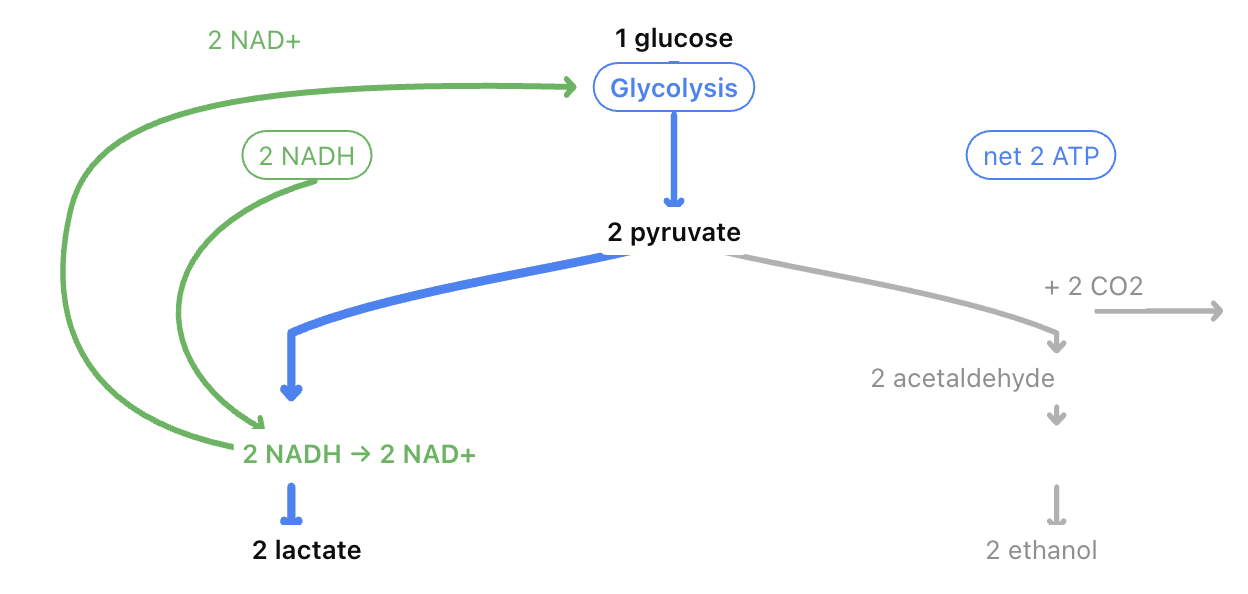
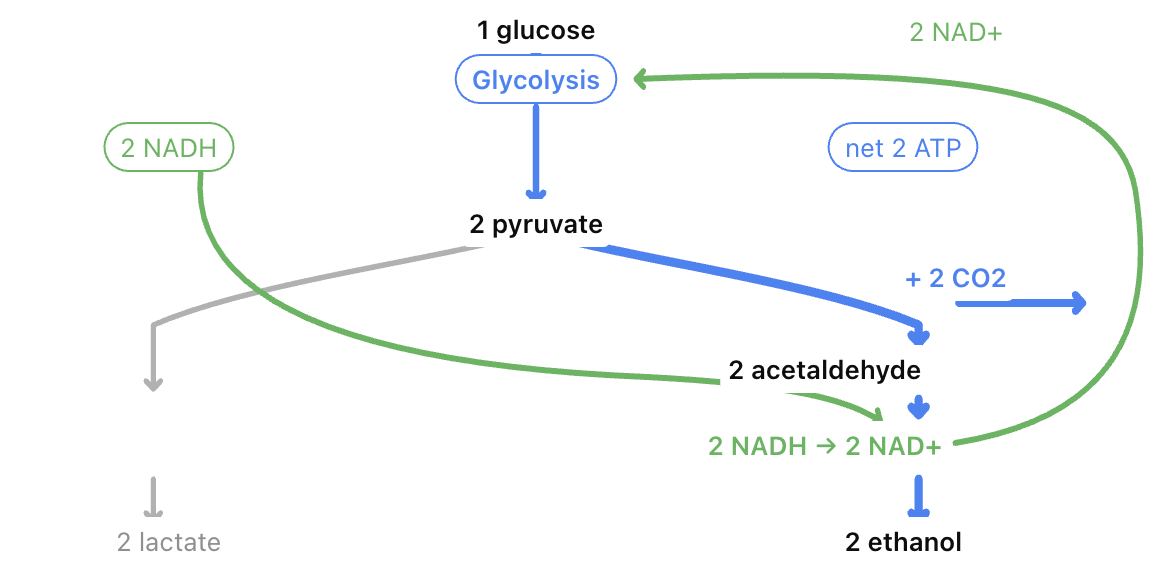
The regeneration of NAD⁺ is important because glycolysis requires NAD⁺.
Without it, glycolysis would eventually stop.
Alcoholic Fermentation
Yeast can carry out alcoholic fermentation.
A simplified overall representation is:
glucose → ethanol + carbon dioxide + energy
The ATP associated with this process is produced during glycolysis.
Yeast fermentation is extremely important in:
- bread making
- brewing
- wine production
- bioethanol production


Yeast
Yeasts are single-celled fungi.
One of the most widely used species is Saccharomyces cerevisiae.
This species has been used extensively in:
- baking
- brewing
- winemaking
- biotechnology research
Yeast is useful because it:
- grows relatively quickly
- can use sugars as an energy source
- is relatively easy to culture
- produces useful fermentation products
Fermentation in Bread
Bread provides an everyday example of biotechnology.
Yeast is mixed into dough containing carbohydrates.
The yeast metabolizes available sugars.
During fermentation:
sugar → carbon dioxide + ethanol
The important product for bread making is carbon dioxide.


Carbon dioxide becomes trapped in the dough.
The gas forms bubbles, causing the dough to:
- expand
- rise
- develop a lighter texture
During baking, much of the ethanol and water evaporates, gases expand, and the structure of the bread becomes fixed.
Why Does Bread Dough Rise Faster When Warm?
Microorganisms contain enzymes.
Like other enzymes, yeast enzymes are affected by temperature.
At low temperatures:
enzyme activity is relatively slow
As temperature increases toward a suitable range:
metabolic reactions become faster
However, if the temperature becomes too high:
proteins can lose function and yeast cells can be damaged or killed
Therefore:
Warmer does not always mean better.
There is an optimum range for yeast activity.
Lactic Acid Fermentation
Some microorganisms use pathways that produce lactate.
A simplified representation is:
glucose → lactate + energy
Again, the ATP comes from glycolysis, while fermentation regenerates NAD⁺.
Lactic acid bacteria are particularly important in food biotechnology.
They are used in products such as:
- yogurt
- some cheeses
- fermented vegetables
- other cultured foods
Yogurt Production
Yogurt is produced using particular bacteria that ferment sugars in milk.


A simplified process is:
milk
↓
starter bacteria added
↓
bacteria metabolize lactose
↓
organic acids accumulate
↓
pH decreases
↓
milk proteins change
↓
yogurt texture and flavour develop
The microorganisms therefore change both the chemistry and physical properties of the food.
Starter Cultures
A starter culture contains selected microorganisms used to begin a fermentation.
Instead of relying on random microorganisms from the environment, producers introduce organisms with known characteristics.
Starter cultures help provide:
- predictable fermentation
- consistent flavour
- consistent texture
- appropriate acid production
- improved control over the process
This is an important difference between traditional uncontrolled fermentation and modern industrial production.
Cheese Production
Microorganisms also play important roles in cheese making.
Different microorganisms contribute to:
- acid production
- flavour
- aroma
- texture
- ripening


Different combinations of:
- microorganisms
- temperature
- moisture
- salt
- time
help produce the enormous variety of cheeses found around the world.
Fermented Vegetables
Vegetables can also be fermented by microorganisms.
Examples include:
- sauerkraut
- kimchi
- some pickles
Lactic acid bacteria convert available sugars into organic acids.
As acidity increases, conditions become less favourable for many spoilage microorganisms.
Fermentation therefore contributes to both:
flavour
and
food preservation.
Fermentation and Food Preservation
Before refrigeration, fermentation provided an important method of preserving food.
Microorganisms involved in fermentation can change conditions by producing:
- acids
- alcohol
- other antimicrobial compounds
These changes can make the environment unsuitable for some competing microorganisms.
Fermentation may therefore:
fresh food → microbial activity → chemical changes → longer usable storage
However, fermentation does not mean that any food left at room temperature automatically becomes safe.
Controlled organisms and appropriate conditions are essential.
Industrial Fermentation
Traditional fermentation can occur in a bowl, jar, barrel, or dough.
Industrial biotechnology requires much greater control.
Large-scale processes commonly use vessels called fermenters or bioreactors.

A bioreactor provides a controlled environment in which cells can grow and produce a desired substance.
The Bioreactor
A bioreactor is a vessel designed to maintain suitable conditions for biological processes.
Depending on the process, engineers may control:
- temperature
- pH
- nutrient concentration
- oxygen supply
- stirring
- pressure
- foam
- microorganism concentration
Sensors continuously monitor conditions.
Control systems can then make adjustments.
A modern bioreactor is therefore much more sophisticated than simply placing microorganisms into a tank.
Temperature Control
Microorganisms depend on enzyme-controlled reactions.
Temperature affects the rates of these reactions.
If temperature is:
too low → metabolism slows
optimal → efficient growth and production
too high → enzymes and cells may be damaged
Microorganisms also produce heat as they metabolize nutrients.
Large industrial fermenters may therefore require cooling systems.
pH Control
Microorganisms usually grow best within particular pH ranges.
Fermentation itself can change pH.
For example, microorganisms producing organic acids can make the culture increasingly acidic.
Sensors measure pH.
If necessary, substances can be added to keep conditions within an appropriate range.
This creates a feedback system:
pH measured → control system responds → pH adjusted
Oxygen Supply
Some industrial microorganisms require oxygen.
Others operate under low-oxygen or anaerobic conditions.
When oxygen is needed, sterile air can be pumped into the fermenter.


Oxygen supply can become challenging in large fermenters because oxygen must move:
air → liquid → microorganism
Engineers therefore use:
- aeration
- mixing
- carefully designed impellers
to improve oxygen transfer.
Stirring and Mixing
Industrial fermenters often contain impellers that rotate and mix the contents.
Mixing helps distribute:
- microorganisms
- nutrients
- oxygen
- heat
Without adequate mixing, different parts of a large tank could develop different conditions.
One region might have plenty of glucose while another has very little.
Industrial biotechnology therefore requires both biology and engineering.
Sterility
One major challenge in industrial fermentation is contamination.
Imagine a company wants to grow Microorganism A.
If Microorganism B enters the fermenter, it might:
- consume nutrients
- produce unwanted chemicals
- reduce yield
- destroy the product
- create safety problems
Equipment, air supplies, nutrients, and transfer systems may therefore need careful sterilization or contamination control.


A single contamination event in a large industrial batch can be extremely expensive.
Batch Fermentation
In batch fermentation, microorganisms and nutrients are placed into a vessel and allowed to react for a period of time.
A simplified process is:
fermenter prepared
↓
nutrients added
↓
microorganisms added
↓
fermentation occurs
↓
product collected
↓
fermenter cleaned
↓
next batch begins
Batch systems are relatively straightforward and widely used.
Continuous Fermentation
In continuous fermentation, fresh nutrients are continuously supplied while culture material and products are continuously removed.
A simplified model is:
fresh nutrients → bioreactor → product/culture removed
Advantages may include:
- continuous production
- high productivity
- reduced downtime
However, continuous systems can be more difficult to control.
A contamination event can also persist through the production system.
Fed-Batch Fermentation
Another important method is fed-batch fermentation.
The process begins with microorganisms and some nutrients.
Additional nutrients are then added gradually.
Why not add everything at the beginning?
Very high nutrient concentrations can sometimes:
- inhibit cells
- change metabolism
- produce unwanted by-products
Controlled feeding can help maintain favourable conditions.
Fed-batch processing is widely used in industrial biotechnology.
Industrial Production Process
Industrial fermentation usually involves more than the fermentation itself.
A complete production chain may look like:
microorganism selected
↓
starter culture prepared
↓
bioreactor sterilized
↓
nutrients added
↓
culture introduced
↓
conditions controlled
↓
product produced
↓
product separated
↓
product purified
↓
quality tested
↓
packaged
The stages after fermentation are called downstream processing.
Downstream Processing
The desired product may be mixed with:
- microorganisms
- water
- nutrients
- waste products
- other molecules
Therefore, the product must often be separated and purified.
Possible techniques include:
- filtration
- centrifugation
- precipitation
- chromatography
- crystallization
For some biotechnology products, purification can be one of the most expensive parts of production.
Fermentation and Medicines
Microorganisms can manufacture medically important substances.
One famous example is antibiotic production.
Certain microorganisms naturally produce substances that inhibit competing microorganisms.


These compounds can be produced industrially using controlled fermentation.
The product must then be:
- extracted
- purified
- tested
- formulated into medicine
Penicillin
Penicillin was originally discovered from a fungus belonging to the genus Penicillium.
Industrial production eventually required scientists and engineers to develop methods for growing large quantities of the fungus under controlled conditions.
The process illustrates the relationship between:
microbiology + chemistry + engineering + medicine
A naturally produced microbial molecule became a major pharmaceutical product through fermentation technology.
Recombinant Proteins
Genetic engineering can be combined with fermentation.
Scientists can insert a human gene into microorganisms.
The modified microorganisms can then produce the corresponding human protein.
A major example is human insulin.


A simplified process is:
human insulin gene identified
↓
gene introduced into production cells
↓
engineered cells cultured
↓
protein produced
↓
protein harvested
↓
purification
↓
quality testing
This connects genetic engineering directly with industrial fermentation.
Enzyme Production
Microorganisms are also used to manufacture enzymes.
Industrial enzymes may be used in:
- food processing
- detergents
- textiles
- paper production
- pharmaceuticals
- biotechnology laboratories
Examples include:
- amylases
- proteases
- lipases
- lactase
Microorganisms are useful because they can often produce enzymes rapidly and at large scale.
Example: Lactase
Lactase breaks lactose into simpler sugars.
It can be produced using microorganisms and used to manufacture lactose-reduced or lactose-free dairy products.
The process demonstrates an important biotechnology chain:
microorganism
↓
enzyme production
↓
enzyme purified
↓
enzyme added during food processing
↓
lactose broken down
The microorganism itself does not necessarily need to be present in the final food.
Organic Acids
Fermentation can manufacture useful organic acids.
One important example is citric acid.
Although citric acid occurs naturally in citrus fruits, much commercial citric acid is produced using microbial fermentation.


Citric acid is widely used in:
- foods
- beverages
- pharmaceuticals
- cleaning products
This demonstrates that industrial fermentation can sometimes be more practical than extracting a substance directly from natural sources.
Bioethanol
Yeast fermentation can also produce ethanol for use as a fuel.
Sugar-rich materials can be fermented:
sugar → ethanol + carbon dioxide
The ethanol is then separated and purified.
Bioethanol can be produced from materials such as:
- sugar cane
- sugar beet
- maize-derived sugars
- other plant biomass after suitable processing
Biofuels and Sustainability
Biofuels are sometimes described as renewable because the starting biomass can be regrown.
However, environmental evaluation should consider the entire production system.
Questions include:
- How much land is required?
- How much water is used?
- What fertilizers are needed?
- How much energy is required for processing?
- Does production compete with food crops?
- What are the total greenhouse gas emissions?
Therefore:
biological origin ≠ automatically environmentally sustainable
Precision Fermentation
Modern biotechnology increasingly uses precision fermentation.
In precision fermentation, microorganisms can be genetically engineered to manufacture particular molecules.
Examples can include:
- proteins
- enzymes
- flavour compounds
- food ingredients
- pharmaceutical molecules
The process combines:
genetic engineering
microbial fermentation
industrial bioprocessing
The microorganism is programmed to act as a biological production system.
Scaling Up
A process that works in a laboratory flask does not automatically work equally well in a 100,000-litre industrial vessel.
This is called the scale-up problem.


As fermenters become larger, engineers must consider:
- mixing
- heat transfer
- oxygen transfer
- pressure
- contamination
- sensor placement
For example, the centre of a huge fermenter may experience different conditions from regions near the walls.
Scale-up therefore requires extensive engineering.
Optimizing Fermentation
Suppose scientists want microorganisms to produce as much Product X as possible.
They could investigate:
- temperature
- pH
- glucose concentration
- oxygen concentration
- nutrient supply
- mixing rate
- fermentation time
This is an example of optimization.
The goal is not necessarily to produce the largest number of microorganisms.
The goal may instead be to maximize:
desired product per unit time or cost
Growth and Product Formation
Microbial populations typically pass through several stages.
Lag Phase
Cells adapt to their environment.
Exponential Phase
Cells divide rapidly.
Stationary Phase
Population growth slows as nutrients become limited and wastes accumulate.
Death Phase
The number of living cells declines.
Some useful products are produced mainly during rapid growth.
Others may be produced most strongly when growth slows.
Therefore, industries must know when to harvest their product.
Fermentation and the Circular Economy
Fermentation technologies can sometimes use biological waste materials as raw materials.
Possible feedstocks include:
- agricultural residues
- food-processing waste
- plant biomass
Microorganisms may convert these materials into:
- fuels
- chemicals
- enzymes
- food ingredients
This supports the idea of a circular economy, where waste from one process becomes a resource for another.
Why Is Fermentation Important in Biotechnology?
Fermentation has several major advantages.
Rapid Reproduction
Microorganisms can grow quickly.
Large-Scale Production
Bioreactors can produce large quantities of material.
Controlled Conditions
Temperature, pH, nutrients, and oxygen can be optimized.
Wide Range of Products
Microorganisms can produce foods, enzymes, medicines, fuels, and chemicals.
Genetic Engineering
Microorganisms can be engineered to produce molecules they would not normally make.
Renewable Feedstocks
Some processes can use plant-based or waste-derived materials.
Limitations of Industrial Fermentation
Fermentation technology also has challenges.
Contamination
Unwanted microorganisms can destroy a batch.
Energy Use
Heating, cooling, stirring, aeration, purification, and sterilization require energy.
Downstream Processing
Separating and purifying products can be difficult and expensive.
Waste
Fermentation can generate:
- unused biomass
- wastewater
- metabolic waste
Scale-Up
Processes may behave differently in industrial equipment than in laboratory experiments.
Cost
Bioreactors, sensors, sterile systems, and skilled staff can be expensive.
Worked Example 1: Bread
A student prepares two identical bread mixtures.
Mixture A: kept at 10°C
Mixture B: kept at 30°C
After one hour, Mixture B has risen much more.
Explain why.
Answer
At 30°C, the yeast enzymes generally function more rapidly than at 10°C.
The yeast therefore metabolizes sugar faster and produces carbon dioxide more quickly.
The carbon dioxide becomes trapped in the dough, causing it to rise.
However, increasing temperature indefinitely would not continue increasing the rate because excessive heat damages the yeast.
Worked Example 2: Yogurt
During yogurt production, the pH decreases.
Why?
Answer
Bacteria metabolize sugars in the milk and produce organic acids.
As acid accumulates:
pH decreases
The changing pH affects milk proteins and contributes to yogurt's:
- texture
- flavour
- preservation
Worked Example 3: Industrial Fermenter
A company notices that microorganisms near the top of a fermenter grow well, but cells deeper in the vessel grow poorly.
The microorganisms require oxygen.
Suggest one possible cause and solution.
Answer
Possible cause: insufficient oxygen transfer or mixing.
Possible solution: increase appropriate aeration or improve mixing.
The goal is to distribute oxygen throughout the culture more effectively.
Worked Example 4: Production Rate
A fermenter produces 2,400 kg of Product X during a 48-hour fermentation.
Average production rate:
production rate = amount produced ÷ time
= 2,400 kg ÷ 48 h
= 50 kg/h
If optimization increases production to 3,000 kg in the same time:
3,000 ÷ 48 = 62.5 kg/h
Increase in production rate:
62.5 − 50 = 12.5 kg/h
Worked Example 5: Evaluating a New Process
A company develops a fermentation process that produces a chemical from agricultural waste.
Compared with conventional production, it:
- uses less fossil-fuel feedstock
- produces less hazardous waste
- requires substantial electricity for aeration
- costs 15% more
- uses renewable agricultural waste
Is the fermentation process automatically more sustainable?
Answer
No.
The evidence is promising, but a complete evaluation should consider:
- source of electricity
- total energy use
- greenhouse gas emissions
- transportation
- waste production
- resource use
- economic cost
A full life-cycle assessment would provide stronger evidence.
Common Mistakes
Mistake 1: "Fermentation only makes alcohol."
Fermentation technologies produce many substances, including:
- foods
- organic acids
- enzymes
- medicines
- fuels
Mistake 2: "Fermentation always requires yeast."
Many bacteria and fungi are also used.
Mistake 3: "All fermentation happens without oxygen."
Cellular fermentation pathways are associated with conditions where oxygen-dependent respiration is unavailable, but industrial biotechnology uses the term fermentation more broadly. Many industrial fermentation processes are aerobic.
Mistake 4: "Microorganisms are always harmful."
Many microorganisms are harmless or beneficial and are extremely important in biotechnology.
Mistake 5: "Fermentation itself produces large amounts of ATP."
In cellular fermentation, the ATP associated with the pathway is produced during glycolysis. Fermentation primarily regenerates NAD⁺.
Mistake 6: "Higher temperature always makes fermentation faster."
Only within an appropriate range.
Excessive temperatures can damage enzymes and kill microorganisms.
Mistake 7: "A fermenter is simply a large container."
Industrial fermenters contain systems for monitoring and controlling biological conditions.
Mistake 8: "The microorganism is always the final product."
Often the microorganism produces another substance that is harvested and purified.
Mistake 9: "If a microorganism produces a medicine, the medicine can immediately be used."
The product usually requires extensive separation, purification, and quality testing.
Mistake 10: "Biological production is automatically sustainable."
The entire process—including energy, materials, land use, waste, and purification—must be evaluated.
Check Your Understanding
1. Fermentation
Explain fermentation in your own words.
Why is fermentation important to microorganisms under conditions where oxygen-dependent respiration cannot continue?
2. Products
Identify six products or product types that can be produced using fermentation technology.
For each, identify the microorganism or type of microorganism involved where possible.
3. Bread
Explain how yeast causes bread dough to rise.
Include:
- glucose
- fermentation
- carbon dioxide
- gas bubbles
4. Yogurt
Explain how microorganisms change milk into yogurt.
Why does the pH decrease?
5. Industrial Fermenters
Identify five conditions that may need to be controlled inside an industrial fermenter.
Explain why each is important.
6. Sterility
Why is contamination a major problem in industrial fermentation?
Suggest two ways contamination could enter a fermenter.
7. Genetic Engineering
Explain how genetic engineering and fermentation can be combined to manufacture a human protein such as insulin.
8. Scale-Up
Why might a fermentation process that works well in a 1-L laboratory flask not work equally well in a 100,000-L industrial fermenter?
9. Sustainability
Give two potential environmental advantages and two possible environmental disadvantages of industrial fermentation.
10. Challenge
A biotechnology company develops a genetically engineered bacterium that converts agricultural waste into a useful industrial chemical.
Laboratory results show:
- high product yield
- rapid bacterial growth
- agricultural waste can be used as the carbon source
- large amounts of oxygen are required
- the product requires extensive purification
- industrial-scale production has not yet been tested
Evaluate the potential of this technology.
Include:
Potential benefits
Technical challenges
Environmental considerations
Evidence still required
Key Terms
- Fermentation – metabolic process that regenerates NAD⁺ without oxygen-dependent respiration; also used industrially for controlled cultivation of microorganisms or cells
- Microorganism – microscopic organism such as a bacterium or yeast
- Yeast – single-celled fungus widely used in fermentation
- Alcoholic fermentation – pathway producing ethanol and carbon dioxide while regenerating NAD⁺
- Lactic acid fermentation – pathway producing lactate while regenerating NAD⁺
- Glycolysis – pathway that breaks glucose into pyruvate and produces a small amount of ATP
- Starter culture – selected microorganisms used to begin a fermentation
- Bioreactor – controlled vessel used for biological production
- Fermenter – bioreactor used for fermentation processes
- Aeration – supplying air or oxygen to a culture
- Impeller – rotating device used to mix material inside a bioreactor
- Sterility – absence of unwanted living microorganisms
- Contamination – unwanted microorganisms entering a culture
- Batch fermentation – production system in which a batch is grown and harvested
- Continuous fermentation – system in which nutrients are continuously supplied and material continuously removed
- Fed-batch fermentation – process in which nutrients are gradually added during cultivation
- Downstream processing – recovery and purification of a biological product after production
- Bioethanol – ethanol produced from biological materials
- Precision fermentation – use of selected or engineered microorganisms to produce specific molecules
- Scale-up – increasing a biological process from laboratory to industrial production
- Optimization – adjusting conditions to improve production
- Feedstock – raw material supplied to a biological or industrial process
- Cryopreservation – preservation at very low temperatures, often used to maintain production strains
- Life-cycle assessment – evaluation of environmental impacts across the stages of a product's life
Key Takeaways
- Fermentation is one of the oldest and most important forms of biotechnology.
- Microorganisms act as microscopic factories that convert nutrients into useful products.
- In cellular biology, fermentation regenerates NAD⁺, allowing glycolysis to continue when oxygen-dependent respiration is unavailable.
- Yeast performs alcoholic fermentation and is important in bread, beverage, and bioethanol production.
- Lactic acid bacteria are used to manufacture products such as yogurt, cheese, and fermented vegetables.
- Fermentation can preserve foods by changing environmental conditions such as pH.
- Industrial biotechnology uses fermenters or bioreactors to grow microorganisms under controlled conditions.
- Important variables include temperature, pH, nutrients, oxygen, mixing, and contamination control.
- Fermentation can be operated using batch, fed-batch, or continuous systems.
- The desired product often requires substantial downstream processing before it can be used.
- Industrial fermentation can produce antibiotics, enzymes, organic acids, recombinant proteins, food ingredients, chemicals, and biofuels.
- Genetic engineering can turn microorganisms into biological factories for products such as human insulin.
- Precision fermentation combines genetic engineering with controlled microbial production.
- Scaling fermentation from a laboratory flask to a large industrial bioreactor creates challenges involving oxygen transfer, mixing, heat removal, and contamination.
- Fermentation technologies can potentially use renewable or waste-derived feedstocks, but biological production is not automatically sustainable.
- The importance of fermentation lies in its ability to combine microbiology, genetics, chemistry, and engineering to manufacture useful products efficiently and at large scale.
4. Industrial Enzymes
Learning outcomes
- I can describe what enzymes are and how they function.
- I can explain how enzymes are used in industrial processes.
- I can identify examples of enzyme applications.
- I can explain the advantages of biological catalysts.
- I can evaluate the environmental benefits of enzyme technology.
Enzymes are essential to life. Almost every chemical reaction occurring inside living organisms depends on enzymes to make it happen quickly enough.
Humans have learned to use these same biological catalysts outside living organisms. Today, enzymes are used in industries ranging from food production and detergents to textiles, medicine, paper manufacturing, biofuels, and biotechnology.
An industrial process that once required high temperatures, strong acids, or harsh chemicals may sometimes be carried out under milder conditions using an enzyme.
This makes industrial enzymes an important example of how biology can be used to solve technological problems.


What Is an Enzyme?
An enzyme is a biological catalyst.
A catalyst is a substance that:
- increases the rate of a chemical reaction
- is not consumed by the reaction
- can therefore be used repeatedly
Most enzymes are proteins, although some RNA molecules can also act as catalysts.
Without enzymes, many reactions in living cells would occur far too slowly to support life.
A simple model is:
substrate → enzyme-controlled reaction → product
The substance an enzyme acts upon is called the substrate.
Activation Energy
Chemical reactions usually require an initial input of energy called activation energy.
Imagine pushing a ball over a hill.
The ball must first receive enough energy to reach the top before it can roll down the other side.
Chemical reactions face a similar energy barrier.
Enzymes lower this activation energy.
Therefore:
lower activation energy → more successful reactions per unit time → faster reaction
Importantly, enzymes do not provide the energy for the reaction. They provide an alternative reaction pathway with a lower activation-energy requirement.


The Active Site
An enzyme contains a region called the active site.
The active site has a particular three-dimensional shape and chemical environment.
The substrate interacts with this region.
A simplified sequence is:
enzyme + substrate
↓
enzyme-substrate complex
↓
reaction occurs
↓
products released
↓
enzyme available again
The enzyme itself is not used up.
Enzyme Specificity
Enzymes are usually specific.
This means an enzyme normally catalyzes a particular reaction or a relatively narrow group of reactions.
For example:
amylase → starch
protease → proteins
lipase → lipids
lactase → lactose
The shape and chemical properties of the active site determine which substrates can interact effectively with the enzyme.


Lock-and-Key Model
A simple model of enzyme action is the lock-and-key model.
In this model:
enzyme = lock
substrate = key
Only a substrate with a suitable shape fits the active site.
This model is useful for introducing enzyme specificity.
However, real enzymes are flexible molecules.
Induced-Fit Model
A more realistic model is the induced-fit model.
When the substrate approaches:
substrate interacts with active site
↓
enzyme changes shape slightly
↓
substrate positioned correctly
↓
reaction occurs
↓
products released
The enzyme's structure therefore adjusts during substrate binding.
Factors Affecting Enzyme Activity
Industrial engineers need to understand what affects enzyme activity.
Important factors include:
- temperature
- pH
- substrate concentration
- enzyme concentration
- inhibitors
- product concentration
Controlling these variables allows industries to make enzyme-controlled processes more efficient.
Temperature and Enzyme Activity
At low temperatures, molecules move relatively slowly.
There are fewer successful enzyme-substrate collisions.
As temperature increases:
particles move faster
↓
collision frequency increases
↓
reaction rate increases
This continues toward an optimum temperature.


Above the optimum, the enzyme may begin to lose its functional three-dimensional structure.
The active site changes shape.
This is called denaturation.
The reaction rate then decreases rapidly.
Denaturation
Denaturation occurs when the structure of a protein is disrupted enough to interfere with its function.
For an enzyme:
structure changes
↓
active site changes
↓
substrate binds less effectively
↓
enzyme activity decreases
Very high temperatures can cause denaturation.
Extreme pH conditions can also disrupt enzyme structure.
Denaturation is different from simply slowing an enzyme down at low temperature.
Temperature: A Common Mistake
Students sometimes say:
"Cold temperatures denature enzymes."
Usually, this is incorrect.
Low temperatures generally reduce molecular movement and therefore reduce the rate of enzyme-controlled reactions.
If the enzyme is warmed again to a suitable temperature, its activity can often increase again.
High temperatures, in contrast, can permanently disrupt protein structure.
pH and Enzyme Activity
Enzymes also have an optimum pH.
Changes in pH can affect:
- electrical charges within the enzyme
- interactions maintaining protein structure
- properties of the active site


Different enzymes can have different optimum pH values.
This is important industrially because manufacturers can choose enzymes suited to the conditions of a particular process.
Substrate Concentration
Increasing substrate concentration can initially increase reaction rate.
Why?
More substrate molecules means more opportunities for collisions with enzyme active sites.
However, eventually most active sites are occupied.
The enzymes become saturated.
At this point:
more substrate → little or no further increase in maximum reaction rate


Adding more enzyme could then increase the maximum possible reaction rate, provided enough substrate is available.
Where Do Industrial Enzymes Come From?
Many industrial enzymes are produced by microorganisms.
Common producers include:
- bacteria
- yeasts
- filamentous fungi
Microorganisms are useful because they can:
- grow rapidly
- be cultured in large quantities
- produce enzymes efficiently
- be genetically modified
- grow on relatively inexpensive nutrients
This connects industrial enzyme production directly to fermentation technology.
Producing Industrial Enzymes
A simplified production process is:
useful microorganism selected
↓
production strain developed
↓
microorganism grown in bioreactor
↓
enzyme produced
↓
culture harvested
↓
enzyme separated
↓
enzyme purified if necessary
↓
enzyme formulated for industrial use


The level of purification depends on the application.
A pharmaceutical enzyme may require extremely high purity.
An enzyme used in some industrial processing may require less extensive purification.
Genetic Engineering and Enzyme Production
Genetic engineering can improve industrial enzyme production.
Scientists may:
- identify a useful enzyme gene
- introduce it into a production microorganism
- modify gene expression
- grow the microorganism in large fermenters
This can increase:
- production rate
- enzyme yield
- consistency
Scientists can also modify enzyme genes to produce enzymes with improved properties.
Engineering Better Enzymes
Natural enzymes evolved to function inside organisms—not necessarily inside factories.
Industrial processes may require enzymes that tolerate:
- higher temperatures
- unusual pH
- detergents
- solvents
- high substrate concentrations
Scientists can alter enzymes through techniques such as:
- genetic engineering
- protein engineering
- directed evolution
The goal may be to produce an enzyme that is:
more stable + more active + better suited to industrial conditions
Enzymes in Biological Detergents
One of the most familiar uses of industrial enzymes is in biological washing detergents.


Detergents may contain:
Proteases – break down protein stains
Lipases – break down fats and oils
Amylases – break down starch
Cellulases – can help remove tiny fibres and improve fabric appearance
Different enzymes therefore target different components of stains.
Example: Protease and a Food Stain
Suppose clothing contains a protein-rich food stain.
A protease catalyzes the breakdown of proteins into smaller molecules.
The large protein molecules become smaller, more soluble products that can be removed more easily during washing.
This is why enzyme mixtures can improve stain removal.
Lower-Temperature Washing
Enzymes can function effectively at temperatures lower than those required by some purely chemical cleaning processes.
If clothes can be washed effectively at:
30°C instead of 60°C
less energy may be needed to heat the water.
This can provide:
- lower energy consumption
- reduced household electricity use
- potentially lower greenhouse gas emissions
However, the actual environmental benefit depends partly on how the electricity is generated and how the detergent is produced.
Enzymes in Food Production
The food industry uses enzymes extensively.
Applications include:
- bread making
- cheese production
- juice processing
- lactose-free milk
- brewing
- confectionery
- starch processing


Enzymes can improve:
- texture
- flavour
- clarity
- processing speed
- yield
- nutritional properties
Lactase and Lactose-Free Milk
Milk contains the sugar lactose.
The enzyme lactase catalyzes its hydrolysis.
lactose + water → glucose + galactose
Some people produce insufficient lactase in the small intestine and therefore have difficulty digesting large amounts of lactose.
Food manufacturers can treat milk with lactase.
The lactose is broken down before the milk is consumed.
This produces lactose-reduced or lactose-free milk.
Immobilized Lactase
Instead of mixing lactase into milk and leaving it there, manufacturers can sometimes use immobilized enzymes.
An immobilized enzyme is attached to or trapped within a solid material.


For example:
milk enters column
↓
passes over immobilized lactase
↓
lactose broken down
↓
treated milk exits
The enzyme remains inside the system.
Advantages of Immobilized Enzymes
Immobilization can provide several advantages.
Reuse
The enzyme can often be used repeatedly.
Easy Separation
The enzyme does not have to be removed from the final product.
Continuous Processing
Material can flow continuously through an enzyme-containing system.
Improved Stability
Some immobilized enzymes are more stable than free enzymes.
Reduced Cost
Reusing enzymes can lower operating costs.
Disadvantages of Immobilization
Immobilization also has limitations.
- preparing the immobilized enzyme costs money
- substrates must reach the enzyme
- diffusion may slow the reaction
- some enzyme activity may be lost during immobilization
Therefore, immobilization is useful when its advantages outweigh these costs.
Pectinase and Fruit Juice
Plant cell walls contain substances including pectin.
Pectin can make fruit juice cloudy and difficult to extract.
Pectinase enzymes break down pectin.


Using pectinase can:
- increase juice yield
- improve juice extraction
- reduce cloudiness
- improve filtration
This can make industrial juice processing faster and more efficient.
Chymosin and Cheese
Cheese making requires milk proteins to coagulate.
Traditionally, an enzyme preparation called rennet was obtained from the stomach tissue of young calves.
One important enzyme in rennet is chymosin.
Modern biotechnology can produce chymosin using genetically engineered microorganisms.
A simplified process is:
chymosin gene
↓
production microorganism
↓
fermentation
↓
chymosin produced
↓
enzyme purified
↓
used in cheese production
This is another example of genetic engineering combined with fermentation.
Amylase and Starch Processing
Amylase breaks starch into smaller carbohydrates.
Industrial amylases are used in:
- baking
- brewing
- starch processing
- production of glucose syrups
- detergents


Instead of using harsh chemical conditions to break down starch, enzymes can perform reactions under relatively mild conditions.
Enzymes in Baking
Enzymes can help modify starches and other molecules in bread dough.
They may influence:
- dough handling
- fermentation
- texture
- volume
- freshness
Because enzymes catalyze specific reactions, small quantities can have significant effects on industrial food production.
Enzymes in the Textile Industry
The textile industry uses enzymes during fabric manufacturing and treatment.
Examples include:
Amylases
Remove starch used during fabric processing.
Cellulases
Modify the surfaces of cotton fibres.
Catalases
Remove hydrogen peroxide after bleaching.


Enzymatic processing can sometimes replace harsher chemical treatments.
Stonewashed Denim
Some denim is treated to create a worn or faded appearance.
Historically, physical abrasion using stones could be used.
Modern processes can use cellulase enzymes.
Cellulase acts on cellulose fibres at the fabric surface.
This can help produce the desired appearance with less physical abrasion.
Enzymes in the Paper Industry
Paper manufacturing involves processing plant fibres.
Enzymes can assist with:
- pulp treatment
- bleaching
- removal of unwanted substances
- recycling
- reducing chemical use
For example, xylanases can modify components of plant cell walls and help some pulp-processing operations.
Using enzymes may allow some processing steps to occur under milder conditions.
Enzymes in Biofuel Production
Plant biomass contains large amounts of cellulose.
Cellulose is a polymer made from glucose units.
However, cellulose is difficult to break down.
Cellulases can hydrolyze cellulose into smaller sugars.


A simplified process is:
plant biomass
↓
pretreatment
↓
cellulase enzymes
↓
simple sugars
↓
microbial fermentation
↓
ethanol
This could allow agricultural residues or other plant material to become feedstocks for biofuel production.
Enzymes in Medicine
Enzymes also have medical applications.
They may be used in:
- diagnostic tests
- laboratory analysis
- pharmaceutical manufacturing
- some therapeutic treatments
Enzyme specificity is particularly valuable in medicine because enzymes can recognize particular molecules.
However, medical applications generally require much stricter standards of:
- purity
- safety
- dosage
- manufacturing consistency
than many other industrial uses.
Enzymes in Diagnostic Tests
Some diagnostic tests use enzyme-controlled reactions to detect biological molecules.
For example, enzymes can be linked to reactions that produce:
- a colour change
- light
- an electrical signal
The size of the signal can indicate how much of a particular substance is present.
This converts a molecular event into something that can be measured.
Why Are Enzymes Useful Industrial Catalysts?
Industrial enzymes have several important advantages.
High Specificity
Enzymes usually target particular substrates and reactions.
This can reduce unwanted side reactions.
Mild Conditions
Many enzymes function at moderate:
- temperatures
- pressures
- pH values
High Efficiency
Small amounts of enzyme can catalyze large numbers of reactions.
Biodegradability
Protein enzymes can usually be broken down biologically.
Renewable Production
Many enzymes can be produced using microorganisms grown by fermentation.
Enzymes Are Not Used Up
Consider the reaction:
E + S → ES → E + P
where:
E = enzyme
S = substrate
ES = enzyme-substrate complex
P = product
Notice that the enzyme appears both before and after the reaction.
The enzyme can therefore catalyze another reaction.
This is why relatively small quantities of enzymes can process large amounts of substrate.
Comparing Enzymes with Chemical Catalysts
Suppose two industrial processes produce the same product.
Process A
Requires:
- 150°C
- strong acid
- high pressure
Process B
Uses an enzyme at:
- 45°C
- near-neutral pH
- normal pressure
Process B could potentially require:
- less heating
- less corrosion-resistant equipment
- fewer hazardous chemicals
- less energy
However, enzymes themselves must be produced, purified, transported, and eventually replaced.
A full comparison must consider the entire process.
Environmental Benefits
Enzyme technology can potentially reduce environmental impacts in several ways.
Lower Energy Use
Milder temperatures can reduce heating requirements.
Reduced Chemical Use
Enzymes may replace some harsh chemicals.
Reduced Waste
Greater reaction specificity can reduce unwanted by-products.
Biodegradability
Many enzymes are biodegradable proteins.
Renewable Production
Microorganisms can manufacture enzymes using biological feedstocks.
Improved Resource Efficiency
More efficient reactions can reduce raw-material consumption.


But Are Enzymes Always Greener?
No.
Calling something "biological" does not automatically make it environmentally sustainable.
Industrial enzyme production may require:
- fermentation tanks
- electricity
- heating
- cooling
- aeration
- purification
- water
- transportation
Therefore, environmental comparisons should consider the entire life cycle.
A good question is:
Does the enzyme-based process reduce total environmental impact compared with the realistic alternative?
Life-Cycle Thinking
Imagine an enzyme reduces factory energy consumption by 20%.
That sounds beneficial.
However, suppose producing and purifying the enzyme itself requires large amounts of energy.
To evaluate the environmental benefit properly, scientists should consider:
raw materials
↓
enzyme production
↓
transportation
↓
industrial use
↓
waste treatment
↓
disposal or degradation
This is called life-cycle thinking.
Industrial Optimization
Industries want enzymes to operate efficiently.
Scientists may investigate:
- optimum temperature
- optimum pH
- enzyme concentration
- substrate concentration
- reaction time
- enzyme stability
The best laboratory conditions are not always the best industrial conditions.
For example, an enzyme may work fastest at 60°C but degrade rapidly at that temperature.
At 50°C, it might operate slightly more slowly but remain active for much longer.
Therefore, the most economically useful condition may not be the condition giving the highest instantaneous reaction rate.
Worked Example 1: Temperature
An enzyme has the following activity:
| Temperature | Relative Activity |
|---|---|
| 20°C | 25% |
| 30°C | 50% |
| 40°C | 85% |
| 50°C | 100% |
| 60°C | 60% |
| 70°C | 10% |
What is the approximate optimum temperature?
Answer
50°C
The enzyme has its highest measured activity at this temperature.
Why does activity decrease at 70°C?
The high temperature likely disrupts the enzyme's three-dimensional structure, changing the active site.
Worked Example 2: Biological Detergent
Two detergents remove the same protein stain.
Detergent A: effective at 60°C without enzymes
Detergent B: effective at 30°C using protease
Why might Detergent B have an environmental advantage?
Answer
Less energy may be required to heat the wash water.
This could reduce:
- energy consumption
- cost
- associated greenhouse gas emissions
However, a complete evaluation should also consider how both detergents are manufactured and used.
Worked Example 3: Lactase
A dairy company uses immobilized lactase.
Milk passes through a column containing lactase-coated beads.
Why might this be preferable to adding free lactase directly to every batch?
Answer
The immobilized enzyme can potentially:
- remain in the column
- be reused
- avoid contaminating the final product with enzyme
- support continuous processing
This can reduce costs and simplify product separation.
Worked Example 4: Substrate Concentration
An enzyme reaction produces:
| Substrate Concentration | Reaction Rate |
|---|---|
| 1 unit | 10 |
| 2 units | 19 |
| 4 units | 34 |
| 8 units | 47 |
| 16 units | 50 |
| 32 units | 50 |
Why does doubling substrate concentration from 16 to 32 units produce almost no increase?
Answer
At high substrate concentrations, nearly all available enzyme active sites are occupied.
The enzyme has become approximately saturated.
Adding more substrate cannot substantially increase the rate unless more active enzyme is available.
Worked Example 5: Evaluating an Industrial Process
A textile factory replaces a chemical treatment with an enzyme-based process.
The new process:
- operates at 40°C instead of 90°C
- uses 30% less water
- reduces a hazardous chemical by 80%
- requires enzymes produced at another factory
- costs 8% more
Is the new process environmentally better?
Answer
The evidence suggests several potential environmental benefits:
- lower heating requirements
- lower water use
- less hazardous chemical use
However, more information is needed about:
- enzyme manufacturing
- transportation
- electricity sources
- wastewater
- total greenhouse gas emissions
A life-cycle assessment would provide stronger evidence.
Common Mistakes
Mistake 1: "Enzymes are living organisms."
Enzymes are molecules, usually proteins.
They can be produced by living organisms but are not themselves alive.
Mistake 2: "Enzymes provide energy for reactions."
Enzymes lower activation energy.
They do not supply the energy required by the reaction.
Mistake 3: "Enzymes are used up during reactions."
Enzymes are catalysts and can usually be reused.
Mistake 4: "One enzyme can catalyze any reaction."
Enzymes are generally specific.
Their active sites interact with particular substrates.
Mistake 5: "Higher temperature always increases enzyme activity."
Only up to an optimum.
Excessive temperatures can denature enzymes.
Mistake 6: "Cold temperatures usually denature enzymes."
Low temperature generally slows molecular movement rather than denaturing the enzyme.
Mistake 7: "Enzymes work at only one exact pH."
Enzymes generally work across a range, but usually have an optimum.
Mistake 8: "Adding more substrate always increases reaction rate."
Once enzymes become saturated, additional substrate produces little increase.
Mistake 9: "Industrial enzymes only come from plants and animals."
Many important industrial enzymes are produced by microorganisms.
Mistake 10: "Enzyme technology is automatically environmentally friendly."
Environmental benefits must be demonstrated by comparing the entire enzyme-based process with realistic alternatives.
Check Your Understanding
1. Enzymes
Define:
enzyme
catalyst
substrate
active site
2. Enzyme Action
Explain how an enzyme increases the rate of a chemical reaction.
Include:
- substrate
- active site
- activation energy
- products
3. Temperature
Sketch the expected relationship between temperature and enzyme activity.
Label:
- low-temperature region
- optimum temperature
- denaturation region
Explain the shape of your graph.
4. Industrial Applications
Match each enzyme to a likely industrial application:
amylase
protease
lipase
lactase
pectinase
cellulase
Possible applications:
- lactose-free milk
- protein stain removal
- fruit juice clarification
- starch processing
- fat stain removal
- textile processing
5. Immobilized Enzymes
Explain what an immobilized enzyme is.
Give three advantages of immobilizing an industrial enzyme.
6. Fermentation
Explain how fermentation technology can be used to manufacture an industrial enzyme.
7. Biological Catalysts
Identify four advantages enzymes may have over traditional chemical processing.
8. Environmental Impact
Explain three ways enzyme technology could reduce the environmental impact of an industrial process.
9. Evidence
A company advertises:
"Our new enzyme process is 100% environmentally friendly because enzymes are natural."
Explain why this claim does not provide enough scientific evidence.
What additional information would you want?
10. Challenge
A factory currently produces Product X using a chemical catalyst.
The existing process:
- operates at 140°C
- requires high pressure
- produces significant chemical waste
- is inexpensive
A new enzyme process:
- operates at 45°C
- works at normal pressure
- produces 60% less waste
- requires fermentation to manufacture the enzyme
- costs 12% more
- gives the same product yield
Evaluate whether the factory should consider changing to the enzyme process.
Discuss:
energy
waste
cost
enzyme production
safety
long-term environmental impact
additional evidence needed
Key Terms
- Enzyme – biological catalyst, usually a protein
- Catalyst – substance that increases reaction rate without being consumed
- Substrate – substance upon which an enzyme acts
- Active site – region of an enzyme where the substrate interacts
- Enzyme-substrate complex – temporary association between enzyme and substrate
- Activation energy – minimum energy barrier that must be overcome for a reaction to proceed
- Specificity – tendency of an enzyme to catalyze particular reactions
- Lock-and-key model – simplified model in which substrate shape matches the active site
- Induced fit – model in which substrate binding causes changes in enzyme shape
- Optimum temperature – temperature at which an enzyme shows its highest activity under specified conditions
- Optimum pH – pH at which an enzyme shows its highest activity under specified conditions
- Denaturation – disruption of protein structure that causes loss of function
- Saturation – condition in which available enzyme active sites are largely occupied
- Industrial enzyme – enzyme used in a commercial or manufacturing process
- Immobilized enzyme – enzyme attached to or trapped within a material
- Amylase – enzyme that breaks down starch
- Protease – enzyme that breaks down proteins
- Lipase – enzyme that breaks down lipids
- Lactase – enzyme that breaks down lactose
- Pectinase – enzyme that breaks down pectin
- Cellulase – enzyme that breaks down cellulose
- Biological detergent – detergent containing enzymes
- Protein engineering – modification of proteins to alter their characteristics
- Life-cycle assessment – evaluation of environmental impacts throughout a product or process life cycle
Key Takeaways
- Enzymes are biological catalysts that increase reaction rates without being consumed.
- Enzymes lower the activation energy required for reactions.
- Substrates interact with enzymes at their active sites.
- Enzyme activity is influenced by temperature, pH, substrate concentration, enzyme concentration, and inhibitors.
- Excessive temperature or extreme pH can disrupt enzyme structure and reduce activity.
- Many industrial enzymes are produced by microorganisms grown in fermenters.
- Genetic engineering and protein engineering can produce enzymes with improved industrial properties.
- Industrial enzymes are widely used in detergents, food production, textiles, paper manufacturing, medicine, diagnostics, and biofuel production.
- Proteases, lipases, and amylases help biological detergents break down different types of stains.
- Lactase is used to manufacture lactose-reduced or lactose-free dairy products.
- Pectinase can increase juice extraction and improve clarification.
- Cellulase has applications in textiles and the conversion of plant biomass.
- Immobilized enzymes can often be reused and can support continuous industrial processing.
- Enzymes can offer advantages because they are specific, efficient, biodegradable, and often work under relatively mild conditions.
- Lower operating temperatures can reduce industrial energy requirements.
- Greater specificity can reduce unwanted reactions and chemical waste.
- Enzyme technology may reduce the use of harsh chemicals and hazardous processing conditions.
- Biological production is not automatically environmentally friendly; enzyme manufacturing also consumes resources and energy.
- The environmental value of enzyme technology is best evaluated by comparing the whole life cycle of the enzyme-based process with realistic alternatives.
5. Food Biotechnology
Learning outcomes
- I can identify biotechnology applications in food production.
- I can explain how biotechnology improves food quality and safety.
- I can describe examples of biotechnology in food processing.
- I can evaluate the benefits and challenges of food biotechnology.
- I can assess the role of biotechnology in meeting global food demands.
Humans have used biotechnology to produce food for thousands of years. Long before people understood microorganisms, they used yeast and bacteria to make bread, cheese, yogurt, and fermented foods.
Modern food biotechnology goes much further. Scientists now use microorganisms, enzymes, genetic engineering, selective breeding, fermentation, DNA analysis, and cell culture to improve the way food is produced, processed, preserved, and tested.
Food biotechnology connects several topics we have already studied:
genetics + microorganisms + fermentation + enzymes + agriculture + food science


What Is Food Biotechnology?
Food biotechnology is the use of biological organisms, cells, enzymes, genetic information, or biological processes to produce, modify, process, preserve, or test food.
It includes both traditional and modern technologies.
Traditional Biotechnology
- bread making
- yogurt production
- cheese making
- fermentation
- selective breeding
Modern Biotechnology
- genetic engineering
- gene editing
- precision fermentation
- recombinant enzymes
- DNA-based food testing
- microbial diagnostics
- cell culture
This means biotechnology in food production is much broader than simply GM foods.
A Long History of Food Biotechnology
Biotechnology may sound modern, but people were using it thousands of years before the word existed.
Early civilizations discovered that microorganisms could transform foods.
For example:
grapes → microbial fermentation → wine
milk → bacterial fermentation → yogurt
flour + water + yeast → fermentation → bread
People could observe the results even though they did not know that microorganisms were responsible.


Modern science allows us to identify the microorganisms, understand their metabolism, and carefully control the process.
Microorganisms in Food Production
Microorganisms used in food biotechnology include:
- bacteria
- yeasts
- fungi
These organisms can convert raw materials into new substances through their metabolism.
A simplified model is:
raw food material
↓
microorganism added
↓
microbial metabolism
↓
chemical changes
↓
new food product
Microorganisms may change:
- flavour
- texture
- acidity
- aroma
- nutritional characteristics
- storage properties
Bread
Bread making is a familiar example of food biotechnology.
Yeast such as Saccharomyces cerevisiae metabolizes sugars in the dough.
A simplified fermentation equation is:
glucose → ethanol + carbon dioxide
The carbon dioxide is particularly important.


Carbon dioxide becomes trapped inside the dough.
CO₂ produced
↓
gas bubbles form
↓
dough expands
↓
bread rises
The structure becomes fixed during baking.
Yogurt
Yogurt is produced using bacterial starter cultures.
The bacteria metabolize lactose and produce organic acids.
As acidity increases:
pH decreases
↓
milk proteins change
↓
texture thickens
↓
characteristic flavour develops

Carefully selected starter cultures allow manufacturers to produce yogurt with predictable characteristics.
Cheese
Cheese production can involve:
- bacteria
- fungi
- enzymes
Different microorganisms contribute to different:
- flavours
- aromas
- textures
- appearances
This is one reason cheeses can be so different from one another.
Microbial communities may continue changing the cheese during ripening.
Biotechnology and Cheese Enzymes
An important enzyme used in cheese making is chymosin.
Chymosin helps coagulate milk proteins.
Historically, chymosin-containing rennet was obtained from the stomachs of young calves.
Modern biotechnology can produce chymosin using genetically engineered microorganisms.


A simplified process is:
chymosin gene identified
↓
gene introduced into production microorganism
↓
microorganism cultured
↓
chymosin produced
↓
enzyme purified
↓
enzyme used in cheese making
This combines genetic engineering, fermentation, and enzyme technology.
Fermented Vegetables
Microorganisms are also used to produce foods such as:
- kimchi
- sauerkraut
- fermented pickles
Lactic acid bacteria metabolize sugars and produce acids.
The decreasing pH contributes to:
- characteristic flavour
- preservation
- inhibition of some unwanted microorganisms
Fermentation therefore changes both food quality and storage properties.
Enzymes in Food Processing
Food manufacturers use many industrial enzymes.
Important examples include:
| Enzyme | Substrate | Example Use |
|---|---|---|
| Lactase | Lactose | Lactose-free milk |
| Pectinase | Pectin | Fruit juice production |
| Amylase | Starch | Baking and starch processing |
| Protease | Protein | Food processing and flavour development |
| Lipase | Lipids | Flavour development |
| Chymosin | Milk proteins | Cheese making |
Because enzymes are specific catalysts, they can perform particular chemical changes without requiring extremely harsh processing conditions.
Lactose-Free Milk
Some people produce insufficient amounts of the enzyme lactase.
Lactase catalyzes:
lactose + water → glucose + galactose
Food manufacturers can treat milk with lactase before it reaches consumers.


This allows people who have difficulty digesting lactose to consume suitable dairy products more easily.
This is an example of biotechnology improving food accessibility.
Fruit Juice Production
Fruit contains pectin, an important component of plant cell walls.
Pectin can make juice:
- difficult to extract
- viscous
- cloudy
The enzyme pectinase breaks down pectin.
Using pectinase can:
- increase juice yield
- make filtration easier
- reduce cloudiness
- improve processing efficiency
A small amount of enzyme can therefore significantly improve industrial production.
Amylase and Starch
Starch is a large carbohydrate polymer.
Amylase enzymes break starch into smaller carbohydrates.
Amylases are used in:
- bread production
- brewing
- glucose syrup manufacture
- starch processing
Enzymes allow manufacturers to control the breakdown of carbohydrates more precisely.
Biotechnology in Crop Production
Food biotechnology begins before food reaches the factory.
Biotechnology can also be used to develop crops with desirable characteristics.
These may include:
- insect resistance
- disease resistance
- herbicide tolerance
- improved nutrition
- environmental stress tolerance
- improved storage characteristics


These technologies can potentially affect:
how much food is produced
and
the characteristics of the food itself.
Reducing Crop Losses
Producing more food does not always mean making individual plants produce more.
Biotechnology can also help protect food that would otherwise be lost.
Imagine a field capable of producing:
10 tonnes of maize
but insects destroy:
3 tonnes
Harvest:
7 tonnes
If an insect-resistant crop reduces losses to 1 tonne:
Harvest:
9 tonnes
The plant's theoretical maximum yield has not necessarily increased.
Instead:
More of the potential harvest has been protected.
This distinction is important when discussing biotechnology and food supply.
Improving Nutritional Quality
Biotechnology can alter the nutritional composition of foods.
A well-known example is Golden Rice, which was engineered to produce beta-carotene in the edible grain.

Beta-carotene can be converted into vitamin A in the body.
Increasing nutrients or nutrient precursors in foods is called biofortification.
Other biotechnology research can investigate changes in:
- vitamins
- minerals
- fatty acids
- proteins
Improving Food Storage
Large amounts of food are lost after harvest.
Losses can occur through:
- spoilage
- bruising
- browning
- over-ripening
- microbial growth
Biotechnology can potentially alter traits affecting:
- ripening
- browning
- texture
- storage life
Longer-lasting foods may help reduce waste.
However:
longer storage life ≠ automatically less food waste
Transportation, refrigeration, consumer behaviour, and supply chains also matter.
Food Safety
Food biotechnology can help improve food safety in several ways.
These include:
- detecting pathogens
- monitoring contamination
- identifying toxins
- testing ingredients
- tracing food sources
- controlling harmful microorganisms


Modern biological tests can sometimes detect very small quantities of harmful organisms or their genetic material.
Detecting Foodborne Pathogens
Foodborne disease can be caused by microorganisms such as certain strains or species of:
- Salmonella
- Escherichia coli
- Listeria
- Campylobacter
Traditional microbial testing may require organisms to be cultured.
Modern biotechnology can also use molecular methods such as PCR.
PCR in Food Safety
PCR – Polymerase Chain Reaction – can amplify specific DNA sequences.
Suppose scientists want to test food for a particular bacterium.
A simplified process is:
food sample collected
↓
DNA extracted
↓
target DNA sequence tested
↓
DNA amplified if present
↓
signal detected
PCR can help laboratories identify microorganisms even when relatively little target DNA is present.
Why Rapid Detection Matters
Imagine contamination occurs in a food-processing plant.
If detection requires several days:
contaminated product may continue moving through supply chains
If a reliable test provides results sooner:
contamination detected earlier
↓
production investigated
↓
affected products isolated
↓
risk to consumers reduced
Rapid testing can therefore contribute to food safety and quality control.
DNA and Food Authentication
DNA technology can also help determine the biological origin of food.
For example, DNA analysis may help identify:
- fish species
- meat species
- plant ingredients


This can help detect food fraud, where a product is deliberately or accidentally sold as something it is not.
For example, DNA testing might determine whether an expensive fish product actually contains the species listed on the label.
Biosensors
A biosensor combines a biological component with a system that produces a measurable signal.
The biological component might be:
- an enzyme
- antibody
- DNA sequence
- microorganism
A biosensor may detect:
- glucose
- toxins
- microorganisms
- contaminants
The biological recognition event is converted into:
electrical signal
or
colour change
or another measurable output.
Probiotics
Some foods contain live microorganisms intended to provide a health benefit when consumed in adequate amounts.
These are called probiotics.
Certain fermented dairy products may contain probiotic microorganisms.
However, an important distinction is:
Not every fermented food is automatically probiotic.
For a microorganism to be described as probiotic, evidence is needed for a specific health benefit in the intended use.
Prebiotics
Prebiotics are substances that are selectively used by microorganisms in the body and may provide a health benefit.
Many prebiotics are particular dietary fibres or carbohydrates.
Therefore:
probiotic = beneficial microorganism
while
prebiotic = substance used by beneficial microorganisms
These terms are related but not interchangeable.
Precision Fermentation
One rapidly developing area of food biotechnology is precision fermentation.
Microorganisms can be genetically engineered to produce specific food molecules.


A simplified process is:
gene encoding desired molecule
↓
production microorganism engineered
↓
microorganism grown in bioreactor
↓
desired molecule produced
↓
product separated and purified
↓
food ingredient manufactured
Possible products include:
- proteins
- enzymes
- flavour compounds
- fats
- vitamins
The microorganism acts as a microscopic production system.
Cultivated Meat
Another developing technology is cultivated meat, sometimes called cell-cultured meat.
Instead of growing an entire animal, animal cells are cultured under controlled conditions.
A simplified process is:
animal cells obtained
↓
cells cultured
↓
nutrients supplied
↓
cells multiply
↓
muscle and other tissues developed
↓
food product formed


This technology combines:
- cell biology
- tissue engineering
- biotechnology
- food science
Potential Advantages of Cultivated Meat
Possible advantages could include:
- reduced need to raise and slaughter animals
- controlled production conditions
- potential changes in land requirements
- ability to modify product composition
However, large-scale production remains technically demanding.
Challenges include:
- cost
- energy requirements
- growth media
- scaling bioreactors
- texture
- consumer acceptance
- regulatory approval
Environmental benefits depend on how the production system operates.
Food Biotechnology and Animal Production
Biotechnology can also affect foods obtained from animals.
Examples include:
- selective breeding
- artificial insemination
- genomic selection
- disease diagnostics
- vaccines
- genetic technologies
Healthier and more productive animals can reduce losses.
However, increased productivity must be evaluated alongside:
- animal welfare
- genetic diversity
- environmental effects
- economic costs
Improving Food Quality
What does food quality mean?
It can include characteristics such as:
- flavour
- texture
- appearance
- nutritional value
- consistency
- shelf life
- processing characteristics
Biotechnology can influence each of these.
For example:
enzyme → improved juice clarity
starter culture → consistent yogurt flavour
biofortification → altered nutrient content
ripening modification → longer storage life
Improving Food Safety
Food quality and food safety are related but not identical.
Food Quality
Concerns desirable characteristics.
Food Safety
Concerns whether food can be consumed without unacceptable risk.
Biotechnology may improve safety through:
- pathogen detection
- contamination monitoring
- fermentation control
- DNA testing
- biosensors
- improved traceability
Quality Control
Modern food factories need consistency.
Consumers expect the same product to have similar:
- taste
- texture
- appearance
- nutritional content
Biotechnology helps achieve this through controlled:
- starter cultures
- enzymes
- fermentation conditions
- genetic strains
- diagnostic testing
This allows manufacturers to move from variable biological processes toward highly controlled production.
Food Biotechnology and Sustainability
Biotechnology may potentially reduce environmental impacts.
Examples include:
- enzymes allowing lower processing temperatures
- fermentation using renewable feedstocks
- crops with reduced losses
- longer shelf life reducing waste
- improved feed efficiency in animals
- microorganisms producing ingredients efficiently
However, these benefits must be evaluated carefully.


A biotechnology process may also require:
- electricity
- water
- land
- fertilizers
- feedstocks
- refrigeration
- transportation
- industrial equipment
Therefore:
Biotechnology is not automatically sustainable simply because it uses biology.
Global Food Demand
The global food system faces several major pressures.
These include:
- population growth
- changing diets
- climate change
- limited agricultural land
- freshwater availability
- soil degradation
- crop pests and diseases
- food waste
- unequal access to food
Biotechnology may contribute solutions to some of these problems.
Producing More vs Losing Less
Increasing the food supply can happen in two ways.
Strategy 1: Produce More
Increase agricultural productivity.
Strategy 2: Lose Less
Reduce losses caused by:
- pests
- disease
- spoilage
- poor storage
- food waste
For example:
100 tonnes produced − 30 tonnes lost = 70 tonnes available
If biotechnology reduces losses to 15 tonnes:
100 − 15 = 85 tonnes available
No additional food was originally produced, but 15 more tonnes became available.
Biotechnology and Food Security
Food security means that people have reliable access to sufficient, safe, nutritious food.
Biotechnology may contribute through:
- disease-resistant crops
- pest-resistant crops
- improved nutrition
- reduced spoilage
- improved food safety
- efficient processing
- improved animal health
But biotechnology alone cannot solve food insecurity.
Food security also depends on:
- poverty
- conflict
- transportation
- storage
- markets
- political stability
- food prices
- infrastructure
- distribution
Producing enough food does not guarantee that everyone can access it.
Benefits of Food Biotechnology
Potential benefits include:
Increased Production Efficiency
Biological processes can improve manufacturing.
Reduced Agricultural Losses
Disease and pest resistance may protect harvests.
Improved Nutrition
Biofortification can change nutrient composition.
Improved Food Safety
Molecular tests can detect contamination.
Longer Storage
Some technologies can slow deterioration.
Reduced Processing Energy
Enzymes can sometimes operate under milder conditions.
New Food Sources
Precision fermentation and cell culture can create alternative production methods.
Challenges of Food Biotechnology
Food biotechnology also creates challenges.
Cost
Developing and scaling biotechnology can be expensive.
Technical Complexity
Biological systems require careful control.
Regulation
New products may require extensive safety assessment.
Consumer Acceptance
Some consumers may be uncomfortable with unfamiliar technologies.
Intellectual Property
Patents can affect access and ownership.
Environmental Effects
Agricultural technologies may influence ecosystems.
Ethical Concerns
Animal biotechnology and cell-based technologies can raise ethical questions.
Access
Technologies may not be equally available in all regions.
Consumer Choice and Labelling
People may want information about:
- ingredients
- allergens
- production methods
- genetic modification
- nutritional characteristics
Food labelling requirements differ between jurisdictions.
Clear information can help consumers make choices based on their own:
- dietary needs
- values
- preferences
This creates a challenge for regulators and manufacturers: providing useful information without making labels unnecessarily confusing.
Risk and Hazard
When evaluating food biotechnology, it is useful to distinguish hazard from risk.
A hazard is something capable of causing harm.
Risk considers both:
how harmful?
and
how likely is meaningful exposure?
For example, a chemical may be hazardous at a very high dose but present very little risk at extremely low exposure.
Food-safety assessment therefore needs information about both hazard and exposure.
Evaluating Evidence
When evaluating a biotechnology claim, ask:
- What technology is being studied?
- What food or organism is involved?
- What is it being compared with?
- What outcome was measured?
- How large was the study?
- How long did it last?
- Were appropriate controls used?
- Has the result been reproduced?
- Who conducted or funded the study?
- Do the conclusions match the evidence?
Statements such as:
"Biotechnology makes food safer."
are too broad.
A better scientific question is:
Which biotechnology, applied to which food, compared with which alternative, and measured using what evidence?
Worked Example 1: Yogurt Production
A yogurt factory notices that one batch has a much higher pH than normal.
What might this suggest?
Answer
The bacterial starter culture may not have fermented the milk normally.
Possible causes include:
- incorrect temperature
- damaged starter culture
- contamination
- insufficient fermentation time
Less acid production would result in a higher pH.
Worked Example 2: Pectinase
A juice company processes:
10,000 kg of fruit
Without pectinase, it obtains:
6,000 L of juice
With pectinase, it obtains:
6,800 L
Increase:
6,800 − 6,000 = 800 L
Percentage increase:
800 ÷ 6,000 × 100 ≈ 13.3%
The enzyme increased the amount of usable product obtained from the same quantity of fruit.
Worked Example 3: Food Safety
A traditional test requires 48 hours to detect a particular foodborne pathogen.
A new DNA-based test produces reliable results in 5 hours.
Why might this be useful?
Answer
Earlier detection could allow manufacturers to:
- isolate contaminated products sooner
- investigate the contamination source
- prevent further distribution
- reduce consumer exposure
However, the test must still demonstrate suitable:
- accuracy
- sensitivity
- specificity
- reliability
Worked Example 4: Reducing Food Loss
A crop normally produces 50 tonnes.
Disease destroys 20%.
Loss:
50 × 0.20 = 10 tonnes
Harvest:
40 tonnes
A disease-resistant variety reduces losses to 5%.
New loss:
50 × 0.05 = 2.5 tonnes
New harvest:
47.5 tonnes
Additional food available:
47.5 − 40 = 7.5 tonnes
The technology did not necessarily increase potential production. It reduced losses.
Worked Example 5: Evaluating a New Technology
A company produces a milk protein using precision fermentation.
Compared with conventional production, the process:
- uses microorganisms in bioreactors
- requires less agricultural land
- uses substantial electricity
- requires extensive purification
- produces a protein chemically equivalent in relevant structure and function
- currently costs more
Can we conclude that it is environmentally better?
Answer
Not yet.
Potential benefits include:
- reduced agricultural land requirements
- controlled production
- reduced dependence on livestock
However, scientists would need to compare:
- electricity use
- energy source
- water use
- feedstock production
- purification
- waste
- transportation
- greenhouse gas emissions
A life-cycle assessment would provide stronger evidence.
Common Mistakes
Mistake 1: "Food biotechnology means genetically modified food."
GM food is only one part of food biotechnology.
Fermentation, enzymes, selective breeding, diagnostics, and cell culture are also examples.
Mistake 2: "Biotechnology is completely new."
Humans have used fermentation and selective breeding for thousands of years.
Mistake 3: "All microorganisms in food are harmful."
Many microorganisms are essential for producing foods such as yogurt, cheese, and bread.
Mistake 4: "Fermentation only produces alcohol."
Fermentation is involved in many foods and industrial products.
Mistake 5: "Food quality and food safety mean the same thing."
Quality concerns desirable characteristics.
Safety concerns unacceptable risk of harm.
Mistake 6: "A food made using genetic engineering necessarily contains genetically engineered microorganisms."
A microorganism may manufacture an ingredient that is later purified from the production culture.
Mistake 7: "Increasing agricultural yield is the only way to increase food availability."
Reducing losses and waste can also increase the amount of food available.
Mistake 8: "More food production automatically eliminates hunger."
Food insecurity also involves poverty, access, conflict, prices, infrastructure, and distribution.
Mistake 9: "Biotechnology is automatically environmentally friendly."
The entire production system must be considered.
Mistake 10: "A new biotechnology is either completely safe or completely dangerous."
Scientific risk assessment examines the specific technology, product, hazard, exposure, and available evidence.
Check Your Understanding
1. Food Biotechnology
Define food biotechnology in your own words.
Give four examples.
2. Traditional Biotechnology
Explain why bread, yogurt, and cheese can be considered biotechnology products.
3. Microorganisms
Describe two ways microorganisms are useful in food production.
4. Industrial Enzymes
For each enzyme below, describe one food-industry application:
- lactase
- pectinase
- amylase
- chymosin
5. Food Safety
Explain how DNA-based technologies such as PCR can contribute to food safety.
6. Food Quality
Identify four characteristics that could be included when scientists discuss food quality.
Give one biotechnology example that could affect each.
7. Food Supply
Explain the difference between:
increasing potential production
and
reducing food losses.
Why can both increase food availability?
8. Global Food Demand
Describe four ways biotechnology could potentially contribute to meeting future food demands.
9. Challenges
Identify and explain four challenges associated with food biotechnology.
Consider:
- economics
- environment
- regulation
- ethics
- consumer acceptance
10. Challenge
A country is considering investing in several food biotechnology programs:
- disease-resistant crops
- rapid DNA tests for foodborne pathogens
- enzymes that reduce processing temperatures
- precision fermentation for food proteins
- improved starter cultures for fermented foods
Evaluate how these technologies could contribute to the country's food system.
Organize your evaluation under:
Food production
Food quality
Food safety
Environmental impact
Economic considerations
Challenges and limitations
Additional evidence needed
Key Terms
- Food biotechnology – use of organisms, cells, enzymes, genetic information, or biological processes in food production and processing
- Fermentation – use of cellular metabolic processes; industrially, controlled cultivation of microorganisms or cells
- Starter culture – selected microorganisms used to begin fermentation
- Food processing – transformation of raw materials into food products
- Industrial enzyme – enzyme used in commercial manufacturing
- Lactase – enzyme that breaks lactose into glucose and galactose
- Pectinase – enzyme that breaks down pectin
- Amylase – enzyme that breaks down starch
- Chymosin – enzyme used to coagulate milk proteins during cheese making
- Biofortification – increasing the nutritional value of a food crop
- Food safety – protection from unacceptable risks associated with food
- Food quality – characteristics affecting the desirability and usefulness of food
- PCR – technique used to amplify specific DNA sequences
- Food authentication – verification of the identity or origin of food
- Biosensor – device using a biological component to detect and measure a substance
- Probiotic – live microorganism that provides a demonstrated health benefit when administered in adequate amounts
- Prebiotic – substance selectively used by microorganisms and associated with a health benefit
- Precision fermentation – use of selected or engineered microorganisms to manufacture specific molecules
- Cultivated meat – food produced by culturing animal cells rather than raising an entire animal
- Genetic engineering – deliberate modification of genetic material
- Food security – reliable access to sufficient, safe, nutritious food
- Food loss – reduction in food quantity or quality before reaching consumers
- Food waste – edible food discarded or not consumed
- Hazard – something with the potential to cause harm
- Risk – likelihood and consequence of harm under particular exposure conditions
- Life-cycle assessment – evaluation of environmental impacts throughout a product or process life cycle
Key Takeaways
- Food biotechnology includes both traditional technologies, such as fermentation, and modern technologies such as genetic engineering, DNA testing, precision fermentation, and cell culture.
- Microorganisms have been used for thousands of years to produce foods including bread, yogurt, cheese, and fermented vegetables.
- Controlled starter cultures improve the consistency and reliability of food fermentation.
- Industrial enzymes such as lactase, pectinase, amylase, and chymosin are widely used in food processing.
- Biotechnology can improve food quality by changing flavour, texture, nutrition, appearance, processing characteristics, and shelf life.
- Genetic and agricultural biotechnology can reduce losses caused by pests and diseases and can alter nutritional characteristics.
- Biotechnology contributes to food safety through pathogen detection, DNA testing, biosensors, contamination monitoring, and food authentication.
- PCR can detect specific genetic material from foodborne microorganisms.
- Precision fermentation uses microorganisms as biological factories to manufacture particular food ingredients.
- Cultivated meat uses animal cell culture to produce food without growing an entire animal.
- Biotechnology can increase food availability both by increasing production and by reducing losses.
- Potential benefits include improved productivity, nutrition, safety, processing efficiency, and storage.
- Challenges include cost, technical complexity, regulation, environmental impacts, consumer acceptance, intellectual property, and unequal access.
- Increased food production alone does not guarantee food security because food access also depends on poverty, distribution, infrastructure, prices, conflict, and waste.
- A biological process is not automatically environmentally sustainable; its energy, water, land, feedstocks, waste, and entire life cycle should be considered.
- Food biotechnology is best evaluated technology by technology and product by product using appropriate scientific evidence.