DNA Technology and Genetic Engineering
| Hệ thống: | Young Education |
| Khoá học: | Biotechnology |
| Book: | DNA Technology and Genetic Engineering |
| Được in bởi: | ゲストユーザ |
| Ngày: | Thứ Hai, 5 tháng 10 2026, 3:04 AM |
1. DNA and Genes
Learning outcomes
- I can describe the structure and function of DNA.
- I can explain the relationship between genes and proteins.
- I can identify how genetic information is inherited.
- I can describe how DNA carries biological instructions.
- I can explain why DNA is central to biotechnology.
What Is DNA?
DNA, or deoxyribonucleic acid, is the molecule that stores the genetic information needed for an organism to grow, function, reproduce, and respond to its environment.
In eukaryotic organisms, most DNA is found inside the nucleus. Smaller amounts are also present in mitochondria and, in plant cells, chloroplasts.
In prokaryotic cells such as bacteria, DNA is found in the cytoplasm because these cells do not have a nucleus.


DNA contains instructions for:
- Building proteins
- Controlling chemical reactions
- Producing cell structures
- Coordinating growth and development
- Repairing and replacing cells
- Reproducing and passing information to offspring
DNA does not usually perform these jobs directly. Instead, its instructions allow cells to make proteins, which carry out many of the jobs.
The Structure of DNA
A DNA molecule consists of two long strands twisted around each other to form a double helix. Its shape is often compared to a twisted ladder.
Each DNA strand is constructed from repeating units called nucleotides.
Every nucleotide contains:
- A deoxyribose sugar
- A phosphate group
- One nitrogen-containing base
There are four possible DNA bases:
- Adenine, represented by A
- Thymine, represented by T
- Cytosine, represented by C
- Guanine, represented by G
The DNA Backbone
The alternating sugar and phosphate groups form the outer sides, or backbone, of the DNA molecule.
Strong covalent bonds connect the sugar and phosphate groups within each strand.
Complementary Base Pairing
The bases point toward the centre of the double helix and pair in a specific way:
These are called complementary base pairs.
Hydrogen bonds form between the paired bases and help hold the two DNA strands together.
If one DNA strand has the sequence:
the complementary strand must have the sequence:
Complementary pairing is important because it allows DNA to be copied accurately before a cell divides.
How DNA Stores Information
DNA carries biological information in the order of its bases.
Consider these two short DNA sequences:
They contain the same types of bases, but the bases occur in different orders. Just as changing the order of letters changes the meaning of a word, changing the order of DNA bases can change the biological instruction.
A cell reads groups of bases and uses the information to determine the order of amino acids in a protein.
Therefore:
The sequence of bases in DNA determines the instructions carried by the molecule.
Chromosomes, DNA and Genes
DNA is an extremely long molecule. To fit inside a cell, it wraps around proteins and coils into structures called chromosomes.
The relationship can be summarized as follows:
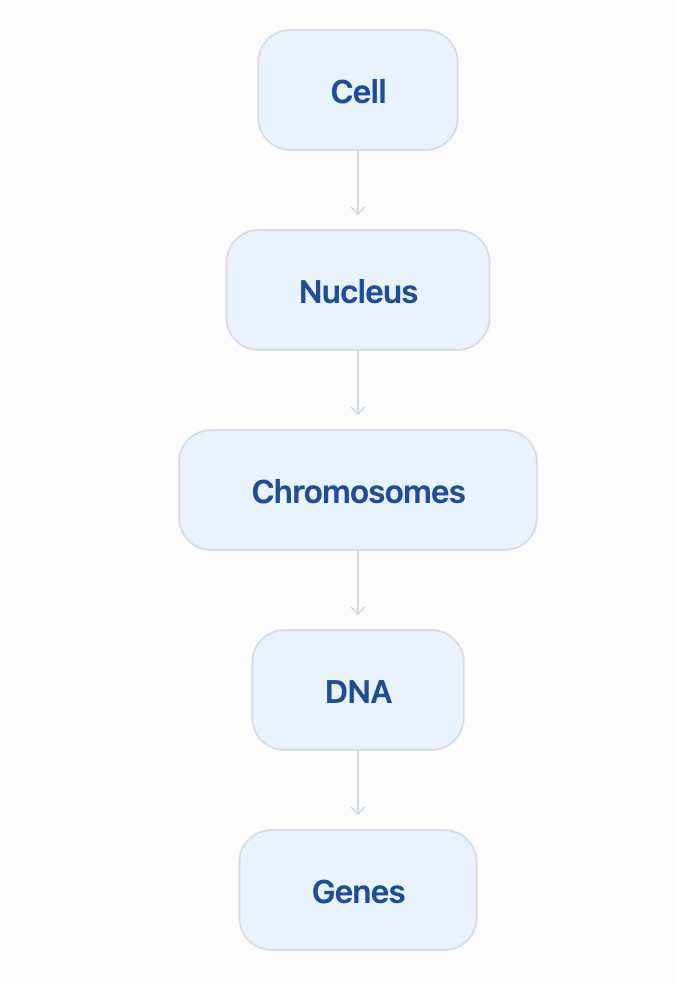
A gene is a section of DNA containing instructions for producing a functional product, usually a protein or functional RNA molecule.
Each chromosome contains many genes. Different genes have different base sequences and therefore carry different instructions.
For example, humans have genes involved in:
- Producing insulin
- Making haemoglobin
- Controlling eye pigment
- Building enzymes
- Regulating cell division
- Supporting immune responses
Not every section of DNA codes directly for a protein. Some DNA sequences help control when, where, and how strongly genes are activated.
From Genes to Proteins
Proteins are large biological molecules built from smaller units called amino acids.
A gene’s base sequence provides instructions that help determine the amino acid sequence of a protein. The amino acid sequence then causes the protein to fold into a particular three-dimensional shape.
That shape is essential to the protein’s function.
The pathway from DNA to protein can be summarized as:

Transcription
During transcription:
- A particular gene is activated.
- The DNA strands separate in the gene’s region.
- One DNA strand acts as a template.
- The cell produces a messenger RNA copy called mRNA.
- The mRNA leaves the nucleus and travels to a ribosome.
Translation
During translation:
- A ribosome reads the base sequence in the mRNA.
- The sequence is read in groups of three bases called codons.
- Each codon corresponds to a particular amino acid or instruction.
- Amino acids are joined in the correct order.
- The amino-acid chain folds into a working protein.
This is sometimes summarized as:
How Proteins Influence Characteristics
Proteins can influence characteristics by forming structures or controlling processes inside cells.
Examples include:
- Keratin contributes to hair and nail structure.
- Collagen provides strength and support to tissues.
- Haemoglobin transports oxygen in red blood cells.
- Insulin helps regulate blood glucose.
- Melanin-producing enzymes affect pigmentation.
- Digestive enzymes break large food molecules into smaller molecules.
- Antibodies help defend the body against pathogens.
The relationship between genes and characteristics can be written as:
However, most characteristics are not controlled by one gene alone. Many result from the interaction of:
- Several genes
- Environmental conditions
- Nutrition
- Lifestyle
- Development
- Chance biological events
For example, a person’s height is influenced by many genes, but it is also affected by nutrition and health.
Alleles and Genetic Variation
Different versions of the same gene are called alleles.
Alleles have slightly different DNA base sequences. These differences may produce:
- Different forms of a protein
- Different amounts of a protein
- A protein that does not function
- No noticeable difference
For example, different alleles of genes involved in pigmentation can contribute to differences in eye, hair, or skin colour.
Not all genetic differences affect appearance. Genetic variation can also influence:
- Blood type
- Enzyme activity
- Disease resistance
- Metabolism
- Responses to medications
How Genetic Information Is Inherited
Genetic information passes from parents to offspring through reproductive cells called gametes.
In humans:
- The male gamete is the sperm cell.
- The female gamete is the egg cell.
- Each gamete contains one set of 23 chromosomes.
- Fertilization combines the two gametes.
- The resulting cell usually contains 46 chromosomes.
An offspring normally receives:
- One version of each gene from its biological mother
- One version of each gene from its biological father
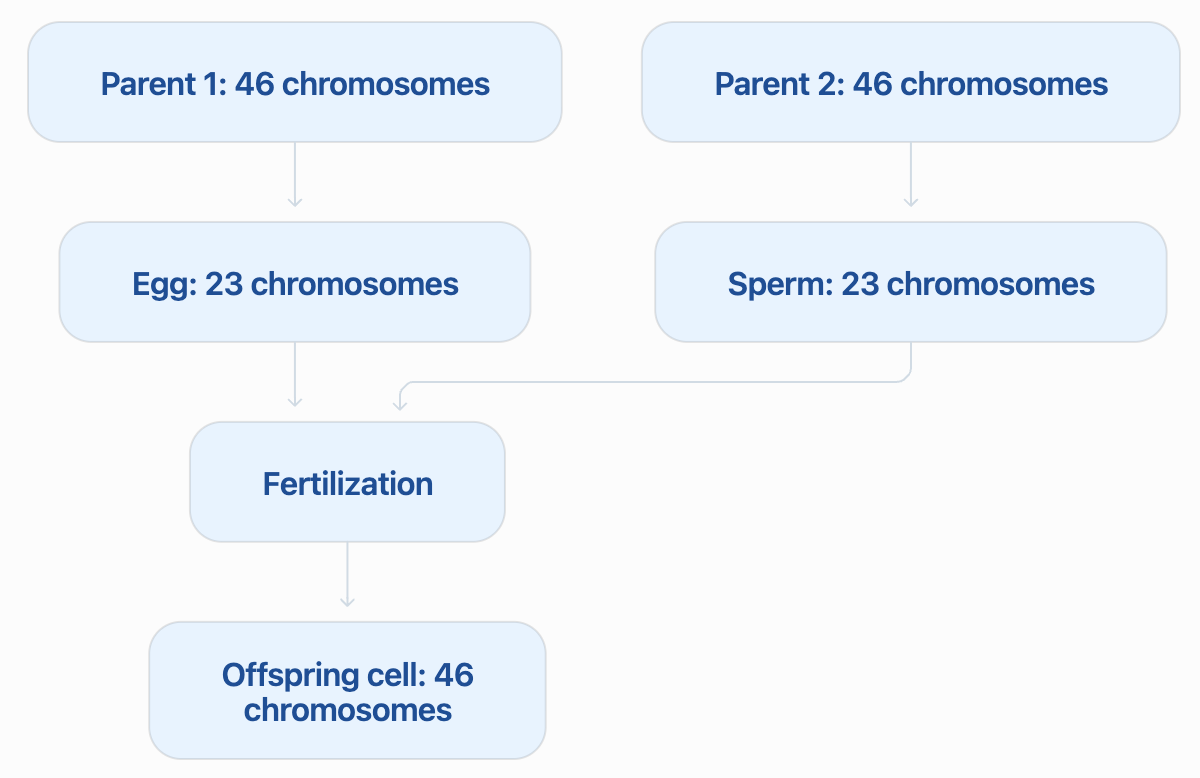
Before gametes form, DNA is copied and chromosomes are separated through meiosis. Meiosis also rearranges genetic information, helping make each gamete genetically different.
This mixing of alleles is one reason siblings from the same parents are usually genetically different.
DNA Replication
Before most cells divide, their DNA must be copied. This process is called DNA replication.
During replication:
- The two DNA strands separate.
- Each original strand acts as a template.
- Complementary nucleotides are added.
- A pairs with T, and C pairs with G.
- Two DNA molecules are produced.
Each new DNA molecule contains:
- One strand from the original molecule
- One newly constructed strand
Accurate replication allows new cells to receive essentially the same genetic instructions as the original cell.
Mutations
A mutation is a change in a DNA sequence.
Mutations can occur because of:
- Errors during DNA replication
- Ultraviolet radiation
- Ionizing radiation
- Certain chemicals
- Some viruses
A mutation may:
- Have no observable effect
- Change a protein slightly
- Prevent a protein from working
- Alter gene regulation
- Occasionally produce a beneficial characteristic
If a mutation occurs in a body cell, it may affect only the individual. If it occurs in a cell that produces gametes, it may be passed to offspring.
Mutations create new alleles and are an important source of genetic variation.
Why DNA Is Central to Biotechnology
Biotechnology uses organisms, cells, enzymes, or biological molecules to develop useful products and processes.
DNA is central to modern biotechnology because it:
- Stores biological instructions.
- Can be extracted from cells.
- Can be copied.
- Can be sequenced.
- Can be compared between organisms.
- Can sometimes be transferred or edited.
- Can direct cells to produce useful proteins.


DNA Profiling
DNA profiling examines highly variable regions of DNA.
It can be used to:
- Help identify individuals
- Investigate biological relationships
- Analyze evidence in forensic investigations
- Identify human remains
- Support wildlife conservation
Except for identical twins, individuals normally have different DNA profiles.
Polymerase Chain Reaction
Polymerase chain reaction, or PCR, is a laboratory technique used to make millions of copies of a selected DNA region.
PCR is useful when only a small DNA sample is available. Applications include:
- Medical testing
- Pathogen detection
- Forensic science
- Genetic research
- Environmental DNA analysis
DNA Sequencing
DNA sequencing determines the order of bases in a DNA molecule.
Scientists can use sequencing to:
- Identify genetic variants
- Study inherited conditions
- Compare species
- Track disease-causing organisms
- Investigate evolutionary relationships
- Support personalized medicine
Recombinant DNA
Recombinant DNA is formed by combining DNA from different sources.
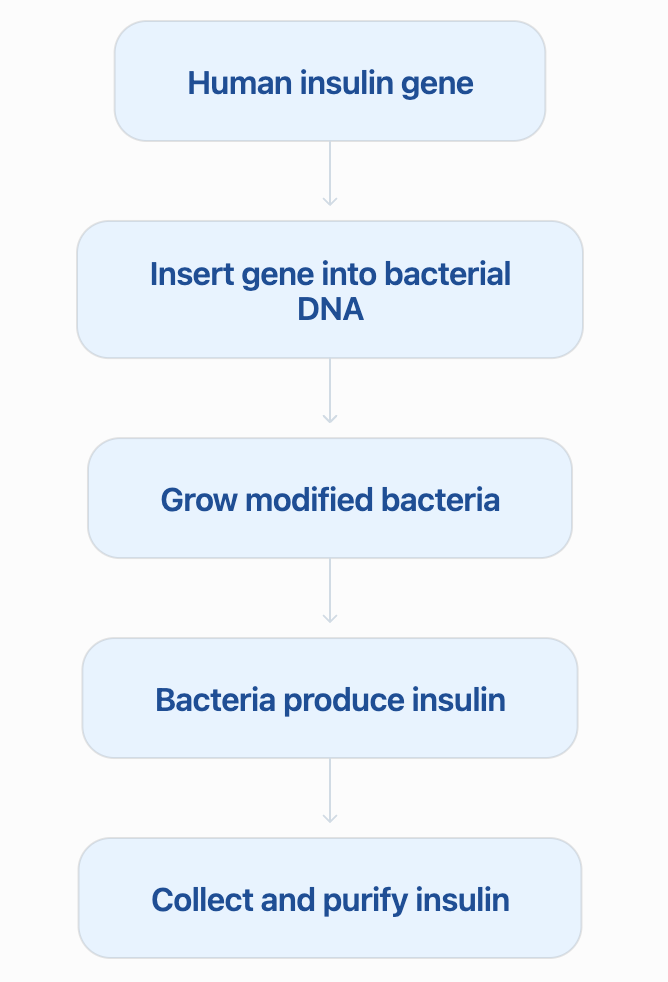
For example, scientists can insert the human insulin gene into bacteria. The genetically modified bacteria read the gene and produce human insulin protein.
The process can be summarized as:
2. Restriction Enzymes
Learning outcomes
- I can describe the function of restriction enzymes.
- I can explain how restriction enzymes cut DNA.
- I can identify recognition sequences in DNA.
- I can explain why restriction enzymes are important in genetic engineering.
- I can interpret simple diagrams involving restriction enzymes.


3. Recombinant DNA
Learning outcomes
- I can define recombinant DNA.
- I can explain how DNA from different organisms can be combined.
- I can describe the steps used to create recombinant DNA.
- I can explain the role of plasmids in genetic engineering.
- I can identify examples of recombinant DNA technology.


4. Genetic Modification (GM)
Learning outcomes
- I can explain how genes can be transferred between organisms.
- I can describe the process of genetic modification.
- I can identify examples of genetically modified organisms (GMOs).
- I can evaluate the benefits and risks of GM technology.
- I can explain how genetic modification can alter traits.
Genetic modification (GM) is the deliberate alteration of an organism's genetic material using biotechnology.
Scientists can change DNA in order to give an organism a particular characteristic, or trait. This may involve adding a gene, removing genetic material, or changing an existing DNA sequence.
Genetic modification has applications in:
- agriculture
- medicine
- scientific research
- industry
- environmental science
Examples include bacteria engineered to produce human insulin, crops modified for insect resistance, and organisms modified to help scientists study the functions of genes.


From DNA to Traits
To understand genetic modification, recall the relationship:
DNA → genes → proteins → traits
A gene is a section of DNA containing information used to produce a functional product, often a protein.
Proteins can influence characteristics by acting as:
- enzymes
- hormones
- receptors
- structural components
- transport proteins
If scientists change an organism's genes, they may change the proteins it produces.
This can alter its characteristics.
Example
Suppose a plant receives a gene that allows its cells to produce a protein toxic to certain insect pests.
The plant now has a new characteristic:
increased resistance to those insects
The change in DNA has resulted in a change in phenotype.
What Is Genetic Modification?
Genetic modification involves deliberately changing an organism's DNA using biotechnology.
Several types of change are possible.
Scientists may:
- insert a gene
- remove or disable a gene
- alter a DNA sequence
- change how strongly a gene is expressed
- transfer genetic information between organisms
An organism whose genetic material has been altered using genetic engineering may be described as a genetically modified organism (GMO).
Selective Breeding vs Genetic Modification
Humans have changed organisms for thousands of years through selective breeding.
Farmers choose organisms with desirable characteristics and breed them together.
Over generations, particular alleles can become more common.
Genetic modification works differently.
| Selective Breeding | Genetic Modification |
|---|---|
| Uses reproduction | Directly alters DNA |
| Usually involves many genes | Can target particular genes |
| Changes occur over generations | Specific changes can be introduced directly |
| Usually uses sexually compatible organisms | Some methods can introduce DNA from more distantly related organisms |
| Less precise control over inherited combinations | Can make more targeted genetic changes |
Both approaches can change the characteristics of organisms, but they do so in different ways.


Recombinant DNA
A major concept in traditional genetic engineering is recombinant DNA.
Recombinant DNA contains DNA sequences that have been joined together using biotechnology.
For example, scientists can combine:
a gene of interest + bacterial plasmid DNA
The resulting plasmid contains a new combination of genetic material.
This DNA can then be introduced into suitable cells.
What Is a Plasmid?
A plasmid is a small, usually circular DNA molecule found naturally in many bacteria.
Plasmids are separate from the main bacterial chromosome.
Scientists can use engineered plasmids as vectors.
A vector is a carrier used to deliver genetic material into a cell.


Engineered plasmids may contain:
- a gene of interest
- regulatory DNA
- sequences needed for replication or selection
Different vectors are used depending on the organism and purpose.
The Basic Idea of Gene Transfer
A simplified genetic-engineering process can be represented as:
identify useful gene
↓
obtain or construct the desired DNA
↓
place DNA into a suitable vector or delivery system
↓
introduce the genetic material into target cells
↓
identify cells containing the desired change
↓
allow the gene to function
↓
test whether the desired trait is produced
The exact method depends on the organism and the goal.
Step 1: Identify the Desired Trait
Scientists first determine the characteristic they want to change.
For example:
- insect resistance
- disease resistance
- nutritional content
- production of a medicine
- ability to produce a particular enzyme
They then investigate the genetic information associated with that characteristic.
Modern genetic engineering therefore depends heavily on understanding:
genes → proteins → traits
Step 2: Identify or Design the Gene
Scientists may identify a DNA sequence associated with the desired characteristic.
For example, a particular gene may contain instructions for a useful protein.
Modern biotechnology can also allow DNA sequences to be:
- copied
- modified
- synthesized
- assembled
The goal is to create genetic material capable of functioning appropriately in the target organism.
Step 3: Construct Recombinant DNA
In classic recombinant-DNA methods, enzymes can be used to manipulate DNA.
Two important types are:
Restriction Enzymes
Restriction enzymes recognize particular DNA sequences and cut DNA.
DNA Ligase
DNA ligase joins DNA fragments by forming bonds in the DNA backbone.


A simplified model is:
plasmid cut + desired DNA prepared → compatible DNA joined → recombinant plasmid
This is one classic method of creating recombinant DNA.
Restriction Enzymes
Restriction enzymes originally evolved in bacteria as part of their defence against foreign DNA.
Different restriction enzymes recognize different DNA sequences.
When they cut DNA, they may produce:
- sticky ends
- blunt ends
Sticky ends contain short single-stranded regions that can pair with complementary sequences.
This can make joining compatible DNA fragments easier.
DNA Ligase
Once compatible DNA fragments are positioned together, DNA ligase can help join them permanently.
An easy analogy is:
restriction enzyme → molecular scissors
DNA ligase → molecular glue
This analogy is useful, although the actual molecular processes are more complex.
Step 4: Introduce DNA into Cells
The engineered DNA must then enter the target cells.
Different organisms require different delivery techniques.
Methods used in biotechnology can include:
- plasmid-based transformation
- modified biological vectors
- physical delivery methods
- specialized laboratory techniques
The important principle is:
The new genetic information must reach the appropriate cells and be maintained or integrated in a way that allows the desired effect.
Genetic Modification of Bacteria
Bacteria are widely used in biotechnology.
They:
- reproduce rapidly
- can be grown in large quantities
- are relatively simple to study
- can contain plasmids
- can manufacture useful proteins
One famous application is the production of human insulin.


Genetically Engineered Insulin
Insulin is a hormone involved in regulating blood glucose.
Today, forms of human insulin and insulin analogues can be manufactured using genetically engineered microorganisms.
The basic concept is:
DNA encoding insulin-related protein
↓
introduced into suitable microorganisms
↓
microorganisms express the genetic information
↓
protein is produced
↓
product is purified and processed
This was a major development in biotechnology because microorganisms could be used as biological manufacturing systems.
Why Can a Human Gene Work in a Microorganism?
The genetic code is nearly universal.
This means that organisms generally use the same relationships between nucleotide codons and amino acids.
For example, a particular codon usually specifies the same amino acid whether it occurs in a human, bacterium, or plant.
This shared genetic code is one reason genes or engineered coding sequences can sometimes function in very different organisms when provided with suitable regulatory elements.
It is also strong evidence of the shared evolutionary ancestry of life.
Genetically Modified Plants
Plants are frequently genetically modified for agricultural or research purposes.
Possible traits include:
- insect resistance
- disease resistance
- herbicide tolerance
- altered nutritional composition
- altered ripening
- tolerance of some environmental stresses


Once plant cells containing the desired genetic change are obtained, plant biotechnology techniques can sometimes be used to regenerate whole plants from those cells.
Bt Crops
Some genetically modified crops contain genes derived from the bacterium Bacillus thuringiensis, often shortened to Bt.
These genes allow plants to produce particular Bt proteins that affect certain insect pests.
Examples of Bt crops include some varieties of:
- maize
- cotton


The intended result is:
Bt gene → Bt protein → reduced damage from susceptible insect pests
This can reduce reliance on some insecticide applications, although resistance management remains important.
Herbicide-Tolerant Crops
Some crops have been genetically modified so they tolerate particular herbicides.
This allows farmers to control certain weeds while the crop survives the treatment.
Potential advantages include:
- effective weed control
- simplified management
- compatibility with some reduced-tillage systems
However, repeated reliance on the same herbicide can create strong selection pressure.
Over time, resistant weed populations can become more common.
This is an example of natural selection occurring within an agricultural system.
Golden Rice
Golden Rice was genetically engineered so that the edible part of the rice grain produces beta-carotene.


Beta-carotene can be converted by the human body into vitamin A.
Golden Rice was developed as one approach intended to help address vitamin A deficiency.
This is an example of biofortification—increasing the nutritional value of a food crop.
Whether a particular biofortified crop achieves its intended public-health benefits also depends on factors such as:
- access
- acceptance
- diet
- distribution
- agricultural performance
Biotechnology is therefore often only one part of a larger solution.
Genetic Modification of Animals
Animals can also be genetically modified.
Applications include:
- biomedical research
- studying gene function
- producing biological products
- modelling human diseases
- changing agricultural traits


Genetic modification of animals can raise additional ethical and animal-welfare questions, particularly when changes may affect health or quality of life.
Fluorescent Organisms
Scientists can transfer genes encoding fluorescent proteins into organisms.
One well-known example is green fluorescent protein (GFP), originally identified in a jellyfish.
A GFP gene can be used as a reporter gene.
Cells expressing the gene can produce fluorescent protein, helping scientists investigate:
- gene expression
- cell location
- development
- protein movement


This shows how genetic modification can be used as a scientific research tool, not only to create commercial products.
Gene Editing
Modern biotechnology also includes gene editing.
Gene editing allows scientists to make targeted changes to DNA.
One well-known system is CRISPR-Cas technology.


Gene editing can be used to:
- disrupt a gene
- change a DNA sequence
- correct some genetic variants in research or therapeutic contexts
- modify gene activity
This differs from some older forms of genetic engineering because adding a gene from another species is not always necessary.
Genetic Modification Can Change Traits
Suppose a gene codes for an enzyme needed to produce a pigment.
If scientists disable that gene:
gene activity changes
↓
enzyme production changes
↓
pigment production changes
↓
visible trait changes
Alternatively, adding a gene may allow an organism to produce a protein it previously could not make.
Therefore:
Changing DNA can change protein production, which can change phenotype.
However, many traits are controlled by multiple genes and environmental factors, so not every characteristic can be changed by modifying one gene.
Genotype and Phenotype
Recall:
genotype = genetic information an organism carries
phenotype = observable characteristics resulting from interactions between genotype and environment
Genetic modification changes part of the organism's genotype.
This may change phenotype.
But phenotype can also depend on:
- other genes
- nutrition
- temperature
- development
- environmental conditions
Therefore:
genetic change does not always produce a simple or completely predictable visible change.
Potential Benefits of GM Technology
Genetic modification can offer significant benefits depending on the application.
Agriculture
Potential benefits include:
- reduced crop losses
- resistance to particular pests or diseases
- altered nutritional content
- improved agricultural management
- possible reduction in some pesticide use
Medicine
Applications include:
- production of medicines
- production of vaccines or vaccine components
- research into diseases
- development of some gene-based therapies
Research
Scientists can alter genes to determine what they do.
Industry
Engineered microorganisms can produce:
- enzymes
- chemicals
- food ingredients
- biological materials
Potential Agricultural Benefits
Imagine a crop that is frequently damaged by a particular insect.
If a genetic modification provides effective resistance:
less insect damage → greater surviving yield
Depending on the crop and farming system, this may also reduce the amount of some insecticides required.
However, the result depends on:
- the crop
- the pest
- local agricultural practices
- resistance development
- environmental conditions
GM technology should therefore be evaluated case by case rather than assuming every GM crop has identical effects.
Potential Risks and Concerns
Genetic modification also raises important questions.
Possible concerns include:
- genes spreading into related populations
- effects on non-target organisms
- development of resistant pests or weeds
- reduced genetic diversity in some agricultural systems
- unintended biological effects
- economic impacts on farmers
- control and ownership of agricultural technologies
- ethical concerns


Importantly, these risks vary considerably among different organisms and modifications.
Gene Flow
Gene flow is the movement of genetic information between populations.
For plants, pollen can sometimes transfer alleles between compatible populations.
For example:
GM crop → pollen → compatible nearby plant
If fertilization occurs, offspring may inherit the modified allele.
Whether this creates an environmental concern depends on:
- the species involved
- whether compatible relatives are nearby
- the trait
- whether the gene provides a survival advantage
- environmental conditions
Scientists may study these possibilities during environmental risk assessment.
Evolution of Resistance
GM technology does not stop evolution.
Consider an insect-resistant crop.
Within a large pest population, some individuals may naturally be less susceptible.
If susceptible insects are removed more often, resistant individuals may survive and reproduce.
Over generations:
selection pressure → resistant individuals reproduce → resistance becomes more common
This is natural selection.
Resistance-management strategies are therefore important when pest-control technologies are used.
GMOs and Food Safety
A common question is:
"Are GM foods safe?"
Scientifically, it is more useful to evaluate the specific product and modification rather than treating all GMOs as identical.
Safety assessment may consider:
- the newly expressed product
- possible toxicity
- possible allergenicity
- nutritional composition
- unintended changes
- exposure
- environmental effects
Different genetically modified organisms can contain entirely different genetic changes.
Therefore, simply knowing that something is "GM" does not describe all of its biological properties.
Ethical Questions
Genetic modification also creates questions that science alone cannot completely answer.
For example:
- Should animals be genetically modified for human benefit?
- How should animal welfare be protected?
- Who should control patented genetic technologies?
- How should GM foods be labelled?
- How should environmental risks be balanced against possible benefits?
- Should some types of human genetic modification be permitted?
Science can provide evidence about likely outcomes.
Societies then use that evidence together with:
- ethics
- laws
- economics
- cultural values
to make decisions.
Evaluating GM Technology
A strong evaluation should consider both benefits and risks.
Instead of saying:
"GMOs are good."
or:
"GMOs are bad."
ask more specific questions.
What organism is being modified?
A bacterium? Plant? Animal?
What gene or sequence is being changed?
What trait results?
What problem is the technology intended to solve?
What evidence supports the benefit?
What possible risks exist?
How likely are those risks?
Can the risks be reduced or managed?
This is a much more scientific approach.
Example Evaluation: Insect-Resistant Crop
Imagine a genetically modified crop that produces a protein toxic to a particular insect pest.
Possible Benefits
- reduced crop damage
- potentially increased yield
- reduced use of some insecticides
- lower losses for farmers
Possible Concerns
- evolution of resistant insect populations
- ecological effects that require assessment
- movement of the gene into compatible plants
- cost and access issues
Evaluation
The technology should be evaluated using evidence from the specific crop, gene, environment, and farming system.
The fact that the crop is genetically modified does not by itself tell us whether its overall effects will be beneficial or harmful.
Genetic Engineering in Medicine
Engineered cells and microorganisms are used to produce many biologically active substances.
Examples can include:
- insulin
- some hormones
- enzymes
- antibodies
- vaccine components


This field is sometimes called biopharmaceutical biotechnology.
Large vessels called bioreactors can provide controlled conditions for growing cells or microorganisms and producing useful substances.
Genetic Modification vs Gene Therapy
These terms are related but not identical.
Genetic Modification
Broadly refers to altering genetic material.
It can involve:
- microorganisms
- plants
- animals
- cells
Gene Therapy
Uses genetic material or gene editing with the aim of treating or preventing disease in a patient.
Gene therapy is therefore a medical application of genetic technology.
Somatic and Heritable Changes
In humans and other animals, an important distinction can be made between:
Somatic Cells
Body cells that do not produce the next generation.
Genetic changes made to somatic cells generally affect the treated individual and are not inherited by offspring.
Germline Cells
Cells involved in producing eggs or sperm, or very early developmental stages that can pass changes into future generations.
Heritable genetic modification raises especially significant scientific, ethical, and regulatory questions because changes could be transmitted to descendants.
Worked Example 1: From Gene to Trait
A plant is given a gene that allows it to produce a protein that reduces damage from a particular insect.
Explain how the genetic modification changes the plant's phenotype.
Solution
The inserted genetic information is expressed by plant cells.
new genetic information
↓
protein produced
↓
protein affects the insect pest
↓
less pest damage
The plant therefore shows the phenotype:
increased resistance to that pest
Worked Example 2: Recombinant DNA
Scientists want bacteria to produce a useful protein.
Arrange these simplified steps into a logical order:
A. Bacteria containing the engineered DNA produce the protein.
B. The desired DNA sequence is obtained or constructed.
C. The DNA is inserted into an appropriate vector.
D. The engineered vector is introduced into suitable bacterial cells.
Correct Order
B → C → D → A
This demonstrates the general idea:
desired DNA → vector → host cell → gene expression → protein
Worked Example 3: Evaluating Evidence
Two crops are compared.
Crop A
Produces a protein that controls a particular insect pest.
Crop B
Does not.
Researchers find that farms using Crop A require fewer applications of a particular insecticide under the conditions studied.
Can we conclude that all GM crops always reduce pesticide use?
Answer
No.
The evidence supports a conclusion about:
- this crop
- this trait
- this pest-control system
- the conditions studied
Other GM crops may have different traits and different effects.
Scientific conclusions should match the evidence available.
Common Mistakes
Mistake 1: "A GMO always contains a gene from another species."
Not necessarily.
Modern genetic modification can involve:
- altering an existing gene
- disabling a gene
- changing gene regulation
- editing a DNA sequence
without necessarily introducing a gene from another species.
Mistake 2: "Genetic modification and selective breeding are the same."
Both can alter traits, but their methods are different.
Selective breeding works through reproduction and selection.
Genetic engineering directly manipulates DNA.
Mistake 3: "One gene always controls one trait."
Some relatively simple traits can be strongly influenced by one gene.
Many traits, however, involve:
- multiple genes
- environmental factors
- interactions among genes
Mistake 4: "Restriction enzymes randomly cut DNA."
Restriction enzymes recognize particular DNA sequences.
They do not simply cut DNA everywhere at random.
Mistake 5: "DNA ligase cuts DNA."
DNA ligase joins DNA fragments.
Restriction enzymes are commonly used for cutting DNA in classic recombinant-DNA techniques.
Mistake 6: "Plasmids are bacterial chromosomes."
Plasmids are usually small DNA molecules separate from the main bacterial chromosome.
Mistake 7: "All genetically modified organisms are basically the same."
GMOs can have completely different:
- genes
- traits
- purposes
- risks
- benefits
They should be evaluated individually.
Mistake 8: "GM crops cannot evolve."
The crops, pests, weeds, and surrounding organisms remain subject to evolutionary processes.
Selection can lead to resistance.
Mistake 9: "If a technology has benefits, it has no risks."
Nearly all technologies involve trade-offs.
Scientific evaluation should examine both benefits and risks.
Mistake 10: "If a technology has a risk, it should never be used."
Risk alone does not determine whether a technology is useful.
Scientists and decision-makers consider:
likelihood + severity + benefits + alternatives + risk-management options
Check Your Understanding
1. Recall
Define:
- genetic modification
- GMO
- plasmid
- vector
2. Genes and Traits
Explain the sequence:
gene → protein → trait
How can changing a gene alter an organism's phenotype?
3. Recombinant DNA
Describe the roles of:
- restriction enzymes
- DNA ligase
- plasmids
in a simplified example of genetic engineering.
4. Insulin
Explain how genetically engineered microorganisms can be used to produce a human protein such as insulin.
5. Genetic Code
Why can genetic information from one organism sometimes function in a very different organism?
6. GM Crops
Identify two possible benefits and two possible concerns associated with genetically modified crops.
7. Resistance
Explain how repeated use of an insect-resistant crop could contribute to the evolution of resistant insect populations.
Use:
- variation
- selection pressure
- survival
- reproduction
- inheritance
8. Compare
Explain one important difference between:
selective breeding
and:
genetic modification
9. Evaluate
A genetically modified crop produces higher yields but costs farmers more to purchase.
What additional evidence would you want before deciding whether the crop is useful?
Consider:
- environmental effects
- pesticide use
- economic costs
- food production
- long-term effectiveness
10. Challenge
A student says:
"GMOs are either safe or unsafe. Once scientists decide which one, the same answer applies to every GMO."
Evaluate this statement.
Explain why scientists normally evaluate the specific organism, genetic change, trait, intended use, exposure, and environment rather than treating all GMOs as identical.
Key Terms
- Genetic modification (GM) – deliberate alteration of genetic material using biotechnology
- Genetically modified organism (GMO) – organism whose genetic material has been altered using genetic engineering
- Genetic engineering – direct manipulation of DNA using biotechnology
- Gene – section of DNA containing genetic information
- Trait – characteristic of an organism
- Genotype – genetic information carried by an organism
- Phenotype – observable characteristics resulting from genotype and environment
- Recombinant DNA – DNA constructed by joining genetic material using biotechnology
- Plasmid – small DNA molecule found naturally in many bacteria
- Vector – carrier used to deliver genetic material
- Restriction enzyme – enzyme that recognizes particular DNA sequences and cuts DNA
- DNA ligase – enzyme that joins DNA fragments
- Transformation – uptake of genetic material by a cell
- Gene expression – use of genetic information to produce a functional product
- Transgenic organism – organism containing introduced genetic material originating from another organism or source
- Bt crop – genetically engineered crop producing particular proteins derived from Bacillus thuringiensis
- Biofortification – increasing the nutritional content of food crops
- Gene editing – targeted alteration of DNA sequences
- CRISPR-Cas – family of technologies used for targeted gene editing
- Gene flow – movement of genetic information between populations
- Reporter gene – gene used to help scientists observe gene expression or biological processes
- Bioreactor – controlled vessel used to grow cells or microorganisms for biological production
Key Takeaways
- Genetic modification deliberately changes an organism's DNA.
- Changing DNA can alter gene expression, proteins, and traits.
- Genetic modification may involve adding, removing, disabling, or editing genetic material.
- Plasmids can be used as vectors to carry engineered DNA into bacterial cells.
- Restriction enzymes can cut DNA, while DNA ligase joins DNA fragments in classic recombinant-DNA methods.
- The genetic code is nearly universal, helping explain why genetic information can sometimes function across different organisms.
- Genetically engineered microorganisms can produce useful substances such as insulin and other biological products.
- GM crops can be engineered for characteristics such as insect resistance, herbicide tolerance, disease resistance, or altered nutrition.
- Genetic modification is different from selective breeding, although both can change traits.
- Gene editing technologies such as CRISPR-Cas allow targeted changes to DNA.
- Potential benefits of GM technology occur in agriculture, medicine, research, and industry.
- Potential concerns can include gene flow, resistance evolution, ecological effects, economic impacts, and ethical questions.
- GM technologies should be evaluated case by case, because different genetic modifications can have very different effects.
- Scientific evaluation considers both benefits and risks and examines the quality of the available evidence.
- Genetic modification demonstrates a central principle of biotechnology: by changing genetic information, scientists can sometimes change how cells function and therefore alter the characteristics of an organism.
5. Applications of Genetic Engineering
Learning outcomes
- I can identify practical applications of genetic engineering.
- I can explain how genetic engineering is used in medicine.
- I can describe agricultural applications of genetic engineering.
- I can explain how engineered organisms can produce useful substances.
- I can evaluate the impact of genetic engineering on society.
Genetic engineering allows scientists to deliberately change DNA. But why would we want to do this?
The answer is that genes contain instructions that influence how cells function. By changing those instructions, scientists can sometimes give cells or organisms useful new abilities.
Today, genetic engineering has applications in:
- medicine
- agriculture
- food production
- scientific research
- industry
- environmental science
One of its most important ideas is surprisingly simple:
Living cells can sometimes be engineered to become tiny biological factories.
A microorganism, plant, or animal cell can be given genetic instructions to produce a useful substance such as a medicine, enzyme, or industrial material.


From Genetic Engineering to Useful Products
Recall the basic relationship:
DNA → genes → proteins → traits
Many useful substances are proteins.
Examples include:
- insulin
- enzymes
- some hormones
- antibodies
- vaccine components
If scientists introduce appropriate genetic instructions into suitable cells, those cells may produce the desired protein.
The general idea is:
identify useful gene
↓
create or obtain the desired DNA
↓
introduce it into suitable cells
↓
cells express the gene
↓
useful product is produced
↓
product is collected and purified
This approach is known as recombinant DNA technology when DNA sequences are deliberately combined.
Genetic Engineering in Medicine
Medicine is one of the most important areas in which genetic engineering is used.
Applications include:
- manufacturing medicines
- producing some vaccines
- producing antibodies
- studying diseases
- creating genetically modified research organisms
- developing gene therapies
- engineering immune cells


Producing Human Insulin
One of the classic examples of genetic engineering is the production of human insulin.
Insulin is a protein hormone involved in controlling blood glucose concentration.
People with some forms of diabetes need insulin treatment.
Before genetically engineered insulin became available, insulin used medically was commonly obtained from animals such as pigs and cattle.
Genetic engineering provided another way to manufacture it.
How Engineered Cells Produce Insulin
A simplified process is:
1. Genetic information for producing insulin is identified and prepared.
↓
2. The appropriate DNA is placed into a suitable genetic vector.
↓
3. The engineered DNA is introduced into microorganisms such as bacteria or yeast.
↓
4. The cells are grown under controlled conditions.
↓
5. The cells produce the desired insulin-related protein.
↓
6. The product is recovered, processed, and purified.


The result is insulin manufactured using genetically engineered living cells.
Why Can Microorganisms Produce Human Proteins?
The genetic code is nearly universal.
Organisms generally interpret DNA codons in the same way when translating genetic information into proteins.
This means appropriately engineered microorganisms can sometimes use genetic instructions associated with human proteins.
However, scientists must also provide suitable genetic control sequences and production conditions.
A human gene cannot simply be placed anywhere inside a bacterium and automatically be expected to work correctly.
Biological Factories
Engineered cells used to manufacture useful substances are sometimes described as biological factories.
Imagine millions or billions of microorganisms growing in controlled conditions.
Each cell can manufacture the desired product.
Together, the population can produce useful quantities.


Large controlled vessels called bioreactors may be used to grow these cells.
Conditions such as:
- temperature
- pH
- nutrients
- oxygen
- mixing
can be carefully controlled.
Other Medicines Produced Using Genetic Engineering
Genetically engineered cells can produce many useful biological products.
Examples include certain forms of:
- human growth hormone
- clotting factors
- enzymes
- antibodies
- vaccine components
- therapeutic proteins
Before recombinant technology, some of these substances were difficult or expensive to obtain.
Genetic engineering can allow them to be manufactured at larger scales under controlled conditions.
Human Growth Hormone
Human growth hormone (HGH) is a protein involved in growth and metabolism.
Recombinant DNA technology can be used to produce human growth hormone using engineered microorganisms.
The general principle is similar to insulin production:
human genetic information → engineered cells → protein production → purification
This illustrates an important advantage of biotechnology:
The same general genetic-engineering principles can be adapted to manufacture many different biological products.
Clotting Factors
Blood contains proteins involved in clotting.
Some people have inherited conditions in which particular clotting factors are missing or do not function correctly.
Recombinant technology can be used to manufacture certain clotting factors for medical treatment.


This is another example of engineered cells producing a protein that can be purified and used as medicine.
Genetic Engineering and Vaccines
Genetic engineering can also contribute to vaccine production.
Some vaccines use a specific protein or other antigen associated with a pathogen rather than using the complete disease-causing organism.
Genetically engineered cells can sometimes produce these antigens.
The general process is:
genetic information for antigen
↓
engineered production cells
↓
antigen produced
↓
antigen purified/formulated
↓
used as part of a vaccine


The hepatitis B vaccine is a well-known example of a vaccine produced using recombinant biotechnology.
Monoclonal Antibodies
Antibodies are proteins that recognize particular molecular targets.
Biotechnology can produce large quantities of specific antibodies called monoclonal antibodies.
Modern antibody production often involves genetically engineered cells.
Monoclonal antibodies have applications in:
- medical treatments
- diagnostic tests
- laboratory research
Different antibodies can be designed or selected to recognize different targets.
Gene Therapy
Genetic engineering can also be used to change genetic material inside a patient's cells.
This approach is called gene therapy.
The aim is to treat or prevent disease by modifying genetic information or its effects.


Possible strategies include:
- providing a functional gene
- altering gene activity
- editing a harmful genetic variant
- modifying cells so they perform a therapeutic function
Gene therapy is different from simply giving a patient a drug because the treatment acts directly on genetic information or genetically modified cells.
Ex Vivo Gene Therapy
One approach is called ex vivo therapy.
Ex vivo means outside the body.
A simplified process is:
patient's cells removed
↓
cells genetically modified in the laboratory
↓
modified cells tested or expanded
↓
cells returned to patient
This approach allows scientists and clinicians to work with the cells before returning them to the body.
In Vivo Gene Therapy
Another approach is in vivo gene therapy.
In vivo means inside the living organism.
Genetic material or a gene-editing system is delivered directly into the patient's body and targeted toward particular cells or tissues.
Both approaches present engineering and biological challenges involving:
- delivery
- targeting
- effectiveness
- immune responses
- safety
Engineered Immune Cells
Some cancer treatments genetically modify a patient's immune cells.
One important example involves CAR-T cells.
Certain T cells are collected and genetically modified so they produce a receptor that helps them recognize a particular target on cancer cells.


The modified cells can then be returned to the patient.
This combines:
genetic engineering + immunology + medicine
and demonstrates how biotechnology can modify a patient's own cells for therapeutic purposes.
Genetic Engineering in Agriculture
Agriculture is another major application.
Scientists can genetically modify crops to change characteristics such as:
- pest resistance
- disease resistance
- herbicide tolerance
- nutritional content
- ripening characteristics
- tolerance to particular environmental stresses


The goal is usually to improve some aspect of:
- crop production
- crop protection
- food quality
- agricultural efficiency
Insect-Resistant Crops
Some crops have been genetically engineered to produce proteins derived from the bacterium Bacillus thuringiensis, or Bt.
Certain Bt proteins affect particular insect pests.
Examples include some varieties of:
- maize
- cotton
The basic idea is:
Bt genetic information
↓
plant produces particular Bt protein
↓
susceptible insect feeds on plant
↓
insect is affected
↓
crop damage may decrease
Possible Benefits of Insect Resistance
Depending on the crop, pest, region, and management system, possible benefits can include:
- reduced crop losses
- improved yields
- reduced use of some insecticides
- reduced exposure to certain chemical insecticides
However, these outcomes should be measured rather than assumed.
Agricultural systems vary greatly between locations.
Evolution of Resistant Pests
Genetic engineering does not prevent evolution.
Suppose a pest population contains variation in susceptibility.
If a Bt crop kills susceptible insects more effectively:
susceptible insects die
while:
more-resistant insects are more likely to survive
Those survivors may reproduce.
Over generations:
resistance alleles can become more common.
This is natural selection.
Resistance-management strategies are therefore an important part of using insect-resistant crops.
Herbicide-Tolerant Crops
Some crops are genetically engineered to tolerate particular herbicides.
Farmers can use the herbicide to control weeds while the crop survives.
Potential benefits can include:
- simpler weed management
- reduced crop competition
- compatibility with some reduced-tillage practices
However, repeated use of the same herbicide can create selection pressure favouring herbicide-resistant weeds.
Again:
genetic engineering + agricultural practices + evolution
must all be considered together.
Disease-Resistant Crops
Plants can also be engineered for resistance to certain diseases.
A famous example involves papaya varieties developed to resist papaya ringspot virus.


Disease-resistant crops can potentially:
- reduce crop losses
- protect agricultural production
- reduce the need for some control methods
The usefulness depends on the specific crop and disease.
Improving Nutritional Content
Genetic engineering can also change the nutritional composition of crops.
One example is Golden Rice.
Golden Rice was engineered so that the edible grain produces beta-carotene.


The body can convert beta-carotene into vitamin A.
This approach is called biofortification.
Biofortification attempts to increase the nutritional value of foods people already consume.
Changing Food Characteristics
Genetic engineering can also alter characteristics associated with:
- ripening
- storage
- browning
- oil composition
- starch composition
For example, reducing the activity of particular enzymes can sometimes slow undesirable changes in harvested food.
These modifications may help reduce:
- food waste
- transportation losses
- storage problems
Again, the effect depends on the specific genetic change.
Genetically Engineered Animals
Animals can also be genetically engineered.
Possible applications include:
- biomedical research
- disease models
- pharmaceutical production
- agriculture
- food production


Animal genetic engineering can raise additional questions about:
- welfare
- environmental effects
- containment
- ethics
These issues must be considered alongside possible benefits.
Engineered Organisms Producing Medicines
Plants and animals can sometimes be engineered to produce useful substances.
For example, researchers have investigated genetically engineered:
- plants producing pharmaceutical proteins
- animals producing proteins in milk
- microorganisms producing therapeutic molecules
This concept is sometimes called pharming when genetically engineered organisms are used to produce pharmaceutical substances.
The organism acts as a biological production system.
Industrial Biotechnology
Genetic engineering is not limited to medicine and agriculture.
Engineered microorganisms can manufacture useful industrial substances.


Possible products include:
- enzymes
- amino acids
- food ingredients
- organic acids
- chemicals
- materials
- fuels or fuel precursors
This field is known as industrial biotechnology.
Enzymes in Industry
Enzymes are biological catalysts.
Engineered microorganisms can produce enzymes for industrial processes.
These enzymes may be used in:
- detergents
- food processing
- textile production
- paper manufacturing
- biofuel production
For example, enzymes in some laundry detergents help break down stains containing:
- proteins
- fats
- starches
Genetic engineering can help produce large quantities of enzymes with useful properties.
Chymosin and Cheese Production
An interesting food-industry example is chymosin.
Chymosin is an enzyme used in cheese production.
Traditionally, chymosin was obtained from animal rennet.
Today, genetically engineered microorganisms can produce chymosin through fermentation.


This demonstrates how genetic engineering can influence everyday food production even when the final food does not contain living genetically engineered microorganisms.
Biofuels
Researchers also investigate genetically engineered microorganisms for the production of fuels and fuel-related chemicals.
Microorganisms can convert biological materials into substances such as:
- ethanol
- other alcohols
- hydrocarbons
- fuel precursors
Genetic engineering may improve the organisms' ability to:
- digest raw materials
- tolerate products
- produce greater quantities
- use different feedstocks
However, whether a biofuel is environmentally beneficial depends on the entire production system, not simply whether biotechnology was used.
Environmental Applications
Genetic engineering may also have environmental applications.
One area is bioremediation.
Bioremediation uses organisms to remove, break down, or transform pollutants.


Researchers can investigate microorganisms with enhanced abilities to process particular substances.
Potential targets include some:
- industrial chemicals
- waste products
- contaminants
However, releasing engineered organisms into natural environments requires careful ecological and safety assessment.
Genetic Engineering in Scientific Research
One of the largest applications of genetic engineering is research itself.
Scientists can modify genes to investigate what those genes do.
For example:
disable gene → observe change → infer possible gene function
Researchers can also insert reporter genes.
Reporter genes produce an easily detected signal.
A famous example is green fluorescent protein (GFP).


If the cells glow, researchers can determine where or when particular genetic processes are active.
Genetically Engineered Disease Models
Scientists can modify laboratory organisms so that they show biological characteristics related to human diseases.
Common research organisms include:
- mice
- fruit flies
- zebrafish
- yeast
- bacteria
These models help researchers investigate:
- gene function
- disease mechanisms
- possible treatments
However, a model organism is not identical to a human.
Results must therefore be interpreted carefully.
Genetic Engineering and Conservation
Biotechnology is also being investigated for conservation applications.
Potential uses include:
- studying genetic diversity
- improving disease resistance
- preserving genetic material
- assisting breeding programs
Some proposed applications are highly experimental and can involve significant ecological and ethical questions.
Conservation biotechnology therefore requires careful evaluation.
Benefits to Society
Genetic engineering can potentially contribute to:
Health
- medicines
- vaccines
- diagnostic tools
- gene therapies
Food Production
- pest resistance
- disease resistance
- nutritional improvement
- reduced crop losses
Industry
- efficient enzyme production
- biological manufacturing
- new materials
Research
- understanding genes
- studying diseases
- testing possible treatments
Environment
- potential pollution-control technologies
- more efficient biological production systems
These applications can provide significant benefits, but benefits must be demonstrated for the specific technology.
Risks and Concerns
Genetic engineering can also create concerns.
These may include:
Environmental
- gene flow
- effects on non-target organisms
- resistant pests or weeds
- ecological disruption
Health
- unintended biological changes
- potential allergenicity of new food proteins
- safety of new therapies
Economic
- technology costs
- patent ownership
- farmer access
- market concentration
Ethical
- animal welfare
- human genetic modification
- fairness of access
- acceptable limits of biotechnology


Who Owns Genetic Technology?
Some genetically engineered products are protected by patents or other intellectual-property rights.
This can encourage companies to invest in expensive research because successful products may generate revenue.
However, it can also raise questions such as:
- Who controls important technologies?
- Can farmers afford the seeds?
- Can researchers access patented tools?
- Who benefits financially?
- How should innovation be balanced with public access?
These are economic and social questions rather than purely biological ones.
Access to Medical Technology
A genetically engineered medicine can be scientifically successful but still have limited social impact if people cannot access it.
Important factors include:
- manufacturing cost
- healthcare systems
- patents
- distribution
- refrigeration
- medical infrastructure
- affordability
Therefore:
Developing a technology and making that technology widely useful are not always the same problem.
Ethical Questions
Some applications generate more ethical debate than others.
Producing insulin using bacteria is very different from making inherited genetic changes to humans.
Questions can include:
- Is the modification medically necessary?
- Could the change be inherited?
- Are there safer alternatives?
- What are the risks?
- Who gives consent?
- Who receives the benefits?
- Could the technology increase inequality?
Science can provide evidence about what a technology can do and what its risks may be.
Ethical reasoning helps societies decide what should be done.
Somatic vs Heritable Genetic Engineering
This distinction is especially important in medicine.
Somatic Modification
Changes body cells.
The modification generally affects only the treated individual.
Heritable Modification
Changes genetic material in a way that could be passed to future generations.
This could affect people who cannot consent to the original procedure.
For this reason, heritable human genetic modification raises especially significant ethical and regulatory questions.
Evaluating an Application
A good scientific evaluation should not simply ask:
"Is genetic engineering good or bad?"
That question is too broad.
Instead ask:
- What organism is being engineered?
- What genetic change is being made?
- What trait or product results?
- What problem is being addressed?
- What are the measurable benefits?
- What risks have been identified?
- How likely are those risks?
- Who receives the benefits?
- Who carries the risks?
- Are alternatives available?
- Can risks be managed?
Different applications can have very different answers.
Example Evaluation: Engineered Insulin
Benefit
Allows large-scale production of insulin for medical treatment.
Risks or Challenges
Production requires:
- strict quality control
- purification
- sterile manufacturing
- appropriate storage and distribution
Social Consideration
Producing the medicine does not automatically guarantee affordable access.
Conclusion
The biotechnology must be evaluated as part of a larger healthcare system involving manufacturing, regulation, distribution, and access.
Example Evaluation: Insect-Resistant Crop
Potential Benefits
- reduced insect damage
- potentially higher yield
- reduced use of some insecticides
Potential Risks
- evolution of resistant insects
- possible ecological effects requiring assessment
- possible gene flow
Social Considerations
- seed cost
- farmer access
- intellectual property
- public acceptance
This demonstrates why evaluating genetic engineering often requires:
biology + ecology + economics + ethics
Worked Example 1: Biological Factory
A scientist inserts genetic information for a useful enzyme into microorganisms.
The microorganisms are grown in a bioreactor.
Explain why the microorganisms can be described as biological factories.
Solution
The engineered cells:
- contain genetic instructions for the enzyme
- express those instructions
- manufacture the enzyme
- reproduce, creating more enzyme-producing cells
The useful product can then be collected and purified.
Worked Example 2: Agricultural Application
A crop is engineered to resist a viral disease.
Before modification:
40% of plants are severely damaged
After modification:
10% are severely damaged
For every 100 plants, how many additional plants avoid severe damage?
Before:
40 severely damaged
After:
10 severely damaged
Difference:
40 − 10 = 30
Answer
30 additional plants per 100 avoid severe damage.
However, this information alone is not enough to evaluate the entire technology.
Scientists would also investigate:
- yield
- environmental effects
- costs
- durability of resistance
- food characteristics
Worked Example 3: Evaluating a Claim
A company says:
"Our genetically engineered crop is better because it produces 15% more food."
Is this enough evidence to decide whether the crop is the better agricultural option?
Answer
No.
The yield information is useful, but we would also need evidence about:
- environmental effects
- water requirements
- pesticide use
- seed cost
- nutritional value
- resistance development
- local growing conditions
A good evaluation uses multiple relevant criteria.
Common Mistakes
Mistake 1: "Genetic engineering is only used to make GM food."
Agriculture is only one application.
Genetic engineering is also important in:
- medicine
- research
- industry
- environmental science
Mistake 2: "Engineered bacteria are injected into people to provide insulin."
In recombinant insulin production, engineered microorganisms manufacture the product under controlled conditions.
The insulin is then processed and purified before medical use.
Mistake 3: "Gene therapy and genetically engineered medicine are the same."
They are different.
A recombinant medicine such as insulin is manufactured using engineered cells.
Gene therapy modifies genetic material or genetically modifies cells for treatment.
Mistake 4: "Every GM crop is insect resistant."
Different crops are engineered for different traits.
Examples include:
- pest resistance
- herbicide tolerance
- disease resistance
- nutritional changes
Mistake 5: "Genetic engineering stops evolution."
It does not.
Pests and weeds can evolve resistance when strong selection pressures are present.
Mistake 6: "If microorganisms produce a medicine, the medicine must contain microorganisms."
Not necessarily.
The desired substance can be separated and purified from the production system.
Mistake 7: "Genetic engineering always adds genes from another species."
Modern genetic engineering can also:
- alter existing genes
- disable genes
- change gene regulation
- edit specific DNA sequences
Mistake 8: "If genetic engineering increases yield, there are no disadvantages."
Yield is only one criterion.
Scientists may also examine:
- environmental impact
- cost
- sustainability
- nutrition
- resistance
- social effects
Mistake 9: "Natural means safe and engineered means dangerous."
Whether something is safe depends on its actual properties and exposure, not simply whether humans modified it.
Mistake 10: "All genetic engineering should be evaluated together."
Applications can be extremely different.
Engineered insulin-producing bacteria, insect-resistant maize, CAR-T cells, and modified industrial microorganisms have different purposes, benefits, and risks.
They should be evaluated individually.
Check Your Understanding
1. Recall
Identify four major areas where genetic engineering is used.
2. Medicine
Explain how genetically engineered microorganisms can be used to produce a medicine such as insulin.
Use:
- gene
- microorganism
- protein
- bioreactor
- purification
in your answer.
3. Agriculture
Describe three different traits that scientists may introduce or modify in agricultural crops.
4. Biological Factories
Why can genetically engineered microorganisms be described as biological factories?
Give two examples of products they can make.
5. Vaccines
Explain how genetic engineering can be used to produce an antigen for some vaccines.
6. Gene Therapy
Explain the difference between:
ex vivo
and
in vivo
gene therapy.
7. Industry
Describe two industrial uses of genetically engineered microorganisms.
8. Evolution
Explain why insect-resistant crops do not permanently prevent insect damage.
Use natural selection in your explanation.
9. Society
Choose one application of genetic engineering and identify:
- one scientific benefit
- one possible risk
- one economic consideration
- one ethical or social consideration
10. Challenge
A student says:
"If genetic engineering can solve a problem, we should always use it."
Evaluate this statement.
Your answer should consider:
- effectiveness
- safety
- environmental effects
- cost
- access
- alternatives
- ethics
- long-term effects
Key Terms
- Genetic engineering – deliberate manipulation of genetic material using biotechnology
- Recombinant DNA – DNA constructed by combining genetic material using biotechnology
- Recombinant protein – protein produced using engineered genetic information
- Bioreactor – controlled vessel used to grow cells or microorganisms
- Biological factory – organism or cell used to manufacture a useful substance
- Insulin – protein hormone involved in blood-glucose regulation
- Therapeutic protein – protein used to treat or manage disease
- Monoclonal antibody – population of highly specific antibodies derived from a single cell lineage or engineered production system
- Gene therapy – use of genetic material or genetically modified cells to treat or prevent disease
- Ex vivo – occurring outside the body
- In vivo – occurring within a living organism
- CAR-T cell – genetically engineered T cell designed to recognize a particular target
- GM crop – crop whose genetic material has been modified using genetic engineering
- Bt crop – engineered crop producing particular insecticidal proteins derived from Bacillus thuringiensis
- Biofortification – increasing the nutritional content of food
- Industrial biotechnology – use of biological systems to manufacture industrial products
- Bioremediation – use of organisms to remove, transform, or break down pollutants
- Reporter gene – gene producing a detectable signal used in research
- Pharming – use of genetically engineered organisms to produce pharmaceutical substances
- Somatic modification – genetic alteration of non-reproductive body cells
- Heritable modification – genetic alteration that can potentially be passed to future generations
- Intellectual property – legal rights associated with inventions and creative developments
Key Takeaways
- Genetic engineering has applications far beyond genetically modified food.
- It is widely used in medicine, agriculture, scientific research, and industry.
- Engineered microorganisms can act as biological factories that produce useful proteins and other substances.
- Recombinant biotechnology is used to manufacture products such as insulin, growth hormone, clotting factors, enzymes, and some vaccine components.
- Gene therapy attempts to treat disease by modifying genetic information or genetically modifying cells.
- Engineered immune cells such as CAR-T cells demonstrate how a patient's own cells can be modified for medical treatment.
- Agricultural genetic engineering can produce crops with pest resistance, disease resistance, herbicide tolerance, or altered nutritional characteristics.
- Genetic engineering can also be used to produce industrial enzymes, food-processing enzymes, chemicals, and other biological products.
- Scientists use genetically engineered organisms to investigate gene function and disease.
- Environmental biotechnology may use microorganisms to help process pollutants or waste.
- Genetic engineering does not stop evolution; pests and weeds can evolve resistance.
- A genetically engineered product should be evaluated according to its specific genetic change and application, rather than assuming all genetic engineering has the same effects.
- Evaluation should consider benefits, risks, effectiveness, environmental impact, economics, access, ethics, and alternatives.
- A technology can work scientifically while still presenting challenges involving cost, distribution, regulation, or public access.
- Genetic engineering is ultimately a set of tools. Its impact depends on what is changed, why it is changed, how the technology is used, and how its benefits and risks are managed.