Reproduction, Immunity, and Health
| Site: | Young Education |
| Cours: | Human Body Systems |
| Livre: | Reproduction, Immunity, and Health |
| Imprimé par: | ゲストユーザ |
| Date: | lundi 5 octobre 2026, 03:04 |
1. The Reproductive System
Learning outcomes
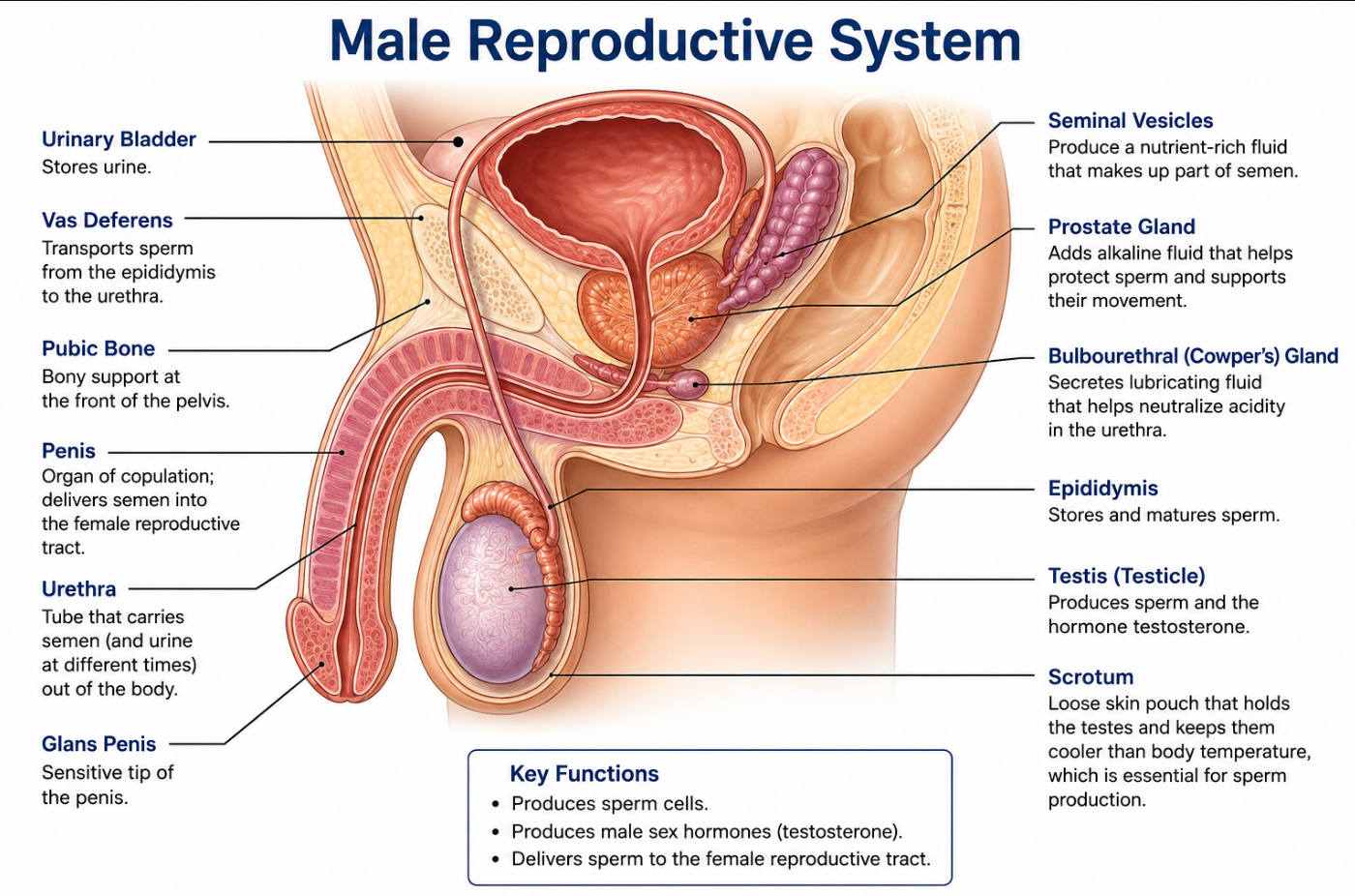
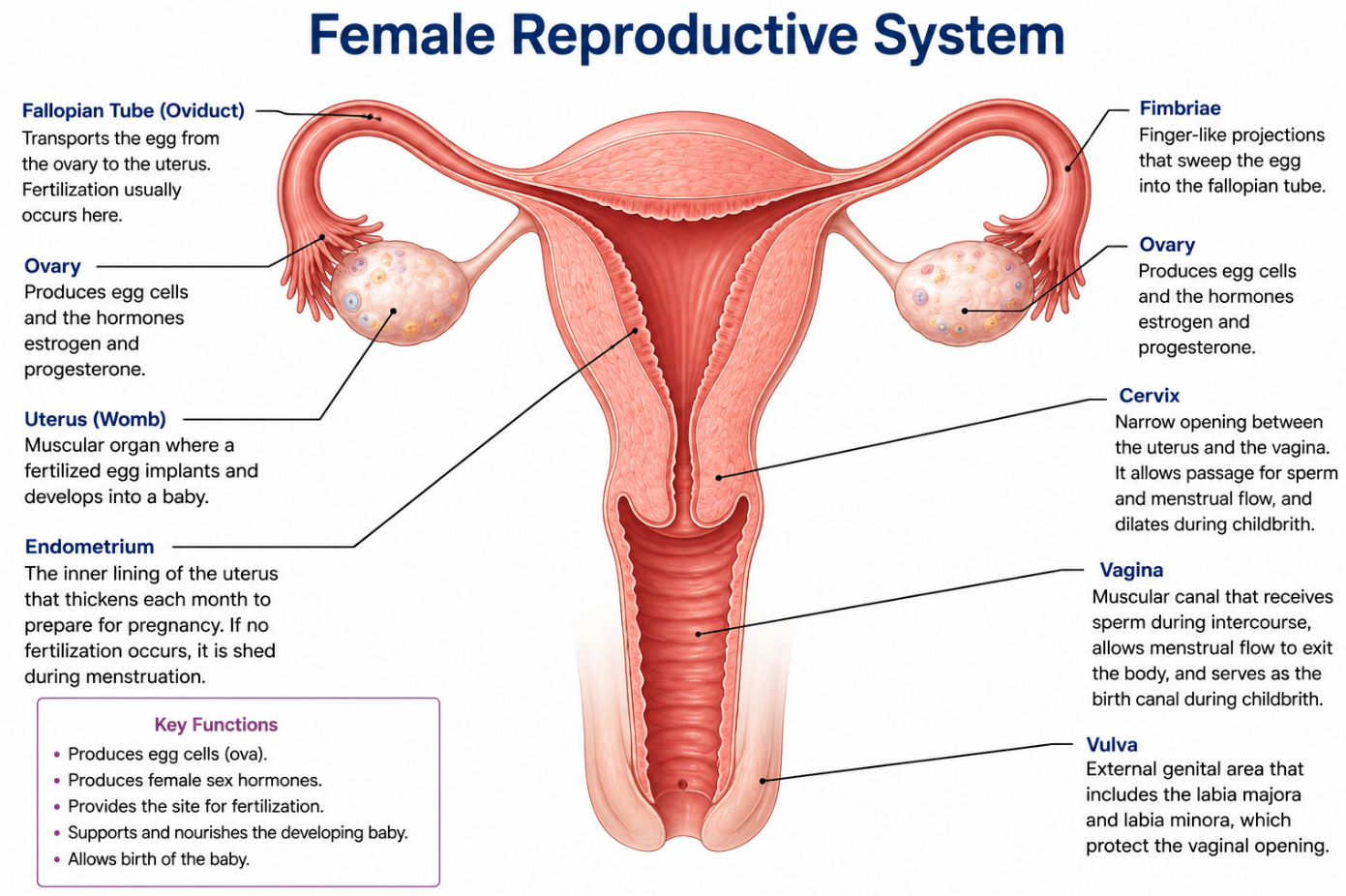
- I can identify the major structures of the male and female reproductive systems.
- I can describe the functions of reproductive organs.
- I can explain the roles of sperm and egg cells in reproduction.
- I can describe the process of fertilization.
- I can explain the importance of the reproductive system for the continuation of a species.


2. Human Development
Learning outcomes
- I can describe the stages of human development from fertilization to birth.
- I can explain how a fertilized egg develops into an embryo and fetus.
- I can identify the functions of the placenta and umbilical cord.
- I can describe major physical and biological changes during human growth and development.
- I can explain how genetics and environmental factors influence development.


3. The Immune System
Learning outcomes
- I can describe the function of the immune system.
- I can identify the body's first, second, and third lines of defense against disease.
- I can explain how white blood cells help protect the body from pathogens.
- I can distinguish between innate immunity and adaptive immunity.
- I can explain how the immune system helps maintain health.


4. Disease and Prevention
Learning outcomes
- I can distinguish between infectious and non-infectious diseases.
- I can identify common ways that pathogens spread.
- I can explain how vaccines help prevent disease.
- I can describe the concepts of active and passive immunity.
- I can explain how personal and public health measures reduce the spread of disease.


5. Maintaining Human Health
Learning outcomes
- I can identify lifestyle factors that influence health.
- I can explain the importance of nutrition, exercise, sleep, and stress management.
- I can describe how healthy choices support body systems.
- I can explain how harmful substances can affect the body.
- I can evaluate strategies for maintaining long-term physical and mental well-being.
Introduction
Good health is much more than simply not being sick. Health is a state of physical, mental, and social well-being that allows people to live active and fulfilling lives.
Although genetics influence our health, many of the most important factors are within our control. Daily choices about food, exercise, sleep, hygiene, and stress management can have a major impact on how our bodies function and how we feel.
Healthy habits developed during childhood and adolescence often continue into adulthood and can greatly reduce the risk of many diseases.


What Influences Human Health?
Health is affected by many different factors.
These include:
- Nutrition
- Physical activity
- Sleep
- Mental health
- Hygiene
- Genetics
- Environment
- Access to healthcare
- Social relationships
Some factors, such as genetics, cannot be changed. Others depend largely on our daily choices.
Nutrition
The food we eat provides the body with:
- Energy
- Building materials for growth
- Vitamins
- Minerals
- Water
A balanced diet should include:
- Fruits
- Vegetables
- Whole grains
- Protein-rich foods
- Healthy fats
- Plenty of water
Eating a variety of nutritious foods helps every body system function properly.


Why Nutrition Is Important
Good nutrition supports:
- Growth and development.
- Strong bones and muscles.
- Healthy skin.
- Brain function.
- A healthy immune system.
- Tissue repair.
- Energy production.
Poor nutrition can lead to:
- Fatigue.
- Poor concentration.
- Nutrient deficiencies.
- Obesity.
- Increased risk of chronic disease.
Physical Activity
Regular exercise benefits almost every body system.
Exercise helps:
- Strengthen the heart.
- Build muscles.
- Increase bone strength.
- Improve lung function.
- Maintain a healthy body mass.
- Improve balance and coordination.
Physical activity also supports mental health by reducing stress and improving mood.


Sleep
Sleep is essential for both physical and mental health.
During sleep, the body:
- Repairs damaged tissues.
- Releases growth hormones.
- Strengthens memories.
- Supports learning.
- Restores energy.
- Helps regulate the immune system.
Teenagers generally require about 8–10 hours of sleep each night.
Too little sleep can affect:
- Concentration.
- Learning.
- Mood.
- Reaction time.
- Overall health.


Managing Stress
Stress is the body's natural response to challenges.
Short-term stress can help us stay alert.
However, long-term stress may affect:
- Mental health.
- Blood pressure.
- Sleep quality.
- Digestion.
- Immune function.
Healthy ways to manage stress include:
- Regular exercise.
- Talking to trusted friends or family.
- Relaxation techniques.
- Spending time outdoors.
- Enjoying hobbies.
- Good time management.
Managing stress is an important part of maintaining overall health.
Healthy Choices Support Body Systems
Every healthy habit benefits multiple body systems.
| Healthy Habit | Body Systems Supported |
|---|---|
| Balanced diet | Digestive, circulatory, muscular, immune |
| Exercise | Muscular, skeletal, circulatory, respiratory |
| Adequate sleep | Nervous, endocrine, immune |
| Good hygiene | Integumentary (skin), immune |
| Stress management | Nervous, endocrine, circulatory |
Healthy choices work together to keep the body functioning efficiently.


Harmful Substances
Some substances can damage body systems.
Examples include:
- Tobacco products.
- Alcohol.
- Recreational drugs.
- Excessive vaping.
- Air pollutants.
- Some toxic chemicals.
These substances may:
- Damage organs.
- Increase the risk of disease.
- Slow growth and development.
- Affect mental health.
- Reduce life expectancy.
Avoiding harmful substances is one of the most effective ways to maintain good health.
Hygiene and Disease Prevention
Good hygiene reduces the spread of infectious diseases.
Healthy hygiene habits include:
- Washing hands regularly.
- Brushing teeth twice daily.
- Bathing regularly.
- Covering coughs and sneezes.
- Keeping cuts clean.
- Preparing food safely.
These simple actions protect both individuals and communities.


Mental and Social Well-Being
Health includes more than physical fitness.
Good mental health involves:
- Managing emotions.
- Building resilience.
- Solving problems.
- Maintaining positive relationships.
Social well-being includes:
- Family support.
- Friendships.
- Respectful communication.
- Feeling connected to a community.
Mental and physical health influence one another.
Long-Term Healthy Living
Maintaining health is not about making one perfect choice.
Instead, it involves building healthy habits over time.
Examples include:
- Eating nutritious meals most of the time.
- Exercising regularly.
- Getting enough sleep.
- Drinking enough water.
- Managing stress effectively.
- Avoiding harmful substances.
- Having regular medical and dental check-ups.
Small healthy choices made consistently can have a large positive effect over a lifetime.
Real-World Applications


Understanding how to maintain human health is important in:
- Medicine.
- Nursing.
- Nutrition.
- Sports science.
- Public health.
- Fitness.
- Psychology.
- Personal healthcare.
Healthy lifestyle choices improve quality of life and reduce the risk of many diseases.
Worked Examples
Example 1
Name four lifestyle factors that influence health.
Answer:
Possible answers include:
- Nutrition.
- Exercise.
- Sleep.
- Stress management.
- Hygiene.
Example 2
Why is regular exercise important?
Answer:
Exercise strengthens the heart, muscles, bones, and lungs while improving mental health and reducing the risk of many diseases.
Example 3
How does sleep support health?
Answer:
Sleep allows the body to repair tissues, strengthen memories, restore energy, and support the immune system.
Example 4
Give two examples of harmful substances.
Answer:
Possible answers include:
- Tobacco.
- Alcohol.
- Recreational drugs.
- Some toxic chemicals.
Example 5
Why are healthy habits important throughout life?
Answer:
Healthy habits help body systems function properly, reduce the risk of disease, support mental well-being, and improve overall quality of life.
Did You Know?
Your body is constantly renewing itself. Your skin replaces many of its outer cells every few weeks, your intestinal lining renews itself every few days, and your bones are continually remodelled throughout your life. Healthy nutrition, regular exercise, and sufficient sleep help support these ongoing repair processes.
Key Terms
| Term | Definition |
|---|---|
| Health | A state of physical, mental, and social well-being. |
| Nutrition | The process of obtaining and using nutrients from food. |
| Physical Activity | Any movement of the body that uses energy and supports fitness. |
| Stress | The body's physical and emotional response to challenges or demands. |
| Hygiene | Practices that help maintain health and prevent disease. |
| Mental Well-Being | A person's emotional, psychological, and social health. |
| Lifestyle Factor | A daily habit or behaviour that influences health. |
| Chronic Disease | A long-lasting disease that usually develops over time rather than being caused by an infection. |
Key Takeaways
- Human health is influenced by lifestyle choices, genetics, environment, and access to healthcare.
- A balanced diet, regular exercise, adequate sleep, and effective stress management support healthy body systems.
- Healthy habits work together to improve physical, mental, and social well-being.
- Avoiding harmful substances such as tobacco, excessive alcohol, and recreational drugs helps reduce the risk of many diseases.
- Good hygiene and healthy daily routines contribute to both personal health and the prevention of disease.
- Developing healthy habits early in life provides long-term benefits and supports a healthier, more active future.