Movement of Substances

Website: Young Education
Kurs: Cells and Life Processes
Buch: Movement of Substances
Gedruckt von: Guest user
Datum: Montag, 5. Oktober 2026, 04:03

1. The Cell Membrane

Learning outcomes
  • I can describe the structure of the cell membrane.
  • I can explain the function of the cell membrane.
  • I can define selective permeability.
  • I can explain why cells need to exchange substances with their environment.
  • I can relate membrane structure to its function.

The Cell Membrane

Every living cell is surrounded by a cell membrane.

The cell membrane forms a thin boundary between the inside of the cell and its surroundings. However, it is not simply a protective covering. It controls which substances can enter and leave the cell and helps the cell maintain suitable internal conditions.

The cell membrane is therefore essential for homeostasis, communication, transport, and survival.

https://images.openai.com/static-rsc-4/HuZ9xqZrmquJaqOrHkeHlSGhL6sE8Nd7-g_t8NX4-M47RBWlXQt5S7q3efRkfC8kfBTwokn66Rwugbs5ZHDPBpnRBOaXvcuBdDLrMpHJgggrUt8Z0d4qyj-nMvSrkT80lzayNxM6zGjhwUb9qfQ7a2dLNkpOudhvDkc6ncDwYHj0ThqhASXfjUVAsHQXpNPk?purpose=fullsize
 
https://images.openai.com/static-rsc-4/wsP3y4q1Z7m3xIHze5QKDlaBg6QydjHIBSTdc4pUNEzElV1Y9ZjIe180mwRaTcZ14Rv2OlleoNrtUD8uydh9hwp38Upr9YuK_1V2SIDwcAte3x-NC68KtJ0XEzjvzFNTw-wbdvgC35Lo8lGMcsFMON9eXeSyFUpqAA4alhZscEZhBkh1h9xwx7Q-834LKrzn?purpose=fullsize
 
https://images.openai.com/static-rsc-4/X7lBJNcywIfwm0EjSBF3bM5SJPQIWoT1wK3UsLUxOvBERSWNjuza3q7SHaraKjxdEbpEQbt3sg9OQIZqu3LDgzl08uB1SDJqQwKpVjZgJPfDXpbHcDU6hZy-egOCHejTRAsmJUYyrIEA_fMTPV138kboviGT6HCNAEnBkXKUhnKzw_3Ed8gcldszlLlSGDaa?purpose=fullsize
 
5

Where Is the Cell Membrane?

Both plant and animal cells have cell membranes.

In an animal cell, the cell membrane forms the outer boundary of the cell.

Plant cells also have a cell membrane, but it is located just inside the cell wall.

The cell wall provides structural support, while the cell membrane controls the movement of substances into and out of the cell.

This means that the cell wall and cell membrane have different functions.

Structure of the Cell Membrane

The cell membrane is mainly made from molecules called phospholipids.

These phospholipids arrange themselves into two layers called a:

phospholipid bilayer

The word bilayer means "two layers."

Embedded within the phospholipid bilayer are different proteins and other molecules.

A simplified cell membrane contains:

  • phospholipids
  • membrane proteins
  • cholesterol
  • carbohydrate chains

Together, these components form a flexible and dynamic structure.

https://images.openai.com/static-rsc-4/VTubq0eVcS2CNPk81dIHopCtipcywqlbJmY2RYzN3-YFQvu0gBTnn-eu1FRTobOHHXy7MpEx34p2-8YXlseZ-5FK1c_xgtenw-Ho6_JfnYy3_uYsisQumZat6V9Rms0xHjjRLt1aN0pHDhmvXJzydWbLsRUC6HaCJ6LbU6QotN-XOGH6kRy9Zns3Klv-Lelw?purpose=fullsize
 
https://images.openai.com/static-rsc-4/KOrZwS4fTwYwEbuZucf740PxYCnO1bhHAd0Yl90lIar_fWLwZN7OiQBVM0kzPUvZzvrxXnqOAi_R844e6-m5kQNBhr-cGKv_wrgqM6Ya0eSLIYwLdZSHhCq7nRQeXzmIpDYofi6ynbvWaO6oSCfMGzqkCr1gzBdjTIo9hND8mfesOnwtbpDwylxoX8mX4Zpy?purpose=fullsize
 
https://images.openai.com/static-rsc-4/ytKEjtOzXTldHQ5Ouw8_t6cZ9HcepH4a6Rapp4IWlmbETq42xB60e3buYTEH2g-Q-xFqdblLxnT_OYpEi2kWjW_CMtwxzNYnlUvZBDfRgAMBdePfbBH6baXoL-z6b4dnvU8VpTsmeeGAvnEDLQTSttSYcUn9yDnWjJz1AuxCSu6e6bZ6c9XD15EfIgRq92Ka?purpose=fullsize
 
5

Structure of a Phospholipid

A phospholipid has two main regions:

  • a hydrophilic head
  • two hydrophobic tails

"Hydrophilic" means attracted to water.

"Hydrophobic" means repelled by water.

Because cells contain water and are surrounded by watery environments, phospholipids naturally arrange themselves into a bilayer.

The hydrophilic heads face toward the water.

The hydrophobic tails point inward, away from the water.

The basic arrangement is therefore:

Water

Hydrophilic heads

Hydrophobic tails

Hydrophobic tails

Hydrophilic heads

Water

This creates a stable barrier around the cell.

Why Does a Bilayer Form?

Cells contain a watery solution called cytoplasm, and most cells are also surrounded by water or body fluids.

The hydrophilic heads of phospholipids interact with these watery environments.

The hydrophobic tails avoid water and point toward each other inside the membrane.

As a result, the phospholipids naturally form a double layer.

This arrangement gives the membrane both stability and flexibility.

The Fluid Mosaic Model

Scientists often describe the structure of the cell membrane using the fluid mosaic model.

The membrane is called fluid because phospholipids and some proteins can move sideways within the membrane.

It is called a mosaic because many different proteins and other molecules are scattered throughout the phospholipid bilayer.

https://images.openai.com/static-rsc-4/GYHvoRyq4Z-Z1_f-MBZbAPGqg5NVPt4TeNkx7QTt5cTNOts3-bgpopiP7quuaPL4mJuw5-ymzKYDd34PKOvC4iDsTAgPv00wI07w5gFMUSyMeJSMVOP2QdNkPtxdzBFK0WEHqoSOxpIe8Ctuwm4sqiZgtTPzZVO0MPTi_iCge_oLKWC-KIGGeZmQhlUaJ2JJ?purpose=fullsize
 
https://images.openai.com/static-rsc-4/tbUqnJTecWVutjhheFDm8J_oxCp9gik4wajVw7WiXVNE1MrLoqkxS0qj9uI53b5_xVp1knWlQMlDjdLuiPPEDo6cF7RrKo9xCqfzQE5_T-oQ4lBZcofwdD1wMwKVqeCtmGcR0v0Woh10kCRvRMCAKvo0junICWynWEz3b_BkQDLF3sKkts01LnIwkAhQflgm?purpose=fullsize
 
https://images.openai.com/static-rsc-4/wsP3y4q1Z7m3xIHze5QKDlaBg6QydjHIBSTdc4pUNEzElV1Y9ZjIe180mwRaTcZ14Rv2OlleoNrtUD8uydh9hwp38Upr9YuK_1V2SIDwcAte3x-NC68KtJ0XEzjvzFNTw-wbdvgC35Lo8lGMcsFMON9eXeSyFUpqAA4alhZscEZhBkh1h9xwx7Q-834LKrzn?purpose=fullsize
 
5

The membrane is therefore not a rigid wall.

It is a flexible, constantly changing structure.

Membrane Proteins

Many proteins are embedded within the phospholipid bilayer.

These proteins perform several important functions.

Some membrane proteins:

  • transport substances
  • act as channels
  • act as carriers
  • receive chemical signals
  • act as enzymes
  • help cells recognize one another

Some proteins extend all the way through the membrane.

These are particularly important for transporting substances that cannot easily pass through the phospholipid bilayer.

Transport Proteins

Certain substances cannot move directly through the membrane.

Special transport proteins help these substances cross.

Two important types are:

Channel proteins – Form pathways through the membrane.

Carrier proteins – Bind to particular substances and help move them across the membrane.

This allows the cell to control the movement of many substances.

Cholesterol

Animal cell membranes contain cholesterol between the phospholipids.

Cholesterol helps:

  • stabilize the membrane
  • maintain flexibility
  • prevent the membrane from becoming too fluid
  • prevent the membrane from becoming too rigid

Cholesterol therefore helps maintain suitable membrane properties under changing conditions.

Carbohydrate Chains

Some proteins and lipids on the outer surface of the membrane have carbohydrate chains attached to them.

These molecules help with:

  • cell recognition
  • cell communication
  • identifying different cell types

For example, cells in the immune system can recognize particular molecules on cell surfaces.


Functions of the Cell Membrane

The cell membrane has several important functions.

It:

  • separates the cell from its environment
  • controls movement of substances
  • helps maintain internal conditions
  • allows cells to communicate
  • helps cells recognize each other
  • protects the contents of the cell

One of its most important functions is controlling what enters and leaves the cell.

Selective Permeability

The cell membrane is described as selectively permeable.

Selective permeability means:

Some substances can cross the membrane more easily than others.

The membrane therefore does not allow everything to move freely into and out of the cell.

Some substances pass through easily.

Others require transport proteins.

Some substances may be prevented from crossing almost completely.

https://images.openai.com/static-rsc-4/CNbQlGOgGj6_fARIkBQK6ieDIA0QjAp6T9QDsThzt993nx--VGp9J4VlerHp-zqy9FgkSo2I5wcBcICpsTLF_Gu9SO2PAJR0apMBjvuzMCx3bFmJgB-TIcZZoEm099DSQ1e8cUbHfcRwZL02EiRVK7MKYeOXSh51Px8DxGsx0S9NVyLpXwZIGTEw2IY-cwIv?purpose=fullsize
 
https://images.openai.com/static-rsc-4/PJNL_7xGiP1X-PGgopT3dosg6b6hmrL-rTxPjV4cyK9fb1GNSkBtIIjs1ZsqPsx4u4nHUFgDrta690AkreyxPPwEqRLGYNcshpGPIX0NVWH5bI0S3OsUeTwR7M8MizfUopsmn1N0J5egaJuGUPCAGkYw22aG4pHXMk0KA32JO26ZENZyj2v3mQSiV0_iVj5j?purpose=fullsize
 
https://images.openai.com/static-rsc-4/mezzCPW1C-I3F_M5YEUMYA0H05Bvkww9P7yWQtys2247mjByOzRWD3eMJi0AvdNAPg85O-RxyynaqgzDGdCXjn3Q4yeljA_B4G6Rm3NY3NJSm2Z4aTnBe-Kje0ElTF4r2b4AIEUQcFA7o5UHOt_IEpSdRshG-_ucGD2rRw5rNzxy_rLAFiSOh2s2Ev_c8THr?purpose=fullsize
 
5

Why Is Selective Permeability Important?

A cell needs to maintain specific internal conditions.

If every substance could move freely through the membrane, the cell would have very little control over its internal environment.

Selective permeability allows the cell to:

  • take in nutrients
  • obtain oxygen
  • remove wastes
  • regulate water
  • control ion concentrations
  • maintain suitable chemical conditions

This contributes to homeostasis.

What Can Cross the Membrane?

Different substances cross the membrane in different ways.

Small molecules such as oxygen and carbon dioxide can move relatively easily through the phospholipid bilayer.

Water can cross the membrane, including through specialized water-channel proteins called aquaporins.

Ions and many larger or polar molecules usually require membrane proteins.

For example:

Substance Why Cells Need It
Oxygen Cellular respiration
Glucose Energy source
Water Chemical reactions and cell processes
Mineral ions Many cellular functions
Carbon dioxide May need to be removed as waste
Urea and other wastes   Need to be removed


Cells Must Exchange Substances

Cells are not isolated from their surroundings.

They constantly exchange substances with their environment.

A cell may need to take in:

  • oxygen
  • glucose
  • amino acids
  • water
  • mineral ions

At the same time, it may need to remove:

  • carbon dioxide
  • metabolic wastes
  • excess ions
  • excess water

Without this exchange, normal cellular processes could not continue.

Example: Oxygen

Most cells need oxygen for aerobic cellular respiration.

Oxygen must move:

from the environment → across the cell membrane → into the cell

The cell can then use oxygen to help release energy from food molecules.

Carbon dioxide produced during respiration moves in the opposite direction:

cell → across the membrane → environment

The cell membrane therefore allows the exchange necessary for respiration.

Example: Glucose

Cells need glucose as an important source of chemical energy.

However, glucose is relatively large and polar compared with molecules such as oxygen.

It does not simply pass freely through the phospholipid portion of the membrane.

Instead, glucose commonly crosses cell membranes with the help of specific transport proteins.

This demonstrates how membrane structure controls membrane function.


Movement Across the Cell Membrane

Substances can cross cell membranes using several processes.

Three important mechanisms are:

  • diffusion
  • osmosis
  • active transport

These processes are studied in greater detail when learning about membrane transport.

https://images.openai.com/static-rsc-4/J9TiFSsVm5ll90MUC8Fe8FrJd04h3rf04Dp7IdIhJZQYHS34NRxQeWJ6mt6_8Rixe-guJBH0APpRWlC65X5n1BtbUl1M1Pm9Uq6g_j1kJQqrqLFwv-tBuml7MjDQFohti0PDTTszt1Q_kAWDR4pMPaSVHx0kmct8B9OgbKhqzaf5kPRghuNdOdyFGkXL9_hB?purpose=fullsize
 
https://images.openai.com/static-rsc-4/8tMb73MMgHEmsVmXsQF1W4s_ooVuK04CO_2usJBT2GliKFjMIsvdMfJTp3SVOEDYJSzqf_kd7cUkevkC0zeNQhq0cfSb18veEkmkjZF9irPBMalKNssQzsX2OSsdZfiWVSql_SB5vvwS8dqyONLReo_ta4Iu0K0e4eaiNUVrTeU9R3nsPz3cZaVKZaaC6yV7?purpose=fullsize
 
https://images.openai.com/static-rsc-4/9PFVLQLT8U5Vs0QtIXkUMMMvs2yE5dj-QoPV0h7FIF0UDpnTF66VAOMnp0gNmRD-Sys7fRB2Zlbw0SoJXoEyhXqkr8FJ-wqbPb1HcHg_FcwpexSeYz3hKr7l8YIIoCzHe0Qq4sK_9tvXGvOtNrTHsc9uRat-dXJmd1-VRTJsfHi6FbGDjXZJAoVZmEJqj5P5?purpose=fullsize
 
6

Diffusion

Diffusion is the net movement of particles from an area of higher concentration to an area of lower concentration.

For example, oxygen can diffuse across the cell membrane.

If there is more oxygen outside a cell than inside it, oxygen tends to move into the cell.

Diffusion does not require the cell to supply energy.

Osmosis

Osmosis is the net movement of water through a selectively permeable membrane from an area of higher water concentration to an area of lower water concentration.

Because cell membranes are selectively permeable, osmosis is extremely important in controlling water movement into and out of cells.

Active Transport

Sometimes a cell needs to move substances against their concentration gradient.

This means moving substances from:

lower concentration → higher concentration

This requires energy.

The process is called active transport.

Special membrane proteins are involved.


How Structure Relates to Function

A major idea in biology is:

Structure is related to function.

The cell membrane is an excellent example.

Different parts of the membrane contribute to different functions.

Membrane Structure    Function
Phospholipid bilayer Forms a flexible barrier
Hydrophobic interior Restricts many polar or charged substances
Channel proteins Allow particular substances to cross
Carrier proteins Transport specific substances
Receptor proteins Receive chemical signals
Cholesterol Helps stabilize membrane fluidity
Carbohydrate chains Help with recognition and communication

The membrane's structure therefore allows it to be both a barrier and a transport system.

Why Not Just Have a Solid Wall?

A completely solid barrier would protect the cell, but it would also prevent essential substances from entering.

A completely open boundary would allow nutrients to enter, but harmful substances could also enter and useful substances could escape.

The cell membrane provides a balance.

It is:

  • protective
  • flexible
  • selectively permeable
  • responsive to the environment

This combination is essential for cell survival.


Membrane Receptors and Cell Communication

Cells need to respond to signals from other cells.

Some membrane proteins act as receptors.

A particular chemical signal can bind to a receptor because its shape matches the receptor.

This is sometimes compared with a lock and key.

When the signal binds, it can trigger a response inside the cell.

https://images.openai.com/static-rsc-4/NwLDkCWpoxOS-yir2XodpnOkioqUMab64clRoQcrgWPg7SCKwrXwfyrmvI_NgtnUl-HuZ54Z32GPE0_inPcck_E_Sp7y1UYCiU0iohPG2Z6KF5bgq-GwlGNlQLvxl3pG3Re3MC8Gv17VXGXfC-ztIJJG1KwilKuA-gTuG2_5i-rPf4iAY6dubA8hyE6dZKZX?purpose=fullsize
 
https://images.openai.com/static-rsc-4/QY3HPJx9wlD_6bTNKfVC4EGIOlk6MwplWaNOVApOWhYtOClmQwmvn9mhqXA12Bu9WfBCPFTWFRLeuBFBEhc2yuolUTn7eGEtQLAGxLxcHxVHwnV7ppB9rDoayVCuzSkNANwhzOBNFoyyLp6T604GmWF3l9adhhP7qLq4xpzOPW79wyr3cC6aCxmg_Hou3as_?purpose=fullsize
 
https://images.openai.com/static-rsc-4/HHHJTzrMOImkgt_Iw1tnCJqv2oMkUHiFZAqGjfgp1ngNia62ef7lebgWUmaBzNZsDZyo6JeQHbbniRsOVq3mz2R4VCoq9Zly8Vwf85tSDb7U-wBrMjUcwxkXz4HZic0QA-NpAczfAMw4s-YtV5Xwuekqt0SZrvvzPauY9lMWy7tFy9GKISPkHEAp9b2Y33x_?purpose=fullsize
 
4

For example, hormones can communicate with target cells by binding to specific receptors.

A cell without the correct receptor may not respond to that particular signal.

Maintaining Homeostasis

Homeostasis is the maintenance of relatively stable internal conditions.

The cell membrane contributes to homeostasis by controlling:

  • water content
  • ion concentrations
  • nutrient uptake
  • waste removal
  • chemical signals

The cell can therefore maintain an internal environment that is different from its surroundings.

This is essential because many cellular reactions only work efficiently under particular conditions.


Cell Membranes in Plant and Animal Cells

Both plant and animal cells have cell membranes.

Animal Cells

The cell membrane forms the outer boundary of the cell.

Plant Cells

The cell membrane is located just inside the cell wall.

The cell wall is freely permeable to many substances and provides support.

The cell membrane performs the more selective role of controlling what actually enters and leaves the cell.

https://images.openai.com/static-rsc-4/OM-B_r4XSblGmVQJkpUO0ulpc2QQzPtdatapfYAU91GYWnVVQEPjLKi7Ry7-3WZAgxLwoQoliius3mESSiYahRp7OGmIgE3UcWj6xpdpRFjZe3ZoBusCjIQ2vU7RoGCKJR2j1VDLJ2fN3QSSHCm20Pi0PeVdX-dNqrLtJNa2icOKK5Ph_YGxygLaev4cjae9?purpose=fullsize
 
https://images.openai.com/static-rsc-4/E6lkfPrDARFnaykJ2cF-1Fo8ey8vGpLpdCUCc1HBUV9-CW6z9oaYLbXCpI2ld7AZ23W8Is-4sjVUaMx9ieb_qxDgWbJNKvxfx-DSrTG2JhsEPc8yruFPXjEt395JEjRXZypqcTiiu4oWB4qwNxZecfvkP4ERCBrt-sV_kly84uyX4yOT4E2psA2fZIHCZFhn?purpose=fullsize
 
https://images.openai.com/static-rsc-4/wZWjNEP6TfndzfNLKauY7CjJYjZrw8k0K6VdoXo7592cSWXxpLCx2js5Vqv6TsE51I6oJ3l13cFfryjTTpV-nhw2c0SzF3jyguTjTZOYIji4--KB1dbWmByyDadeTBvMylLfD5G2n06yTmlgUIRyIz1i1ldSpPVUs0u2qhwvy4fOqzjOudHHpxf24lRgF4F3?purpose=fullsize
 
5

What Happens If the Membrane Is Damaged?

A badly damaged cell membrane can cause serious problems.

The cell may:

  • lose important substances
  • take in harmful substances
  • lose control of water movement
  • lose control of ion concentrations
  • become unable to maintain homeostasis

Severe membrane damage can therefore lead to cell death.


Surface Area and Exchange

Substances enter and leave cells through the cell membrane.

This means the surface area of the membrane affects how much exchange can occur.

Cells that need rapid exchange may have structures that increase membrane surface area.

For example, cells lining the small intestine have microscopic projections called microvilli.

Microvilli increase surface area, allowing substances to be absorbed more efficiently.

https://images.openai.com/static-rsc-4/0550p60ZPPoxb234lD4-WhSAD7Q7wjn7MRFcpYiME2I7V67jo3MGfbaWFcOPQpsxLs2l2FIENL5CBuTAMfofcBoSba8GoGT1VEN6L_XxJljlseNXCZQurmM5mIStA4LuHs0Ky7B57W6ZOECY41MNCS-jqzhmpu_I_xFlXoHV73qLD7_xsDOPzWkm4tjz6CZd?purpose=fullsize
 
https://images.openai.com/static-rsc-4/2KoANcCuBUW3uq74nt2lswnEC5SVa0-as69o5Fc9EmGpaldi0pLwzpoy7hKTiUFEEEeCbjjIM4vocz2A8yRrKEhim2p4iSIxl459RUpwHCAOk0SLzRkzA23TpERfaCd34rNvHJE8JeMU80Yn8fe-FFHpm8uLLIKubnmFIv6bkChsO5wziBbCYdZOQdt88bAI?purpose=fullsize
 
https://images.openai.com/static-rsc-4/m44eq9EkgFQce5hleyCgKtOjlPdmgIPXtQ4JSd88oNa9-YukCI2t1DS3pmIt74mAHpgdh7OEMF2r6D1bo2vS9jKuu4nKHhRCJ6izsx9UTruWLQTYRbzBHBvTEAaKPBybKrVyzWR1IQk4PnrRvM5k6Syba5SmOH5tU0u4PUPVyob7sqbA291Q1tCS4A5su4z9?purpose=fullsize
 
5

This is another example of the relationship between structure and function.

More membrane surface area allows more opportunities for substances to cross the membrane.


Worked Example: Identifying Membrane Functions

A cell needs to take glucose from its surroundings, but glucose cannot pass easily through the phospholipid bilayer.

How can glucose enter?

The membrane contains specific transport proteins that can help glucose cross.

This shows that membrane proteins contribute to the membrane's selective permeability.


Worked Example: Explaining Selective Permeability

A student says:

"The cell membrane is like a wall because nothing can pass through it."

This statement is incorrect.

A better explanation is:

The cell membrane is selectively permeable because some substances can cross it while others are restricted or require specific transport proteins.

This controlled movement helps maintain suitable conditions inside the cell.


Worked Example: Structure and Function

Why does the cell membrane contain a hydrophobic interior?

The hydrophobic tails of the phospholipids point inward.

This creates a region that many charged and strongly polar substances cannot easily cross.

As a result, the membrane can control their movement and use specific proteins to transport them when necessary.

Therefore:

Membrane structure helps produce selective permeability.


Common Misconceptions

The cell membrane is a solid wall.

Incorrect. The membrane is a flexible and dynamic structure containing phospholipids and proteins.

Only animal cells have cell membranes.

Incorrect. Both plant and animal cells have cell membranes.

Plant cells have a cell wall instead of a cell membrane.

Incorrect. Plant cells have both.

Selectively permeable means that nothing can pass through the membrane.

Incorrect. It means some substances cross more easily than others.

All substances cross the membrane in the same way.

Different substances may cross through diffusion, osmosis, transport proteins, or active transport.

The cell membrane only protects the cell.

Protection is one function, but the membrane also controls transport, communication, recognition, and internal conditions.

Did You Know?

A cell membrane is incredibly thin — typically only around 7–10 nanometres thick.

Despite being so thin, it can separate two very different environments and precisely control the movement of many substances.

The membrane is also constantly changing. Phospholipids and many proteins can move sideways within it, which is why scientists describe the membrane using the fluid mosaic model.

https://images.openai.com/static-rsc-4/DnU-1MjyTZGN1_J-tk5DYJHSZdo_o-ZL0fvO6vPFvdu1sq5kS7FjVgr0Kx4xUDISPl9PfgpO2owvzr9NC81102buw9EINeCwFemI9fj1Dx_zYuOR9L9u0UxcaFe3DkQhbUYUWb6GRJs7cAneVa6zE5Omzz0nuV5aiZJalwwoMj_V8nU5y0rupqdSqCUw95s3?purpose=fullsize
 
https://images.openai.com/static-rsc-4/uOJblRzw_mnwgrZVKPpjeZkziDzV8Ackgno_dHv81J9S58rXqopb7yTt8P2RVVTOnvW2dlKHJOe3gXmG-p5zwa5I1Ym4HzJ_QbnqEQZn22z4CqdREdX9XachKypSY3j30jRvkwMy726l5HisbVBTyHYx3Mz3J5CRnOsHYJLORwYLCwA-vYCULDoaO8nuhprJ?purpose=fullsize
 
https://images.openai.com/static-rsc-4/UEdsJYJoLU6Fvw9hD2s2tq02rYX-LF_VJ2ZsFvgxT7Vv1z-ZnToj5e0gdgJK02RJm1vGOOrlpG5uBpTaYW5IhW7M9Pk1t44TB8HTPwUsbtzkD6fR4RWlz9Zmn0E1u1Yh0sgCOccK1CoaypziNUoYqbcozpOFAWAsGJtgzbLdp3SrUILmeSDOqHMWAHQRSxN8?purpose=fullsize
 
4

Key Terms

Cell membrane – A thin boundary surrounding a cell that controls movement of substances into and out of the cell.

Phospholipid – A molecule containing a hydrophilic head and hydrophobic tails.

Phospholipid bilayer – The double layer of phospholipids forming the basic structure of the cell membrane.

Hydrophilic – Attracted to or able to interact with water.

Hydrophobic – Repelled by water.

Fluid mosaic model – A model describing the membrane as a flexible phospholipid bilayer containing many different proteins and other molecules.

Selectively permeable – Allowing some substances to cross more easily than others.

Transport protein – A membrane protein that helps substances cross the membrane.

Receptor – A protein that binds to a particular chemical signal.

Diffusion – Net movement of particles from higher concentration to lower concentration.

Osmosis – Net movement of water through a selectively permeable membrane.

Active transport – Movement of substances against a concentration gradient using energy.

Homeostasis – Maintenance of relatively stable internal conditions.

Key Takeaways

  • Every plant and animal cell has a cell membrane.
  • The membrane separates the cell from its environment and controls what enters and leaves.
  • The membrane is mainly made from a phospholipid bilayer.
  • Phospholipids have hydrophilic heads and hydrophobic tails.
  • Proteins are embedded within the membrane and perform functions such as transport and communication.
  • The membrane is described using the fluid mosaic model.
  • The cell membrane is selectively permeable, meaning some substances cross more easily than others.
  • Cells must exchange oxygen, nutrients, water, ions, wastes, and other substances with their environment.
  • Substances can cross membranes by processes including diffusion, osmosis, and active transport.
  • The structure of the membrane is closely related to its function.
  • Membrane proteins allow the cell to control transport and respond to chemical signals.
  • By controlling exchange with the environment, the cell membrane helps maintain homeostasis.

2. Diffusion

Learning outcomes
  • I can define diffusion.
  • I can explain diffusion using the particle model.
  • I can describe the role of concentration gradients in diffusion.
  • I can identify examples of diffusion in living organisms.
  • I can predict the direction of diffusion in different situations.

Diffusion

Diffusion is an important process that allows substances to move from one place to another without the cell having to provide energy.

It occurs constantly in living organisms and is responsible for processes such as:

  • oxygen moving from the lungs into the blood
  • carbon dioxide moving from cells into the blood
  • oxygen entering cells
  • carbon dioxide entering plant leaves
  • dissolved nutrients moving between cells and their surroundings

Diffusion can be explained using the particle model of matter.

https://images.openai.com/static-rsc-4/p2aq-pm2C-JgopwjKFdKqedwHlzHwDfx-2FPGmB7C9HNikghix0FSLv4pesG_IbK9dkQtjjVKQTpyVpq9tKXQaOjXu2ROVKPpLrqBci_gYgRk6VplnhItQVFt2U3dVQHJvlaidzU4iP8jJ2Yh6P-4IQDyuuyHlFcrazE_fQrPU8zLmR1hTj9mkTbhBxc3_nH?purpose=fullsize
 
https://images.openai.com/static-rsc-4/Ir14HvYrT3cciTiFVkE8xXhcolwWHy98CHagLSylMRKGyntzPvADf903O4Gf1KC1doKMF8JFWdTzMt2G6GGxnyQO5YpFugMb79y5tMtqO5JMYjS9owo11CCsFuCeSv40EcDSMs7MBhT1pl2WBvuEJo_IMmUXwDoJTd8fTmfzS4qoSaUh6Z1Gsn0P1KBkC7eb?purpose=fullsize
 
https://images.openai.com/static-rsc-4/_ys0a9htLY-5ixu2FatO9WTkdnnI2_zYk6yDNL8EAmAkkJAh7T7JKA1RVTAEW7M58w5q6JK6_ci2bcTizhj5H33H9-ZAGZ29nIFoAFEO0QM_GETyyZ7mex4YbM5C5T5xRZUx9hBrpbkFm8___lfLQXXnPN_JoSHI7BoQbkIlm8lxVoDRKDwv1c3Bvl7nivXS?purpose=fullsize
 
5

What Is Diffusion?

Diffusion is the net movement of particles from an area of higher concentration to an area of lower concentration.

The word net is important.

Particles actually move randomly in all directions. However, when there are more particles in one area than another, more particles will move away from the high-concentration area than move back into it.

The overall result is movement:

higher concentration → lower concentration

Diffusion is a passive process, meaning that it does not require energy from the cell.

Understanding Diffusion with the Particle Model

According to the particle model:

  • matter is made of tiny particles
  • particles are constantly moving
  • particles move randomly
  • particles collide with each other
  • particles spread through the available space

Imagine a container divided into two regions.

One side contains many oxygen molecules.

The other side contains relatively few.

Because the molecules are constantly moving randomly, oxygen molecules gradually spread throughout the container.

Eventually, the oxygen molecules become approximately evenly distributed.

Importantly, the particles do not stop moving when they become evenly distributed. They continue moving randomly, but there is no longer a net movement in one direction.


Concentration

Concentration describes how much of a substance is present in a particular volume.

An area containing many particles of a substance has a high concentration.

An area containing fewer particles has a low concentration.

For example:

High concentration:

● ● ● ● ● ● ● ● ● ●

Low concentration:

● ● ●

If the two areas are connected, there will be a net movement of particles from the high-concentration region toward the low-concentration region.


The Concentration Gradient

A concentration gradient is a difference in the concentration of a substance between two regions.

For example:

Side A: high oxygen concentration

Side B: low oxygen concentration

There is therefore a concentration gradient between Side A and Side B.

Oxygen will show a net movement:

Side A → Side B

We say that oxygen moves down its concentration gradient.

https://images.openai.com/static-rsc-4/3HmJIJCs6-nM2xzmXikEI2sK9icP_uXQlZ2GLDaoAxMiDwe950WlFqH8I67v_emt1FPcL7gX_GbvJtQQmXShxw4fx8MiDibIL2w5HFUpmVpdYXy0AvQT5khHP--YBjyHkIsnvYJGg3Yxw5gGMGUU4YvZ3WcKZw4vmqo7ID-gv4XJQl4d2tJn3xhah9aJTa5H?purpose=fullsize
 
https://images.openai.com/static-rsc-4/wX6auRgITwTwcy2oSx0B_EhWpaybE-pk5-tX648MgjPQIecP_lPLhTti56091CevJ8ISv4KOML7F7iQQUwOLhUJFs4eTkZlHSXJQz_4dtkJm-QFECud9N_nu9_A22W1XKb9wkuZuXngPkhCpE_nHmbSbgGRarxFdjpSAPs9MTb4bnFB5Wkxs-bl_uA76AJ3W?purpose=fullsize
 
https://images.openai.com/static-rsc-4/C7mjJioZBdCf4uMn82zSsOP5Yl6bG0jpdsb6aUs4f1YwSqimI_seTmEnhPfgyS9vMaXCFSaO41xWqfShsLdqU-nZhTZK1biiNNXCMiyEFHauRFgR93Z2KW_xjbYTVWKWo4qUSYJFev-TohUOycT02JtYId8GM3GypDLgyzzbGnaY8NOBcMjd_-rNi2gPL_Zu?purpose=fullsize
 
5

Predicting the Direction of Diffusion

To predict the direction of diffusion, compare the concentration of the substance in the two locations.

Ask:

Where is the concentration higher?

Then:

Where is the concentration lower?

The net movement will be:

higher concentration → lower concentration

For example:

Outside cell: high oxygen concentration

Inside cell: low oxygen concentration

Net oxygen movement:

outside → inside


Diffusion Across Cell Membranes

Cell membranes are selectively permeable, meaning some substances can cross more easily than others.

Small molecules such as oxygen and carbon dioxide can diffuse across cell membranes.

For example, if a cell is using oxygen during cellular respiration, the oxygen concentration inside the cell may become lower than the concentration outside.

Oxygen can therefore diffuse:

outside the cell → inside the cell

At the same time, carbon dioxide produced by cellular respiration may build up inside the cell.

Carbon dioxide can diffuse:

inside the cell → outside the cell

https://images.openai.com/static-rsc-4/Ir14HvYrT3cciTiFVkE8xXhcolwWHy98CHagLSylMRKGyntzPvADf903O4Gf1KC1doKMF8JFWdTzMt2G6GGxnyQO5YpFugMb79y5tMtqO5JMYjS9owo11CCsFuCeSv40EcDSMs7MBhT1pl2WBvuEJo_IMmUXwDoJTd8fTmfzS4qoSaUh6Z1Gsn0P1KBkC7eb?purpose=fullsize
 
https://images.openai.com/static-rsc-4/FapLyV3BIW5DLDHud2wwP3WLh8FiVsgEMYBk1EkAiyo1vSYJIoInFBdizEIG5pAfjiSSowO68H491Zhz6sJxTWjUuDG5GAGEkTmTwv-uhVjDqeroLn3t1afVeEVEPc4eyLWgDe9OME2NHVyU-ds7PidKTCwcV93zi7MU1nVSR2Pw4C91DKuqOlIFR_6x6YA-?purpose=fullsize
 
https://images.openai.com/static-rsc-4/6MHZCYZYwzA_uFCc4665wuXWe5fjpyrb5NGoo9YtnvbhH8HSeA3k6pwKaZ9ygf0-cMCSCyCuYw08OvO-kiiT2AaRRuOlpc_2r-npOptFdhWddTFZ86A_O3QoSQ7SQZBwc7dT23EAxJooZkeTlcJtIz93tKrpDWSLdw82eu5-XUOVJNUWatfAHBYutsXngCFB?purpose=fullsize
 
5

Diffusion Continues Until Equilibrium

As diffusion occurs, the difference in concentration becomes smaller.

Eventually, the substance may become approximately evenly distributed.

This condition is called dynamic equilibrium.

At equilibrium:

  • particles continue moving
  • particles still cross between regions
  • movement remains random
  • approximately equal numbers move in each direction

Therefore, there is no net movement of the substance.

This does not mean that the particles have stopped.


Example: Perfume in a Room

Diffusion is not limited to cells.

Imagine someone sprays perfume at one side of a room.

At first, perfume molecules are highly concentrated near the person.

The molecules move randomly through the air.

Over time, they spread throughout the room.

Someone on the opposite side of the room may eventually smell the perfume.

This happens because perfume molecules diffuse from areas of higher concentration toward areas of lower concentration.


Example: Food Colouring in Water

A drop of food colouring placed in water initially forms a concentrated region.

Over time, the colouring spreads through the water.

Eventually, the colour becomes much more evenly distributed.

https://images.openai.com/static-rsc-4/YqqRPybGUXWrdNQAbFqoWxYG8Nv-kBUrqNlTTK8uB4S0ZIl_st-W8GzmlO50agYVIdxMXrgSoObuKJzvALEStCobLyVz1jJ1h5PWOQJf0QzTXTWzNu3Rii3garxYk2UhGDfXXIQ8bXB59C8VavJ75kIIkMmgbXYLiSxcN9Fv1Fp4nzbJu6StcSa9gmZPWCCZ?purpose=fullsize
 
https://images.openai.com/static-rsc-4/CxENhOfV09G4YIvQPoAriOEW8k_HIA9MExwbwVKtkyf5MD_KDDCLk-kRFC0kKQOpod1s4DwAA6DficCXef1eCMZO4qGRrcpFbaHrBr8JQuzMWu6_FksXtqeWqVa1cggn9AoN7zpc0e4yqGytQX_03bX-aT0BKfexe2syB3991bdv5fQl6KZe7FSEcDiIxbAE?purpose=fullsize
 
https://images.openai.com/static-rsc-4/1EfvqO412RwGJOnVrvZST7MtrlrbBfF-34GpdFldZOZclKgVkpsgSJTXfO3vYIVAkTw2CIAnkeV5DdJuCG5QGIOjiv1fw1L1_XeiMsU6w2xE0TWIWEcECYREIE_wRBuAnqt8lJ-3Uv4dn3ZPABWs6b9HS8Lf6YjM6Owb2YNFYQ2ooeuHF5iBEfX--dEekM7X?purpose=fullsize
 
5

The particles do not spread because they "want" to become evenly distributed.

They spread because particles are constantly undergoing random motion.


Diffusion in the Lungs

One of the most important examples of diffusion in the human body occurs in the lungs.

The lungs contain millions of tiny air sacs called alveoli.

When we breathe in, air inside the alveoli contains a relatively high concentration of oxygen.

Blood arriving at the lungs contains less oxygen.

Therefore, oxygen diffuses:

alveoli → blood

At the same time, blood arriving at the lungs contains a higher concentration of carbon dioxide than the air inside the alveoli.

Carbon dioxide therefore diffuses:

blood → alveoli

The carbon dioxide can then be breathed out.

https://images.openai.com/static-rsc-4/xIKhzpEFECzFZt0wZkCJdGmrIyAQ3ELexNGorAlxOd-MbtKSwhXigz_PHq6HSftVw5EkXf1TLtWI6iRguXuA7tQx4Z8Qf7DjjjPe9lGrlSsPTtB8M_Y1eb6kM_RlIvDUeKxfiXz5Pu6zxoKOheabJPs4syEreWnTFWnZLQs3Xv0jSXhjhy6Bt8NTfC92VB5I?purpose=fullsize
 
https://images.openai.com/static-rsc-4/qTWpxZBlzOKoWXSDesZT1Fxsipj5SFMkg8UthmH3C5kZB_MJWX4uA9i2uW3QUsn046tUXK293jqhGEAGq1SqyvD6RpWF3dXSUQNRd1zAymNG9fXGDGfWdmyF6F7MrM098An8OaR_q7lpqh_7T8fd9ehW6oAIVKDxpMKbWlw8PRvP5Nyeq8xvmyckraKiinnp?purpose=fullsize
 
https://images.openai.com/static-rsc-4/BuNVQHGud-bfliu1NUjIY_EK_sAwNM7STrEt3LNuTqmcy9LdW_HjF7Vu11o-56O3I-KbqFsONsVSp_wmNPl5dSBQFpHAx_3X-6XZN85_1L1dOE4TLpVsPN1G5VBfTgOr3ddgyksp0JLSkp8-flsovi3LfemUvqsMsHeU8_5IjiUqqo1oMjSFgJA9CLnb_R-v?purpose=fullsize
 
5

Why Are Alveoli Good for Diffusion?

Alveoli have several adaptations that make diffusion efficient.

They have:

  • very thin walls
  • a large surface area
  • a good blood supply
  • a moist surface

Their thin walls create a short diffusion distance.

Their large surface area provides more space for diffusion to occur.

The blood supply continuously brings carbon dioxide to the lungs and removes oxygen, helping maintain concentration gradients.


Diffusion Between Blood and Body Cells

Diffusion also occurs between the blood and cells throughout the body.

Body cells constantly use oxygen during cellular respiration.

Therefore:

Blood: higher oxygen concentration

Cells: lower oxygen concentration

Oxygen diffuses:

blood → cells

Cells also produce carbon dioxide.

Therefore:

Cells: higher carbon dioxide concentration

Blood: lower carbon dioxide concentration

Carbon dioxide diffuses:

cells → blood

The blood then transports carbon dioxide toward the lungs.


Diffusion in Plants

Plants also rely heavily on diffusion.

Leaves contain small openings called stomata.

Carbon dioxide from the air enters leaves through the stomata.

Because carbon dioxide is being used during photosynthesis, its concentration inside photosynthesizing leaf tissues may be lower than in the surrounding air.

Carbon dioxide therefore diffuses:

air → leaf

https://images.openai.com/static-rsc-4/QyD0PrfGXuG9oUOlRSgYbLaXbjTj4HLFf5Q2AcDS5l5d5DceSL4HX4CNwdxkM3F-lHaBZn0JMoerFkA-RGO7QXXIw2fJRGM_DVTnPAHzE4ndIw9koJvP8K7T2hRXYQN_1Qs1f5Z67FScpahTeyNPo-41a0G5-wItX4nGXWFSscR2UVCSgKxX6j-HNEcQmBf3?purpose=fullsize
 
https://images.openai.com/static-rsc-4/pCfFtZXjE_XhXDOLvYvpVfloLs0TN84Avr0U17uDtYBdtWWc5KLJyTdeGqmeBy1_I__1AcAw1B1dN_h6_V8ZowhfeXmFTOKcfYBxhH3r_JcZPsg96ijqxJrPFlFJ0-8zz8InzS_afE16uUtgnqQr49jeQnPc44NEFzVcggYtYjwwKuGc0RCW-rlElMy_Ojn2?purpose=fullsize
 
https://images.openai.com/static-rsc-4/_fP2bCQbpkBDDrGnG4W3uNYFE21TWLAJVKTj9u53nV2gHh2fg4KCe-YshnGKRIbDm3n7lOiYPqPC36jYP47tlTwNAUPw63QCT9BuPoKl1bSdIBJkEKRl58fHXXdGL-4RjGdk4DOcLuISX54YzkGb6ECdQboST5Bg4Bx8zraRNhMd3bcCAxe-zzAchcYlWe1t?purpose=fullsize
 
6

Oxygen produced during photosynthesis can diffuse in the opposite direction:

leaf → air

Plants therefore depend on diffusion for gas exchange.


Diffusion in the Small Intestine

Digested food molecules are absorbed from the small intestine into the blood.

Some substances can move by diffusion when a suitable concentration gradient exists.

The small intestine has many finger-like structures called villi.

Villi provide a very large surface area for absorption.

This helps substances move efficiently between the intestine and blood.


Factors Affecting the Rate of Diffusion

Diffusion does not always occur at the same rate.

Several factors affect how quickly particles diffuse.

Important factors include:

  • concentration gradient
  • temperature
  • surface area
  • diffusion distance
  • size of the particles

Concentration Gradient

A larger concentration gradient generally produces faster net diffusion.

Compare:

Situation A:

100 particles → 10 particles

Situation B:

60 particles → 50 particles

Situation A has the larger concentration difference.

Therefore, net diffusion will generally occur more rapidly in Situation A.

As diffusion continues and the concentrations become more similar, the rate of net diffusion decreases.


Temperature

Increasing temperature gives particles more kinetic energy.

The particles move faster.

As a result, diffusion generally occurs more rapidly at higher temperatures.

This can be demonstrated by adding food colouring to hot and cold water.

The colouring normally spreads faster through the warmer water.

https://images.openai.com/static-rsc-4/K8Rs0Fjqnr-gjMNv7YS_LGflNj9JmkclHEOFqHXqUwnoZfxK5WU0yz4_qVhzA1chOOeCkiyayh641ORaohwulmOtVAX-EuQ5aHWHxRTNuUwOPM92Lz0r7zzH4uuCpcNKmZu0WlQp7Mg_kBQJNxUO5uUbrSwJdKK17SreV80LOmKtaU8--jw0mhx9TmG47GgK?purpose=fullsize
 
https://images.openai.com/static-rsc-4/IPzhWRsbUQ-jgsZaTDc6HohTw8n7QMu0QABUUtSXgCsOqyYmqzlNslTQJiJp8P8lF4WtCJM9yzS77BqUVPIX1isfZ2CEp54BrOLad4yGrqh7BWqKusF89jYEirRGVGkWLriMm72xrpXw9Zt4Ik2w4Lx3ihtKY0GRs9YQedcJrW_znl0GFmtPZrMWJbyFz2se?purpose=fullsize
 
https://images.openai.com/static-rsc-4/yGVwt5uRRCTxMew37MO5lcRUuLrtxw3wRhsiGv9NNsms8gIceFjPdqvk5cYuGlgLojZHtiOIA1kZrWvGlKCh2QpCJWDLHakipKexEQqJZNylQgozelFBQQethQ__-VgiDGnXBZ_U5tqknQsm9Oij1XqgSR-lmAXOrNcMm4twXmHBeO7XzPKkw7dPKJiPX9tP?purpose=fullsize
 
7

Surface Area

A larger surface area allows more particles to cross at the same time.

This is why many biological exchange surfaces have large surface areas.

Examples include:

  • alveoli in the lungs
  • villi in the small intestine
  • root hair cells in plants
  • gills in fish

A large surface area makes exchange more efficient.


Diffusion Distance

Diffusion occurs more quickly across a short distance than across a long distance.

Biological exchange surfaces are therefore often extremely thin.

For example, alveolar walls and capillary walls are each only about one cell thick.

This creates a short distance for oxygen and carbon dioxide to diffuse.


Particle Size

Smaller particles generally diffuse more easily and rapidly than larger particles.

The properties of the cell membrane also determine whether a substance can cross directly or requires a transport protein.

For example, small molecules such as oxygen can diffuse directly through the membrane much more readily than large biological molecules.


Predicting Diffusion: Example 1

A cell contains a carbon dioxide concentration of 8 units.

The surrounding fluid contains a carbon dioxide concentration of 3 units.

Where will carbon dioxide show a net movement?

Inside cell: 8

Outside cell: 3

Carbon dioxide will diffuse:

inside cell → outside cell

because diffusion occurs from higher concentration to lower concentration.


Predicting Diffusion: Example 2

The oxygen concentration outside a cell is 12 units.

The oxygen concentration inside the cell is 5 units.

Oxygen will diffuse:

outside cell → inside cell

because:

12 > 5


Predicting Diffusion: Example 3

Suppose the concentration of a substance is:

Inside cell: 6 units

Outside cell: 6 units

There is no concentration difference.

Therefore, there is no concentration gradient.

Particles will still move randomly in both directions, but there will be:

no net movement


Predicting Diffusion: Example 4

A student observes the following concentrations:

Substance  Inside Cell  Outside Cell
Oxygen 2 8
Carbon dioxide   7 3

For oxygen:

8 outside > 2 inside

Net movement:

outside → inside

For carbon dioxide:

7 inside > 3 outside

Net movement:

inside → outside

This is similar to what happens in many actively respiring cells.


Diffusion Does Not Require Cellular Energy

Diffusion is described as a passive transport process.

The cell does not need to use ATP to make diffusion happen.

The particles already possess kinetic energy and are constantly moving.

This is different from active transport, in which the cell uses energy to move substances against a concentration gradient.

A useful comparison is:

Diffusion:

high concentration → low concentration

Active transport:

low concentration → high concentration

and active transport requires cellular energy.


Why Diffusion Is Important to Life

Cells need a constant exchange of substances with their surroundings.

Diffusion contributes to:

  • oxygen uptake
  • carbon dioxide removal
  • gas exchange in lungs
  • gas exchange in leaves
  • movement of substances between blood and tissues
  • absorption of some digested substances

Without diffusion, many essential biological processes would occur too slowly or would not occur effectively.


Common Misconceptions

Diffusion means particles only move from high concentration to low concentration.

Individual particles move randomly in all directions. The net movement is from high concentration to low concentration.

Particles stop moving when equilibrium is reached.

Incorrect. Particles continue moving randomly, but there is no net movement in one direction.

Cells use energy to make diffusion happen.

Diffusion is passive and does not require cellular energy.

Diffusion only happens in liquids.

Diffusion can occur in gases and liquids and across suitable membranes.

A concentration gradient is the movement of particles.

A concentration gradient is the difference in concentration between two regions. Diffusion is the movement that can result from that difference.

Particles diffuse because they are trying to spread out.

Particles have no intention or goal. Diffusion results from their constant random motion.

Did You Know?

Your lungs provide an enormous surface for diffusion.

Although they fit inside your chest, the millions of alveoli create a very large total surface area for gas exchange.

Their combination of large surface area, thin walls, and a continuous blood supply makes oxygen and carbon dioxide exchange extremely efficient.

https://images.openai.com/static-rsc-4/MPHrsEL6K_zClq4Z1S5jgQDQOR_WwJ_xEcMoSWoEuyMY0h2AAn9z9abmHRqAwhJ6dLF07N3RXMAnJxymWT06OeL6ZqPnGGnqXj3yiJHJ9HrDI5JyUWN2EHk7FY5xLt463wsx6EGE-Kq8VsuhfUPjuOcuvl29vSRVLCssAbP3g1HiyScAhnaamXvWVYvn3CB0?purpose=fullsize
 
https://images.openai.com/static-rsc-4/F-zAVULdatdYhlIqn7jhhMfVrkJS9cdUHD7pXvI9dFLMOiWlJbve9jaGxdLxdgCDFhplO2LwUPY6sgcnnjcelqX06JwWviiz0s8s5tkEHkSR9-BzlYu-5WX2qmC8FTXa5q1e1Sz_FO33zK4uBGS_xb55qSM4V5n_v9MVjBBtjU8CfHndbd8dqas-g8vlMETH?purpose=fullsize
 
https://images.openai.com/static-rsc-4/2dwVy9uNZXaT5Ttg9SWE1xePWVFN9OVgQXUJ6D3CuJ9p2SjSE-aG6V1fWEksVkyfTLAlyvk_SMDRIf1oI-TDUO1aINpPOiqDXFgYv2-fSFFYjeDzK3twWmlQiKEUCKG7UK2prFGX0jbNHdQDqC2onueTgLOKXox-RKm0ojEjd_3i9mCXKCFgOrV2dxc_MiZY?purpose=fullsize
 
6

Key Terms

Diffusion – The net movement of particles from an area of higher concentration to an area of lower concentration.

Concentration – The amount of a substance present in a particular volume.

Concentration gradient – A difference in concentration between two regions.

Net movement – The overall movement resulting from particles moving in different directions.

Dynamic equilibrium – A condition in which particles continue moving but there is no net movement between regions.

Passive transport – Movement across a membrane that does not require cellular energy.

Particle model – A model explaining matter in terms of constantly moving particles.

Alveoli – Tiny air sacs in the lungs where gas exchange occurs.

Stomata – Small openings in leaves that allow gases to enter and leave.

Surface area – The total area available for exchange.

Key Takeaways

  • Diffusion is the net movement of particles from higher concentration to lower concentration.
  • Particles are constantly moving randomly.
  • A concentration gradient is a difference in concentration between two regions.
  • Diffusion occurs down a concentration gradient.
  • At equilibrium, particles continue moving but there is no net movement.
  • Diffusion does not require cellular energy.
  • Oxygen and carbon dioxide can diffuse across cell membranes.
  • In the lungs, oxygen diffuses from the alveoli into the blood while carbon dioxide diffuses from the blood into the alveoli.
  • In body tissues, oxygen can diffuse from blood into cells and carbon dioxide from cells into blood.
  • Carbon dioxide enters plant leaves by diffusion through the stomata.
  • A larger concentration gradient generally increases the rate of diffusion.
  • Higher temperature generally increases diffusion because particles move faster.
  • Large surface area and short diffusion distance make biological exchange more efficient.
  • To predict the direction of diffusion, identify where the substance has the higher concentration and where it has the lower concentration.


3. Osmosis

Learning outcomes
  • I can define osmosis.
  • I can explain the movement of water across partially permeable membranes.
  • I can describe the effects of osmosis on plant and animal cells.
  • I can compare osmosis and diffusion.
  • I can predict osmotic changes in different environments.

Osmosis

Osmosis is a special type of movement involving water molecules.

Cells are surrounded by cell membranes that control the movement of substances between the cell and its environment. Because water can cross these membranes, changes in the concentration of water and dissolved substances around a cell can cause water to move into or out of the cell.

Osmosis is extremely important in living organisms because cells must maintain the correct amount of water to function properly.

https://images.openai.com/static-rsc-4/FKuWd9AJL2m3vv7AEDtdhMGTOBATiv93R2NWcWJE8aj-fNthNsxM9BAIc_HCeHdfRcXSvrMLdc-Dy1EEd-PeNdYjvf2ed-TYdq52NYNOhL45tFecd_i-pbJaoGSyRn25HpL4XaWjc206PIWd1H698QFmE8FqxImmiHdTtNRRcv13awhW3BO1m8IkWd9J3suJ?purpose=fullsize
 
https://images.openai.com/static-rsc-4/8XSiqWgdAkQSTjwEcfYR0WUX71_64-wzq0c9HmT2iiuBSWvk8RJE1ManJXqIyh606aY2rVHq01lK_WCRG4OxH5_IpCu_xxtWyOMrIpwgwS_A1Nn0dTv4vkQkhtrGkfL57OnrYtLBA6lmIcFOAfMCCJU1U1C70GBDC6YcmIIdOgHNc8FIswBFjvp-i70mMP3t?purpose=fullsize
 
https://images.openai.com/static-rsc-4/NajenFD2uIzq5j8ewnDHU-A1VY2Mrs-MN2wtutxxKKdANgBiFAi7OqjRzjflwy0wJdgLRDvefpyX9xn3CmHynfu5F1Wyj7ksDumHP1KK7l9QqR4f6MQxdigWtG7AOXF3Z9BbvTNKf0ry8xjiZY7C38i5m7cvrGjf7UwA-pyLvMc3sy0ey4YLRAlpYJqJIGRr?purpose=fullsize
 
5

What Is Osmosis?

Osmosis is the net movement of water molecules across a partially permeable membrane from an area of higher water concentration to an area of lower water concentration.

Another way to describe this is:

Water moves from a dilute solution toward a more concentrated solution through a partially permeable membrane.

Osmosis is a passive process.

This means the cell does not need to provide energy for osmosis to occur.

Understanding Osmosis

Imagine two solutions separated by a partially permeable membrane.

Side A contains:

  • many water molecules
  • few dissolved solute particles

Side B contains:

  • fewer water molecules
  • many dissolved solute particles

Water shows a net movement:

Side A → Side B

The following visualization shows how changing the solute concentration outside a cell affects water movement across the membrane.
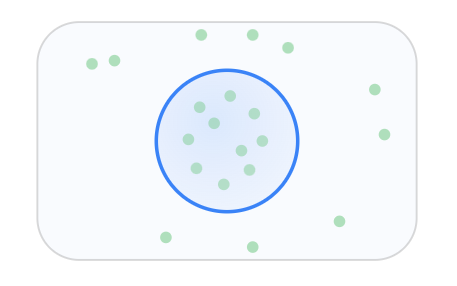
Water moves toward the side with the higher concentration of dissolved substances, because that side has a lower concentration of free water molecules.


What Is a Partially Permeable Membrane?

A partially permeable membrane allows some substances to pass through but prevents others from crossing easily.

The cell membrane is partially permeable.

Water molecules can cross the membrane, while many larger dissolved substances cannot move freely through it.

This difference allows osmosis to occur.

https://images.openai.com/static-rsc-4/pEKjYwvO4EnDzZ65c0YorwTk-QyRbQ9SgFbf4mpGWTzy2K2QseY8QK3cuOQ7_CMW-GFNWaNfNLYRbPeOi2FRp234FEWl7-JX13BJwWDq1CfkwHO6jwLSWa3KqVZVis1nlbudADLxpFxEpN4W737R72PyVkBToR5zK46vKX6DFUyyrWSB6CWl18gq-wRup3qV?purpose=fullsize
 
https://images.openai.com/static-rsc-4/w8c4V91zxKHBiCpK0M969Twyd8NxRfn1pBoukYqH7oD41lBZk6iYcNeiAV4DCFrw1lXY2uCPilC5lnUM2W4SoCPotkOoC1daJj56T2SztUYUv2bzEaznrw2Z4OTEpmnYnyoPvascHRTBzHI58hPVR4DaswcwigInZj0hhEhMcU8rnh5-mmE6peZGjuTnUf4x?purpose=fullsize
 
https://images.openai.com/static-rsc-4/7Cdw7kMxq-G2ITC2YF8oxbtyClD5HhzW9vUiNuLF9ur16DH-Gr3F_wEpxkqtunqovLVBP3VQ-kRuVrxgVtJZIj7iRo6wh5IBgrhoT37ymo5esn8yWxM2WOleY2IxeryRGrCmWbLDSMB9O0qsbPSfxS1bIEa_ZWCbt3piaIK-ZjDncmzwZYafKhOtpoXoERP6?purpose=fullsize
 
5

Water and Solute Concentration

A solute is a substance dissolved in a liquid.

Examples include:

  • salt
  • sugar
  • mineral ions

A solution with relatively little solute is dilute.

A solution with a large amount of solute is concentrated.

Compare these two solutions:

Solution A

Lots of water + little salt

This has a relatively high water concentration.

Solution B

Less water + lots of salt

This has a relatively low water concentration.

If a partially permeable membrane separates them, water shows a net movement:

Solution A → Solution B


Osmosis and the Particle Model

Like diffusion, osmosis can be explained using the particle model.

Water molecules:

  • are constantly moving
  • move randomly
  • collide with other particles
  • can move across suitable membranes

Water molecules actually move in both directions across the membrane.

However, if one side has a higher water concentration, more water molecules move from that side than move back.

The result is a net movement of water.


Osmosis Continues Toward Equilibrium

As water moves across the membrane, the difference between the two sides becomes smaller.

Eventually, the system may approach dynamic equilibrium.

At equilibrium:

  • water molecules continue moving
  • water crosses in both directions
  • approximately equal amounts move each way
  • there is no net movement of water

The water molecules have not stopped moving.


Predicting the Direction of Osmosis

To predict osmosis, compare the solutions on either side of the membrane.

Ask:

Which side is more dilute?

Then ask:

Which side is more concentrated?

Water will show a net movement:

more dilute solution → more concentrated solution

For example:

Inside cell: 5% salt

Outside cell: 1% salt

The outside solution is more dilute.

Therefore, water moves:

outside → inside


Osmosis in Animal Cells

Animal cells are surrounded by a cell membrane but do not have a rigid cell wall.

This means that gaining or losing too much water can significantly change their size and shape.

https://images.openai.com/static-rsc-4/iKmakqHMP06xrQPHZBV1ej74BYLJF5GC1q5o9D0v1kHjQ_8p2iQl8jKy1kf2yOsDYYb8IVNLJbR3pazkxdjeBLgPAuV0ixVZ3UyO623vsZhjgDAhCnKORFtgNhfJxFXeyGsbYtSTBxP5crXA3LSWAD7isx_iv_9MMLE91TPIGaQej8TZ0Iq4Z_cTpcnfx9dM?purpose=fullsize
 
https://images.openai.com/static-rsc-4/y92NzRg3xBhQOz2sorcaE0mjgFSPtXTM9JK6gdTNBvqsZ0EeaJCernMR5Iu1VEY9gNdOcfPAxhhRRg1cyTnvocsw6vWI0ptX1SH4D1NPtQKmo7bs4swaJildBsjIZClEas758CDD19vptxRjrx-gNFPxYLQfRvTI_FyJzmjD4QsACMRH_9PRTEX5x3dNH9c5?purpose=fullsize
 
https://images.openai.com/static-rsc-4/Z0GFSqguL4NcPguEJVtVjqPqWFJYySKvsq9wZjhASDaHQ0n-9v-mBoxF0-cfpWXREGQxQ-_1XPPNit5uyy4QzKYyg96p1JAamuV4zksHZKVuk74_aYnONbZQDDIJNXHyoJktZBOWKy8835-ZxsmxaJQTtMSGABr-OmglTsVo9-wPpKpiL8EpSEd9yZ_50ro1?purpose=fullsize
 
5

Animal Cell in a Dilute Solution

Suppose an animal cell is placed in a solution that is more dilute than the cell contents.

The surrounding solution has:

  • higher water concentration
  • lower solute concentration

Water moves:

outside → inside the cell

The cell gains water and swells.

If too much water enters, the cell membrane may rupture.

This is called lysis.

For red blood cells, rupture caused by excessive water entry is called haemolysis.


Animal Cell in a Concentrated Solution

Suppose an animal cell is placed in a solution that is more concentrated than its contents.

The surrounding solution has:

  • lower water concentration
  • higher solute concentration

Water moves:

inside → outside the cell

The cell loses water and shrinks.

A red blood cell that loses water becomes shrivelled or crenated.


Animal Cell in an Isotonic Solution

An isotonic solution has approximately the same effective solute concentration as the cell.

Water still moves across the membrane in both directions.

However:

water entering ≈ water leaving

Therefore, there is no net movement of water.

The animal cell remains approximately its normal size.


Animal Cells Compared

Environment Net Water Movement    Effect on Animal Cell
More dilute outside Into cell Cell swells; may burst
Similar concentration No net movement Cell remains normal
More concentrated outside    Out of cell Cell shrinks

Osmosis in Plant Cells

Plant cells respond differently to osmosis because they have a strong cell wall outside the cell membrane.

The cell wall prevents the cell from easily bursting when water enters.

This makes osmosis particularly important for supporting plants.

https://images.openai.com/static-rsc-4/hQzmcDkzGg8SpbkyTJCWkC0yyK7G0PDzMnnKGi9CL3bCnD3wreM9UhBYY856gt6Wlq3uME1J8hcSN1XqYXmYFgdStZvxpqYqLb02ZqQIqlVzscT5jpmhNr2uEC_6AU6-qvm_Rt-T2zVXQv80jzV2VP-1Hmvb5deoswrFx9AIqY9Xtdll-i0McdfgAbZhV_VQ?purpose=fullsize
 
https://images.openai.com/static-rsc-4/5grK36AjdHD-2o8cPkHb9Q_MJkZialF3WKapq8Bz53yC5UdnHa2iq9PYGvsXhqCr7hc2lXsXTaRsk6KmB2sEfPafDb5ESOTt1ts50AEtBKAP9KBtBwJ-hZKzINKi9UTmO4s5GHAr3kCX8Qsm8_XHJtj_tSCTgqc4uppMcaDeNm5zpFL_PgH7ASen7G0oIcHY?purpose=fullsize
 
https://images.openai.com/static-rsc-4/MR917ExYf86_nEUPCposOxZmt9d067svWsdaUTM5vYpNhQOjf4r9LQFpUd67WomRZ1sYNdJuvnJieaqwjPOpf1w5k18nCWSLV5C0sLOrcA-OyfRs2LPzw5JCmiBjg9qFSTVBGmJKPkz78jMwYlK8Q1l_DMjtMl7uu9ZYILmjiiwt6lR37GL-OTreaymbA5HI?purpose=fullsize
 
5

Plant Cell in a Dilute Solution

When a plant cell is surrounded by a dilute solution, water enters by osmosis.

Water moves:

outside → inside

The vacuole fills with water and becomes larger.

The contents of the cell push outward against the cell wall.

The cell becomes turgid.

A turgid cell is firm and well supported.

This is usually the normal and healthy condition for many plant cells.


Turgor Pressure

As water enters a plant cell, the cell contents push against the cell wall.

This produces turgor pressure.

Turgor pressure helps:

  • support leaves
  • support young stems
  • keep plant tissues firm
  • prevent wilting

The rigid cell wall prevents the plant cell from continuing to expand until it bursts.

This is an important difference between plant and animal cells.


Plant Cell in a Concentrated Solution

If a plant cell is placed in a concentrated solution, water leaves the cell by osmosis.

Water moves:

inside → outside

The vacuole becomes smaller.

The cytoplasm shrinks.

The cell membrane may pull away from the cell wall.

This condition is called plasmolysis.

A severely plasmolysed cell has lost a significant amount of water.

https://images.openai.com/static-rsc-4/XxVCVwKlA9dL6m5xBb3egpmfu9_V8zstk5-QubPqw22NJ4dM5cu0jm2MLvnUgPmuIwasoyqF3w8oEZM18i2SHSEkNWpFo5JRTMlxTKFMwabZ-xHpI3WLxoDkO0NPfqhV5qEUF2ORIIMWJ65gXRQkgQRtRTy2dz762TucNU0hBmG6mUkNwtwW686JojONFICH?purpose=fullsize
 
https://images.openai.com/static-rsc-4/4mYYncCfmaz_EIKp-v8rc1zz9bx6iFtVrYzEDzGPZdgZ9ebn54MHzgwRVamF-DMKhwUeHeS-ZHDMt_my4lC2yAGaGGRNDkdquOXO-yrp5fDv0TcwCBUtFtywkjQ5AqlVvp497_Po4bN2fOIGQpsnhfw9afF7UPu811tMFMLf6I06Dw3zkqUrncmnoCBrx0m7?purpose=fullsize
 
https://images.openai.com/static-rsc-4/f4D8Oxm5ek6O-17klYFsb403q-u43kF5MkNwri2C3rDGRCaTZa1zVJGBKb-oIxtfhYD9ZGrdMAESdMj4P2q9ZV0CsTIgjv_CLRAW5eK6uZERXoH-ac7gX7ds2lrxjRvLy26wZKNvwUgWx6FBHk5Nkt7YJZzJ5LQVwS6o7wWROxmXHFVUqWClTyytN9hu-6Nt?purpose=fullsize
 
6

Flaccid Plant Cells

When plant cells lose some water, they lose turgor pressure.

They become flaccid.

If many cells in a plant become flaccid, the plant may begin to wilt.

This is why plants often wilt when they cannot absorb enough water from the soil.


Plant Cells Compared

Environment Net Water Movement Effect on Plant Cell
More dilute outside Into cell Becomes turgid
Similar concentration Little/no net movement    May become flaccid
More concentrated outside    Out of cell Becomes plasmolysed

Why Plant Cells Do Not Normally Burst

Animal cells may burst if too much water enters them.

Plant cells usually do not.

This is because plant cells have a rigid cell wall.

As water enters:

  • the vacuole expands
  • the cytoplasm pushes outward
  • pressure builds against the cell wall
  • the cell wall resists further expansion

The cell becomes turgid rather than bursting.

This is a good example of how cell structure affects cell function.


Osmosis and Plant Support

Plants do not have skeletons like animals.

Instead, water inside plant cells contributes to structural support.

When cells are turgid:

  • leaves remain firm
  • stems remain upright
  • plant tissues maintain their shape

When cells lose water:

  • turgor pressure decreases
  • cells become flaccid
  • the plant may wilt
https://images.openai.com/static-rsc-4/PUg5yxuW5glggxb5TQtYBXX0wyCz35igmUh7K-_aG3debRP9IIRodlqSgC6qgcMhLVVI8cDHYTWjNLFhJkmygibs2nSQURjjz6nCqBwF_AleURGhcq-Bu3Cs5t1m4GEnhtI806Atf6yg_f53FjyJxrcinZ4EQElCpqGrlmfb7grVva33ePNEtVX4vpgndHdl?purpose=fullsize
 
https://images.openai.com/static-rsc-4/eHCK05I1V0-SHnDnp5B9FqE9Ru26y5DQKuneKxh6bzJ3Q1VylEnsTd2LYsu7PBXIJZQ-LpVat8MepBLNvBuIRNBKHFhaAc1CB0igY32B2NtRxsHlaONmFG9rrHO2QTH1EZclxyjF-yjUssUDTZTYZG1TuS2-dRr4fVyk2CEwV-IFHpDL_p9UWpJpBwWXp_n7?purpose=fullsize
 
https://images.openai.com/static-rsc-4/H3w8aA7VXtWjGDORkN2Wzvfl93aOcZq0m5mxT2PlIK8DwKtS2v9B0E9a1lEO0S-OaGKyn2H1myHSjJUjTBJtNAaGeFs_u9F1wUfr8S174bG2UCUA_L675SLiCNk8h5l84Mb4E91tlk6E_wW6oNMSo81hr133H5KMjv0cO-ulSdlCCRJw41-1nHe6D3jXcU-v?purpose=fullsize
 
5

Comparing Osmosis and Diffusion

Osmosis and diffusion are closely related processes.

Both involve the passive movement of particles.

However, there are important differences.

Feature Diffusion Osmosis
What moves? Any suitable particles Water molecules only
Membrane required?    Not always Yes
Direction High concentration to low concentration    High water concentration to low water concentration
Energy required? No No
Example Oxygen entering a cell Water entering a plant cell

A useful way to remember the difference is:

Diffusion = movement of particles

Osmosis = movement of water across a partially permeable membrane


Diffusion and Osmosis Both Depend on Gradients

Both processes involve differences between two regions.

In diffusion, we usually consider the concentration gradient of the substance itself.

For example:

High oxygen concentration → low oxygen concentration

In osmosis, we consider differences in water concentration across a partially permeable membrane.

For example:

High water concentration → low water concentration

Both processes continue toward equilibrium without requiring cellular energy.


Worked Example: Animal Cell

An animal cell contains a solution that is approximately 2% dissolved substances.

It is placed in a solution containing 8% dissolved substances.

Outside: 8% solute

Inside: 2% solute

The outside solution is more concentrated.

Therefore, water moves:

inside → outside

The animal cell will:

lose water and shrink


Worked Example: Plant Cell

A plant cell contains 5% dissolved substances.

It is placed in a solution containing 1% dissolved substances.

Outside: 1% solute

Inside: 5% solute

The outside solution is more dilute.

Therefore, water moves:

outside → inside

The plant cell gains water and becomes:

turgid


Worked Example: Equal Concentrations

A cell contains a 4% solution.

It is placed in a 4% solution.

The concentrations are approximately equal.

Water molecules still move across the membrane in both directions.

However:

water entering ≈ water leaving

Therefore, there is no net movement of water.


Worked Example: Predicting Osmosis

Consider a cell surrounded by the following conditions:

Inside cell: 10% sugar

Outside cell: 3% sugar

Which direction will water move?

The outside has less sugar and therefore a higher water concentration.

The inside has more sugar and therefore a lower water concentration.

Water moves:

outside → inside

The cell will gain water.

The exact effect depends on whether it is a plant or animal cell.

If it is an animal cell, it may swell.

If it is a plant cell, it will become more turgid.


Osmosis in Root Hair Cells

Plants absorb water from the soil through root hair cells.

Root hairs provide a large surface area for water absorption.

When the soil has a higher water concentration than the root cells, water moves into the root hair cells by osmosis.

https://images.openai.com/static-rsc-4/HQm1SfXSylEolu-_NdXDNAEOEl30eEoSIZ5r0zJ3A0h27L3ygFzGlZMI9biMyh5XO9743AXCW3d085eCTfCFrujoXaSP2VTeAUMTmMLXKC6AjMM4oZd2TV7MaA4WPuqluRv1jdvgkv-CVZOeXYTcid1dB3woT52McFGKlj5pDHYl-iHm5qzarKlnRQ1R_zOJ?purpose=fullsize
 
https://images.openai.com/static-rsc-4/NbS3_CMxdgAk5UnzVaN14oA9gJjJOJy19IQHko3wYi9IqQk1ySeCv3G1EI5z2Xgkvrf4s4X4vuO7I3SyGzWhSPU17_Dg0Rj6g6WtRfi8ynh4dT6MgNqpKfDYoa8z1q5xrsTiIMSllHckaIMU6v7zlMlr0o2FlnA7e24m6PQoZzGjWSA9VNa9dyjn_wOfWcFF?purpose=fullsize
 
https://images.openai.com/static-rsc-4/xwr1AWuJ17wl_f5HMcndIxC2Is4qg1OkBCJBrht2euXzq9J93mCQ25VDpLtk3LnPQvTdYBm9sSomlw1TdXcYr-k7dsy1dcGd6s-VfVKHWqlVqJq2l8vkluSNUno-s1vEwTtxa1zmEc2iJ6SZsVQ02mIr_oySR0qO6Vpw0ZdALWDpe6fBUjN7tLZjM4hA3gMb?purpose=fullsize
 
5

The water can then move through the root and eventually enter the plant's transport system.

This water is needed for:

  • photosynthesis
  • transport
  • maintaining turgor pressure
  • cooling through transpiration
  • chemical reactions

Osmosis in Food Preservation

Osmosis also helps explain why high concentrations of salt or sugar can be used to preserve some foods.

A highly concentrated environment can cause microorganisms to lose water.

Water moves:

microorganism → surrounding concentrated solution

This makes it difficult for many microorganisms to grow and reproduce.

This is one reason why foods such as jams contain large amounts of sugar and why salt has historically been used to preserve some foods.


Osmosis Experiments

A common experiment uses pieces of potato placed in solutions of different concentrations.

Students may measure:

  • initial mass
  • final mass
  • initial length
  • final length
https://images.openai.com/static-rsc-4/3psPK_z4VzCmaolXGK_FSvxPJR2SjZlwlnRpaaZXOEoIVh51_oD1kpxJGtIzlmloGQj0QkTavZ3w8JAxtHJnBJh5RTvMgets4CMTXlHX1KujK11gNxKtmkuyG6j4PhtbX0_x2sxei62xm8-kd67y5bDE1cE9TnG0IhSEfvGsseesvgc87lm_RXBAGt5GT1Lb?purpose=fullsize
 
https://images.openai.com/static-rsc-4/2AUg1XE98bsjQ_eIT0kmqjua-B09MpvMjdofF3s_ElgxF-OCQQiQtdOjApRGzMFQUD50Gbf2Is8PUbWlGEIPlfh37Bfeq2XhXN_uL4P7Y6cJQ_rO27G9nJ8WkcIlpQ4YIsU71oc_x7Q-4LIkPMTUUa6dfnA_Qyig1JJSF1iMH4q5c0OORd4MvSsxkKPM1_L4?purpose=fullsize
 
https://images.openai.com/static-rsc-4/RxncD7SOS9-6BqpiDtlmrLbU4BWQSsD72WonxSk2lmPk5knDz-6eTYP54Uc1Ms0sQgsXmEYL0B6imAxrOJsqlYrkc_J6JKGxzRWkzzTdHqBXfRoPpX_iTZaa79wbdg6ozMr-n77EXp-IVMJgkjYnKtNmjvKKY84CPdV0S74-_yIkt43yi7FF46Q5bUMSLZhd?purpose=fullsize
 
5

If a potato piece gains mass:

water entered the potato cells

If it loses mass:

water left the potato cells

If there is almost no change:

there was little or no net movement of water

This type of investigation can be used to estimate the concentration of substances inside plant cells.


Calculating Percentage Change

In osmosis experiments, percentage change is often more useful than simply comparing changes in mass.

The formula is:

Percentage change = (final value − initial value) ÷ initial value × 100

For example:

Initial potato mass = 5.0 g

Final potato mass = 5.5 g

Change = 5.5 − 5.0 = 0.5 g

Percentage change = 0.5 ÷ 5.0 × 100

Percentage change = 10%

The potato gained:

10% of its original mass

This suggests that water entered the potato cells.


Predicting Osmotic Changes

When solving an osmosis problem, use the following steps.

Step 1: Identify the membrane

Is there a partially permeable membrane separating the two solutions?

Step 2: Compare the solutions

Which side is more dilute?

Which side is more concentrated?

Step 3: Predict water movement

Water moves from:

more dilute → more concentrated

Step 4: Predict the effect

For an animal cell:

  • water enters → swelling
  • water leaves → shrinking

For a plant cell:

  • water enters → turgid
  • water leaves → flaccid or plasmolysed

Common Misconceptions

Osmosis is the movement of any substance across a membrane.

Incorrect. Osmosis specifically refers to the movement of water.

Water moves from high solute concentration to low solute concentration.

Incorrect. Water shows a net movement toward the region with the higher solute concentration.

Water molecules only move in one direction during osmosis.

Water molecules move randomly in both directions. Osmosis describes the net movement.

Plant cells burst when water enters them.

Normally they do not because the rigid cell wall resists expansion.

Animal cells have cell walls that prevent them from bursting.

Animal cells do not have cell walls.

Osmosis requires energy from the cell.

Osmosis is passive and does not require cellular energy.

At equilibrium, water molecules stop moving.

Water continues moving in both directions, but there is no net movement.


Did You Know?

Freshwater organisms face an interesting osmotic challenge.

Their surroundings can be much more dilute than their body fluids, meaning water continually tends to enter their cells.

Some single-celled freshwater organisms have structures called contractile vacuoles that collect excess water and pump it out of the cell.

Without this mechanism, too much water could accumulate inside the organism.

https://images.openai.com/static-rsc-4/ishUbPpyJl7kkt52H0ElddA5jUbchqY_W5CRVx3sUeQc3bSueWHpsJDLZ6SVuG1I4TmU_Z6TsXHv9d0qDedi7yvikJ-N9sglbBscUcJ4uRcLNSH_er8Au_Q6LpRnp-86NI-8Q1R1GjAAaLXujlvwphdd-x-RZianeIe6C-Pjv7d7jAfrieHcp3WN0w1ciUvs?purpose=fullsize
 
https://images.openai.com/static-rsc-4/-5gw7FgJfmJ3NT24r-UzjFYA76PBSiAvFW8z7WNNcUASMPFliHIt6eLc2g-Fub_4HSB4LxrTecnQsiX9TJyoiUGgXShO84U33ctg_oKCufDkXS3gFelg6pSYHrogEhseWE0mfO7t8EB-EtQiuLv9kVR2o9moJ3nPSkH-R0kamFvdElBbEyeMd-ACiLoyyIfL?purpose=fullsize
 
https://images.openai.com/static-rsc-4/pT8JNGErmpicskgrWZV_u7aH_h0W9ln0CoPShfZpx1S1P6oO_mRfjBEF8bp0KCDDr4YmTMPB5JL5i2RPuSG08h6-sbLMp8UDYOK9zQ0CJUTRXDM1xxOzcR0nQ83m-mX17kLu-57hokGeuWQnr7FR8mW_ArbSulg9k1ATR4ZI6iOel2JMpn6q3jTbbih6QtAk?purpose=fullsize
 
6

Key Terms

Osmosis – The net movement of water molecules across a partially permeable membrane from higher water concentration to lower water concentration.

Partially permeable membrane – A membrane that allows some substances to cross more easily than others.

Solute – A substance dissolved in a liquid.

Dilute solution – A solution containing relatively little solute.

Concentrated solution – A solution containing relatively more solute.

Isotonic – Having approximately the same effective solute concentration.

Turgid – A plant cell that is firm because it has gained water.

Turgor pressure – Pressure produced when the contents of a plant cell push against the cell wall.

Flaccid – A plant cell that has lost turgor pressure.

Plasmolysis – The condition in which a plant cell loses enough water for the cell membrane and cytoplasm to pull away from the cell wall.

Lysis – Rupture of a cell.

Passive transport – Movement that does not require cellular energy.

Key Takeaways

  • Osmosis is the net movement of water molecules across a partially permeable membrane.
  • Water moves from an area of higher water concentration to lower water concentration.
  • This can also be described as movement from a more dilute solution toward a more concentrated solution.
  • Osmosis is passive and does not require energy from the cell.
  • Water molecules continue moving in both directions even when equilibrium is reached.
  • Animal cells may swell and burst if too much water enters.
  • Animal cells shrink when they lose water.
  • Plant cells become turgid when water enters.
  • Plant cells become flaccid and may become plasmolysed when water leaves.
  • The plant cell wall prevents turgid cells from easily bursting.
  • Osmosis helps plants absorb water through their roots and maintain structural support.
  • Diffusion can involve many different particles, while osmosis specifically involves water moving across a partially permeable membrane.
  • To predict osmosis, compare the concentrations on either side of the membrane and determine which side has the higher water concentration.


4. Active Transport

Learning outcomes
  • I can define active transport.
  • I can explain how active transport differs from diffusion and osmosis.
  • I can describe the role of energy in active transport.
  • I can identify examples of active transport in living organisms.
  • I can explain why active transport is important for cell function.

Active Transport

Cells often move substances by diffusion and osmosis, but these processes only allow net movement down a concentration gradient.

Sometimes a cell needs to move a substance in the opposite direction — from an area where there is relatively little of the substance to an area where there is already more.

To do this, the cell uses active transport.

Active transport is essential for processes such as:

  • absorbing mineral ions from the soil
  • absorbing nutrients in the small intestine
  • maintaining ion concentrations in nerve cells
  • controlling the internal conditions of cells
https://images.openai.com/static-rsc-4/22gTUvF5l8JWNk0mYWOfet0nRY7FpxfERUe_sn9RblQFMfWyn-dquprqszeQJ_mhDm7ebE-GWVvydWTmw6bYemERCO-SbFnkb5BoReSpqDbf44L2TzDVPHSiLwxCkQgzOO8FDTCmAi9_9gxlDPSe1yJUCJUO9gS_csuXFVXMg4N8jnKkwnNnFBJeMa63v3VA?purpose=fullsize
 
https://images.openai.com/static-rsc-4/VDByXMGNvL8FO_E2TohV1-lrffrSjVEzoABv70-iXNH0pf3KINxoSqXrkNVo9GzbJRAd30IA56SOFHNTOx4yzSOKJMHsuuZjKzKhPTB6NSzN2SvQEHjaBNFND0Z9sUWBYNrGVMboNcnJgxan9HuVVYqpsOUSIw8EcMJ_p2Z1ssuix-c-PLZYFLZL0vjN2dTx?purpose=fullsize
 
https://images.openai.com/static-rsc-4/ER-N3fepzV3N335md_62kxcMSZ2A8W9BwOJR8ZTidFRsXGFd6Q6KIDcKhzNo5BBTaHerkhbJI3-G8uerQTkQSYsrktLBovNUOBuC1ppLyUib5oIIPO9NunhL84UHUnr1alTsGLk0ygvVmRf7UFgQZwAdvIGGCTKzG55_kiIOvgLHHQZBNXOGzCB6zZWvt4Vj?purpose=fullsize
 
4

What Is Active Transport?

Active transport is the movement of substances across a cell membrane from an area of lower concentration to an area of higher concentration, using energy.

This means substances move against the concentration gradient.

A simple way to represent this is:

low concentration → high concentration

Energy is required for this movement.

This makes active transport different from diffusion and osmosis.

Moving Against the Concentration Gradient

Recall that a concentration gradient is a difference in the concentration of a substance between two areas.

During diffusion, particles show a net movement:

high concentration → low concentration

This is movement down the concentration gradient.

Active transport can move particles:

low concentration → high concentration

This is movement against the concentration gradient.

https://images.openai.com/static-rsc-4/sv3pPIMEWO_qELdESBH9YeyxZwkAMQnICneAaaKPxwAIKQMr8XPz3afSmvD07bQ03IoZJR8fEVGX00vc4biUMx_Y6w6kfAuf3BW3h7Qj0CLaGVgXxhRBTl8DDFgJQc_bPq_78Q3xXGyQx5LwlyQwluW4XG_PkxdZ-160Pay55wsvWXKbU7pfhOnc8dOMZVh8?purpose=fullsize
 
https://images.openai.com/static-rsc-4/VDByXMGNvL8FO_E2TohV1-lrffrSjVEzoABv70-iXNH0pf3KINxoSqXrkNVo9GzbJRAd30IA56SOFHNTOx4yzSOKJMHsuuZjKzKhPTB6NSzN2SvQEHjaBNFND0Z9sUWBYNrGVMboNcnJgxan9HuVVYqpsOUSIw8EcMJ_p2Z1ssuix-c-PLZYFLZL0vjN2dTx?purpose=fullsize
 
https://images.openai.com/static-rsc-4/22gTUvF5l8JWNk0mYWOfet0nRY7FpxfERUe_sn9RblQFMfWyn-dquprqszeQJ_mhDm7ebE-GWVvydWTmw6bYemERCO-SbFnkb5BoReSpqDbf44L2TzDVPHSiLwxCkQgzOO8FDTCmAi9_9gxlDPSe1yJUCJUO9gS_csuXFVXMg4N8jnKkwnNnFBJeMa63v3VA?purpose=fullsize
 
5

Why Does Active Transport Require Energy?

Moving particles against their concentration gradient does not happen spontaneously by diffusion.

The cell must provide energy to make this movement occur.

This energy is usually supplied by ATP.

ATP stands for adenosine triphosphate.

ATP acts as an immediate source of usable energy for many cellular processes.

Cells produce much of their ATP during cellular respiration.

Therefore, active transport indirectly depends on respiration.

More respiration → more ATP available → more energy available for active processes.


Transport Proteins

Active transport occurs using specialized proteins in the cell membrane.

These are often called:

  • carrier proteins
  • transport proteins
  • protein pumps

The proteins recognize and transport particular substances.

https://images.openai.com/static-rsc-4/22gTUvF5l8JWNk0mYWOfet0nRY7FpxfERUe_sn9RblQFMfWyn-dquprqszeQJ_mhDm7ebE-GWVvydWTmw6bYemERCO-SbFnkb5BoReSpqDbf44L2TzDVPHSiLwxCkQgzOO8FDTCmAi9_9gxlDPSe1yJUCJUO9gS_csuXFVXMg4N8jnKkwnNnFBJeMa63v3VA?purpose=fullsize
 
https://images.openai.com/static-rsc-4/p6DsWih8dBUU9d9NCwYBjdIpXw67OYVWn9G_IBBGRM5cF7h3piLXkaZaUg8fM4aQsbCljxq7U3bUfUvPFSxd-fH2lrc-E0l2UmQE-IOWgjRiE_JhR879y-I4Lta_k3wgqFFmIOt4kjpK1qPplyqJD1P1J1sTyqSV2vxKYM4j_KDhe7_StEY6_1ip5Y8V13Sv?purpose=fullsize
 
https://images.openai.com/static-rsc-4/pESWFkE7asHbmkxMGe0qgRGggDfmYTZbfnnhq1pq_53rRMK_mdHExY08eMOxxL19cyeGj6b2HXLhv0ARdOOtS2CJ6ut0rE2Z0zMBOw2_3Y5ipUrbdyfy89mUW-nFWyf36AsCFAAo3AZuMxgNYEcKpGT4YTLaiuXyIZGKfCySHScuOLEpYbS2HXOUjNOGR7nt?purpose=fullsize
 
4

A simplified active transport process is:

  1. A substance binds to a specific membrane protein.
  2. Energy from ATP is supplied.
  3. The protein changes shape.
  4. The substance is moved across the membrane.
  5. The substance is released.
  6. The protein returns to its original shape.

This allows the cell to move particular substances against their concentration gradients.


Active Transport Is Selective

Cells do not simply pump every substance across their membranes.

Transport proteins are usually specific to particular substances.

For example, one protein may transport:

  • sodium ions

while another transports:

  • potassium ions
  • calcium ions
  • hydrogen ions
  • particular nutrients

This contributes to the selective permeability of the cell membrane.

The membrane can control which substances enter or leave the cell.


Active Transport vs Diffusion

Diffusion is the net movement of particles from higher concentration to lower concentration.

Active transport can move particles in the opposite direction.

Feature Diffusion Active Transport
Direction High → low concentration    Low → high concentration
Concentration gradient Down gradient Against gradient
Cellular energy required    No Yes
Membrane required Not always Yes
Transport proteins Sometimes Required
Example Oxygen entering cells Mineral ions entering root cells

The most important difference is:

Diffusion does not require cellular energy. Active transport does.


Active Transport vs Osmosis

Osmosis is specifically the movement of water across a partially permeable membrane.

Active transport normally moves specific dissolved substances or ions.

Feature Osmosis Active Transport
Substance moving Water Ions or other substances
Direction Down water concentration gradient Against concentration gradient
Energy required No Yes
Membrane required    Yes Yes
Transport proteins Water can move through membrane/aquaporins    Specific transport proteins
Passive or active? Passive Active

Comparing All Three Transport Processes

Diffusion, osmosis and active transport all allow substances to move across cell membranes, but they work differently.

Process What Moves? Direction Energy Required?
Diffusion Particles such as O₂ and CO₂    High → low concentration    No
Osmosis Water High → low water concentration No
Active transport Specific substances or ions Low → high concentration Yes

A useful summary is:

Diffusion = down the gradient

Osmosis = water down its water concentration gradient

Active transport = against the gradient using energy


Active Transport in Plant Roots

One of the most important examples of active transport occurs in root hair cells.

Plants need mineral ions from the soil.

Important mineral ions include:

  • nitrate ions
  • magnesium ions
  • potassium ions

Sometimes the concentration of a mineral ion is lower in the soil than inside the root cells.

Diffusion cannot move the ions into the root because diffusion would move them in the opposite direction.

The plant therefore uses active transport.

https://images.openai.com/static-rsc-4/iIf4YkKxmiF7IEGuQw6YufhNRVcjMCWF-EX5tqkkfuTPQens-vzStXQD4S9TKElygMdKgT9hseQcmtEeppjeR01TieEW6EEBnVaR2B931y_le3jQFdwVwp2GUNv31JNrvhHgfghBp8gAn1Ks6rP12xlmVGfBKBaPz9FZ16X1GFaOFysHQheTXFMbUh7K-Bo1?purpose=fullsize
 
https://images.openai.com/static-rsc-4/RBoAhNX40JxSY5iIRcayRuVdMEeOsQmPz98TEVeGaTIIKQtErsYD1RX9XkIW-zmAOAiWSUYfHXmRVClmalxrREdHS5YGFd0w5XF-BF63EBOTuwvrZOZun4KaSFu1R45qXYX1RAkBydjHN-cZmeRoVFVP_wQLLXHXrD6UsSIwFiX7eWCdYhMmDcDE-srmFTLC?purpose=fullsize
 
https://images.openai.com/static-rsc-4/BsiLvqmRho4F_wRfwd-er6rdEy9vRM2gbNJhKQPzki2jtydS6BsVmtdRwUdZ39tZWPqqGQ7HwfSSgi-QE1nAShiFxTwMYEWKKB0TR_f3ttN_4TjeWkT6oFnXCGAYXM3W4spuzCGd44vm_UeE57asCgM_XgeNK1sznp1fibohWRb0dRzNpHZ-7aM1wTjMtTj0?purpose=fullsize
 
5

For example:

Soil nitrate concentration: low

Root cell nitrate concentration: high

Nitrate ions still need to enter the root.

Therefore:

soil → root cell

This movement is:

low concentration → high concentration

The plant must use energy to make this happen.


Why Do Plants Need Mineral Ions?

Mineral ions are essential for healthy plant growth.

For example:

Nitrate ions are needed to make amino acids and proteins.

Magnesium ions are needed to make chlorophyll.

Potassium ions are involved in several important cellular processes.

A plant cannot simply stop absorbing these ions when their concentration in the soil becomes low.

Active transport allows the plant to continue absorbing essential minerals even against a concentration gradient.


Root Hair Cells Are Adapted for Transport

Root hair cells have long projections called root hairs.

These increase the surface area available for absorption.

Root hair cells also contain many mitochondria.

Mitochondria carry out aerobic respiration and help supply ATP.

This is important because active transport requires energy.

https://images.openai.com/static-rsc-4/W2a1kWi4Pmw4hELY9K-tIjZpsCkhUh8sTD4SV81AYi6zRYkm3busAysUoHmqBhgXYAg6CDv1t5UY0msHP9CB0u4fgFDMTgw-KXoShzOOGCclPVlfAmGMpD_ZGG6PVTT7-DNDT9fxb4nogte_sCIgKCVHi3YvEPunSBJO0PQaS7RvRZAZraI5HxMItaHwgnl6?purpose=fullsize
 
https://images.openai.com/static-rsc-4/RBoAhNX40JxSY5iIRcayRuVdMEeOsQmPz98TEVeGaTIIKQtErsYD1RX9XkIW-zmAOAiWSUYfHXmRVClmalxrREdHS5YGFd0w5XF-BF63EBOTuwvrZOZun4KaSFu1R45qXYX1RAkBydjHN-cZmeRoVFVP_wQLLXHXrD6UsSIwFiX7eWCdYhMmDcDE-srmFTLC?purpose=fullsize
 
https://images.openai.com/static-rsc-4/EfyfROt7XEgvSxvvMgGtmL7096w0OqFhR9zeaDWYxrjUrsVe7PnBvpEJJcBV20NgmhTDwh4vTwTNm3cF7VRGGH4wm88niRHkAGGkPoUylSRqXWAucWBqxwhS9tuDx2Yqa4c0ol7kXu20mpre8DCK9xv6OeXLqS9UxbBSdNlB1ySeC_ErPCf1ZscQY8WyLYRs?purpose=fullsize
 
5

This is another example of the relationship between structure and function.

Root hair cells need active transport.

Active transport needs ATP.

ATP is supplied by cellular respiration.

Therefore, cells involved in high rates of active transport often have many mitochondria.


Active Transport in the Small Intestine

Active transport also occurs in the small intestine.

After food is digested, small molecules such as glucose need to be absorbed into the body.

Glucose can sometimes move down a concentration gradient using transport proteins.

However, when glucose concentration in the intestine becomes relatively low, the body still needs to absorb as much useful glucose as possible.

Transport mechanisms involving active transport allow glucose absorption to continue even when simple passive movement would not be sufficient.

https://images.openai.com/static-rsc-4/kJCj7Q-H8Bu_VDLtwTaKpg-qYTtXBbH1NmeHf6oH_RPlj-CJsIo4OfU6ilWZwPLJONsok_U_KDjPEq-jez2ntox9aiZ3fYNMKsXPAcGl8fq4nw8GrQrT0LWTFQdNiPdjXZTJ95zV5dbQthxO7_Ex_oMSCgc6_Mz3p9cPJFqbUxsnwPXSsj3uwxPpS3qQc7bt?purpose=fullsize
 
https://images.openai.com/static-rsc-4/8yqRIx-lfgQgb9oLFyM2UQy40SbuXkEdiimZFHP9xmDEM8Uv4PQb1YCqIiqR6460FyYlZJ2YwP_ZpqDJ5XtmU0q6dEvTGvmtVi6egotgYSlzPt9mkPLyvxy8zjXbJagdE5mNJxiwfSjg5gVOhLA951ANc209QfYqqr_YhtyYZT3_2u49e5VAqMp7VL82OjcG?purpose=fullsize
 
https://images.openai.com/static-rsc-4/lM2QO3-RyT-CezM-xEyNS_Mev1HaGAJvTj-QcsI7yRB4Zjw55rYNvInqunA0KHduyzm1vEGPLlfoLAjYhyc3IbGVWfFBxN3uPjPrR2QuomTf8OjQxFcC1Tf5nxemtn8PLzgiOCSbxoOiROXtOHHqg2JejfS61hw0RhwTdGKgf8_l95-87h4dl8HcS6jaJx1a?purpose=fullsize
 
5

The small intestine is well adapted for absorption because it has:

  • many villi
  • microvilli
  • a large surface area
  • a good blood supply
  • cells containing many mitochondria

These features help nutrients move efficiently into the body.


Active Transport in Nerve Cells

Nerve cells depend on carefully controlled concentrations of ions.

Important ions include:

  • sodium ions, Na⁺
  • potassium ions, K⁺

The concentrations of these ions are different inside and outside nerve cells.

A membrane protein called the sodium-potassium pump helps maintain these differences.

https://images.openai.com/static-rsc-4/eLIkJ6IbKQZaJvRRGC3z0arFP7I5dRjHWLaInkurVFZ4zOhRjIGM9PVPwc1ptrE0cJkQ7N4n-qvCKmz6SpNiE9ZR-wVCs_4ZlQIZiZhkEgP-xh9NVZMmWC8nvgvMvuDUu6KV-i_95Lfbo9PCwiQIPNJFgt_I101lihnlP99drx8op1v2YmM9ccpRoJSKB8al?purpose=fullsize
 
https://images.openai.com/static-rsc-4/bKtXJe5aFt39S6aRYI7Up9NINHEyjrMdXML_jLlFpuwhmlKrNraHNWQBGfHr0cOa_L8mveFQ5VHjNtMCYNU_pM4ZRva7QXy6xufvfst8kVUtpoW9qAXiRSpYahReTZDCBxt_VHxQaRaY7LwbQpedukuQuCIh0vCa2y2m8avv3otGKsXgnlBQs2ab09J8HxvK?purpose=fullsize
 
https://images.openai.com/static-rsc-4/iZ2PkgTXvfxhzBEZg-RT62b6wd_NqTVeL0pc8llhYOtifh8i8jaTdg6ur2s_xTNHHzF8gk0DDRJWrPKMM54OaelVLSNEwWe_8B1uf8-6RJCtFH-BHAiQJMVl_gcd8bgVsnnAjWT724-X8YxY2KgJyDF2anWE5eRd-_CEoB9RCiIBH--t9-Qih12bD-Az5ziF?purpose=fullsize
 
4

The pump uses energy from ATP to transport sodium and potassium ions across the membrane.

Maintaining these concentration differences is essential for the electrical activity of nerve cells.

Without active transport, nerve cells would gradually lose the ion gradients required for normal function.


Why Active Transport Is Important

Active transport allows cells to maintain conditions that are different from their surroundings.

This is extremely important.

Without active transport, cells would be limited to substances that could move naturally down concentration gradients.

Active transport allows cells to:

  • absorb substances even when external concentrations are low
  • remove substances when necessary
  • maintain ion gradients
  • regulate internal conditions
  • absorb nutrients
  • support nerve and muscle function
  • maintain homeostasis

Active Transport and Homeostasis

Homeostasis is the maintenance of relatively stable internal conditions.

Cells need to control the concentrations of many substances.

For example, a cell may need:

  • more potassium ions inside than outside
  • less sodium inside than outside
  • particular concentrations of calcium ions
  • suitable concentrations of nutrients

Diffusion alone would eventually reduce many of these differences.

Active transport allows cells to create and maintain concentration gradients.

This makes active transport an important part of cellular homeostasis.


Active Transport and Respiration

Because active transport requires ATP, its rate can depend on cellular respiration.

Imagine two groups of root hair cells.

Group A receives plenty of oxygen.

Group B receives very little oxygen.

With sufficient oxygen, Group A can carry out aerobic respiration efficiently and produce ATP.

Group B may produce less ATP.

As a result, active transport of mineral ions may decrease in Group B.

This explains why poorly aerated or waterlogged soils can sometimes cause problems for plant roots.

Roots need oxygen for respiration as well as water and mineral ions.


Worked Example: Root Hair Cell

The concentration of magnesium ions in the soil is:

2 units

The concentration inside a root hair cell is:

8 units

The plant still absorbs magnesium ions from the soil.

Direction:

soil → root

Concentration:

2 → 8

This is movement from lower concentration to higher concentration.

Therefore, the process requires:

active transport

and the cell must supply:

energy from ATP


Worked Example: Diffusion or Active Transport?

A substance has the following concentrations:

Outside cell: 12 units

Inside cell: 4 units

The substance moves into the cell.

Direction:

12 → 4

This is movement from higher concentration to lower concentration.

Therefore, it could occur by:

diffusion

assuming the membrane is permeable to the substance.

Now consider:

Outside cell: 3 units

Inside cell: 10 units

The substance still moves into the cell.

Direction:

3 → 10

This movement is against the concentration gradient.

Therefore:

active transport is required


Worked Example: Energy Supply

A chemical prevents mitochondria from producing enough ATP.

What would happen to active transport?

The amount of energy available to transport proteins would decrease.

Therefore:

active transport would decrease or stop.

Diffusion, however, could continue because diffusion does not require ATP from the cell.


Worked Example: Identifying Transport Processes

Consider three situations.

Situation A

Oxygen moves from a high concentration outside a cell to a lower concentration inside.

Process:

Diffusion

Situation B

Water moves across a partially permeable membrane from a dilute solution toward a more concentrated solution.

Process:

Osmosis

Situation C

Mineral ions move from a low concentration in the soil to a higher concentration inside a root hair cell.

Process:

Active transport

The direction of movement and whether energy is required are important clues.


Why Cells Cannot Depend Only on Diffusion

Imagine a root hair cell that needs nitrate ions.

At first:

Soil nitrate concentration: high

Root nitrate concentration: low

Nitrate may be able to move into the root down its concentration gradient through suitable transport mechanisms.

Eventually, however:

Soil nitrate concentration: low

Root nitrate concentration: high

Passive movement can no longer produce net movement into the root.

But the plant still needs nitrate.

Active transport allows the plant to continue absorbing nitrate even under these conditions.

This is one of the major advantages of active transport.


Surface Area and Active Transport

Cells that absorb large quantities of substances often have structures that increase their surface area.

Examples include:

Root hair cells – Long projections increase contact with soil.

Small intestine cells – Microvilli increase the membrane surface available for absorption.

https://images.openai.com/static-rsc-4/5zS6ww4XE-nK-CbsdjuwXlh3Yz_fS6MDUfCod__abT6uxsNU66ium42S-eGWMWx-BjJrOu_rbdBpGTvMmUvMzWuky-bYeZvcmMFcShF8NKUhFvkzjy-6STIh1FG1w0KHRpfz-YwxwmV334lBZZCi6_bolgYElHRdW3kcxvaXQMlAJi3dsurT7-Lwd_K3luV0?purpose=fullsize
 
https://images.openai.com/static-rsc-4/a0N1QWEZD4ER60pJ3danxnSB_JVLVqrgRsvfsccyGCtueCHaro8eNW5YyKXVQG3SDf405FtGodITJfOQCk8tL4xVF8q2_J6gm-L54F6d1lUWxEJs7YAYKAXfATK-Drd1g_92dlqrMvhemNiukSNWx61QVZNld4mYvXR-Enr5WXhCSQBz2V071JsdIXNTa3Kv?purpose=fullsize
 
https://images.openai.com/static-rsc-4/LTdMtjHMj8EE9HILWRBFNEf0VTBdllJrA7oFe9NsqHgHq_t892x31VjHYfzqLyZyzbcSHJVWUvpV58wceb84lhbzCh-D-UIv4oHkoPhamD1sDK1GR1t12lF0CfSIlP95GZxGJkG5NuzOIW5-oTRwPYzvliHofKvQwHL5SvFhobgWU2uqOuFm-3Bc1_rWwDwa?purpose=fullsize
 
5

More membrane surface means more transport proteins can be present.

This can increase the amount of material transported.


Active Transport and Cell Structure

Cells specialized for active transport often have two important adaptations:

Large membrane surface area

This provides space for many transport proteins.

Many mitochondria

These provide ATP through cellular respiration.

This creates a clear structure-function relationship:

large surface area + many mitochondria → efficient active transport


Common Misconceptions

Active transport means particles are moving because the organism is active.

Incorrect. "Active" refers to the use of cellular energy.

Active transport moves substances from high concentration to low concentration.

Usually this would be passive movement. Active transport allows movement against a concentration gradient.

Active transport does not require a membrane.

Active transport uses specialized proteins in cell membranes.

Diffusion and active transport both require ATP.

Diffusion does not require cellular energy. Active transport does.

Osmosis is a type of active transport.

Osmosis is passive and does not require ATP.

Plants only absorb water through their roots.

Roots also absorb important mineral ions. Many of these can be taken up using active transport.

Mitochondria directly pump substances across the membrane.

Mitochondria do not perform the pumping. They help provide ATP that membrane proteins can use.


Did You Know?

One of the most important active transport proteins in animal cells is the sodium-potassium pump.

A single cycle of the pump typically moves:

3 Na⁺ ions out of the cell

and

2 K⁺ ions into the cell

while using energy from ATP.

This helps maintain the ion gradients needed by nerve cells and many other cells.

Your cells continually spend a significant amount of their available energy maintaining these ion differences.

https://images.openai.com/static-rsc-4/YRpX6n--3eaWeuKiZw67Bc0pEOXfqo8Ol9EjhtiKoOvxFYA8xinJtdeZT7YJXad0hSthMoOKtJgUjwIK2-GeYG3W7CgBQ7Y8z6eGPL6xSlrG614a--S2unO47p2JdjqviCYYjL9Ao6aBRdO6Js_QElOkWpsBlg9R5sz-_-v-bD9XEOk0Nnc3N7xsTBe1Y6G5?purpose=fullsize
 
https://images.openai.com/static-rsc-4/PxINaMGztrxQtw1W-aRK4pz5aSuq2Y2JzAp5HSSJAU9zhE9WzLofiIpGiPWaLKIHfs59uSruehN0SId0UuOu2XtwY1O-OnVqUyBA_8D9DsD2h32i3s6G2Mgz6gFCHKms3MvWblE5oUTZWLKpC0IXKdRm8xXN3qKejKzbCjTyDu_oIRr-4CHM44A74e1-jBY6?purpose=fullsize
 
https://images.openai.com/static-rsc-4/0q1o8wtSb6MLOzlmbJMnPXIJ9bkWmFejcj0w_E9M6mX91_Vq8xHunD9_ZEso7FMPr-8mGs408Gjyp4EJr--msNzmO3V7jmXRHxsBwrH8DQ5yxnhaj0nsMQh3zhyt-nbYktbrxxDMLr20fN3ZllgNyrwQ3hqJ5iz506_33SDYYkAlmv1eMmrR7w5NXlOrhlKo?purpose=fullsize
 
5

Key Terms

Active transport – Movement of substances across a membrane against a concentration gradient using energy.

Concentration gradient – A difference in concentration between two regions.

ATP – A molecule that provides usable energy for cellular processes.

Transport protein – A membrane protein that helps move a particular substance across the membrane.

Protein pump – A membrane protein that uses energy to transport substances.

Cellular respiration – A process through which cells release energy from food molecules and produce ATP.

Passive transport – Movement that does not require cellular energy.

Diffusion – Net movement of particles from higher concentration to lower concentration.

Osmosis – Net movement of water across a partially permeable membrane.

Root hair cell – A specialized plant cell adapted for absorbing water and mineral ions from the soil.

Homeostasis – Maintenance of relatively stable internal conditions.

Key Takeaways

  • Active transport moves substances across cell membranes using energy.
  • It can move substances from lower concentration to higher concentration.
  • This means active transport can work against a concentration gradient.
  • Energy for active transport is usually supplied by ATP.
  • ATP is produced through cellular respiration.
  • Specialized membrane proteins carry out active transport.
  • Diffusion and osmosis are passive and do not require cellular energy.
  • Plants use active transport to absorb mineral ions through their roots.
  • Cells in the small intestine use transport mechanisms involving active transport to help absorb nutrients.
  • Nerve cells use active transport to maintain important sodium and potassium ion gradients.
  • Cells performing large amounts of active transport often contain many mitochondria.
  • Increased membrane surface area can provide more space for transport proteins.
  • Active transport allows cells to maintain internal conditions that are different from their surroundings.
  • This makes active transport essential for cell function and homeostasis.

5. Surface Area and Exchange

Learning outcomes
  • I can explain why surface area is important for exchange.
  • I can describe the concept of surface area-to-volume ratio.
  • I can explain how cell size affects exchange efficiency.
  • I can identify adaptations that increase surface area.
  • I can relate surface area adaptations to biological functions.

Surface Area and Exchange

Cells constantly exchange substances with their surroundings.

They need to take in substances such as:

  • oxygen
  • water
  • glucose
  • mineral ions
  • other nutrients

They also need to remove substances such as:

  • carbon dioxide
  • metabolic wastes
  • excess water
  • excess ions

Most of this exchange occurs across the cell membrane. The amount of membrane available for exchange is therefore extremely important.

A key idea in biology is that a large surface area compared with volume makes exchange more efficient.

https://images.openai.com/static-rsc-4/PG1kANy6uIPiqVmxLY4maHaEHAtPj5r3JOJQ79Psn41pNz99qcSVOfg0z4rzxxEKh7-qC92VWxwFztkDH_7tpHw7wJpkLLsEwKcM2DDt5rQo01WJ1VtvCB-ZLnna4iy0eBBGIsjpxmHaKKya3N1zz4Bpqaoss0EgGyE6aiNdBKTlKMiQm-afvxz-MMy1mZrW?purpose=fullsize
 
https://images.openai.com/static-rsc-4/b4xBtvoJ-pN8rhF_hpT3pGSrUj1kWF2YSIHWUrCVwsAOq3zSQEdn_L7C5xxPy8CRQmgGb7rTddhJJNS6IwBJhk2E6_t7qpUdahai6BwUEbBrMGzHTuDqq6wt0uMGBmodVUL_C5yVyRPNjOVjEmbSC7uKTtCWkgZ_pt8I9UoaziisP5tkEOHC25-VBGvaQtKs?purpose=fullsize
 
https://images.openai.com/static-rsc-4/lICPA-G77POnT9kAdJvFdx4MdPcKiGv-QLQMdcG22WYUwy1TxsFP13wheb8IN_O5_5EOjXPD74-LflwJz9p4VZjBQITr69W8-npLvFQBcgsJjKGnqd8L_dPA84zPtyYm40gSOmTjmoLy2XDetG_6qkaAHZ1CetA5SdGz5N8CiOV3d0eMMe9oUGcUIwbnlefk?purpose=fullsize
 
5

What Is Surface Area?

Surface area is the total area covering the outside of an object.

For a cell, the surface area is mainly determined by its cell membrane.

The membrane is where substances enter and leave the cell.

A larger membrane surface provides more space for processes such as:

  • diffusion
  • osmosis
  • active transport

Therefore, increasing membrane surface area can increase the rate at which substances are exchanged.

What Is Volume?

Volume is the amount of space occupied by an object.

For a cell, volume represents the amount of living material inside the cell.

As cell volume increases, the cell generally requires more:

  • oxygen
  • nutrients
  • water

It also produces more:

  • carbon dioxide
  • metabolic waste

The cell therefore needs enough membrane surface area to support the needs of its internal volume.


Surface Area-to-Volume Ratio

The relationship between surface area and volume is described using the surface area-to-volume ratio, often written as:

SA:V ratio

It compares:

surface area : volume

A high SA:V ratio means there is a large amount of surface area compared with the volume.

A low SA:V ratio means there is relatively little surface area compared with the volume.

For exchange, a higher SA:V ratio is generally more efficient.

https://images.openai.com/static-rsc-4/VhH-UoHNiPf1p3VRL-isMY2R14Y8OhHeEEErMLL5IW_49Gl5-8k-tbLzJ6vGEtKhuPHafkd6jGte-6c4G1YkG6MH2ZiJMXmVF2TFLdFhkWzRMhUgrj0c1OuQvgTGB43m_QPPrm46NK-_upAACH_nD5ye73-dQ90NHBtn8BOq3R1Empym0TpaelHS2LBMG2AG?purpose=fullsize
 
https://images.openai.com/static-rsc-4/dRQxoCYqqmVZoYsyj_Uc9Cl2KyuvLqhJ6VZRba8uG33wDaGo5pAIxuJ0pP00IEqAzOd3uaUoWWOBmew5pD7UgTooGZ_-SYJpUMmKYi5AbjkibNqFRSVJK0cgGmi0U6o852FYwXx2bums3C3xV9n4E677yVTBQ3IfMLN_3Dngwt55fck7eubHS3F9rzA8yVOf?purpose=fullsize
 
https://images.openai.com/static-rsc-4/myfAxxEWaD9Vo5C0jlduYGgp6uJcAzHOXH39Mf1zWxAJi3oB9UjsrNZ5WF8FPgeC0x-T6Q3-XjNaGr212GI4ghuPBA_L3VZlj_of29eBsryjvB3hyq9YUFX8ggSza4NV8hOn70c8-K9D8RLw6polMsqv3g3hjdJr6WE_eP1MJWkW5LzkxLTtfYGKFu8qPz0t?purpose=fullsize
 

Calculating Surface Area and Volume

A simple cube can be used to model a cell.

For a cube:

Surface area = 6 × side²

Volume = side³

Consider a cube with sides of 1 cm.

Surface area = 6 × 1²

Surface area = 6 cm²

Volume = 1³

Volume = 1 cm³

Therefore:

SA:V = 6:1

Now consider a cube with sides of 2 cm.

Surface area = 6 × 2²

Surface area = 24 cm²

Volume = 2³

Volume = 8 cm³

Therefore:

SA:V = 24:8 = 3:1

The larger cube has a lower surface area-to-volume ratio.


What Happens as Size Increases?

Consider three cube-shaped cells.

Side Length  Surface Area   Volume  SA:V Ratio
1 cm 6 cm² 1 cm³ 6:1
2 cm 24 cm² 8 cm³ 3:1
3 cm 54 cm² 27 cm³ 2:1

Notice what happens:

As size increases:

  • surface area increases
  • volume increases
  • volume increases faster than surface area
  • SA:V ratio decreases

Therefore:

Small cells have a larger surface area-to-volume ratio than large cells of the same shape.

This is one of the most important relationships in cell biology.


Why Does Volume Increase Faster?

Imagine increasing the side length of a cube from 1 cm to 2 cm.

The side length has doubled.

Surface area changes from:

6 cm² → 24 cm²

The surface area has increased by:

4 times

But volume changes from:

1 cm³ → 8 cm³

The volume has increased by:

8 times

Therefore, when an object becomes larger, its volume grows faster than its surface area.

https://images.openai.com/static-rsc-4/6gcqzqsb8wjOlZ2-Tc0kLBL7AkcvN_u1Q1i4pLCGFn4QmiAa-g8AN4gjya6h4bxHR--_hO-3cPVtzRrQ70xP6lRMok0vXFxWZ3Eo8LIsdYavD1oEoG7KnnwgC2jV07O1MyKytkwFU2yaxasqjBPpSo25rJ4tJb_c9IKkIrENccmpRNp0LTMa3IpUPWh4N9bY?purpose=fullsize
 
https://images.openai.com/static-rsc-4/3w0gxihbIuFMGQqJndYy6B4qOoi2LTQnLswZIiynyaDQ3ypHwGIfpcwgSpTcDaWEWIEkUM0qUqMYmbkw3oIPZxXKcakpaofOb0JFs6EsVRVdDiKnNj_G8hT2E0w-2pMG-PuWQpxctTXjyhWD6C9gaFuOHfxb9lU_yjoaS_DcXHURuXIm-iPj27jMVCSbN_BP?purpose=fullsize
 
https://images.openai.com/static-rsc-4/ifQG9WPmXBjGadW0OD494duL_-JgxjV2u6SugfxbGqz79pK0R3ia6ZE5CM3Fd70-CwefR9N81e7iB_rXKsfF9yRWt_MO2i1eFEAJHs7lmCXZtFAzP1yeBln8kmttufKSG69iB3_Vxc7Oa8wdqFBjLMhw9R2-yPYYDj0gYp_ZSEJ0A3GT7qx9kUmzI_WRAncT?purpose=fullsize
 
6

Why Is SA:V Ratio Important for Cells?

A cell's membrane is its exchange surface.

Oxygen, nutrients and other substances must cross this surface.

However, the substances are needed throughout the entire volume of the cell.

A small cell has:

  • relatively large membrane area
  • relatively small internal volume
  • short distances for substances to travel

A large cell has:

  • relatively less membrane area for its volume
  • more internal material to support
  • longer distances for substances to travel

Therefore, smaller cells generally exchange substances more efficiently.


Small Cells and Efficient Exchange

Imagine two cells.

Cell A

Small cell

SA:V ratio = 6:1

Cell B

Larger cell

SA:V ratio = 2:1

Cell A has much more membrane available relative to the amount of cytoplasm inside.

This means oxygen and nutrients can enter more efficiently relative to the cell's needs.

Waste products can also leave more efficiently.

Cell B has less membrane available relative to its volume.

Exchange therefore becomes more challenging.


Diffusion Distance

Cell size affects exchange in another important way: diffusion distance.

In a small cell, the distance from the cell membrane to the centre of the cell is short.

In a large cell, this distance is longer.

https://images.openai.com/static-rsc-4/gR6H3mjFBnD64LpnS1XxSqfBnOeHCIfYMPmaGsMIcoowagAg9kNKr63L6xwz48quQs5V8IDie0jpNjl3MDZ6UZSxEDK2UzCDWB0yhllmlA5i2xW5-oHsCIfzk6z1eVDadDf1MU7k2OUEYBXC7nIcmXZYO0BvXBOHwnwJJLYDeSXjqEyeWzxoQEC787jeSW76?purpose=fullsize
 
https://images.openai.com/static-rsc-4/OlOWnsmh3RSFScDvNdNqm7MVb5oygkhykQWhEhj77yEzi3NHOE4BtZ955lhexRub0Hf9DJ-IN9VCH6lWzAq-q0B-tnQHO0fODNMYP1s2k6L6bc9RqajV2-q6wpvnTE1FHyO1N1OAWoI-QBlP_hl__YiwdR91Zuw-OjtJ3d8YJlIT-lUgSZDs3wv0G5AkBheS?purpose=fullsize
 
https://images.openai.com/static-rsc-4/6gcqzqsb8wjOlZ2-Tc0kLBL7AkcvN_u1Q1i4pLCGFn4QmiAa-g8AN4gjya6h4bxHR--_hO-3cPVtzRrQ70xP6lRMok0vXFxWZ3Eo8LIsdYavD1oEoG7KnnwgC2jV07O1MyKytkwFU2yaxasqjBPpSo25rJ4tJb_c9IKkIrENccmpRNp0LTMa3IpUPWh4N9bY?purpose=fullsize
 
4

Diffusion becomes less effective over long distances.

Therefore, small cells have two important advantages:

  • higher surface area-to-volume ratio
  • shorter diffusion distances

Both help substances move efficiently.


Why Cells Cannot Simply Keep Growing

Suppose a cell continues getting larger.

Its volume increases rapidly.

This means it needs increasing amounts of:

  • oxygen
  • glucose
  • nutrients

It also produces increasing amounts of waste.

However, its membrane surface area does not increase as quickly as its volume.

Eventually, the membrane may not provide enough exchange surface to meet the needs of the cell.

This helps explain why cells generally remain small.

Rather than becoming extremely large, cells often divide.

Cell division produces smaller cells with higher surface area-to-volume ratios.


A Simple Cell Model

Imagine one large cube with sides of 2 cm.

Its surface area is:

24 cm²

Its volume is:

8 cm³

SA:V = 3:1

Now imagine dividing that cube into eight smaller cubes, each with sides of 1 cm.

Each small cube has:

Surface area = 6 cm²

Volume = 1 cm³

Eight cubes together have:

Total surface area = 8 × 6 = 48 cm²

Total volume = 8 × 1 = 8 cm³

The total volume has not changed.

But the total surface area has increased:

24 cm² → 48 cm²

This demonstrates why dividing material into smaller units can dramatically increase the surface area available for exchange.


Adaptations That Increase Surface Area

Living organisms frequently have structures that increase surface area without greatly increasing volume.

Examples include:

  • root hairs
  • intestinal villi
  • microvilli
  • alveoli
  • fish gill filaments and lamellae
  • folded membranes inside organelles

These adaptations increase the area available for exchange.

https://images.openai.com/static-rsc-4/8ApwYAU0fQPwAL4TXfr1lokpuF7iBRg8WaGkdF_Tzqvq5CH6D7JuwrGsvSEI4YE1A1IxOB08EcFDjlQj9P3VNqcklNLcop8RbtmzohF-b8QMZNG-jQR8FSooSB87fNDDs9WWFDmav53nZccDU_KmMea9vRiGhF7QmpAk1UTPUicC2tI6uiCvom33W9EMf-wI?purpose=fullsize
 
https://images.openai.com/static-rsc-4/uWOLoJ9VoTECekY77OXLhJjVyQFC_-L9AhPACZ5Yn2hcH_usTUzo8ySF9bRLONO_APILIt7jKqb4wvn5rdsqUts8o3ZYZSc1_3JUPR94kQqQVMte2bCoPCozvQytNloHcsMSqmRBHRpgKHeOFURxuf9j2sj34XJ08mFtGwUzTw3w2lJ1Q01ccyFNkziAM6Fj?purpose=fullsize
 
https://images.openai.com/static-rsc-4/3uELc5owuComVVDhq_8794fYimlxaO5vUCs4Zc9Mu4qwVJYwOhnJRni6657NJDNp-b7qJfQMltawubmpHFMNcBmgOFKDsRvmbA7gSq0I8_ZdFlVjXXWpqs8Fhf77OuFgH1ICXpRJZOZ1d1EY2nJO64jhMw9Tr31FWLqxZVqUvTnDkTLVhVAxC99WINtp3IXV?purpose=fullsize
 

Root Hair Cells

Plants absorb water and mineral ions from the soil through their roots.

Specialized root hair cells have long, thin extensions.

These extensions dramatically increase the surface area of the cell.

https://images.openai.com/static-rsc-4/q3rHza3N-ta47zAL9MLi_MREaafTOJwdnb6L8Abg6JzZA3CpyIiPUlYm4yX12ixURB5O5oXmhNw7mFdzQav0_9HX_ATEZYfTGODVjpjAQyWRkXBycd2hB0Lc5-zoNQZdx_vO6HQ_cuM-_xUcy2zeVB-5PCqf1wOTajzNr3_5utjwyWpLIEUnfncNT7Wi3Zgt?purpose=fullsize
 
https://images.openai.com/static-rsc-4/hJS7QKbCYDS9mE_SEOYBexjvbaX9qRRFxlfZrJENxoCY6CQyXtO7g3fdSq7PRj_HG5HZxXG5v-xlccNHlW8yIeXqWN-Zr0MHCBFRn_oaZnw4Jvbadtja3JSQCC0onns1vpHoEm9tjQrzBRAFU4-JXHnl7wZUONuvpL_24ivnppVjbwUn_NTRbfQkqrSD2pYm?purpose=fullsize
 
https://images.openai.com/static-rsc-4/COR1dZiNhcVsgPacQcPgQkkTrAFMUSY3D0BaoxFWdW2K5dqa7JzkiGvrDCBDAliP79qi5C8Uli0uBrmrAvQJ6Y7wHLLvU6G0LdmW-0cv8XaVjN6cSrKx7flAPcfCKLSzP7VH495Vp8XST7yOWrjhhx1V0yqk9PecRrXv6NC2e1uuQDZrIKCsC7G4rq_Hcibk?purpose=fullsize
 
6

A larger surface area allows:

  • more water to enter
  • more mineral ions to be absorbed
  • more transport proteins to be present in the membrane

Root hairs therefore make absorption from the soil more efficient.

This is a clear example of:

structure → increased surface area → improved function


Villi in the Small Intestine

The small intestine absorbs digested nutrients.

Its inner surface is covered with millions of small projections called villi.

Each villus is also covered with microscopic projections called microvilli.

Together, these structures create an enormous surface area.

https://images.openai.com/static-rsc-4/yR_x7jFeD-BRRzoj3KnU5ZPTA1JeaaRc4UpI9VOYnkPbqXtKNcclV9vEijx-Ivtyhm4kKzjGvK7raIR63_cRQwWoBTNAKU0N2THoghQUSuz7bsn2mezib2KRuptNpDDY882ytLR1Okpx70GeZovk3B7DMNjZ0Hakr-1W8aJtpLN3jO1RNMtEAz5GllB1Jihu?purpose=fullsize
 
https://images.openai.com/static-rsc-4/0550p60ZPPoxb234lD4-WhSAD7Q7wjn7MRFcpYiME2I7V67jo3MGfbaWFcOPQpsxLs2l2FIENL5CBuTAMfofcBoSba8GoGT1VEN6L_XxJljlseNXCZQurmM5mIStA4LuHs0Ky7B57W6ZOECY41MNCS-jqzhmpu_I_xFlXoHV73qLD7_xsDOPzWkm4tjz6CZd?purpose=fullsize
 
https://images.openai.com/static-rsc-4/o2szjY83g5eq2vt9vLeFAzXahf7NTHP4sYuofAQhe8fDNRjO4r8k8w1JsDZ8PltXogMVse9ImcKRmHbcdjX6n-S-saUWbmjkG1k_87TMI5yLtgOyccJoHNo_ZKSKeDuq-SaoS0wuNGaY1JVM3F4X8pvi4Qg-ekR2rUsztzrazdIdfW_PUKpn2ywiCecSSB7y?purpose=fullsize
 
5

The increased surface area allows efficient absorption of substances such as:

  • glucose
  • amino acids
  • fatty acids
  • glycerol
  • water
  • mineral ions

The villi also have thin surfaces and a good blood supply, which further improve exchange.


Microvilli

Microvilli are tiny projections of the cell membrane.

They are much smaller than villi.

Cells lining the small intestine have many microvilli.

Rather than simply having a flat surface:

────────────

the membrane contains many projections.

This creates much more membrane surface within approximately the same space.

More surface area means more room for:

  • transport proteins
  • enzymes
  • diffusion
  • active transport

Alveoli in the Lungs

The lungs contain millions of tiny air sacs called alveoli.

Gas exchange occurs across their surfaces.

https://images.openai.com/static-rsc-4/LFTTNwr_GX7oX-eTDr2vmcxD_NpmjllGoDZicue8gPcGzM5y1lxvFq-SHbZR5H92H0U3JO7WYS4zc-yXAOHUjfwyy9smdsr5uO9_tElW9141gxFYpk0MWUcRUYlDadLsuCIKFM52r-NEI-HeZbLLy6XkaWadwS_7nzMpa26Ve4mDa8D5akwIg1TBGqmfCki2?purpose=fullsize
 
https://images.openai.com/static-rsc-4/c0n-7Y8bfcuu_sHYe90mKa_-tkHCEGPOxClJea8cr5OjGiWT3tNUNmr_Q24ASyQGG9AohRKToCBhBRvrxm8awOeGviF4pBe7LU84bCnaklO1GgxkjlySnLulcYWCk_qjuDS8i5nQUbF-e8-7Hcz0dEx9VWVFiZeFgSFXj3hFud8D2egAiex_rxcocxKJfaLW?purpose=fullsize
 
https://images.openai.com/static-rsc-4/uCt1BmP_jKiK39AL_lCbvpYWvGU62ROk4uaibXAm1DMbO0_9hPLnmyh-YCzeuLkSt09wXUsEJPySMHTIpP_92u0BBkiEtIw4Ni7j3l9Ic_NiOyLKUH59bB9uHUFsfIXGIH4VDoDi33Ux16DUcyE2LBgEiJerfyquDDkBEkWRXcG9PYmxfhdyI7qaveXP5kod?purpose=fullsize
 
6

Having millions of small alveoli rather than a few large air spaces creates a very large total surface area.

This allows:

  • oxygen to diffuse into the blood
  • carbon dioxide to diffuse out of the blood

Alveoli are also adapted for exchange because they have:

  • thin walls
  • moist surfaces
  • an extensive capillary network

The large surface area increases the amount of gas that can diffuse at the same time.


Fish Gills

Fish obtain oxygen from water using gills.

Gills contain many:

  • gill filaments
  • lamellae

These structures create a very large surface area.

https://images.openai.com/static-rsc-4/eDF4D0iXNTGvx13hFkwN9S7oWSexNnxRvh8Sdu5slls8xBGiRjOjpb_FT90lCyOyrrGn1sFzmXjoQ9hwt3Pg7sEcBVIk1GvAU22Z1uSg83TVWg_3nfzY56YQU_4J8gKXTqMdI-moG8OJT7HUSTfK2DOcwxwzHwkwQpTbW8fqyDvx7pMYdvTrVTn43XcoeSlq?purpose=fullsize
 
https://images.openai.com/static-rsc-4/J0Ebl9R02ar65K5NtuD_3aoz4crrrMZiu8tLeFCcAMa4c0iKgtVPMB7RSu6-LgVssvJweIWG-QCjHwG9cVtwpjck193W_EifL4E7yENSXwj43Gx6Ksj9yHQwII2nb1poc-7otVbQeoE7pfTeRmMNjFvBn0hbtsmOVdPFqGnIu2u0RrY3tz6yzsLKUEPuIgDr?purpose=fullsize
 
https://images.openai.com/static-rsc-4/GkfXMvqeMK0YyFf3Gwcg75SVRldUexODGb8f4K8ZwvMaE3B7GtNXOHwEsh7BwrrKySfTgjrGIg36on84oergMi8KYYl7a0rGPiumLYyeKmdKJyUgr6zM6wKjBCasNbqK59Maz45mzXGUMYCKcxF8SuUbutcB3wttAvNKnSDrk6Fcwy1DqZQ6OQe-PO9IfFCb?purpose=fullsize
 
4

The large surface allows oxygen dissolved in water to diffuse into the blood efficiently.

Carbon dioxide can diffuse in the opposite direction.

The thin lamellae also provide a short diffusion distance.


Folded Membranes Inside Cells

Surface area is also important inside cells.

For example, mitochondria have a highly folded inner membrane.

The folds are called cristae.

https://images.openai.com/static-rsc-4/14IC9-t32jOeeJ46YYN72q8XHmEQMnuMFEC082vxUqszsGnZFKybh-_umunc6h7-klmwbHre04dYXIwUaDHXniSMUJHEkmcW4hr2iqjXSf9ovCtE0dMJBUgFe7RcNvOW4VFdGr-Ma4IukU9safhM1HFq3uxKuNFopheK6jqbTdja0_anGGLW72ZXgWEblT-s?purpose=fullsize
 
https://images.openai.com/static-rsc-4/tcfhDOUdMrZ9AxM77PGF5qBre3aPr-vYXlV2FoolyrMhHR_N_CT7rfvlu4gLJAw0dheMa9opc-HuqLfYVWSfDTkkvNrf-AoPf-eptaVkbzw48sdrc-SIvI0m9rEqXxXjjkI1bqA_JiotNiE8m-SCv4PWhnkyfSgRrcFzQKoa_hDWhZZsM_y9ZLtoK6pzj130?purpose=fullsize
 
https://images.openai.com/static-rsc-4/Lqg0vsVWtEPH7VxIBf8NXUjqADV1sN1ozyJcQDYRGJDLoTBsGnhIqybYGqVKsv1spP1mstm4pAlkpkzuxxF8K9LRBvPKdKA0XdpFi7E5OL32o-l3Dzyuw4-oncJOvAuPFCHOBjCUkI2wuB9Yg8jDfBzv1cwc9N8a596MhDrVYHdeKRsTRZBOagz-3-v8N9VO?purpose=fullsize
 
5

The folds increase the membrane surface area available for reactions involved in aerobic respiration and ATP production.

Cells with high energy requirements often contain many mitochondria with extensive internal membranes.

Again:

increased surface area → more space for biological processes


Chloroplasts and Surface Area

Chloroplasts also contain extensive internal membranes.

Inside chloroplasts are flattened membrane structures called thylakoids.

Thylakoids are arranged into stacks called grana.

The large membrane surface provides space for reactions involved in photosynthesis.

This shows that surface area is important not only for exchange between cells and their environment, but also for chemical processes occurring inside cells.


Surface Area and Multicellular Organisms

Very small organisms can often exchange substances directly across their body surfaces.

However, large multicellular organisms have a much lower overall surface area-to-volume ratio.

Many cells are also located deep inside the body.

They cannot rely on direct diffusion with the external environment.

Large organisms therefore need specialized exchange surfaces and transport systems.

Examples include:

  • lungs
  • gills
  • digestive systems
  • circulatory systems
  • plant roots
  • plant vascular tissues

These systems help overcome the limitations caused by larger size.


Why Exchange Surfaces Are Often Thin

Increasing surface area is only one way to improve exchange.

Exchange surfaces are also often thin.

A thin surface creates a short diffusion distance.

For example:

Alveolar wall → about one cell thick

Capillary wall → about one cell thick

This allows oxygen and carbon dioxide to travel only a short distance.

Efficient exchange therefore often involves:

large surface area + short diffusion distance


Maintaining a Concentration Gradient

Exchange is also faster when there is a large concentration gradient.

Organisms often have mechanisms that maintain concentration differences.

For example, blood continually flows past the alveoli.

The blood:

  • carries oxygen away
  • brings carbon dioxide toward the lungs

This helps maintain concentration gradients for both gases.

Similarly, ventilation continually brings fresh air into the lungs.

Therefore, efficient gas exchange depends on several adaptations working together.


Features of an Efficient Exchange Surface

Many efficient biological exchange surfaces have several features in common.

They often have:

  • a large surface area
  • a thin exchange surface
  • a short diffusion distance
  • a mechanism for maintaining concentration gradients

In animals, this may include a good blood supply.

In lungs and gills, ventilation can also help maintain concentration gradients.


Worked Example: Comparing Cell Size

Cell A is cube-shaped with sides of 1 unit.

Surface area = 6 × 1² = 6

Volume = 1³ = 1

SA:V = 6:1

Cell B has sides of 4 units.

Surface area = 6 × 4²

Surface area = 96

Volume = 4³

Volume = 64

SA:V = 96:64

Simplify:

SA:V = 1.5:1

Therefore, Cell A has a much higher surface area-to-volume ratio.

Cell A would generally be more efficient at exchanging substances relative to its volume.


Worked Example: Root Hair Cell

Why does a root hair cell have a long projection?

The projection increases the cell's surface area.

This creates more membrane in contact with the soil.

Therefore, more water and mineral ions can be absorbed.

A complete explanation would be:

The long root hair increases surface area, providing more membrane for the absorption of water and mineral ions from the soil.


Worked Example: Alveoli

Why do the lungs contain millions of small alveoli rather than one large air sac?

Millions of small alveoli produce a much larger total surface area.

This provides more surface for oxygen and carbon dioxide to diffuse across.

Therefore, gas exchange occurs more efficiently.


Worked Example: Villi

A student says:

"Villi help digestion because they make the intestine bigger."

This explanation is incomplete.

A better explanation is:

Villi increase the surface area of the small intestine, allowing digested nutrients to be absorbed more efficiently.

The key concept is not simply size.

It is increased surface area for exchange.


Linking Structure to Function

When explaining a surface-area adaptation, use this pattern:

Structure → effect on surface area → biological function

For example:

Root hairs → increase surface area → increase water and mineral absorption

Villi → increase surface area → increase nutrient absorption

Alveoli → increase surface area → increase gas exchange

Gill lamellae → increase surface area → increase gas exchange

Cristae → increase membrane surface area → provide more space for reactions involved in ATP production

This type of explanation clearly links biological structure with function.


Common Misconceptions

Larger cells have less surface area than smaller cells.

Not necessarily. Larger cells usually have greater total surface area. The important point is that they have less surface area relative to their volume.

Surface area and volume increase at the same rate.

Incorrect. As an object becomes larger, volume increases faster than surface area.

A high SA:V ratio makes exchange less efficient.

Generally, a higher SA:V ratio makes exchange more efficient.

Large organisms solve exchange problems simply by having larger cells.

Larger cells actually have lower SA:V ratios. Large organisms use specialized exchange surfaces and transport systems.

Villi and microvilli are the same structure.

They are different. Villi are larger projections of the intestinal lining, while microvilli are microscopic projections of individual cell membranes.

Surface area is the only factor affecting exchange.

Other factors include diffusion distance, concentration gradient and, in many organisms, blood flow or ventilation.

Did You Know?

The human small intestine is several metres long, but its ability to absorb nutrients depends on much more than its length.

Its surface is heavily folded and covered with villi, while individual intestinal cells have microvilli.

These structures dramatically increase the surface available for absorption without requiring the intestine to occupy an enormous volume.

This principle appears repeatedly in biology:

folding and branching allow organisms to fit a very large surface area into a relatively small space.

https://images.openai.com/static-rsc-4/DGuODjP4s_3nNdPU4z3v_aodpHEjGmBOLMM2_fA9YhGwWvnR2lEJkBRksYA2bcUp8h3WNLKMVcE_wrWRg4rVocilXyyZPc0xgjIGPcbbvc3g11qH-ZpQJvTjSi8udFHIHLfzjaJeLPZetB1LeLx9Fmp638ueqoh3sru3zj7uk4N32FjcyDLYWSUNrInsz5LQ?purpose=fullsize
 
https://images.openai.com/static-rsc-4/8ApwYAU0fQPwAL4TXfr1lokpuF7iBRg8WaGkdF_Tzqvq5CH6D7JuwrGsvSEI4YE1A1IxOB08EcFDjlQj9P3VNqcklNLcop8RbtmzohF-b8QMZNG-jQR8FSooSB87fNDDs9WWFDmav53nZccDU_KmMea9vRiGhF7QmpAk1UTPUicC2tI6uiCvom33W9EMf-wI?purpose=fullsize
 
https://images.openai.com/static-rsc-4/iDpZCYOMkpbVa8pt3e1eY258Jwc8mQzE-S5F38IJYovTAkzmyt2VylI-x2q6ZxqCVLCST4EwQ8eQPQGwArnu_ZjvBPoksDO4SJudGb8qKy1MjS4FkSiYEBq6L-GUm7Qv6UEJjNnueYS5jR44bY0DziHHBRM8t0HrB5HK7j6j-6CRh-pNuLaR94LmsvHi5e6G?purpose=fullsize
 
5

Key Terms

Surface area – The total area covering the outside of an object.

Volume – The amount of space occupied by an object.

Surface area-to-volume ratio (SA:V) – A comparison between an object's surface area and its volume.

Exchange surface – A surface across which substances move between an organism or cell and its environment.

Diffusion distance – The distance particles must travel during diffusion.

Root hair – A long extension of a root hair cell that increases surface area for absorption.

Villus – A projection in the small intestine that increases surface area for absorption.

Microvilli – Microscopic projections of cell membranes that increase surface area.

Alveoli – Tiny air sacs in the lungs that provide a large surface for gas exchange.

Lamellae – Thin structures on fish gills that increase surface area for gas exchange.

Cristae – Folds of the inner mitochondrial membrane that increase its surface area.

Key Takeaways

  • Cells exchange substances across their cell membranes.
  • A larger surface area provides more space for exchange.
  • Surface area-to-volume ratio compares the amount of surface available with the volume that must be supported.
  • Small cells have a higher SA:V ratio than larger cells of the same shape.
  • As an object becomes larger, its volume increases faster than its surface area.
  • Large cells therefore become less efficient at exchanging substances relative to their needs.
  • Small cells also have shorter diffusion distances.
  • Cells generally remain small or divide rather than continuing to grow indefinitely.
  • Root hairs increase surface area for water and mineral absorption.
  • Villi and microvilli increase surface area for nutrient absorption.
  • Alveoli increase surface area for gas exchange in the lungs.
  • Gill filaments and lamellae increase surface area for gas exchange in fish.
  • Folded membranes such as mitochondrial cristae increase surface area for cellular reactions.
  • Efficient exchange surfaces often combine a large surface area, short diffusion distance and maintained concentration gradient.
  • Surface area adaptations demonstrate one of biology's central principles: structure is closely related to function.