Orbital Mechanics and Applications
| Site: | Young Education |
| Cours: | Gravitational Fields |
| Livre: | Orbital Mechanics and Applications |
| Imprimé par: | Guest user |
| Date: | vendredi 25 septembre 2026, 01:05 |
1. Orbital Speed
Learning Outcomes
- I can explain why orbiting objects remain in continuous free fall.
- I can calculate orbital speed for circular orbits.
- I can relate orbital speed to orbital radius.
- I can compare orbital speeds at different altitudes.
- I can analyze the motion of satellites in orbit.
Key Topics:
- Relationship to centripetal force
2. Types of Orbits
Learning Outcomes
- I can distinguish between circular and elliptical orbits.
- I can identify common satellite orbits.
- I can compare low-Earth, geostationary, and polar orbits.
- I can explain the advantages of different orbit types.
- I can relate orbit selection to mission objectives.
Key Topics:
- Characteristics of orbit types
- Specific examples (e.g., GPS satellites)
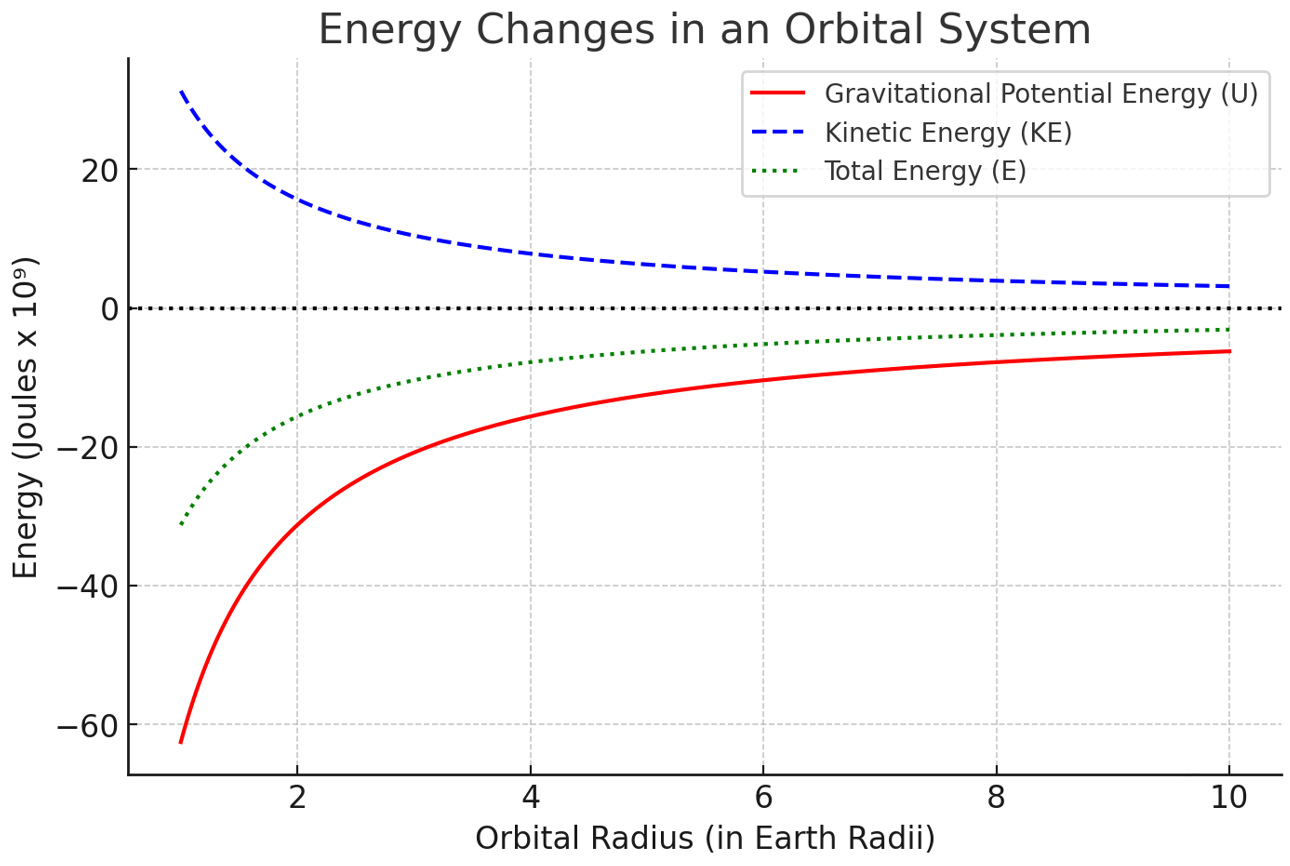
3. Orbital Energy
Learning Outcomes
- I can define orbital energy.
- I can calculate kinetic, potential, and total orbital energy.
- I can explain why bound orbits have negative total energy.
- I can analyze energy changes between different orbits.
- I can apply energy concepts to orbital transfers.
Key Topics:
- Total energy of an orbiting body
- Energy exchanges between kinetic and potential energy
4. Kepler’s Laws of Planetary Motion
Learning Outcomes
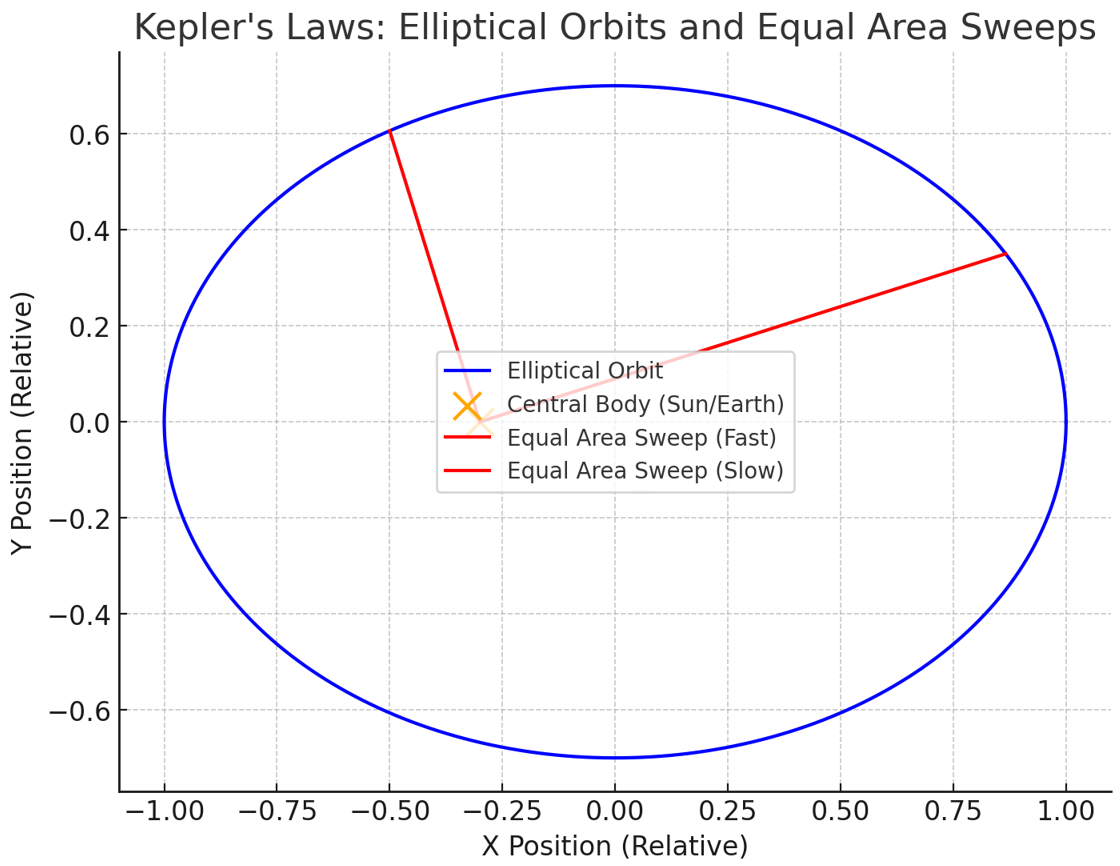
- I can state Kepler's three laws of planetary motion.
- I can explain how Kepler's laws describe planetary orbits.
- I can apply Kepler's laws to orbital calculations.
- I can relate Kepler's laws to Newtonian gravitation.
- I can interpret data involving planetary motion.
Key Topics:
- First, second, and third laws
- Applications to planetary systems
5. Practical Applications of Orbital Mechanics
Learning Outcomes
- I can explain how orbital mechanics is used in satellite operations.
- I can describe applications in communication, navigation, and Earth observation.
- I can analyze orbital requirements for different missions.
- I can evaluate challenges in maintaining satellite orbits.
- I can connect orbital mechanics to modern space exploration and technology.
Key Topics:
- Satellite launches and maintenance
- Space exploration missions