Work and Energy

Site: Young Education
Cursus: Work Energy Power
Boek: Work and Energy
Afgedrukt door: Guest user
Datum: vrijdag, 25 september 2026, 01:54

1. Energy Stores

Learning outcomes
  • I can identify and describe the main energy stores, including kinetic, gravitational potential, chemical, elastic, nuclear, electrostatic, and internal (thermal) energy stores.
  • I can explain how energy can be transferred between stores through mechanical work, electrical currents, heating, and waves.
  • I can distinguish between energy stores and energy transfer pathways.
  • I can interpret and construct simple energy flow diagrams showing energy transfers within a system.
  • I can apply the principle of conservation of energy to explain how energy is transformed and transferred between stores.


What Is Energy?

Energy is a quantity that can be stored and transferred.

When something happens—an object moves, a battery powers a device, water boils, or a ball falls—energy is being transferred between energy stores.

A useful way to think about energy is:

Energy starts in a store → is transferred → ends in another store​

Energy is measured in joules (J).

Importantly, energy does not disappear when it is used. It is transferred from one store to another.


The Main Energy Stores

There are several important ways in which energy can be stored within a system.

Kinetic Energy Store

A moving object has energy in its kinetic energy store.

The faster an object moves, the greater its kinetic energy.

Examples include:

  • A moving car
  • A running person
  • A spinning fan
  • A flying football
  • Water flowing in a river

An object that is not moving has no kinetic energy.

https://images.openai.com/static-rsc-4/Cf4jFMk8EOLuRpqqLSLxY2D1CVQptjT2rvjFr8mivJ4N73abxV61xaZdtotm4JSz1CEXRomUjJsCimB_8b1wO17CXxbj50cyYIzpZ2KbKOmjAyUWwDSyGUPFBZ9zSyEt2MrY7SKyV2xlzDBQ_TN0PSfZbTxSSR2JqEb1jyk4teKlYOLNq0TVF6lY_eXKD5H0?purpose=fullsize
 
https://images.openai.com/static-rsc-4/LIPYvSKwOy6wtowU0w5P_DD16j_ihtaJjDzIg8-cuPPiErv0OwVlJV7V4CLA0dmqUy4mTrr_2WBAFR-wjYS6NsZZCo7dljLjIm16fApRqKqk96CnYyYKJwhn0FJiEGFypjRTvf_9Rf8PJqQdUZAKmNvHm8PtZ2UN44mKm_gHAbLbjzX4wOQG5sSeCdPEna9d?purpose=fullsize
 
https://images.openai.com/static-rsc-4/xF_CfUN6aqcjGiclQvOG2T9PIGBBjaZybUWI3JzZcq5BDiIPMj8hSuIjCE_y8FljshfTbpgxaCEbi3TL9Q9kCawU0n0Jo51HEWuaHKMznD-R1CkxjjJGBQKEIj8CV2ElLA1ghGoMl0rJI47Zt8nKNgJJETxLi2zYvl9uSEKkfIScBqW-cBtdCVBINZO0rGiT?purpose=fullsize
5

Gravitational Potential Energy Store

An object can have energy in a gravitational potential energy store because of its position in a gravitational field.

Near Earth's surface, raising an object increases its gravitational potential energy.

For example, a book on a high shelf has more gravitational potential energy than the same book on the floor.

Examples include:

  • Water stored behind a dam
  • A person at the top of a diving board
  • A roller coaster at the top of a hill
  • A rock held above the ground

When these objects fall, energy can be transferred from the gravitational potential store to the kinetic store.


Chemical Energy Store

Energy can be stored chemically in substances.

Examples include:

  • Food
  • Fuels
  • Batteries
  • Wood
  • Natural gas

When chemical reactions occur, energy can be transferred from the chemical energy store to other stores.

For example, when fuel burns in a car engine, energy from the chemical store of the fuel is transferred to other stores, including the kinetic store of the car and the internal energy stores of the engine and surroundings.


Elastic Energy Store

Energy can be stored when an elastic object is stretched or compressed.

This is called an elastic energy store.

Examples include:

  • A stretched elastic band
  • A compressed spring
  • A drawn bow
  • A stretched trampoline

When the object returns toward its original shape, energy can be transferred from its elastic store.

For example:

https://images.openai.com/static-rsc-4/66k4TcfuCMuqbn1eHvtuvLWYItdwaqq3Ve75xtNIc_U3zei4zAkdEzUosMkIaSHEovqhEa5RdBHWCgx7_1afqE0ghUT8Nro-_MqCgOs8xui3h13XXJ8Vl0PVx8X6YQshXPR1oLkzdht7XpW0yraLy71uqkibwpeAKuYUGEHF26nzHCxpM4RapBiYqyeabfnJ?purpose=fullsize
 
https://images.openai.com/static-rsc-4/7M_eBW3YUObOmGEbzqkubrfKbIJWPQ5nFsccCfKLMUf7saoCoU_f4MzxFNF_YlzSm7cUgXPl8qS1rOHuTPV2BQu5tF922qEuCwJCv3J_xW10PAYNm-1tgfaO0qel-ySNBfo7UV2jNRFO_T430UaslVbFlk9ye6R7M9qWdUDwuIxiP2ztnViP2uDIfisx07lY?purpose=fullsize
 
https://images.openai.com/static-rsc-4/UdIyS7FOvOLeb-ZMIWCv6jpg6JOJANwf4wl-HL5sBfbtdEbmL5twlL3Os6eSIMwFcSZmewC7qwYZqmuFWn5PNfdqNJ1KUiPLH_3IU4UCcfF4MZpEYeRQkrd5PtoIlHlcVc1gvVBIjOB-S3W2LlwmWJ7LWyp_uXzCEwW0UCKEbSROYS5xhFYdmjgc-rX55SKU?purpose=fullsize
6

Nuclear Energy Store

Energy is stored within atomic nuclei.

This is called a nuclear energy store.

Energy can be transferred from nuclear stores during processes such as:

  • Nuclear fission – splitting large nuclei
  • Nuclear fusion – joining small nuclei
  • Radioactive decay

The Sun transfers enormous amounts of energy from nuclear stores through nuclear fusion.


Electrostatic Energy Store

Energy can be stored when electric charges attract or repel each other.

This is called an electrostatic energy store.

For example, rubbing a balloon against hair can cause electric charge to build up. The charged balloon and nearby objects form an electrostatic system in which energy can be stored.

Electrostatic stores become especially important when studying electric fields and charged particles.


Internal (Thermal) Energy Store

Objects contain energy because of the movement and arrangement of their particles.

This is called the internal energy store.

When an object's temperature increases, its internal energy usually increases.

For example:

The hot water has a greater internal energy store.

The term thermal energy is often used informally, but in the energy-stores model we normally refer to an object's internal energy store.


Energy Stores vs Energy Transfers

This distinction is extremely important.

An energy store describes where energy is held.

An energy transfer pathway describes how energy moves from one store to another.

For example, heating is not an energy store. Heating is a way of transferring energy.

Similarly, light is not an energy store. Electromagnetic waves can transfer energy.

Think of it as:

STORE → TRANSFER PATHWAY → STORE​

The Four Main Energy Transfer Pathways

Energy can be transferred between stores in four main ways.

Transfer Pathway.   Description Example
Mechanical work A force moves an object Lifting a box
Electrical work Charges move through a circuit Battery powering a motor
Heating Energy transfers because of a temperature difference   Heating water
Waves Energy is carried by waves Sunlight reaching Earth

Let's examine each one.


Mechanical Work

Energy is transferred mechanically when a force causes an object to move.

Imagine lifting a box from the floor.

Energy is transferred from the chemical store in your body to the gravitational potential store of the box.

Mechanical energy transfer also occurs when:

  • A car accelerates.
  • A person pushes a trolley.
  • A falling object accelerates.
  • A spring launches an object.

Electrical Work

Energy can be transferred when an electric current flows.

For example, consider a battery connected to a lamp.

Some energy is also transferred away from the lamp by electromagnetic waves, including visible light and infrared radiation.


Heating

Energy can be transferred because there is a temperature difference.

Energy transfers from hotter regions toward colder regions.

For example, when a metal spoon is placed in hot soup, energy is transferred from the soup to the spoon by heating.

The internal energy store of the spoon increases.

https://images.openai.com/static-rsc-4/wkGWnFxhj3pa2jJgF7344Bs_DRjj3pbvGlpB50bCnZsayFgGmMXzv3qIjW2g4_dRNHBa5z8guOBHU0xVfDiH3lTLpf3Ojtq6b73M0m-oeywytoz5VHFf2PDalnpumJbgLP8I1R61S9IGwMeiWaKu69vOa9Za7YsdUtWtdXiADNIWYmjW2moRU0COSqpuFbXX?purpose=fullsize
 
https://images.openai.com/static-rsc-4/YPMJSIaWrUKPmWx-8K3G_vygemSuZW-t_iXMyUgolS7nI-YoV1I_1v6uu3qNqIx2AJP3bW1pr5rZL_rILKVPG4nrBB1JA9LrtUXEXUN6cTylbu2Qk0Qk72dosC9EhDH0IWpN4rY5wUiZITPF_Ua_X5IUf66m8IVf-Yr0fGRd-ZaOftcz_VL5GjYTZWW9khSs?purpose=fullsize
 
https://images.openai.com/static-rsc-4/OrapDEthQzp2NLwYBZcPPvS0BxzVDvw3YT4gJAG0rbzc1XGwbNWQtHIsv2YYLlD92ecnHECs8KW9rc6tsradqiOuyNJ_3cVxBa5ZlHTp-_bBipZSlzO0vGybaAbh5ktWFFGsQ1SsD8cykw0SLGDxW-JmxhxqNSCjdrKa-YY_4YnNhsUMa6u2wwDHrUAUzo7V?purpose=fullsize
5

Waves

Waves can transfer energy from one place to another.

Examples include:

  • Visible light
  • Infrared radiation
  • Sound waves
  • Microwaves

For example, energy from the Sun reaches Earth mainly through electromagnetic waves.

A speaker transfers energy to its surroundings through sound waves.

Remember:

Waves are a transfer pathway, not an energy store.


Energy Flow Diagrams

An energy flow diagram shows where energy starts, how it is transferred, and where it ends up.

Consider a falling ball.

Initially, the ball has energy in its gravitational potential store.

As it falls:

Gravitational potential store → Kinetic store​

The gravitational potential energy decreases while the kinetic energy increases.

When the ball hits the ground, some of its kinetic energy is transferred to the internal energy stores of the ball and surroundings and some is transferred away by sound waves.

A more complete diagram might therefore be:

​


Dissipated energy usually spreads into the internal energy stores of the surroundings.

It has not been destroyed. It has simply become less useful for doing the task we wanted.


Conservation of Energy

One of the most important principles in physics is the principle of conservation of energy.

It states:

Energy cannot be created or destroyed.​

Energy can only be:

  • Transferred between stores.
  • Transferred between objects.
  • Spread into the surroundings.

Therefore, in a closed system:

Total energy before = Total energy after​

Worked Example: A Roller Coaster

Imagine a roller coaster at the top of a hill.

At the top

The roller coaster has a large amount of energy in its:

gravitational potential store​


Moving downhill

As the roller coaster falls, energy is transferred:

The roller coaster speeds up.

At the bottom

Its gravitational potential energy has decreased while its kinetic energy has increased.

Some energy has also been transferred to the internal energy stores of the wheels, track, air, and surroundings because of friction and air resistance.

https://images.openai.com/static-rsc-4/FWA3sqW9fZnA3nH1-LWny6-xr8e9Tw59CNPIgB3_HFmiuPj25kq1vYqxufB3aJdTjE4neXhiF06zD4hKD4Cvov6_ehHmItng0CcxSkJvjhKLVmUhO9VLMzzCm8vgcxO7Yaxb0Ijh7RmXvjGUs7S6zIaJNCeuGGcTPtdg3ZGZSQ2sppmYmgqXRgvw8-JopZr2?purpose=fullsize
 
https://images.openai.com/static-rsc-4/OoWDKrrM8nK5xa5GAS3II8ASmCPGAiH8m0igSK6SjiwOpDp5hKWcVWsyyfTEgvSEt0GiXOgvQvb8HTcuuYsfgolEpv6UfTuIzi-BJjE_KX_x9kIviqEGEZvX-7oPa5ahz84TwK_kpUcfdz_r5zJQl8cxj3NuKNs46RcK2bSIRvZptWaqrM0A-Bk-8hPJxMHL?purpose=fullsize
 
https://images.openai.com/static-rsc-4/FZJn19KN2qS9m-bVxsr6F39YmpBAPmZa4zJWaUD3rqbEe-HAZC8i7E4xj2KyG4jjhi_oqYq7PEuxFbA_tYoMeXEmeBxMQGuZ9nR1w7BGovZtrHD1vw5Gynz7tfXQGaVszkwrG07bYNEniaudCz57eExV4piFsRot20CZ9kaCVAamFrXeZnF8-LY5Ubp3oqHG?purpose=fullsize
5

The total energy is still conserved.


Worked Example: A Bouncing Ball

A ball is held above the ground.

Initially:

Energy in gravitational potential store

The ball is released:

The ball hits the ground and deforms:

The ball springs upward:

The ball does not normally return to its original height because some energy is transferred to the internal energy stores of the ball, floor, and surroundings and some is transferred by sound waves.

Energy has not disappeared.


Common Mistakes

Mistake 1: Calling heat an energy store

Instead of:

The object contains heat energy.

It is better to say:

The object has energy in its internal energy store.

Heating describes a transfer pathway.

Mistake 2: Saying energy is used up

Energy is not destroyed.

Instead of:

The car uses up energy.

Say:

Energy is transferred between stores and some is dissipated to the surroundings.

Mistake 3: Calling light an energy store

Light transfers energy through electromagnetic waves.

Therefore, waves are a transfer pathway, not an energy store.


Key Vocabulary

Energy store – A way in which energy is stored within a system.

Energy transfer – The movement of energy from one store or system to another.

Kinetic energy store – Energy associated with a moving object.

Gravitational potential energy store – Energy associated with an object's position in a gravitational field.

Chemical energy store – Energy associated with chemical substances.

Elastic energy store – Energy stored when an object is stretched or compressed.

Nuclear energy store – Energy associated with atomic nuclei.

Electrostatic energy store – Energy associated with the positions of electric charges.

Internal energy store – Energy associated with the particles within a substance.

Dissipation – The spreading of energy into the surroundings, usually into internal energy stores.

Conservation of energy – The principle that energy cannot be created or destroyed.


Key Takeaways

  • Energy can be held in kinetic, gravitational potential, chemical, elastic, nuclear, electrostatic, and internal energy stores.
  • An energy store describes where energy is held.
  • A transfer pathway describes how energy moves between stores.
  • The four main transfer pathways are mechanical work, electrical work, heating, and waves.
  • Energy flow diagrams can show energy moving between different stores.
  • Energy that spreads into the surroundings is dissipated, not destroyed.
  • According to the principle of conservation of energy, energy cannot be created or destroyed.
  • In a closed system: Total energy before = Total energy after​


2. Work Done

Learning outcomes
  • I can explain work done as the transfer of energy by a force acting through a displacement.
  • I can describe the relationship between work done, energy transferred, and the principle of conservation of energy.
  • I can determine when work is done on an object and identify situations in which no mechanical work is done.
  • I can apply the equations and to calculate the work done by a constant force.
  • I can analyze energy transfers in mechanical and electrical systems using the concept of work done.

What is Work Done?

In physics, work is done when a force causes an object to move through a displacement.

Work is therefore a way of describing an energy transfer.

For mechanical work to occur:

  • A force must act on an object.
  • The object must move.
  • At least part of the force must act in the direction of the displacement.

For example:

  • Lifting a box transfers energy into its gravitational potential energy store.
  • Pushing a trolley causes energy to be transferred into its kinetic energy store.
  • Friction does work on a sliding object, transferring energy from its kinetic store into internal energy stores.

The SI unit of work is the joule (J).


Work Done and Energy Transferred

Work done and energy transferred have the same numerical value.

If 50 J of work is done on an object, then 50 J of energy has been transferred.

Work done=Energy transferred\boxed{\text{Work done}=\text{Energy transferred}}

Work done=Energy transferred​

For example, if a motor does 500 J of work lifting a load, the load gains 500 J of gravitational potential energy, assuming no energy is dissipated.


Work and Conservation of Energy

The principle of conservation of energy states that energy cannot be created or destroyed.

When work is done:

  • Energy leaves one store.
  • It is transferred through mechanical or electrical work.
  • It enters one or more other stores.

Example: lifting a book

Chemical energy store in muscles

→\rightarrow

→ mechanical work

→\rightarrow

→ gravitational potential energy store of the book

The energy does not appear from nowhere. It is transferred from the person's chemical store.


When is Mechanical Work Done?

Mechanical work is done when a force has a component in the direction of displacement.

Examples include:

  • Pushing a box across a floor.
  • Pulling a sled with a rope.
  • Lifting a mass vertically.
  • Compressing a spring.
  • Braking a moving bicycle.

In each case, a force acts through a displacement.


When is No Mechanical Work Done?

No mechanical work is done by a force if:

  • There is no displacement.
  • The force is perpendicular to the displacement.
  • The force is zero.

Example 1: Pushing a Wall

A person pushes hard against a wall, but the wall does not move.

Displacement = 0

Therefore:

W=0W=0

The person's muscles still transfer energy internally, but no mechanical work is done on the wall.


Example 2: Carrying a Bag Horizontally

A person carries a bag at constant height.

The supporting force is upward, but the displacement is horizontal.

The angle between the force and displacement is

90∘90^\circ

90∘.

Since:

cos⁡90∘=0\cos 90^\circ=0

the upward force does no mechanical work on the bag.


Work Done When Force and Displacement Are Parallel

If a constant force acts in the same direction as the displacement:

W=Fd\boxed{W=Fd}

W=Fd​

where:

  • WWW = work done in joules (J)
  • FFF = force in newtons (N)
  • ddd = displacement in metres (m)

One joule is the work done when a force of one newton moves an object one metre in the direction of the force.

1 J=1 N⋅m1\text{ J}=1\text{ N}\cdot\text{m}


Worked Example 1

A person pushes a box with a force of 40 N through a distance of 5.0 m.

W=FdW=Fd

W=(40)(5.0)W=(40)(5.0)

W=200 JW=200\text{ J}

Answer: 200 J of work is done on the box.


Work Done at an Angle

Sometimes the force and displacement are not in the same direction.

For example, a person may pull a suitcase using a handle angled upward.

Only the component of the force parallel to the displacement does work.

W=Fdcos⁡θ\boxed{W=Fd\cos\theta}

W=Fdcosθ​

where

θ\theta

θ is the angle between the force and displacement.


Worked Example 2

A person pulls a suitcase with a force of 60 N at an angle of

30∘30^\circ

30∘ above the horizontal. The suitcase moves 8.0 m horizontally.

W=Fdcos⁡θW=Fd\cos\theta

W=(60)(8.0)cos⁡30∘W=(60)(8.0)\cos30^\circ

W≈416 JW\approx416\text{ J}

Only the horizontal component of the force contributes to the work done on the suitcase.


Positive, Negative, and Zero Work

Positive Work

Work is positive when the force acts partly in the same direction as the displacement.

Examples:

  • A person pushes a trolley forward.
  • Gravity does positive work on a falling object.
  • A motor lifts an elevator.

Positive work usually transfers energy into an object's kinetic or potential store.


Negative Work

Work is negative when the force acts opposite to the displacement.

Examples:

  • Friction acts on a sliding box.
  • Brakes slow a car.
  • Gravity acts on an object being lifted.

Negative work removes energy from one store and transfers it elsewhere.

For example, friction does negative work on a moving object, reducing its kinetic energy while increasing internal energy stores.


Zero Work

Work is zero when:

  • There is no displacement, or
  • The force is perpendicular to the displacement.

Examples:

  • Holding a heavy object still.
  • The normal force on a box moving horizontally.
  • The centripetal force in uniform circular motion.

Work Done by Gravity

When an object falls, gravity does positive work.

Its gravitational potential energy store decreases while its kinetic energy store increases.

When an object is lifted, gravity does negative work because gravity acts downward while displacement is upward.

The lifting force does positive work.


Work Done Against Friction

When an object moves across a rough surface, friction opposes the motion.

The work done against friction transfers energy into the internal energy stores of:

  • The object.
  • The surface.
  • The surroundings.

This often appears as heating.

Example:

A 25 N friction force acts over a distance of 4.0 m.

W=FdW=Fd

W=(25)(4.0)W=(25)(4.0)

W=100 JW=100\text{ J}

Therefore, 100 J is transferred from the object's kinetic store into internal energy stores.


Mechanical Systems

In mechanical systems, work can transfer energy between stores.

Examples include:

Lifting a Load

Chemical or electrical store

→\rightarrow

→ mechanical work

→\rightarrow

→ gravitational potential store

Accelerating a Car

Chemical store in fuel

→\rightarrow

→ mechanical work

→\rightarrow

→ kinetic store

Compressing a Spring

Chemical store in muscles

→\rightarrow

→ mechanical work

→\rightarrow

→ elastic store

Braking

Kinetic store

→\rightarrow

→ work done by friction

→\rightarrow

→ internal stores


Electrical Work

Electrical work occurs when a potential difference moves charge through a circuit.

The electrical work done can be written as:

W=QVW=QV

where:

  • WWW = electrical work or energy transferred (J)
  • QQQ = charge moved (C)
  • VVV = potential difference (V)

Electrical work transfers energy between stores.

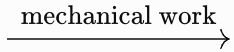
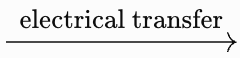
Example: electric motor

Electrical transfer

→\rightarrow

→ mechanical work

→\rightarrow

→ kinetic energy store

Example: electric heater

Electrical transfer

→\rightarrow

→ internal energy store


Work Done and Kinetic Energy

The work-energy principle states that the net work done on an object equals its change in kinetic energy.

Wnet=ΔEkW_{\text{net}}=\Delta E_k

If positive net work is done:

  • Kinetic energy increases.
  • The object speeds up.

If negative net work is done:

  • Kinetic energy decreases.
  • The object slows down.

A Problem-Solving Method

Use these steps when solving work problems:

  1. Identify the force.
  2. Identify the displacement.
  3. Determine the angle between them.
  4. ChooseW=FdW=Fd orW=Fdcos⁡θW=Fd\cos\theta.
  5. Substitute values using SI units.
  6. Decide whether the work is positive, negative, or zero.
  7. Identify the energy stores involved.

Worked Example 3: Lifting

A student lifts a 12 kg box vertically through 1.5 m at constant speed.

The lifting force equals the weight:

F=mg=(12)(9.8)=117.6 NF=mg=(12)(9.8)=117.6\text{ N}

Work done:

W=FdW=Fd

W=(117.6)(1.5)W=(117.6)(1.5)

W=176.4 JW=176.4\text{ J}

The student's chemical energy store decreases, while the box's gravitational potential energy store increases by approximately 176 J.


Worked Example 4: Force Perpendicular to Motion

A satellite moves in a circular orbit.

Gravity acts toward the centre of the orbit, while the satellite's instantaneous displacement is tangential.

The force and displacement are perpendicular.

W=Fdcos⁡90∘W=Fd\cos90^\circ

W=0W=0

Gravity changes the direction of the satellite's velocity but does not change its speed in a perfectly circular orbit.


Common Mistakes

Avoid these misconceptions:

  • A force alone does not guarantee work is done. There must be displacement.
  • Distance and displacement are not always interchangeable. Work depends on displacement in the direction of the force.
  • Only the force component parallel to the displacement does work.
  • Holding an object still does no mechanical work on the object, even though the person uses energy internally.
  • Work is not a form of stored energy. It is a transfer pathway.
  • Negative work does not mean energy is destroyed. It means energy is transferred out of the chosen store.

Key Vocabulary

  • Work Done – Energy transferred when a force acts through a displacement.
  • Joule (J) – The SI unit of work and energy.
  • Displacement – The change in position of an object, including direction.
  • Mechanical Work – Energy transferred by a force acting through a displacement.
  • Electrical Work – Energy transferred when charge moves through a potential difference.
  • Positive Work – Work done by a force acting partly in the direction of displacement.
  • Negative Work – Work done by a force acting opposite to displacement.
  • Net Work – The total work done by all forces acting on an object.
  • Conservation of Energy – The principle that energy cannot be created or destroyed.

Summary

  • Work is done when a force causes displacement and has a component in the direction of that displacement.
  • Work done is equal to the amount of energy transferred.
  • For a force parallel to displacement,W=FdW=Fd.
  • For a force acting at an angle,W=Fdcos⁡θW=Fd\cos\theta.
  • No mechanical work is done if there is no displacement or if the force is perpendicular to the displacement.
  • Positive, negative, and zero work describe how forces transfer energy between stores.
  • Work is a transfer pathway, and all work-energy processes obey the principle of conservation of energy.

Suggested Images

1. Force, Displacement, and Work ⭐

A three-panel diagram showing:

  • Force parallel to displacement: positive work.
  • Force opposite displacement: negative work.
  • Force perpendicular to displacement: zero work.

Include arrows and the angle

θ\theta

θ between force and displacement.


2. Pulling a Suitcase at an Angle

A diagram of a suitcase pulled by an angled handle showing:

  • Applied forceFFF.
  • Horizontal displacementddd.
  • Angleθ\thetaθ.
  • Horizontal componentFcos⁡θF\cos\thetaFcosθ.

Include the equation

W=Fdcos⁡θW=Fd\cos\theta

.


3. Energy Transfers During Lifting

A flow diagram showing:

Chemical store in muscles → mechanical work → gravitational potential store of the object

Include an illustration of a person lifting a box.


4. Positive, Negative, and Zero Work

A comparison infographic with examples:

  • Positive: pushing a trolley forward.
  • Negative: friction slowing a box.
  • Zero: carrying a bag horizontally at constant height.

5. Mechanical and Electrical Work

A split image showing:

  • A motor lifting a mass: electrical transfer → mechanical work → gravitational store.
  • A heater: electrical transfer → internal energy store.

This reinforces that work is an energy transfer process in both mechanical and electrical systems.

__________

Work Done

In everyday language, the word work is often used to describe any task that requires effort. In physics, however, work done has a very specific meaning. Work is done when a force causes an object to move through a displacement. If a force acts on an object but the object does not move, then no mechanical work is done, regardless of how much effort is exerted.

For example, lifting a box from the floor onto a shelf involves work because a force is applied and the box moves upward. In contrast, pushing against a solid wall that does not move may feel exhausting, but no work is done on the wall because there is no displacement.

Work is important because it represents a transfer of energy. Whenever work is done on an object, energy is transferred from one energy store to another. If a force causes an object to speed up, energy is transferred into the object's kinetic energy store. If an object is lifted, energy is transferred into its gravitational potential energy store. The amount of work done is equal to the amount of energy transferred.

where:

  • W = work done (J)
  • ΔE = energy transferred (J)

The SI unit of both work and energy is the joule (J).

When a constant force acts in the same direction as the displacement, the work done is given by:

 
where:
  • W = work done (J)
  • F = force (N)
  • d = displacement (m)

This equation shows that work depends on both the magnitude of the force and the distance through which the object moves.

Example 1: Pushing a Box

A student pushes a box with a force of 50N across a floor for a distance of 4.0m.

The student does 200J of work on the box, transferring 200J of energy.


Work Done by Forces at an Angle

In many real situations, the force is not applied in exactly the same direction as the displacement. Only the component of the force parallel to the displacement contributes to the work done.

The more general equation for work is:


where:

  • W = work done (J)
  • F = force (N)
  • d = displacement (m)
  • θ = angle between the force and displacement vectors

This equation shows that work depends on both the magnitude and direction of the force.

Example 2: Pulling a Sled

A person pulls a sled with a force of 100N at an angle of 30o above the horizontal for a distance of 20m.

Although the applied force is 100N, only the horizontal component contributes to the work done on the sled.


Situations Where No Work Is Done

One of the most common misconceptions in physics is that effort always means work is being done. In reality, work requires displacement.

Example 3: Holding a Box

A person holds a heavy box stationary above the ground.

The upward force is large, but the displacement is zero:


No mechanical work is done on the box.

Example 4: Pushing a Wall

A person pushes on a brick wall with a force of 300N.

Since the wall does not move:


No work is done on the wall.

Example 5: Carrying a Box Horizontally

A student carries a box across a room at constant height.

The applied force acts upward while the displacement is horizontal.


Although the student may become tired, no mechanical work is done on the box because the force is perpendicular to the displacement.


Positive and Negative Work

Work can be either positive or negative.

Positive work occurs when the force acts in the same general direction as the displacement. Positive work transfers energy into a system.

Examples:

  • pushing a shopping cart forward,
  • lifting a weight,
  • accelerating a car.

Negative work occurs when the force acts opposite the displacement. Negative work removes energy from a system.

Example 6: Friction

A box slides across a rough floor.

The friction force acts opposite the motion.


The work done by friction is negative because energy is transferred from the box's kinetic energy store into the internal energy stores of the floor and box.


Work and Energy Conservation

One of the most important principles in physics is the conservation of energy. Energy cannot be created or destroyed. Whenever work is done, energy is simply transferred between stores.

Example 7: Lifting a Backpack

A student lifts a 5.0kg backpack vertically by 2.0m.

The weight of the backpack is:


The work done is:


The backpack gains 98J of gravitational potential energy.

The energy transferred is equal to the work done.


Mechanical and Electrical Work

Work is not limited to mechanical systems. Energy can also be transferred electrically.

Example 8: Electric Kettle

An electric kettle transfers energy from an electrical source into the internal energy store of water. The electrical work done results in heating and an increase in the water's temperature.

Example 9: Flashlight

A flashlight transfers energy from the chemical energy store of a battery through electrical work to produce light and thermal energy.

Work done provides a direct link between forces and energy. By understanding how forces transfer energy through displacement, physicists can analyze everything from moving vehicles and lifting objects to electrical devices and industrial machines. The concept of work forms the foundation for later studies of power, efficiency, energy conservation, and mechanical systems.

 
https://study.com/cimages/multimages/16/force_vs_dist_28895425270674851330.png
 

The work done is the area under the graph:

W = 0.5(8)(30) + 4(30) = 120 + 120 = 240J

A force of 20N pushes a box 3m across a frictionless surface. how much work has been done on the box?

W = Fd

W = 20(3) = 60J


3. Energy Transfer Pathways

Learning outcomes
  • I can identify the four main energy transfer pathways: mechanical work, electrical work, heating, and waves.
  • I can explain how energy is transferred through each pathway and describe real-world examples of each.
  • I can distinguish between energy stores and energy transfer pathways in physical systems.
  • I can analyze energy transfers in everyday situations and identify the stores and pathways involved.
  • I can construct and interpret energy flow diagrams that show how energy is transferred between stores.

Introduction

Energy is constantly moving from one place to another.

A battery powers a flashlight, a kettle boils water, a car accelerates, and the Sun warms Earth. In each case, energy is being transferred.

Modern physics explains these processes using two important ideas:

  • Energy stores — where energy is held.
  • Energy transfer pathways — how energy moves between stores.

Understanding the difference between these two ideas makes it much easier to analyze physical systems and explain how energy is conserved.


What is an Energy Transfer Pathway?

An energy transfer pathway is the process by which energy moves from one energy store to another.

Unlike an energy store, a transfer pathway does not store energy.

Instead, it describes how energy is transferred.

There are four main energy transfer pathways:

  • Mechanical work
  • Electrical work
  • Heating
  • Waves

Every energy transfer can be described using one or more of these pathways.


Energy Stores vs Energy Transfer Pathways

One of the most important ideas in physics is to distinguish between where energy is stored and how it is transferred.

Energy Stores Energy Transfer Pathways
Where energy is held How energy moves
Kinetic Mechanical work
Chemical Electrical work
Gravitational potential Heating
Elastic Waves
Nuclear  
Electrostatic  
Internal (thermal)  

For example:

A battery contains energy in its chemical energy store.

When connected to a lamp:

Chemical store
→ electrical transfer
→ Internal energy store of the lamp + energy transferred by light waves.

The battery stores energy.

The electric current transfers it.


Mechanical Work

Mechanical work transfers energy when a force acts through a displacement.

Whenever a force causes an object to move, energy is transferred mechanically.

Examples include:

  • Pushing a shopping trolley.
  • Lifting a box.
  • Compressing a spring.
  • Braking a bicycle.
  • A falling object accelerating.

Example: Lifting a Backpack

A student lifts a backpack from the floor.

Energy transfer:

Chemical energy store (muscles)

↓

Mechanical work

↓

Gravitational potential energy store (backpack)

The person's muscles transfer energy to the backpack by doing mechanical work.


Electrical Work

Electrical work transfers energy when electric charges move through a circuit.

Examples include:

  • A battery powering a flashlight.
  • Charging a mobile phone.
  • Running an electric fan.
  • Operating a television.
  • Charging an electric vehicle.

Electrical work transfers energy from electrical sources into other energy stores.


Example: Electric Fan

Chemical energy store (battery)

↓

Electrical transfer

↓

Kinetic energy store (fan blades)

↓

Internal energy store (motor and air)

Not all of the transferred energy becomes useful motion. Some is dissipated as heating.


Heating

Heating transfers energy because of a temperature difference.

Energy always moves:

From a hotter object to a cooler object.

Heating increases the internal (thermal) energy store of the cooler object.

Examples include:

  • A saucepan heating on a stove.
  • A hot drink cooling.
  • Warm air heating a room.
  • A spoon becoming hot in soup.
  • A radiator warming a classroom.

Heating may occur by:

  • Conduction
  • Convection
  • Thermal radiation

These processes are explored in greater detail in the Thermal Energy course.


Example: Boiling Water

Chemical energy store (gas)

↓

Heating

↓

Internal energy store (water)

The gas transfers energy to the water by heating.


Transfer by Waves

Energy can also be transferred by waves.

Examples include:

  • Light.
  • Infrared radiation.
  • Sound.
  • Microwaves.
  • Radio waves.
  • X-rays.

The waves carry energy without requiring the movement of matter from one place to another.


Example: Sunlight

Nuclear energy store (Sun)

↓

Light waves

↓

Internal energy store (Earth)

The Sun transfers energy to Earth through electromagnetic waves.


Comparing the Four Transfer Pathways

Transfer Pathway Description Example
Mechanical work Force causes displacement Lifting a box
Electrical work Moving electric charges Battery powering a lamp
Heating Energy transferred due to temperature difference Hot pan heating water
Waves Energy carried by electromagnetic or sound waves Sunlight warming Earth

Analyzing Energy Transfers

To analyze any situation:

Step 1

Identify the starting energy store.

Step 2

Identify the transfer pathway.

Step 3

Identify the final energy store(s).


Example 1: Flashlight

Starting store:

Chemical energy store (battery)

Transfer pathway:

Electrical work

Final stores:

  • Internal energy store of lamp
  • Light waves
  • Internal energy store of surroundings

Example 2: Roller Coaster

Top of hill:

Gravitational potential energy store

↓

Mechanical work by gravity

↓

Kinetic energy store

↓

Heating (friction)

↓

Internal energy stores of wheels, track, and air


Example 3: Bow and Arrow

Chemical energy store (muscles)

↓

Mechanical work

↓

Elastic energy store (bow)

↓

Mechanical work

↓

Kinetic energy store (arrow)

↓

Sound waves + Internal energy stores


Example 4: Electric Kettle

Chemical energy store (fuel at power station)

↓

Electrical transfer

↓

Internal energy store (heating element)

↓

Heating

↓

Internal energy store (water)


Energy Flow Diagrams

An energy flow diagram shows:

  • The starting energy store.
  • The transfer pathway.
  • The final energy store(s).

Example 1: Falling Ball

Gravitational potential energy store

↓

Mechanical work

↓

Kinetic energy store

↓

Heating (air resistance)

↓

Internal energy stores of air and ball


Example 2: Battery-Powered Car

Chemical energy store (battery)

↓

Electrical work

↓

Kinetic energy store (car)

↓

Heating

↓

Internal energy stores of tyres, road, and air


Example 3: Toaster

Electrical transfer

↓

Internal energy store (heating elements)

↓

Heating + Infrared waves

↓

Internal energy store (bread)


Constructing an Energy Flow Diagram

Follow these steps:

Step 1

Identify the system.

Example:

A cyclist riding a bicycle.

Step 2

Identify the starting energy store.

Chemical energy store (food).

Step 3

Identify the transfer pathway.

Mechanical work.

Step 4

Identify the final energy store.

Kinetic energy store (bicycle).

Step 5

Include other transfers.

Heating (friction).

Sound waves.

Internal energy stores of surroundings.


Conservation of Energy

Energy cannot be created or destroyed.

Instead:

  • Energy leaves one store.
  • It is transferred by one or more pathways.
  • It enters one or more new stores.

For example:

When braking a bicycle:

Kinetic energy decreases.

The energy is transferred mechanically by friction into:

  • Internal energy of the brakes.
  • Internal energy of the tyres.
  • Internal energy of the road.
  • Internal energy of the surrounding air.

The total energy remains constant.


Everyday Examples

Walking

Chemical energy store (food)

↓

Mechanical work

↓

Kinetic energy store (body)

↓

Heating

↓

Internal energy store (muscles and surroundings)


Solar Panel

Nuclear energy store (Sun)

↓

Light waves

↓

Electrical transfer

↓

Chemical energy store (battery)


Microwave Oven

Electrical transfer

↓

Microwaves

↓

Internal energy store (food)


Loudspeaker

Electrical transfer

↓

Sound waves

↓

Internal energy store (air and listener's ear)


Common Mistakes

Avoid these common misconceptions:

  • Heat is not an energy store. Heating is an energy transfer pathway.
  • Electricity is not an energy store. Electrical currents transfer energy.
  • Light and sound are not energy stores. They are waves that transfer energy.
  • Energy is never "used up." It is transferred between stores.
  • Most real systems involve more than one energy store and more than one transfer pathway.
  • Dissipated energy is still conserved. It has simply been transferred into less useful internal energy stores.

Key Vocabulary

  • Energy Store – A way in which energy is held within an object or system.
  • Energy Transfer Pathway – A process by which energy moves from one store to another.
  • Mechanical Work – Energy transferred when a force acts through a displacement.
  • Electrical Work – Energy transferred by moving electric charges.
  • Heating – Energy transferred because of a temperature difference.
  • Waves – Oscillations that transfer energy from one place to another.
  • Energy Flow Diagram – A diagram showing how energy moves between stores.
  • Internal Energy Store – The energy associated with the particles inside a substance.
  • Conservation of Energy – The principle that energy cannot be created or destroyed, only transferred.

Summary

  • Energy is transferred between energy stores through four transfer pathways: mechanical work, electrical work, heating, and waves.
  • Energy stores describe where energy is held, while transfer pathways describe how energy moves.
  • Every energy transfer can be analyzed by identifying the starting store, the transfer pathway, and the final store(s).
  • Energy flow diagrams provide a clear way to represent these transfers.
  • The principle of conservation of energy states that energy is never created or destroyed—it is simply transferred from one store to another.

Suggested Images

1. Energy Stores and Transfer Pathways Concept Map ⭐

A concept map with two main branches:

Energy Stores

  • Kinetic
  • Gravitational potential
  • Chemical
  • Elastic
  • Nuclear
  • Electrostatic
  • Internal

Transfer Pathways

  • Mechanical work
  • Electrical work
  • Heating
  • Waves

Use arrows to emphasize that stores hold energy, while pathways move energy.


2. Everyday Energy Transfer Examples

A four-panel infographic showing:

  • Person lifting a box → Mechanical work.
  • Battery powering a torch → Electrical work.
  • Pot heating on a stove → Heating.
  • Sun warming Earth → Waves.

Include arrows from the initial store, through the transfer pathway, to the final store.


3. Energy Flow Diagram Examples

Three simple flow diagrams:

  • Roller coaster.
  • Flashlight.
  • Electric kettle.

Each should clearly label:

  • Initial energy store.
  • Transfer pathway.
  • Final energy store(s).

4. Conservation of Energy

A flowchart showing energy being transferred through several stores and pathways while emphasizing:

Total Energy Before = Total Energy After

Include examples of useful and dissipated energy transfers.


5. Energy Transfer Pathways in a House

A cutaway illustration of a house showing:

  • Electrical energy powering lights and appliances.
  • Heating warming rooms.
  • Mechanical work from a washing machine or fan.
  • Waves from Wi-Fi, radio, or sunlight entering through windows.

Label each transfer pathway to connect the concepts with everyday life.

4. Energy Flow Diagrams

Learning outcomes
  • I can construct energy flow diagrams that show how energy is transferred between stores within a system.
  • I can identify the energy stores and transfer pathways involved in a variety of physical situations.
  • I can distinguish between useful energy transfers and energy dissipated to the surroundings.
  • I can interpret and construct Sankey diagrams to represent energy transfers and transformations.
  • I can use energy flow diagrams and Sankey diagrams to demonstrate the conservation of energy in real-world systems.

Introduction

Energy is constantly transferred between stores.

A battery powers a torch, a falling object speeds up, a kettle heats water, and a car slows when its brakes are applied. In each case, energy moves from one store to another through one or more transfer pathways.

Energy flow diagrams help us represent these changes clearly. They show:

  • Where the energy starts.
  • How the energy is transferred.
  • Where the energy ends up.
  • Which transfers are useful.
  • Which transfers are dissipated to the surroundings.

A special type of energy flow diagram called a Sankey diagram also shows the relative amounts of energy involved.


Energy Stores and Transfer Pathways

Before constructing an energy flow diagram, it is important to distinguish between energy stores and transfer pathways.

Energy Stores

Energy stores describe where energy is held.

Common stores include:

  • Kinetic
  • Gravitational potential
  • Chemical
  • Elastic
  • Nuclear
  • Electrostatic
  • Internal

Transfer Pathways

Transfer pathways describe how energy moves between stores.

The four main pathways are:

  • Mechanical work
  • Electrical work
  • Heating
  • Waves

What is an Energy Flow Diagram?

An energy flow diagram is a simple representation of energy being transferred between stores.

A typical diagram includes:

Initial store→Transfer pathway→Final store\text{Initial store} \rightarrow \text{Transfer pathway} \rightarrow \text{Final store}

Example: Falling Ball

Gravitational potential store→Mechanical transfer→Kinetic store\text{Gravitational potential store} \rightarrow \text{Mechanical transfer} \rightarrow \text{Kinetic store}

As the ball falls:

  • Its gravitational potential energy decreases.
  • Its kinetic energy increases.

If air resistance is present, some energy is also transferred to the internal stores of the air and the ball.


Constructing an Energy Flow Diagram

Use the following steps.

Step 1: Identify the System

Decide which objects are included.

Example:

A torch and its battery.

Step 2: Identify the Initial Energy Store

Ask:

Where is the energy stored at the beginning?

For a torch:

  • Chemical store in the battery.

Step 3: Identify the Transfer Pathway

Ask:

How does the energy move?

For a torch:

  • Electrical transfer through the circuit.

Step 4: Identify the Final Stores

Ask:

Where does the energy end up?

For a torch:

  • Internal store of the lamp.
  • Internal store of the surroundings.
  • Energy transferred by light waves.

Step 5: Include Useful and Dissipated Transfers

Label which transfer is intended and which is less useful.


Example 1: Battery-Powered Torch

Chemical store in battery→Electrical transfer→Light waves+Internal stores of lamp and surroundings\text{Chemical store in battery} \rightarrow \text{Electrical transfer} \rightarrow \text{Light waves} + \text{Internal stores of lamp and surroundings}

Useful transfer:

  • Light emitted by the torch.

Dissipated transfer:

  • Heating of the bulb, battery, and surroundings.

Example 2: Braking Bicycle

Kinetic store of bicycle and rider→Mechanical transfer by friction→Internal stores of brakes, tyres, road, and air\text{Kinetic store of bicycle and rider} \rightarrow \text{Mechanical transfer by friction} \rightarrow \text{Internal stores of brakes, tyres, road, and air}

The bicycle's kinetic store decreases.

The energy is not destroyed. It is transferred mainly into internal energy stores.


Example 3: Electric Kettle

Electrical transfer→Internal store of heating element→Heating→Internal store of water\text{Electrical transfer} \rightarrow \text{Internal store of heating element} \rightarrow \text{Heating} \rightarrow \text{Internal store of water}

Useful transfer:

  • Heating the water.

Dissipated transfer:

  • Heating the kettle body and surrounding air.
  • Sound.

Useful and Dissipated Energy

A useful energy transfer is the transfer intended to achieve the device's purpose.

A dissipated energy transfer spreads energy into the surroundings, usually increasing internal energy stores.

Examples:

Device Useful Transfer Dissipated Transfer
Lamp Light waves Heating
Car Increase in kinetic store Heating and sound
Kettle Increase in water's internal store Heating surroundings
Speaker Sound waves Heating
Motor Increase in kinetic store Heating and sound

Dissipated energy is not lost. It is still present but is usually less useful because it has spread into the surroundings.


What is a Sankey Diagram?

A Sankey diagram is a special type of energy flow diagram in which the width of each arrow represents the amount of energy transferred.

The input arrow represents the total energy supplied.

The output arrows show how that energy is divided into:

  • Useful energy
  • Dissipated energy

The total width of the output arrows must equal the width of the input arrow.

This demonstrates conservation of energy.


Reading a Sankey Diagram

Suppose a lamp receives 100 J of electrical energy.

It transfers:

  • 20 J as useful light.
  • 80 J into internal energy stores.

A Sankey diagram would show:

  • One 100 J input arrow.
  • A smaller 20 J arrow continuing forward.
  • A larger 80 J arrow branching downward.

Because:

100 J=20 J+80 J100\text{ J}=20\text{ J}+80\text{ J}

energy is conserved.


Constructing a Sankey Diagram

Follow these steps.

Step 1: Identify the Total Input Energy

Example:

200 J200\text{ J}

200 J

Step 2: Identify Each Output

Example:

  • Useful kinetic energy = 140 J
  • Dissipated energy = 60 J

Step 3: Check Conservation

140+60=200 J140+60=200\text{ J}

Step 4: Choose a Scale

For example:

1 mm=10 J1\text{ mm}=10\text{ J}

Then:

  • Input arrow width = 20 mm
  • Useful arrow width = 14 mm
  • Dissipated arrow width = 6 mm

Step 5: Draw and Label the Arrows

Ensure the widths are proportional.


Worked Example 1: Electric Motor

An electric motor receives 500 J of electrical energy.

It transfers:

  • 350 J into kinetic energy.
  • 100 J into internal energy stores.
  • 50 J by sound waves.

Check:

350+100+50=500 J350+100+50=500\text{ J}

Useful energy:

350 J350\text{ J}

350 J

Dissipated energy:

100+50=150 J100+50=150\text{ J}

The Sankey diagram must show a 500 J input divided into 350 J useful and 150 J dissipated.


Worked Example 2: Car Engine

A car engine receives 1,000 J of chemical energy.

Outputs:

  • 250 J transferred into the car's kinetic store.
  • 600 J transferred into internal energy stores.
  • 150 J transferred by sound.

Check:

250+600+150=1,000 J250+600+150=1,000\text{ J}

Only one-quarter of the input becomes useful kinetic energy.

The remaining energy is dissipated.


Conservation of Energy

The principle of conservation of energy states:

Energy cannot be created or destroyed. It can only be transferred between stores.

Energy flow diagrams demonstrate this by accounting for all energy transfers.

Sankey diagrams show conservation visually because:

Total input energy=Total output energy\text{Total input energy}=\text{Total output energy}

The combined widths of all output arrows must equal the width of the input arrow.


Interpreting Energy Flow Diagrams

When reading a diagram, ask:

  1. What is the initial energy store?
  2. Which transfer pathway is involved?
  3. Which final stores gain energy?
  4. Which transfer is useful?
  5. Which transfers are dissipated?
  6. Is all input energy accounted for?
  7. Does the diagram obey conservation of energy?

Real-World Systems

Roller Coaster

At the top:

  • Large gravitational potential store.
  • Small kinetic store.

Moving downward:

Gravitational potential→Mechanical transfer→Kinetic\text{Gravitational potential} \rightarrow \text{Mechanical transfer} \rightarrow \text{Kinetic}

Friction also transfers energy into internal stores.


Solar Panel and Battery

Nuclear store of Sun→Light waves→Electrical transfer→Chemical store in battery\text{Nuclear store of Sun} \rightarrow \text{Light waves} \rightarrow \text{Electrical transfer} \rightarrow \text{Chemical store in battery}

Some energy is dissipated through heating.


Hydroelectric Power Station

Gravitational potential store of water→Mechanical transfer→Kinetic store of turbine→Electrical transfer\text{Gravitational potential store of water} \rightarrow \text{Mechanical transfer} \rightarrow \text{Kinetic store of turbine} \rightarrow \text{Electrical transfer}

Some energy is dissipated through heating and sound.


Loudspeaker

Electrical transfer→Kinetic store of speaker cone→Sound waves\text{Electrical transfer} \rightarrow \text{Kinetic store of speaker cone} \rightarrow \text{Sound waves}

Some energy also increases the internal energy stores of the speaker and air.


Energy Flow Diagrams vs Sankey Diagrams

Energy Flow Diagram Sankey Diagram
Shows stores and pathways Shows stores/pathways and energy quantities
Arrows show direction Arrow widths show amounts
Useful for conceptual explanations Useful for comparing efficiency and losses
Does not need a numerical scale Requires proportional arrow widths

Both types can demonstrate conservation of energy.


Common Mistakes

Avoid these errors:

  • Treating heat, light, or electricity as energy stores.
  • Forgetting to include the initial energy store.
  • Leaving out dissipated energy.
  • Saying energy has been “used up” or “lost.”
  • Drawing Sankey arrows with widths that do not match the energy values.
  • Forgetting that all output energies must add to the input energy.
  • Labelling all output energy as useful.
  • Confusing a transfer pathway with a final energy store.

Key Vocabulary

  • Energy Flow Diagram – A diagram showing transfers between energy stores.
  • Sankey Diagram – A diagram in which arrow widths represent energy quantities.
  • Useful Energy Transfer – Energy transferred in the intended way.
  • Dissipated Energy – Energy spread into the surroundings, usually into internal stores.
  • Energy Store – A way in which energy is held.
  • Transfer Pathway – A process through which energy moves between stores.
  • Conservation of Energy – The principle that energy cannot be created or destroyed.
  • Input Energy – The total energy supplied to a system.
  • Output Energy – Energy transferred from the system into one or more stores or pathways.

Summary

  • Energy flow diagrams show how energy moves between stores through transfer pathways.
  • The initial store, transfer pathway, and final stores should all be identified.
  • Useful transfers achieve the intended purpose, while dissipated energy spreads into the surroundings.
  • Sankey diagrams use proportional arrow widths to represent energy quantities.
  • In every Sankey diagram, total input energy must equal total output energy.
  • Both energy flow diagrams and Sankey diagrams provide clear evidence of the conservation of energy.

Suggested Images

1. Energy Flow Diagram and Sankey Diagram Comparison ⭐

A side-by-side example of the same device, such as a lamp:

  • Standard flow diagram showing chemical store → electrical transfer → light and internal stores.
  • Sankey diagram showing 100 J input, 20 J useful light, and 80 J dissipated heating.

This clearly distinguishes the purpose of each type of diagram.


2. Parts of a Sankey Diagram

A labelled Sankey diagram identifying:

  • Input arrow
  • Useful output
  • Dissipated output
  • Direction of energy transfer
  • Arrow width proportional to energy
  • Conservation check

3. Constructing a Sankey Diagram

A step-by-step visual:

  1. List input and outputs.
  2. Check that totals match.
  3. Choose a scale.
  4. Calculate arrow widths.
  5. Draw and label the diagram.

Use a simple 200 J example.


4. Useful vs Dissipated Energy

A four-panel infographic using:

  • Lamp
  • Kettle
  • Motor
  • Car

For each device, identify the useful and dissipated transfers.


5. Energy Conservation in Real Systems

A collage showing:

  • Roller coaster
  • Hydroelectric station
  • Solar panel and battery
  • Braking bicycle

Include simple flow arrows and numerical examples showing that total input equals total output.

5. Conservation of Energy

Learning outcomes
  • I can define mechanical energy as the energy associated with the motion and position of objects.
  • I can identify situations in which energy is stored as kinetic, gravitational potential, or elastic potential energy.
  • I can explain how mechanical energy can be transferred between different energy stores within a system.
  • I can describe real-world examples of mechanical energy transformations, such as roller coasters, pendulums, and springs.
  • I can predict qualitative changes in mechanical energy as objects move, speed up, slow down, rise, or fall.

Introduction

Objects can store energy because of their motion, their position, or their deformation.

A moving bicycle has kinetic energy. A book on a shelf has gravitational potential energy. A compressed spring has elastic potential energy.

These forms are often grouped together as mechanical energy.

Mechanical energy can move between different stores, but the total amount of energy in a closed system remains constant. This is an application of the principle of conservation of energy.


What is Mechanical Energy?

Mechanical energy is the energy associated with the motion and position of objects.

It includes:

  • Kinetic energy
  • Gravitational potential energy
  • Elastic potential energy

The total mechanical energy of a system can therefore be written as:

Emech=Ek+Eg+EeE_{\text{mech}}=E_k+E_g+E_e

where:

  • EmechE_{\text{mech}}Emech​ = total mechanical energy
  • EkE_kEk​ = kinetic energy
  • EgE_gEg​ = gravitational potential energy
  • EeE_eEe​ = elastic potential energy

Not every system contains all three stores.


Kinetic Energy

The kinetic energy store is the energy an object has because it is moving.

Examples include:

  • A rolling ball
  • A moving car
  • A running person
  • A falling stone
  • A swinging pendulum

Kinetic energy depends on:

  • The object's mass
  • The object's speed

A faster object has more kinetic energy.

A more massive object also has more kinetic energy when moving at the same speed.

The equation is:

Ek=12mv2E_k=\frac12mv^2

where:

  • mmm = mass in kilograms
  • vvv = speed in metres per second
  • EkE_kEk​ = kinetic energy in joules

Because speed is squared, doubling the speed gives four times as much kinetic energy.


Gravitational Potential Energy

The gravitational potential energy store is energy associated with an object's position in a gravitational field.

An object gains gravitational potential energy when it is lifted.

Examples include:

  • A book on a shelf
  • Water behind a dam
  • A roller-coaster car at the top of a hill
  • A raised hammer
  • A climber on a mountain

Near Earth's surface:

Eg=mghE_g=mgh

where:

  • mmm = mass
  • ggg = gravitational field strength
  • hhh = vertical height above a chosen reference level

The higher and more massive the object, the greater its gravitational potential energy.


Elastic Potential Energy

The elastic potential energy store is energy stored when an elastic object is stretched or compressed.

Examples include:

  • A stretched spring
  • A compressed spring
  • A drawn bow
  • A stretched rubber band
  • A compressed trampoline mat

For a spring obeying Hooke's Law:

Ee=12kx2E_e=\frac12kx^2

where:

  • kkk = spring constant
  • xxx = extension or compression
  • EeE_eEe​ = elastic potential energy

The more the spring is stretched or compressed, the more elastic energy it stores.


Conservation of Energy

The principle of conservation of energy states:

Energy cannot be created or destroyed. It can only be transferred between stores.

In an ideal closed system:

Total energy before=Total energy after\text{Total energy before}=\text{Total energy after}

If there is no friction or air resistance, total mechanical energy remains constant.

This means:

Ek,i+Eg,i+Ee,i=Ek,f+Eg,f+Ee,fE_{k,i}+E_{g,i}+E_{e,i} = E_{k,f}+E_{g,f}+E_{e,f}

Energy can move from one mechanical store to another, but the total does not change.


Mechanical Energy Transfers

Mechanical energy transformations occur when one store decreases while another increases.

For example:

  • Falling object: gravitational potential → kinetic
  • Rising object: kinetic → gravitational potential
  • Released spring: elastic potential → kinetic
  • Compressing a spring: kinetic or chemical → elastic potential
  • Pendulum: gravitational potential ↔ kinetic

The transfer may be caused by forces doing work.


Falling Objects

Consider a ball dropped from a height.

At the Top

  • Gravitational potential energy is maximum.
  • Kinetic energy is zero or very small.

While Falling

  • Gravitational potential energy decreases.
  • Kinetic energy increases.
  • The ball speeds up.

Just Before Impact

  • Gravitational potential energy is minimum.
  • Kinetic energy is maximum.

Ignoring air resistance:

Loss in Eg=Gain in Ek\text{Loss in }E_g=\text{Gain in }E_k

Rising Objects

Consider a ball thrown upward.

Just After Release

  • Kinetic energy is large.
  • Gravitational potential energy is relatively small.

While Rising

  • Kinetic energy decreases.
  • Gravitational potential energy increases.
  • The ball slows down.

At the Highest Point

  • Kinetic energy is momentarily zero.
  • Gravitational potential energy is maximum.

Then the process reverses as the ball falls.


Roller Coasters

A roller coaster is a classic example of mechanical energy transformation.

At the Top of the First Hill

  • Gravitational potential energy is large.
  • Kinetic energy is small.

Moving Downhill

  • Gravitational potential energy decreases.
  • Kinetic energy increases.
  • The coaster speeds up.

At the Bottom

  • Kinetic energy is large.
  • Gravitational potential energy is small.

Moving Up the Next Hill

  • Kinetic energy decreases.
  • Gravitational potential energy increases.
  • The coaster slows down.

In a real roller coaster, some mechanical energy is transferred into internal energy stores through friction and air resistance.

Therefore, without additional energy input, each later hill must be lower than the first.


Pendulums

A pendulum continuously transfers energy between gravitational potential and kinetic stores.

At the Highest Point

  • Gravitational potential energy is maximum.
  • Kinetic energy is zero.
  • Speed is zero.

Moving Downward

  • Gravitational potential energy decreases.
  • Kinetic energy increases.
  • Speed increases.

At the Lowest Point

  • Kinetic energy is maximum.
  • Gravitational potential energy is minimum.
  • Speed is greatest.

Moving Upward

  • Kinetic energy decreases.
  • Gravitational potential energy increases.
  • Speed decreases.

In an ideal system, the pendulum would swing forever. In reality, air resistance and friction dissipate energy, so the pendulum gradually stops.


Springs

A compressed or stretched spring stores elastic potential energy.

Compressed Spring at Rest

  • Elastic potential energy is maximum.
  • Kinetic energy is zero.

Released Spring

  • Elastic potential energy decreases.
  • Kinetic energy increases.
  • The attached object speeds up.

Passing Through Equilibrium

  • Kinetic energy is maximum.
  • Elastic potential energy is minimum.

Stretching in the Opposite Direction

  • Kinetic energy decreases.
  • Elastic potential energy increases.

The energy repeatedly transfers between elastic potential and kinetic stores.


Predicting Energy Changes

You can often predict energy changes without calculations.

Motion or Situation Energy Change
Object speeds up Kinetic energy increases
Object slows down Kinetic energy decreases
Object rises Gravitational potential energy increases
Object falls Gravitational potential energy decreases
Spring is stretched Elastic potential energy increases
Spring returns to natural length Elastic potential energy decreases
Object moves downward and speeds up Gravitational decreases, kinetic increases
Object moves upward and slows down Kinetic decreases, gravitational increases

Mechanical Energy with Friction

When friction or drag acts, mechanical energy is not conserved by itself.

Some mechanical energy is transferred into:

  • Internal energy stores
  • Sound waves
  • Deformation

Example: a sliding box

Kinetic store→Mechanical work by friction→Internal stores of box and floor\text{Kinetic store} \rightarrow \text{Mechanical work by friction} \rightarrow \text{Internal stores of box and floor}

Total energy is still conserved, but total mechanical energy decreases.


Mechanical Energy vs Total Energy

This distinction is important.

Mechanical Energy

Includes:

  • Kinetic
  • Gravitational potential
  • Elastic potential

Total Energy

Includes all energy stores, such as:

  • Mechanical
  • Internal
  • Chemical
  • Nuclear
  • Electrostatic

In a system with friction:

The missing mechanical energy has been transferred into other stores.


Worked Example 1: Falling Object

A 2.0 kg object falls through 5.0 m.

Ignoring air resistance, the decrease in gravitational potential energy is:

ΔEg=mgh\Delta E_g=mgh=(2.0)(9.8)(5.0)=(2.0)(9.8)(5.0)=98 J=98\text{ J}

Therefore, the kinetic energy increases by 98 J.


Worked Example 2: Roller-Coaster Car

A roller-coaster car has 15,000 J of gravitational potential energy and 2,000 J of kinetic energy at one point.

Total mechanical energy:

Emech=15,000+2,000E_{\text{mech}}=15,000+2,000Emech=17,000 JE_{\text{mech}}=17,000\text{ J}

At a lower point, its gravitational potential energy is 5,000 J.

Ignoring friction:

Ek=17,000−5,000E_k=17,000-5,000Ek=12,000 JE_k=12,000\text{ J}

Worked Example 3: Spring Launcher

A compressed spring stores 40 J of elastic potential energy.

When released, 32 J becomes kinetic energy.

The remaining energy transferred to other stores is:

40−32=8 J40-32=8\text{ J}

This 8 J may increase internal energy stores or be transferred by sound.

Total energy remains 40 J.


Energy Bar Charts

An energy bar chart can show the relative amounts in each store.

For a falling object:

At the Top

  • Gravitational: █████
  • Kinetic:
  • Internal:

Halfway Down

  • Gravitational: ███
  • Kinetic: ██
  • Internal:

Near the Bottom

  • Gravitational:
  • Kinetic: █████
  • Internal:

With air resistance, some bars would appear in the internal store.

Energy bar charts help students visualize conservation without using exact equations.


Real-World Applications

Hydroelectric Power

Water stored behind a dam has gravitational potential energy.

As it falls:

Gravitational potential→Kinetic→Mechanical motion of turbine→Electrical transfer\text{Gravitational potential} \rightarrow \text{Kinetic} \rightarrow \text{Mechanical motion of turbine} \rightarrow \text{Electrical transfer}

Bungee Jumping

As the jumper falls:

  • Gravitational potential energy decreases.
  • Kinetic energy increases.

As the cord stretches:

  • Kinetic energy decreases.
  • Elastic potential energy increases.

Trampolines

As a person lands:

  • Kinetic energy decreases.
  • Elastic potential energy in the trampoline increases.

As the trampoline rebounds:

  • Elastic potential energy decreases.
  • Kinetic and gravitational potential energy increase.

Vehicle Braking

When brakes are applied:

  • Kinetic energy decreases.
  • Internal energy stores of the brakes, tyres, and road increase.

The total energy is conserved, although mechanical energy decreases.


Common Mistakes

Avoid these misconceptions:

  • Mechanical energy is not only kinetic energy. It also includes gravitational and elastic potential energy.
  • Energy is not used up. It is transferred between stores.
  • An object at rest may still have mechanical energy if it has gravitational or elastic potential energy.
  • Mechanical energy is not always conserved. Friction can transfer it into internal energy stores.
  • Total energy is always conserved, even when mechanical energy decreases.
  • A falling object loses gravitational potential energy, not total energy.

Key Vocabulary

  • Mechanical Energy – Energy associated with the motion and position of objects.
  • Kinetic Energy – Energy stored by a moving object.
  • Gravitational Potential Energy – Energy stored because of position in a gravitational field.
  • Elastic Potential Energy – Energy stored in a stretched or compressed elastic object.
  • Conservation of Energy – The principle that energy cannot be created or destroyed.
  • Closed System – A system that does not exchange energy with its surroundings.
  • Transformation – A change from one energy store to another.
  • Dissipation – The spreading of energy into less useful stores, usually internal energy stores.
  • Mechanical Work – Energy transferred when a force acts through a displacement.

Summary

  • Mechanical energy is the energy associated with the motion and position of objects.
  • It includes kinetic, gravitational potential, and elastic potential energy.
  • Mechanical energy can transfer between stores as objects move, rise, fall, speed up, slow down, or deform.
  • Roller coasters, pendulums, springs, trampolines, and bungee jumps all demonstrate mechanical energy transformations.
  • In an ideal closed system, total mechanical energy remains constant.
  • When friction or drag acts, mechanical energy decreases because some energy is transferred into internal stores, but total energy is still conserved.
  • Qualitative predictions can be made by identifying which stores increase and which decrease during motion.


Suggested Images

1. Roller-Coaster Energy Transformations ⭐

A roller coaster shown at three positions:

  • Top of the hill: high gravitational potential energy, low kinetic energy.
  • Moving downhill: gravitational potential energy decreasing, kinetic energy increasing.
  • Bottom of the hill: low gravitational potential energy, high kinetic energy.

Include small energy bar charts at each position to show that total mechanical energy remains constant in an ideal system.


2. Pendulum Energy Cycle

A pendulum shown at:

  • Left highest point
  • Lowest point
  • Right highest point

Label:

  • Highest points: maximum gravitational potential energy, zero kinetic energy.
  • Lowest point: maximum kinetic energy, minimum gravitational potential energy.

Use arrows to show the continuous transfer between gravitational potential and kinetic energy stores.


3. Spring Energy Transformation

A three-stage diagram showing:

  1. A compressed spring with maximum elastic potential energy.
  2. The spring being released as elastic energy transfers to kinetic energy.
  3. The attached object moving fastest as the spring passes through its natural length.

Include arrows showing the restoring force and direction of motion.


4. Mechanical Energy with Friction

A comparison of two sliding objects:

  • Ideal surface: kinetic energy remains within the mechanical energy system.
  • Rough surface: kinetic energy decreases while internal energy stores of the object and surface increase.

Use energy bar charts to show that total energy remains constant even though mechanical energy decreases.


5. Mechanical Energy in Everyday Life

A collage showing:

  • A bungee jumper
  • A trampoline
  • Water behind a dam
  • A raised hammer
  • A braking car

Label the main energy stores and transfers in each situation, such as:

  • Gravitational potential → kinetic
  • Kinetic → elastic potential
  • Kinetic → internal energy stores

This image would help students connect conservation of energy to familiar real-world systems.