Contact Forces

Site: Young Education
Cours: Forces
Livre: Contact Forces
Imprimé par: ゲストユーザ
Date: vendredi 25 septembre 2026, 02:37

1. Normal Force

Learning outcomes
  • I can define the normal force.
  • I can identify normal forces in free-body diagrams.
  • I can explain how normal force arises.
  • I can calculate normal forces in simple situations.
  • I can compare normal force and weight.

Introduction

Whenever you stand on the ground, sit in a chair, or place a book on a table, the surface pushes back on you. This push is called the normal force. Although we cannot see it, the normal force acts whenever two objects are in contact.

The normal force is one of the most common forces encountered in physics. It helps explain why objects do not fall through the floor, how forces balance when an object is at rest, and why the forces acting on an object change when it is placed on an incline. Understanding the normal force is essential before studying friction and more advanced mechanics.


What Is the Normal Force?

The normal force is the support force exerted by a surface on an object in contact with it.

The word normal means perpendicular (at right angles) to a surface.

Definition:
The normal force is the force exerted by a surface on an object, acting perpendicular to the surface.


Key Characteristics

The normal force:

  • acts only when two objects are in contact,
  • always acts perpendicular to the surface,
  • is a contact force,
  • prevents objects from passing through surfaces,
  • is measured in newtons (N).


https://images.openai.com/static-rsc-4/B-hmLm2jdIiQ4QVhGrk6YPzXVJB0gpjXaAHb9nH2wo6U1Lkn2y44kTc2bkzPoJT-cM8NScOFSd5w_4v7UKzfWb79gWWly2SGmvUUgbwajadu79Y6YHubeN4G_OvWUXB51M-waZ0q3VPYQANDSn2ooGtv8hrBFqCaMkupbeXh8fgYZ7aZiEvf8FefOJGU5NsM?purpose=fullsize
https://images.openai.com/static-rsc-4/A--LjGbDMvjBLUOiwAhhkRhBN8sfYB6O_igiegt4bSw_z5711XC62qWXsSDkHDkzV9bPvQwlpolVDRUhC8vI1V15mHJRVwgvaDN2UC4FJW1hFi9U07Cl59ULEDgo_56TjvPxKYGdbQSOKSNQWL2L9LJrHEPEV3TyfmdD-yViGmWPgapH0dxfXS1lpbIByQ1U?purpose=fullsize
https://images.openai.com/static-rsc-4/YJuIIER6z8mpa7b19rncvqRSggwQ5HlKjJcDhOXEm8bv_-Cmhc9iff1yKHTae31F_Tgcdwr7fd0WgtQ-LkMHLadwJrIG91ISCktSyLyanOMOAUKY47TNJqOI48s80c4hQ9JR2uT--0PCtJD3aSQmYUwGBLv5mXC1S4tj0kVs-76LsiCCzTV2LbFoRM52KFZo?purpose=fullsize
5

How Does the Normal Force Arise?

When an object presses against a surface because of its weight or another applied force, the atoms in the surface are slightly compressed.

These atoms resist being compressed and push back on the object.

This upward (or perpendicular) push is the normal force.

According to Newton's Third Law, the object pushes on the surface, and the surface pushes back on the object with an equal and opposite force.

For example:

  • A book pushes down on a table.
  • The table pushes up on the book with the normal force.

Direction of the Normal Force

The normal force is always perpendicular to the surface, not necessarily vertical.

Examples:

  • On a horizontal floor, the normal force acts upward.
  • On a sloping hill, the normal force acts perpendicular to the slope.
  • Against a vertical wall, the normal force acts horizontally.


https://images.openai.com/static-rsc-4/EKEfMJUdtDyhWYvfeiB9w7iHm1Hwi-CdO71SLun_vl7oB6Tr0jh1BJGg4jAoO94CStmjGs-pTKm9ukLlrgJvWKy0GtKq7NhmaoXXx15tkIDCylumEjJwQev9faeWksKt5kCyvVuM5PobLkT9BQHhm4u3kzH0fi1y1dTqdImeUioZTd8IEqUhipVW0Qy7Htsv?purpose=fullsize
https://images.openai.com/static-rsc-4/OUzVKrQFOIWBn-wc-bYBpUMK0leiiKXNxjG1eOaHxnTFtQTwbcb5og2S0P2x-DpqLj-1VS-4gn-DeTV1vTzN7bZFMcPWV8G6qFCyAjVTOyxCyvUuKDPH1if961NKVxtpgJCh7vOD17uTgT4TusQhsGOKEh8fuEo2fdqTE0_OPRSvi7EhaVnWsA8eJqNtDCdq?purpose=fullsize
https://images.openai.com/static-rsc-4/Tap5JvftQN15dtNXsILElEuvAQSF_XAo7d4GcfypPZvzLTutZ6G-DtEHYy5H9QMKXiIhLZHCl9glCdaEyHmr-WCgO9nLP1Zo6ZyhTaNgddBY2R-U6qIbuBnE0SA0eAfzaoBJwIyfr7PLKk3UsiuuhbEICEjaUZ7QQoW6GpO4c7WC1L8krbX1UZ3rToMOW6TQ?purpose=fullsize
6

Normal Force on a Horizontal Surface

Consider a book resting on a table.

Two forces act on the book:

  • Weight (W) acts downward.
  • Normal force (FN) acts upward.

If the book is not accelerating vertically, FN ​= W

Since W = mg then

where:

  • Fₙ = normal force (N)
  • m = mass (kg)
  • g = gravitational field strength (9.8 m/s² or approximately 10 N/kg)

Worked Example 1

A 5.0 kg book rests on a table.

Calculate the normal force.

Solution

Weight:

Since the book is at rest, FN ​= 49 N

Answer:

49 N upward


Normal Force with an Additional Downward Force

Sometimes an extra force pushes an object downward.

For example, a person presses down on a box.

In this case, FN​ = W + Fapplied

The surface must push harder to support the object.


Worked Example 2

A 4.0 kg box rests on the floor.

Someone pushes downward with a force of 20 N.

Calculate the normal force.

Solution

Weight:

Normal force:

Answer:

59.2 N upward


Normal Force When Pulling Upward

If an upward force is applied to an object without lifting it,

the surface supports less of the object's weight.

In this case, FN ​= W − Fupward​

If the upward force becomes equal to the object's weight,

the normal force becomes zero, and the object just begins to lose contact with the surface.


Worked Example 3

A 12 kg suitcase rests on the ground.

Someone pulls upward with a force of 30 N.

Calculate the normal force.

Solution

Weight:

Normal force:

Answer:

87.6 N upward


https://images.openai.com/static-rsc-4/9w8XkwRCi81QS7b91gBUQSPFpcJqvaKZsPc34FFv72A9BPcfuNAdXSwZ5nDGNRoOLCsL_Z0Oq6Z44a-jYnC1haV9yvwpfyiSsbvowOH9ztliVoWXWZAM8RPfaOrSo28iZtupCkEvyvKj2SHyZbuHTVxC7snpbXX74Ns4CMLWwWS7ZVp13rQfrzAs5vK5MZLh?purpose=fullsize
https://images.openai.com/static-rsc-4/kTtPkCsi5iUHOVSLNtBwJpio8Hf1j4nwi1XxbWXAOFFC3Pc66_H1T3hZ-3L7aIE9xyscnIzb_LYPuEq6W2EFg7UN8qqQz0dUauOycdfa0CIp6tQAsduI1cAjVUdeStJHmLozKCRfJ-jxr1YTAzHJJeGRLsZHsYJUZ5OPOsfX7CQMpT0cDaFBKkf07xnHwJmf?purpose=fullsize
https://images.openai.com/static-rsc-4/YJuIIER6z8mpa7b19rncvqRSggwQ5HlKjJcDhOXEm8bv_-Cmhc9iff1yKHTae31F_Tgcdwr7fd0WgtQ-LkMHLadwJrIG91ISCktSyLyanOMOAUKY47TNJqOI48s80c4hQ9JR2uT--0PCtJD3aSQmYUwGBLv5mXC1S4tj0kVs-76LsiCCzTV2LbFoRM52KFZo?purpose=fullsize
5

Normal Force on an Inclined Plane

When an object rests on a slope, its weight still acts vertically downward, but the normal force acts perpendicular to the surface.

Only the component of the weight acting perpendicular to the slope contributes to the normal force.

For an incline with angle θ,

As the slope becomes steeper:

  • the normal force decreases,
  • the component of weight parallel to the slope increases.

Worked Example 4

A 10 kg box rests on a 30° incline.

Calculate the normal force.

Solution

Weight:

Normal force:

Answer:

Approximately 85 N


https://images.openai.com/static-rsc-4/bbZN8ADpKpPqfDEO3W7ryJMRslBeUENaJb5j-KfajAO-bA0k3JOM-7nFR6ryJXSYL5NqFOQHqxrS2XSKK3UTJBdgWPLOZjqRmQING2t5M1yjTr9_9MT4sctA5sXTUc1G_qUSaLoEOLxyWksAkfkysEXGK_Iy98LzgIHdSUn6ODNEiKHhJr5eQ04KcLGzMHEc?purpose=fullsize
https://images.openai.com/static-rsc-4/dqgGMOUfPhl55Omms13aNyw9uC9Xel0w8rm7GKfd2-iuFuq8ZmV7zzzz6MlD2qebxkV_OykIutwdYq8Kwvmr6O-rOOIiPbUm2zUR2SrJXSiz6RourbZtWPkVQb25-pn7VzM7BdBXYF2Y47WKWLsX713xbneaEOd-9vbxMP0w6ymvbuy_hSKCMGdBdSSmFtbW?purpose=fullsize
https://images.openai.com/static-rsc-4/aVekwpiWvYIP5AY2ILD4q-LWtDnokDyDLYAxgP255EjwIZqk1wwYCQxCNh1DOkBRsG23u2hLA212XxYMSkpakAthJmG_4XURdymiClZ_64NXvL6kuztlVAFCcxnAY4jwmBVFpb8_I2Q6bBc1ovh4t25N9BnH6KY8Gm4RZMxBIXsG5hzVpBl-lA8jvk9UBDwy?purpose=fullsize
5

Identifying the Normal Force in Free-Body Diagrams

When drawing a free-body diagram (FBD):

  1. Draw the object as a simple box or dot.
  2. Draw all external forces.
  3. Label each force clearly.
  4. Draw the normal force perpendicular to the surface.

Examples:

Object on a Table

  • Weight ↓
  • Normal force ↑

Object on a Ramp

  • Weight ↓
  • Normal force ⟂ to slope

Object Against a Wall

  • Applied force →
  • Normal force ←

Remember:

The normal force is not always upward—it is always perpendicular to the surface.


Comparing Normal Force and Weight

Normal Force Weight
Contact force Non-contact force
Exerted by a surface Exerted by Earth (or another massive body)
Perpendicular to the surface Always acts toward the centre of Earth
Depends on contact Exists even without contact
Can change depending on the situation    Depends only on mass and gravitational field strength

Although they are often equal in magnitude on a flat surface, they are different forces with different causes and directions.


Worked Example 5

A student says:

"The normal force is always equal to the object's weight."

Question

Is this correct?

Solution

No.

The normal force equals the weight only in certain situations, such as when an object rests on a horizontal surface with no other vertical forces.

On an incline or when additional forces act, the normal force is different from the weight.


Common Mistakes

Students often make these errors.

❌ Drawing the normal force vertically upward on every diagram.

✔ The normal force is always perpendicular to the surface.


❌ Thinking the normal force and weight are an action–reaction pair.

✔ They act on the same object. An action–reaction pair acts on different objects.


❌ Assuming the normal force is always equal to the weight.

✔ This is only true in specific situations.


❌ Forgetting that an inclined surface changes the direction of the normal force.

✔ On slopes, the normal force is perpendicular to the slope, not vertical.


Real-World Connection

Normal forces are considered whenever engineers design buildings, bridges, furniture, roads, and vehicles. The strength of a chair must be sufficient to provide the normal force needed to support a person's weight. In motorsport, the normal force between tyres and the road affects grip, while in skiing and snowboarding the normal force changes continuously as athletes move over slopes and jumps.


Did You Know?

Although the floor feels perfectly solid, the normal force actually comes from electromagnetic forces between the atoms in your feet and the atoms in the floor. When you stand on the ground, the atoms are compressed by only an incredibly tiny amount—far too small to notice—but this microscopic compression produces the support force that keeps you standing.


Key Terms

  • Normal force (Fₙ) — the support force exerted by a surface, acting perpendicular to that surface.
  • Contact force — a force that acts only when two objects touch.
  • Weight (W) — the gravitational force acting on an object.
  • Free-body diagram (FBD) — a simplified diagram showing all the external forces acting on an object.
  • Perpendicular — meeting a surface at an angle of 90°.
  • Inclined plane — a flat surface set at an angle to the horizontal.

Key Takeaways

  • The normal force is the support force exerted by a surface on an object in contact with it.
  • The normal force always acts perpendicular to the surface.
  • On a horizontal surface with no additional vertical forces, the normal force equals the object's weight.
  • Additional upward or downward forces change the magnitude of the normal force.
  • On an inclined plane, the normal force is less than the weight and is given by .
  • The normal force and weight are different forces with different causes and directions.
  • Correctly identifying the normal force is essential when drawing free-body diagrams and solving force problems.


2. Friction

Learning outcomes
  • I can explain the causes of friction.

  • I can distinguish between static and kinetic friction.
  • I can identify factors affecting friction.
  • I can analyze the effects of friction on motion.
  • I can solve problems involving friction.

Introduction

Whenever two surfaces touch and try to move past one another, they resist that motion. This resisting force is called friction.

Friction is everywhere in our daily lives. It allows us to walk without slipping, helps cars stop safely, and enables pencils to write on paper. At the same time, friction can cause machinery to wear out, generate unwanted heat, and reduce efficiency.

Understanding friction helps us explain how objects move and how engineers design safer and more efficient machines.


What is Friction?

Friction is a contact force that opposes the relative motion (or attempted motion) between two surfaces in contact.

Its direction is always:

Opposite to the direction of motion or attempted motion.

For example:

  • A box sliding to the right experiences friction acting to the left.
  • A bicycle moving forward experiences friction opposing the motion of its tires.
  • A book resting on a table experiences no friction unless a force tries to move it.

Friction only acts when two surfaces are in contact.


https://images.openai.com/static-rsc-4/gzQiG7Y841pzWf1EGsDR7LWanpD9wtLBfgqdSHyukvQkuqipZ7q_0QDPBlg99MfZJjgc7u6G6EkFGkMaoqQGGjHNw7ZI_OpD7cEHskiKJV3HXfw_gNBC3Tsw-dhoSCz6fDM4BrQkKUOvZhqsBNe3H26VE0hosVxpmSH6pT24LsjGc6gHV1RT0zYS2GNyzzqx?purpose=fullsize
 
https://images.openai.com/static-rsc-4/MxRl6w3zjoZdW07E4q4CXnv_DZioDQiFImJvoMOmIT08-anh3j1VrqXLvEu-2UOGmqTg_JLHDin7EAIR3jRSck7A-F-e21JQXVg2XIFYEFN0d9mGzSZbJbEu6HSXksUxsCTJrkAkAKpgqCf9zrV1IuNjcemskKRCJy1KK6Fs_-Z1u54ZOcgFlFpj3KKTfJUL?purpose=fullsize
 
https://images.openai.com/static-rsc-4/xZCpmFGvnXVcjFlrGY4eCf30jxPGPdFAjP3m8gGMja32Qj295SFHf5KARTBuP_W9VuFAg-P0m5tAFw4klxykIukOBKsTysGdg_nuDTAcqp5eTaPZFOl5q7TjovrCSdls8jZWK7bwhwfuROvc7tym1FRLkqQ5cugxwZdo5FLBuBJQEhwREFuFcAyXNzbPzz7d?purpose=fullsize
 
6

What Is Friction?

Friction is a force that opposes the relative motion, or attempted motion, between two surfaces that are in contact.

Whenever one surface moves—or tries to move—across another, friction acts in the direction that opposes that motion.

For example, imagine pushing a box across a floor. You push the box forward, but friction between the box and the floor acts backward.

Push → BOX ← Friction

Friction does not always mean that an object is slowing down. Instead, the key idea is:

Friction opposes relative motion or the tendency for relative motion between surfaces.

This distinction becomes especially important when studying walking, tires, and accelerating vehicles.


What Causes Friction?

Even surfaces that look perfectly smooth are rough when viewed at the microscopic level. They contain tiny bumps and irregularities called asperities.

When two surfaces touch, these irregularities interact. Electromagnetic attractions between atoms and molecules at the points of contact also contribute to friction.

https://images.openai.com/static-rsc-4/mFM7M5BGYtrv2Putk5Ndm-J-SkyTyghECrWUT2E3zPYfhYT-hhth7yf200DHHga0SQ78q-pKXWlnckm-E4Lq9kVfzHQAZenmHe8QSJwf0Jq3lCXGLGXRoW35rCjj9e878KgVA__S6-_i5D_z44B4zqfm1hp17wmFeLLDk2V-W33PCD0FR8NekfPHnhAllNRg?purpose=fullsize
 
https://images.openai.com/static-rsc-4/rtCBHBg8OJ9goLyKzsPWZK1N38-szAj_lanxzeIw8pxK_T3eckd_81mSJTmVojTxl9YwzT1RSHkckvif4U247iOwOiwMI8YMO3PNEfuyXLYF2PtNMdTXtRdf6-g9xUFyMzj0P58YHpJCgM3uX68JNuMTDPBxX1F_fvxmrP3JHc8L6kHLtu279SevVx9Yq6gX?purpose=fullsize
 
https://images.openai.com/static-rsc-4/GwwbtAdBA4SAiUOfprqgdnRkz5a5dRIagSx98QgB95O8brqRV43BeTrESnRYBfzDEcH9EscNeQJpaMEn6qGJ1dwbTqXn7v2ZpGME73PrS6BdWwii0HqKN2SH2x0YwjxBDyMnQBhDal98CzbeYD8MzFVBGHYWx563a7YF95BT4yv6SpBsgoZwEG3O5GjVSWYw?purpose=fullsize
 
5

As one surface tries to move across another, these interactions resist the movement.

The amount of friction therefore depends partly on:

  • the materials in contact
  • the condition of the surfaces
  • how strongly the surfaces are pressed together

Different combinations of materials produce different amounts of friction.

For example, rubber on dry pavement usually produces much greater friction than metal on ice.


Static Friction

Static friction acts between surfaces that are not sliding relative to each other.

Imagine trying to push a heavy cabinet.

You push gently.

The cabinet does not move.

You push harder.

It still does not move.

Why?

Static friction increases to oppose your applied force.

https://images.openai.com/static-rsc-4/k23eGNI7PupM4Wh_EVIQ7NJ7PILuHTMotsWmuVOxao-Le7_o-2x8E0DZL5bB-44JBwLrSpjt06Vn2Xyxlb6mrK9kIPTzF6Q26oCz4xK68SKtR5owLVqTYc3oS_vhyB-Ci0Q3mQ3TSq1UY3rV5uV4G98_SFmpxe81N9W-Ne3Q0itDKhRLkjeM8I4m4Zh5ez0s?purpose=fullsize
 
https://images.openai.com/static-rsc-4/YJuIIER6z8mpa7b19rncvqRSggwQ5HlKjJcDhOXEm8bv_-Cmhc9iff1yKHTae31F_Tgcdwr7fd0WgtQ-LkMHLadwJrIG91ISCktSyLyanOMOAUKY47TNJqOI48s80c4hQ9JR2uT--0PCtJD3aSQmYUwGBLv5mXC1S4tj0kVs-76LsiCCzTV2LbFoRM52KFZo?purpose=fullsize
 
https://images.openai.com/static-rsc-4/2Bod2rTizzXUJ58M06YXPLquXMHfydSG8XudIqTD8Smp1UkLAI8L4MCbURvoxn_kfiHod49UQt1OMkoogVFIfSA_munSNyrLB4GDXIQMVsnmBKAI5J9f-zMx12iNHt_SCxXfTKscsBEPi_16xlmJiY6YV5kcqLzvQgc2ERsBO5qUyPGWZkmidfn2m-HVAfTH?purpose=fullsize
 
5

Suppose you push with 20 N and the cabinet remains stationary.

Applied force = 20 N →

← Static friction = 20 N

The forces are balanced, so:

Resultant force = 0 N

Therefore:

Acceleration = 0 m/s²

An important point is that static friction does not always have one fixed value. It adjusts to match the applied force until it reaches a maximum value.


Maximum Static Friction

Eventually, the applied force may become large enough to overcome static friction.

The maximum possible static friction is:

Fₛ(max) = μₛN

where:

  • Fₛ(max) = maximum static friction in newtons (N)
  • μₛ = coefficient of static friction
  • N = normal force in newtons (N)

The symbol μ is the Greek letter mu.

The coefficient of friction describes how strongly two surfaces resist sliding against each other. It has no units.

Once the applied force exceeds the maximum static friction, the object begins to slide.


Kinetic Friction

Once an object begins sliding, kinetic friction acts between the moving surfaces.

Kinetic friction is sometimes called sliding friction.

https://images.openai.com/static-rsc-4/d3hEUriyhGrEUggFv5Ya_Ee0ijqFuT2nDZUlHnU-aub3XamEWL__yZtkyrEnxBjNP8JRVP0aEI-P6xoe35v41JL0LUWoqxEf2-mu2JCexVcTShlovGZemjYQJVcF1AWjDQh1f0d9_7nC-0dbbNB5rQpHIOeMtkapwd3wdHlFl69eXQxv2uFORoc3qPPBYrGH?purpose=fullsize
 
https://images.openai.com/static-rsc-4/ed3MvdQLDXQz17ZdKaGbEiuvsliGXZP_rBGKSTBqfVi4NOyUD4-vW9mUmbYVpkiiGKil9bMtVMktxhADIoc54SDDOWSuDfihrFwvai-rJI8jLolOBwz4A2FQFK47Gs67ir64eS8c4xk4kLHG3b9ACly2rhXKJuZBG2FesLnsVUxXUbaNOWYiuPth6JlVD2gv?purpose=fullsize
 
https://images.openai.com/static-rsc-4/N591-CV0eZOpe7ONdi-5Lq6ipN3xqLnpgJKyDwt5S1Ui_FwN_zBq9YT0C5OW7ZzVydsRg2IKkiAOigzYQ-wX3zbElRXXO9EPRL4rUFUynGcJrFpT5HNzE7v00FbgXgfCehZa-NQ9bgEtPUpxQfpsoxtX5jyDMJSzDTIw9ATb-BrJi5euM7QV_13kyfnDMLpw?purpose=fullsize
 
6

The kinetic friction force can be modeled using:

Fₖ = μₖN

where:

  • Fₖ = kinetic friction force (N)
  • μₖ = coefficient of kinetic friction
  • N = normal force (N)

For most pairs of surfaces:

μₛ > μₖ

This means that it usually takes more force to start an object moving than to keep it moving.

You may have experienced this when pushing heavy furniture. The first movement can be difficult, but once the furniture starts sliding, it becomes somewhat easier to push.


Static vs Kinetic Friction

Static Friction Kinetic Friction
Acts when surfaces are not sliding Acts when surfaces are sliding
Prevents sliding from beginning Opposes existing sliding
Changes depending on the applied force Often modeled as approximately constant
Has a maximum value Usually lower than maximum static friction
Fₛ ≤ μₛN Fₖ = μₖN
https://images.openai.com/static-rsc-4/64xiRNKmR1KpbvHhB9uSMSRjqvpC0dhcsXq3PNzUuuncyZKtDkNJoNRRjjt-Qx9Ofi3a__ccONGcdo9cqPQk-0ojhZqf7JfqJaauu9z_UyXa45GA70kDNnEIAJjy_tGnKtvLpOoh_5EnCqAjUT971ntv7_Z-IihGMv4HkIiPFiCY2WahzExWHH1xb9n-156d?purpose=fullsize
 
https://images.openai.com/static-rsc-4/3WkwXTCOb_2yWd0GpAj_9Sp-d20WXL1k6I5J77InYNFVG3ArFB7m5e02KXeaKDYv7r3ukd51wPabzNh38de5r3xQo7wQU1J2S9mRoCE61YvVK2qAb7U1gpONSfjKynRoXH7RUDTvT0zDIS96hCqFdXFZQAqKwIBJK-6XfDFNApN5oND0y3LhSxYsfoAXoWfK?purpose=fullsize
 
https://images.openai.com/static-rsc-4/RD1PbqZx5h0lm9utM7b0gGx9aC3wE8w_KqUsyoPG5xaxOJ_6Zd4Qu3ald_M9tPa5dN0juhrwTXFIx_MwENvVPd1ktdF4mKKjr2hgXiD4YN_uwvA07wzoA0nHat5ssnqTSn6qLIM9LNnalbMzbt2rSPc_o6Hz5eFfLhEY5cvyDo06fdE_gEp-2qEzHbNfTpqJ?purpose=fullsize
 
5

A typical friction graph shows static friction increasing as the applied force increases. When the object begins moving, the friction force drops to the lower kinetic-friction value.


The Normal Force

To calculate friction, we often need to know the normal force.

The normal force is the contact force exerted by a surface on an object. It acts perpendicular to the surface.

For an object resting on a horizontal surface with no additional vertical forces:

N = mg

where:

  • N = normal force (N)
  • m = mass (kg)
  • g = gravitational field strength (approximately 9.8 N/kg)
https://images.openai.com/static-rsc-4/xETDg2BEis7OoCA4C-0BhFp6qSp3S0sghkmlvDt5zqAePmd1Mp9gkVRewvPwC7nAwbcyLacWHrSt8uSzzaLAtNY8Y31exvI5gUq0D0p_Fn2BYRuzTL_0yLVyz-vFT7e2B9qyux8EHLn5C-k7sf3etsJvRj6WsQTJClCJQtXjQO3UAeTSZwlug9jAlbNk3nCX?purpose=fullsize
 
https://images.openai.com/static-rsc-4/Xnhgv6hOBxAp2pkMvfXPs_a_c0Vf5Z1fprT4WpyW76VjoBU9UnXeD97Qx5O73-D-TnhxsDB88cIIFydd6D3s-iPPTni7JOuSrgJHX6Q0sJPLjULHIFrddyGlnj4Sy29n6ekSp0Dg0O6lLxz0ZUNhHgY3DaAlETkf4KZuxJX7MDy9ffu5C9KN-k71oUp0MxiL?purpose=fullsize
 
https://images.openai.com/static-rsc-4/SwrgJS6vpAg8jCojFX-NTUjYFrXjm0tX2cVE4add4Q-htd5kav9quvRz4xjmwmDemzyOaCDAqxKtotgIPQvFZkWtbtGvd7Yj408WOROnqrBHmMrt8wkc_TCC1L5hhpFoA5cGsXUXvg6e1f-s8WAf52kAaqDHCMMgb27afRIg7yntOdUYSW2tWQZy0UlFVm00?purpose=fullsize
 
5

For a box resting on a horizontal floor:

↑ Normal force

BOX

↓ Weight

If there is no vertical acceleration:

N = mg

However, the normal force is not always equal to weight. If someone pushes downward on the object or pulls upward at an angle, the normal force changes.


Factors Affecting Friction

1. Type of Surface

Different materials have different coefficients of friction.

A rough rubber surface usually produces more friction than smooth ice.

https://images.openai.com/static-rsc-4/IpPjCETkzQqjR3l3GKjisX-D8D84psaqDUBlCKPB8ktzlNw_bQ9MdupvfCaMlych1eL2TDgwrOMhFaqelrY1-0hFrRyQGNGnSwfnLFXLLP4ePmwFRiHjQjQW77RlPXK-k3GBddFrTGjXsFzyw3Xp1MiM9vzjripd-ZTrzB6nzSw-j0yES50giaZ_n-8LJm5R?purpose=fullsize
 
https://images.openai.com/static-rsc-4/GjzvWAFAXGuseIlRUDW7DFft2BD_Lfyj37KwvRF1YAhoZwyWRj8y2F3M0zWj8zk-FYH1Ppgr0BWS67e72S1C0GfP5yXNrC8OLTYeXWxRDA7CSlXfqhYv9PtZxsmY-vYIhLQ4E33OM0HhA_93JNQTJ0WqpnDpOZwE3nlINGFNcL0_k-JIDY452y_b8vHJ-zzL?purpose=fullsize
 
https://images.openai.com/static-rsc-4/cba70PcooNBM2Cmb-g3at7PeCOb8KARYWcy4626nNAmArOMdwpXANhqzmvncnGkGkHT9joRissPDU5jzBrAK19F4V4SgDkwxL-UoXmpotVeYwrs9ecsYPovv21jul-GNN6JhgQqlCkZ1a6jriX40OoklTJOX3zqNCgQqxPJS4PdvJ13OGiaXK3Vu6VfvsXHQ?purpose=fullsize
 
7

A larger coefficient of friction means a larger friction force when the normal force is the same.


2. Normal Force

Increasing the normal force generally increases friction.

Consider two identical boxes, but place a heavy object on top of one.

The heavier system pushes harder against the floor.

Therefore:

N increases → friction increases

This follows directly from:

F = μN


3. Surface Conditions

Water, oil, ice, dust, and lubricants can change the amount of friction between surfaces.

Lubricants such as oil create a layer between moving surfaces and can dramatically reduce friction.

This is why lubricants are used inside engines and machinery.

https://images.openai.com/static-rsc-4/YF53HG0eEOeCzYXK1CE_wAUUb--anxvcbb2uHq_MIFToHXXcJj9oAjjr8ZnFDWarbiHnYi0hunlJh05wQuGNd8RVLz-GspV1wlx4LK6aVkE6BaJurGN-Isui7FDUwcipiJLQM26Nqo-maJ5T8ziuJ1ickGu7XhjzmFb1YmA6yjFQOaIoDx5wZ8Vo7Wy9PDoL?purpose=fullsize
 
https://images.openai.com/static-rsc-4/bLyvIVjT5rw6UUB4Wmm038kBVfgy0zSkM1fH4ByrpiAU4fMMkahelM_0K2Nk9OmyvR7w0Jo0EQtqz8_1EAQkOZZvSd2RFs_GkeswK6-3F5nrR5VTMYxt0RQL9Vq5G1cHSOALBKypAIRRncKThaapk4_Kda6fVfY-Aisuv1gIRdOTuN2okqbLvTdQM5sZRkNy?purpose=fullsize
 
https://images.openai.com/static-rsc-4/QoKwTavIEyE-aDezas0JYKB6tbVGMHT29X3iGgYRgb00gd74sN8YrlyJ4f-rYD8QiXggzpEXQAJnKY3lR9Ogk9ldJdZ5UFtM5KnOPTFZ4riCSAKdpw0TckHw6MINWFs0H4UGWHt8a4ITMC3SBgeET61kZ9AonyDFq3GLOiRk_fnk1LoLIDlLVXpGJLynkIzX?purpose=fullsize
 
6

Friction and Motion

According to Newton's Second Law:

Fnet = ma

Friction contributes to the net force acting on an object.

Suppose a person pushes a box to the right with 50 N while friction acts to the left with 20 N.

Applied force = 50 N →

← Friction = 20 N

The net force is:

Fnet = 50 − 20

Fnet = 30 N to the right

If the box has a mass of 10 kg:

Fnet = ma

30 = 10a

a = 3.0 m/s²

The box therefore accelerates to the right.


Worked Example 1: Calculating Kinetic Friction

A 20 kg box slides across a horizontal floor. The coefficient of kinetic friction is 0.30.

Calculate the friction force.

First calculate the normal force:

N = mg

N = 20 × 9.8

N = 196 N

Now calculate friction:

Fₖ = μₖN

Fₖ = 0.30 × 196

Fₖ = 58.8 N

Therefore, the kinetic friction force is approximately:

59 N

The friction force acts opposite the direction of sliding.


Worked Example 2: Friction and Acceleration

A 10 kg box is pushed across a floor with a force of 50 N. The kinetic friction force is 20 N.

Calculate its acceleration.

First find the net force:

Fnet = Fapplied − Ffriction

Fnet = 50 − 20

Fnet = 30 N

Now use:

Fnet = ma

30 = 10a

a = 30 ÷ 10

a = 3.0 m/s²


Worked Example 3: Will the Object Move?

A box is pushed horizontally with a force of 35 N. The maximum static friction between the box and floor is 42 N.

Will the box move?

Applied force = 35 N

Maximum static friction = 42 N

Because:

35 N < 42 N

the applied force is not large enough to overcome static friction.

Therefore:

The box does not move.

The actual static friction in this situation is 35 N, not 42 N.

That distinction is important.


Friction Can Be Useful

Friction is sometimes described as something that slows objects down, but life would be extremely difficult without it.

Friction allows us to:

  • walk without slipping
  • grip objects
  • write with pencils
  • stop vehicles using brakes
  • accelerate vehicles using tires
  • hold screws and nails in materials
  • light a match
https://images.openai.com/static-rsc-4/1ktYUChPZ57Vw7sGWsQMDGzF0gXbFY3kSegDFEcmPMaCZ66pLye4FZOZKOl3vmwpfCRWPfkobuMcwKfghxRnNJFcNjJ6BjYe0HI6NHKy0c8gXuxI3OtWxX0sO2bZaFT61m_4BAqq_B3udYKOdgELRYp2WozhGNgACGJhRRn2ulKDIa4XXfcM1tu3sH2E8p4U?purpose=fullsize
 
https://images.openai.com/static-rsc-4/tHx3OQJ-odkB_vg0pMPXUEHCV4zSznenQSF-RB3CzfkALaaKU9gfxnzLt9CV5Z6tXh6DOyxly_dxx-KKV_2Rj-Kc5MvgSXcUHQMLsje5Ga88sBzV2wf9Z2mK47fPJZn0u4ZjpwvT_JIb9BEoRJ0rqW0BRKMB7TP6Ipe6B8xQmj-Axu_qtBwiEtVHuZO3eNRW?purpose=fullsize
 
https://images.openai.com/static-rsc-4/Y6Yk4Lf2Ns5td_Lg9jDKfTecVHCnkPmxxuAWLhIoOnAiwFrDsbkVbjUR-PtWMvxQEcx4j00l0ti8FmqYD5-JGXKkCc_jJgkbLEN5GIs5uSJecGzHOdQKlaFsZECgsmodS4yc9NLpjPOq1rzAGA5h9kH2F6ezMK4Aqhw0ohfZHzCg_rtmp-xyKBuDMY1vL1_f?purpose=fullsize
 
6

When you walk forward, your foot pushes backward against the ground. Static friction from the ground pushes your foot forward.

This is an important example showing that friction does not simply "act backward." It opposes the relative slipping of the surfaces.


Friction Can Also Be Unwanted

Friction can cause:

  • heating
  • energy loss
  • wear of moving parts
  • damage to machinery
  • reduced efficiency

For example, friction between moving engine components converts some mechanical energy into thermal energy.

Engineers therefore often try to reduce unwanted friction.

Common methods include:

https://images.openai.com/static-rsc-4/k80COd0iu0qZ59NBFHAA8vC5AOyJxslOVfeR-XdFdaik0DyP80izIJ-1vEuupZCExzfDDSg0iTr_2G_PW5gYT2_2g5KmdZjDXj7M4zLrfBUxrtiqr9Gzu5Xkz57AuSiU0sHUhUVXx7UGUUtuflvvSrsqQ7gkO5xliwlN32uRK5cXK_VxDAKkpSh1oIFvhfOT?purpose=fullsize
 
https://images.openai.com/static-rsc-4/HuDS0DlCdWwkqFLGZLz8wp6ZpU0YvAWDERfbuP32rgKbYxAjLUwh4Oq0dH6Lg7N_Cz7a66SifxWd9UqhksiChuEKwjZcoClSpY7D6_IrwNRxyzkmw4vRNJyWQ_9Z19qoGjdvV0UOqneYMqIaTlusqVn2iHmzDGROsnsl3iBThmMXgFOh5vY3gsu-cvLbL8Ca?purpose=fullsize
 
https://images.openai.com/static-rsc-4/9yI_IGfbLhjNU9t8aycBXSwocKHIW6CAYhqb5SDcljnSAcB37WEfRaDqiTgwdVEpPIjEjyzirz1J07ifkzui-gVBQbI5DC1jk1Gqe1d9CFATgN9i67KVjY4QQIqQdBNehDNhVcubC509xb4W4UK0qrNJ5sS9X7C_HyIQyCcSCfQ-yEyxqDlXNkLZpqMTP9xt?purpose=fullsize
 
5

However, engineers sometimes want to increase friction. Tire tread, sports shoes, climbing equipment, and textured handles are designed to provide greater grip.


Friction and Energy

When friction acts on a moving object, mechanical energy can be transformed into thermal energy.

Rub your hands together quickly.

They become warmer because friction converts some of the mechanical energy of the motion into thermal energy.

This is also why:

  • car brakes become hot
  • drill bits heat up
  • machinery requires cooling
  • tires become warmer during driving
https://images.openai.com/static-rsc-4/qqJF6WS-SeENWR8L7lTIH-90z7W-hHIb2-VfJT2t_9rEnmZ_zXCfFw_D7dXiXzgGzvx9k2TLMkMXoOfkjMpEDQPsbQ1_T7MY32qY9rxeVpjmWdF-8GT8P6iTb6Hu613A3AXHUD3fOUZ9Id-E33nEQRXC7OTxKnjP0h5BhMKQDbKsCk3KYqLo27V3VCBPfsav?purpose=fullsize
 
https://images.openai.com/static-rsc-4/e46IYhL0SyfOulMo7abdeBG36VycalSMdGghWctm84KVB8aHPRazhCZMSiGJS335HWOnezDm0GrppeOSIgRABpVY3X9OI003rcYWDDa_tbAHLzi3T3CuLN1Qz0M9gK_sbZ7yMvizxOjFe37bn9tu6dIMjMOaXdO_HQE7CUx24uluFsEImmCfNvNIdvavPHoT?purpose=fullsize
 
https://images.openai.com/static-rsc-4/t83JsZAUAEham0F-1slvixaVJnzEqL5LX9GmKXwKWTtkAWBNpdUY8MeYbGjbC6Zm39_GB3ZsaGNKxLt5yoNFe9wKQ7VcY5trP-aMzhFEq7JFSKJC4-NihsFUG3LccGFLq8QhUPPQXnfO5OjdL-dMfQmkvwFIbkMJru4sawGfDlzsDqsH8E6GDSpunXYQqu9K?purpose=fullsize
 
5

Friction does not make energy disappear. Energy is transferred or transformed into other forms, especially thermal energy.


Did You Know?

Formula One racing tires are designed to operate at relatively high temperatures. As the tires warm, their interaction with the track changes, helping them provide the grip required for rapid acceleration, braking, and cornering.

Ice is another interesting example. Its slipperiness is influenced by several processes, including the presence of a very thin mobile layer of water molecules at its surface.

https://images.openai.com/static-rsc-4/LBc-KhFLwPJWTpk7N6i9TItGPf1lNl-Nh7CJhTuwQZpeyIabyeThJN9d8S60m3avv_mvxeBodv0VBpRd1HYncFksq42UyCHU8ayIUy8WVX9oAIJoOgwW7zhAV-sQCPQwrpBVh48DdMWKdVlAQObKUTjMtbEx8vwhT3AH8Q9B4RA8SZKvOIPKMpr6HllIo9Kv?purpose=fullsize
 
https://images.openai.com/static-rsc-4/DFQHotDU1Qbnc9AjYRswnFEu-ByXWLKMUqadHtAhXCVetrsLbgrOSDkqHfiGUNyw1kY4-5wk3_D0EEWgcEcCqpZveDd01DLCEOX9gol56mgfI5Dg4IBVpH0NheBSS3ZV55ZnfTIn1ZSpTy33wH7usBSmQR6OjZiQL33o4J6N3PEGxVZV8F00ul37ZNGdKVG7?purpose=fullsize
 
https://images.openai.com/static-rsc-4/FOWrB1zSJCey1vEAX4podYZ4cOq3nLu-xVeBhm6vbwf_ymFsZxDvLXutkjV4pVffDLRMevBT6IIR0AIr3t6zlkTCwiPeRjjWai_mCoJKZkdk77ONUZZtONRNx8UMtCme4ztzdB8y8vxy35bqxqk2cQHlWwaxJWslBcSbH9BA_g_elhmEE41nSj2t5aSz9Tpk?purpose=fullsize
 
6

Key Terms

Friction: A force that opposes relative motion or attempted relative motion between surfaces.

Static friction: Friction acting between surfaces that are not sliding relative to each other.

Kinetic friction: Friction acting between surfaces that are sliding.

Normal force: The contact force exerted perpendicular to a surface.

Coefficient of friction (μ): A dimensionless value describing the frictional interaction between two surfaces.

Net force: The vector sum of all forces acting on an object.

Lubricant: A substance used to reduce friction between surfaces.


Key Equations

Maximum static friction:

Fₛ(max) = μₛN

Kinetic friction:

Fₖ = μₖN

Weight:

Fg = mg

Newton's Second Law:

Fnet = ma

For an object on a horizontal surface with no other vertical forces:

N = mg


Key Takeaways

  • Friction opposes relative motion or attempted relative motion between surfaces.
  • Friction results from interactions between surfaces at the microscopic level.
  • Static friction acts before surfaces begin sliding.
  • Kinetic friction acts while surfaces are sliding.
  • Maximum static friction is usually greater than kinetic friction.
  • Friction depends on the materials involved and the normal force.
  • Friction can be calculated using F = μN.
  • Friction affects the net force and therefore the acceleration of an object.
  • Friction can be useful, such as when walking or braking.
  • Friction can also cause unwanted heating, wear, and energy transfer.
  • Friction problems often combine F = μN with Fnet = ma.

An object with a mass of 20. kg has a coefficient of static friction of 0.80. There is an applied force of 120N. What is the force of friction acting on the object?


First, it always helps to draw a Free Body Diagram:
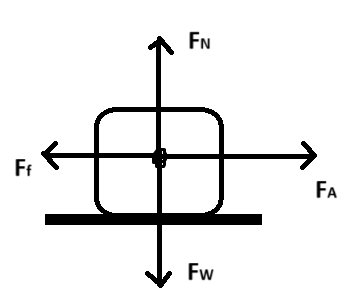
FN = -FW = -mg = -20(-9.8) = 196N

Ff ≤ μsFN

Ff ≤ -(0.80)(196) 

Ff ≤ 157N

Since the applied force is 120N, the force of friction is able to resist this with a balancing force of

Ff = -120N

The applied force needs to be at least 157 N to get the object moving!

If an object is in motion, then the resisting friction force tends to be less than when it was not moving. In this case, we have

Kinetic Friction

Kinetic friction is defined as 

Ff = ±μkFN

Where 

  • Ff is the force of friction
  • μk is the coefficient of kinetic friction
  • FN is the normal force acting on the object.

The ± indicates that we can assign the direction of the friction force according to our particular situation.

A 35kg mass has a coefficient of kinetic friction of 0.60. It is moving with an initial velocity of +22m/s. What is the force of friction acting on this object?


Again, it is a good idea to draw a Free Body Diagram:
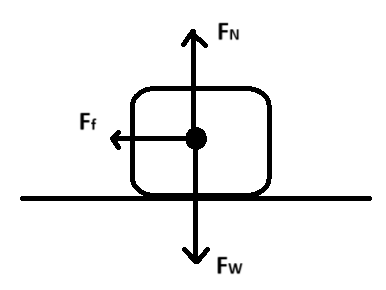
Since the object is moving to the right, the friction force is to the left. There is no applied force, and so the friction force will cause the object to decellerate until it comes to rest.

FN = -FW = -mg = -(35)(-9.8) = 343N

Ff = ±μkFN

Ff = - (0.60)(343N) = -206N

Now that we understand friction, we can apply our knowledge to kinematic situations:

a 575 gram object slides 2.0m across a surface. its initial speed was 4.5 m/s, and its final speed is 2.3m/s. what was is the coefficient of kinetic friction?


First we need to determine the acceleration of the object:

Use the equation

v2 = u2 + 2as

where v is final velocity, and u is initial velocity

2.32 = 4.52 + 2a(2.0)

4a = 5.29 - 20.25 = -14.96

a = -3.74m/s2

Now use this to determine the force of friction:

Ff = ma = 0.575(-3.74) = -2.15N

From here, we can determine the coefficient of kinetic friction:

Ff = μkFN = -μkFW = -μkmg

-2.15 = -μk(0.575)(9.8)

μk = 0.38

We could have gone straight to

Ff =  m a= -μmg

or

a = μkg

-3.74 = -9.8μk

μk = 0.38

a 1.2kg object has a velocity of 12.5m/s as it encounters a surface with a coefficient of kinetic friction of 0.64. How long, in seconds, does it take for the object to come to rest?


First determine the acceleration due to the force of friction acting on the object:

Ff = μFN = μFW = μmg = ma 

μg = a

0.64(9.8) = a = 6.3m/s2

Now use the kinematics equation

v = u + at 

to determine the time it takes for v = 0:

0 = 12.5 - 6.3t

6.3t = 12.5

t = 2.0s

Moving from one surface to another...

A boy slides 235m across the snow with a coefficient of friction of 0.11 before encountering a grassy patch with a coefficient of friction of 0.45. Given that his initial speed was 34m/s, how far does he go across the grass before he comes to a stop? Grass coming soon!


We need to know the speed of the boy the moment he enters the grassy patch.

Using the equation

v2 = u2 + 2as

we need to know the acceleration due to friction first:

Ff = μkFN = μkFW = μmg = ma

μg = a

a = 0.11(9.8) = 1.1m/s2

v2 = u2 + 2as

v2 = 342 - 2(1.1)(235)

v2 = 1156 - 517 = 639

v = 25.3m/s

Now, on the grass, the acceleration due to friction has changed:

Ff = μkFN = μkFW = μmg = ma

μg = a

a = 0.45(9.8) = 4.4m/s2

v2 = u2 + 2as

0 = 25.32 - 2(4.4)s

8.8s = 640

s = 73m

More than one applied force, and forces in vertical direction.

Two cars are dragging a 300kg metal safe down a highway (this sounds familiar). Car A applies a force on the safe of 2000N at an angle of 30o with the vertical. Car B applies a force of F at an angle of 45 with the vertical.  The coefficient of kinetic friction between the safe and the pavement is 0.65. The the safe is in horizontal equilibrium, what is the net vertical force on the safe? safe driving!
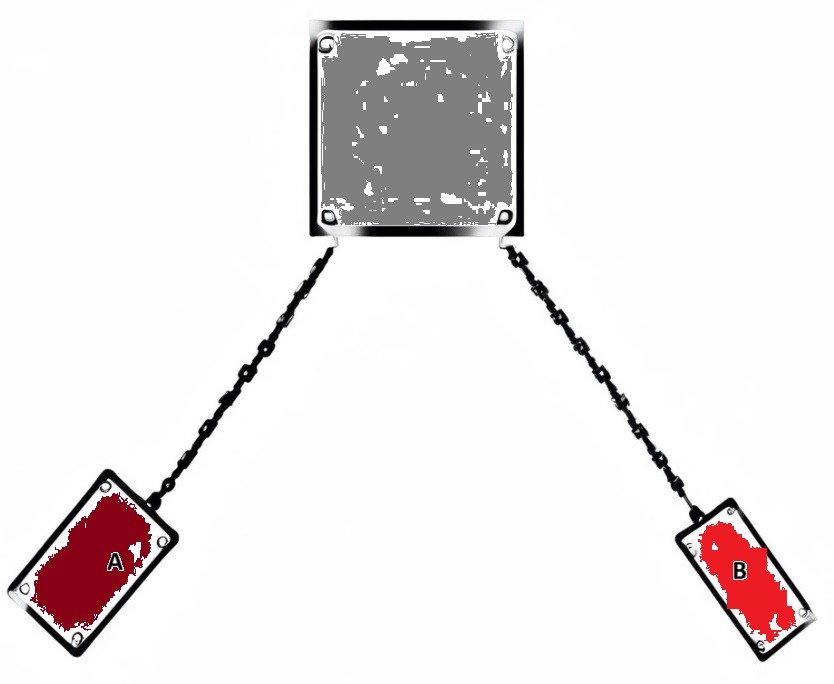

First we need to find the horizontal force of car A on the safe:
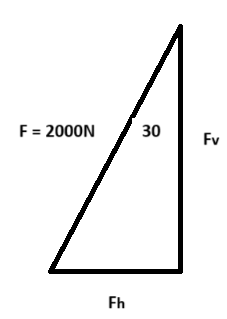
FAh = -2000sin30 = -1000N

Since the horizontal forces are in equilibrium, this means that 

FB = 1000

(FAh + FBh = 0 = -1000 + FB )
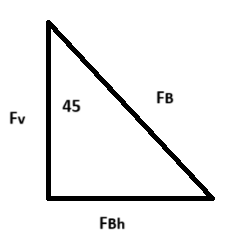
We need to also find FAv and FBv

FAv = -2000cos30 = -1730N

FBv = \( \frac{1000}{tan45} \) = -1000N

Friction will be resisting in the opposite direction:

Ff = μFN = -μFW = -μmg = -0.65(300)(-9.8) = 1910N

In the vertical direction,

ΣF = FAv + FBv + Ff = -1730 - 1000 + 1910 = -820N 

A woman pushes WITH A FORCE OF 13.4N on some tiles that have a collective mass of 400 grams. she directs her force at and angle of 60 with the table. The tiles are sliding across the table at a constant speed. What is the coefficient of kinetic friction? Majong Maneuvers


First we need to find the vertical force that the woman is applying on the blocks in order to determine the normal force acting on the blocks.
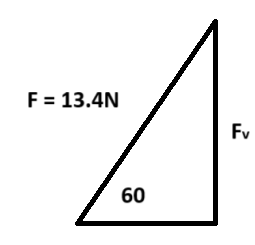
Fv = -13.4sin60 = -11.6N

Next find the weight of the blocks:

FW = mg = 0.4(-9.8) = -3.9N

For the vertical forces:

ΣF = FAv + FW + FN = 0

-11.6 - 3.9 + FN = 0

FN = 15.5N

The applied horizontal force by the woman is

Fh = 13.4cos60 = 6.7 N

The frictional force on the tiles is:

Ff = μFN = 15.5μ

Since the tiles are moving with constant velocity,

ΣF = Ff + FAh = 0

15.5μ - 6.7 = 0

15.5μ = 6.7

μk = 0.43

3. Tension

Learning outcomes
  • I can define tension as a force transmitted through a rope or cable.
  • I can identify tension forces in physical systems.
  • I can represent tension on free-body diagrams.
  • I can analyze systems involving tension.
  • I can solve problems involving tension forces.

Introduction

Many everyday situations involve ropes, cables, chains, or strings pulling on objects. Whether a crane lifts a heavy load, an elevator carries passengers, or a climber hangs from a rope, the pulling force transmitted through the rope is called tension.

Tension is one of the most common contact forces studied in mechanics. Understanding tension helps us analyze connected objects, draw accurate free-body diagrams, and solve many real-world physics problems.


What is Tension?

Tension is the pulling force transmitted through a rope, cable, chain, or string when it is pulled tight by forces acting at its ends.

Unlike a push, tension can only pull.

A rope cannot push an object because it becomes slack instead.

Examples of tension include:

  • A crane lifting a steel beam.
  • A person pulling a sled with a rope.
  • An elevator supported by steel cables.
  • A mountain climber hanging from a climbing rope.

How Does Tension Arise?

Tension is produced whenever a rope or cable is stretched.

For example:

A person pulls on one end of a rope attached to a box.

  • The person pulls on the rope.
  • The rope pulls on the box.
  • The box pulls back on the rope.

The rope transmits the pulling force from one object to another.

According to Newton's Third Law, each interaction produces equal and opposite forces.


Direction of the Tension Force

A very important rule is:

Tension always acts along the length of the rope or cable.

It always pulls away from the object.

For example:

Horizontal Rope

A rope pulls a box to the right.

The tension acts horizontally to the right.


Vertical Rope

A hanging object experiences tension upward.

The rope pulls upward on the object.


Angled Rope

If a rope is at an angle, the tension acts along the rope at that same angle.

https://images.openai.com/static-rsc-4/l_9SVhx2R4R3kHSkKgkvnDfkpzwdcoDjujP-B935pFFzA_D5WkB2y0Bg84WUCbZkycPOQ5_a5-xNnp7DkNFymNz4epLvVc9Mgtjz8VBoYkH9Vln1RXefCPyIUisBdwOpJ4cWQvjvIk3rf2XMRrXxxzUupxg0ebB8pGQ66PCtyJb79lNrJpB4Yi1XXNOV-8Fw?purpose=fullsize
 
https://images.openai.com/static-rsc-4/i5uh8_BOXSwJq0wo3lOr0G_N_DS9gTmH9Nr3TJ0lZOl3RSirUP-uMboNJk2XcTCSbcRQ5bPVFKWg6A-kekdJo62XVAT4moEPCJd5IaXon4yGOu2qLqBn1KlZ0aI7ZvW--bQePY5SlswPzdQoZVmyTLhSup_ZDJekj4rRQcBZpMBFmlYtcAadPZUDrEymhrwO?purpose=fullsize
 
https://images.openai.com/static-rsc-4/jNY7VgOm6ielpYB7UHGKLIxRqXE9y1KrmQRP_PNmG5K6uj6uynEeEOortwwMGallRTr-8btL_C6HqOeqG0jHav3xEJS-Igqf84plZVt0aNs_hUapwYeYBIsl-wspmhF2L9UsUkQw8xJnjKWXLBKiSSRJCj0k6LAcgx1Z2cN2CLWX0feO5HgaRvDpdsBT4qek?purpose=fullsize
 
6

What Is Tension?

Tension is a pulling force transmitted through a rope, string, cable, chain, or similar object when it is pulled tight.

The symbol normally used for tension is:

T

Tension is measured in newtons (N) because it is a force.

A rope can transmit a force from one object to another. For example, when you pull a sled using a rope, the rope pulls on the sled.

Person → Rope → Sled

The force transmitted through the rope is the tension force.

An important rule is:

Tension always pulls. A rope cannot push an object.

If a rope becomes slack, it no longer provides tension.


How Is Tension Produced?

Imagine two people pulling on opposite ends of a rope.

Each person pulls on the rope, causing the rope to become stretched slightly. Internal forces within the rope transmit the pulling force from one end to the other.

https://images.openai.com/static-rsc-4/vCqZjQDFV9pw3ySU-ik7u6cqjddKEpSVV6EjaS7oelJfcRvUKabpNhJO5ltKSOC1-qiA79M6Nht7AX6DPr67BYWuqpSjnrhN6m3soOeRro8-JZPvmBMMOuFq32OsRsML2hdalIW-57fFslU7JYEMOlVyI91DuZHG3TYaadOJhQ4nUJ_YjWENpBrwKyu3LFJW?purpose=fullsize
 
https://images.openai.com/static-rsc-4/ZMb2-7HRaB4DSAA9MtseR_5IVg1S__a2iZpzSJJ2tUkLfyfZp9DUImvOBpDhbs1q3hFgOv8hfb9rY5T1QOnwc8heMpAeGWRXRBvlSvW8SNOGrNtB1QqfQRPqBRNdV37zpogiRh_TOqsleQgMQjm2HoQhrkT8UtsdyQOQIgf44U1BnrrIPCn5hdISlHuCyN5b?purpose=fullsize
 
https://images.openai.com/static-rsc-4/Dz-v9K2RkLgwtHsqfDpps2RxDNpMW45OkzCJh3kI7eaaWhy-Ce0J_-gCWi56WV4ePuu9FaUQffwmuqyifYRMCqtIayboMfJV1NxIhc1NdltnTIbfUw6uEVGqt6J2cKbAn26kfrVlOiQyW6PiIzd42i5qWKnR-uUuumtp8Fq3HXC1dKpzOamg0jRC1woA23DX?purpose=fullsize
 
5

The same principle applies to:

  • cables supporting bridges
  • ropes lifting objects
  • elevator cables
  • tow ropes
  • climbing ropes
  • strings holding suspended objects
  • cables in cranes

Tension therefore allows forces to be transmitted over a distance.


The Direction of Tension

Tension acts along the rope or cable.

When drawing a tension force, the arrow points:

away from the object and along the rope.

Consider a mass hanging from a rope.

↑ T

Mass

↓ Fg

The rope pulls upward on the mass, while gravity pulls downward.

https://images.openai.com/static-rsc-4/o2QLBurBqRXNF4X6uaOeopD67enlWYj65QU1MNXUh0QeP6Q0DtTlv6Jej07O5AHFG-mawyWBP7HCYLXjMfvKfg_aNlqUGvXRuEphQHtuRc7RdJ9ehO967MJgR68oU71y-d-AvR9rnn2HlQfZztgxKzfQkH6J-gXV3eqT0PVtq28-ZGx59bXihtcv3SA8ca6N?purpose=fullsize
 
https://images.openai.com/static-rsc-4/SJRvePE6u4U2bBrysf5JSJY0ZKrrlcaRr05p7L6H8e-P6t2jDoRzyLoPWMTY-TeRYxCoVTbzsedt4eoEuBKMmrPYKtt49jrjyOCRHRQ1AumXkDzQ_lXWdSdiYMbEc8kZ74pOsqdvtbjXgoRBJFyyOhU4L4KNE8JE5bS97m7-gG_O_5DpxGp1YqPH7-Tl02az?purpose=fullsize
 
https://images.openai.com/static-rsc-4/qkyxKwTrT4iuFb0WV1KFXYe9kZ2HHb2fP2gWZ5VCy8rLYV6FqvYycTrMHkpBTME1N3sEug3eA4Zal_vS6c2D2rJtbIIDTENwyEn6f_Qn_b_hl_ILGiPKz6jvXDwojnky4isxyaUcTvsSG0V2UvHs9-YxNNo05ycp6AyNlT5h8VfSyOlxDc9fawPk6_gsSiVk?purpose=fullsize
 
5

This is one of the simplest tension systems.


Tension on a Free-Body Diagram

A free-body diagram shows all the forces acting on one object.

When a rope or cable is attached to an object, tension should usually appear as a force pointing along the rope and away from the object.

For a hanging object:

↑ T

●

↓ Fg

For a box being pulled horizontally:

T →

[BOX]

← Friction

↑ N

↓ Fg

https://images.openai.com/static-rsc-4/jNY7VgOm6ielpYB7UHGKLIxRqXE9y1KrmQRP_PNmG5K6uj6uynEeEOortwwMGallRTr-8btL_C6HqOeqG0jHav3xEJS-Igqf84plZVt0aNs_hUapwYeYBIsl-wspmhF2L9UsUkQw8xJnjKWXLBKiSSRJCj0k6LAcgx1Z2cN2CLWX0feO5HgaRvDpdsBT4qek?purpose=fullsize
 
https://images.openai.com/static-rsc-4/Ml9sq1AX9IpvXBPGRR1LQ5IqxyFINYZLc73VZEDk5Kl9N0TBmFAEgADzVZuGomYG3tafRMIYt7L5BdeVQqYJUCNRRglydenhRpPPQwrzXeLGEqn074hkSc2_1PV6r2hYc7Ph1eotHBY3Xk0KjaYgDpRmJOwlejZaigPWD3j9TZZk63f3GE7uTg1Bw6spIjFH?purpose=fullsize
 
https://images.openai.com/static-rsc-4/MNK3UQTIX8i_xDJGPcvrvMUUKbDb09NOKAd4NgMcd-bWqRGPWLLtjsv9cxKwLq2sEbW2V9ZtV_aYw3VJse3ZL2ByAdX2WL_IFFh4iYzaM0tDQAgRnk9nkN7NjB8cDog5GJECJDARze0ys77-B9kRG4HnIv2a6JoV7D_b1C4u8cDQMSj3jNhP5V-n6SNBnxYF?purpose=fullsize
 
5

Remember that the free-body diagram should show forces acting on the object, not forces that the object exerts on something else.


A Hanging Object at Rest

Suppose a 5.0 kg mass hangs from a rope and remains stationary.

Two forces act on the mass:

  • tension upward
  • gravitational force downward

Because the object is stationary:

a = 0 m/s²

Therefore:

Fnet = 0 N

The forces must balance:

T = Fg

Since:

Fg = mg

then:

T = mg

For the 5.0 kg mass:

T = 5.0 × 9.8

T = 49 N

https://images.openai.com/static-rsc-4/BfiwKkADTi4rcAX5yVvvgt3ONdwYbnFMn5wb8_aBdWkiuZcGg_d8nfxsGaqcLdu6eqorFIW0cAE5wt9B2UtnejrLh0uBIjR1sw5jRwoAJjYQ85ydX_NBfao6cmvPNcZphxMOa1a6-kxak8uiMwgyxcs3ti1dhzDxjZyXGIWZCwBB62J3iCybnzx9Eu2MdxK9?purpose=fullsize
 
https://images.openai.com/static-rsc-4/SJRvePE6u4U2bBrysf5JSJY0ZKrrlcaRr05p7L6H8e-P6t2jDoRzyLoPWMTY-TeRYxCoVTbzsedt4eoEuBKMmrPYKtt49jrjyOCRHRQ1AumXkDzQ_lXWdSdiYMbEc8kZ74pOsqdvtbjXgoRBJFyyOhU4L4KNE8JE5bS97m7-gG_O_5DpxGp1YqPH7-Tl02az?purpose=fullsize
 
https://images.openai.com/static-rsc-4/qkyxKwTrT4iuFb0WV1KFXYe9kZ2HHb2fP2gWZ5VCy8rLYV6FqvYycTrMHkpBTME1N3sEug3eA4Zal_vS6c2D2rJtbIIDTENwyEn6f_Qn_b_hl_ILGiPKz6jvXDwojnky4isxyaUcTvsSG0V2UvHs9-YxNNo05ycp6AyNlT5h8VfSyOlxDc9fawPk6_gsSiVk?purpose=fullsize
 
5

The rope therefore has a tension of 49 N.


Tension Does Not Always Equal Weight

A common mistake is to assume:

T = mg

This is only true in certain situations.

If an object is accelerating vertically, the tension and weight are not balanced.

For example:

↑ T

● accelerating upward

↓ mg

If the object accelerates upward:

T > mg

If the object accelerates downward:

T < mg

If the object has zero acceleration:

T = mg

This gives us an important relationship between tension and motion.

https://images.openai.com/static-rsc-4/6gObIBvnGZrEY-SAKDyeHfADE5Q2JKa21L7Yv5i0Au_BbLSC5I_83rZM8OVNIMgcGdfNCjc7CaoBlsAQDlgiBtk897FCS2dLkRKXKOLaC9RYb9asZtljvPTXZ-4oPV4_svwr77ikSaH1aqg2hCdu3wuNaIpqZlu0ZrLEG_KeITiJQRXUPzLRGTciM58OBs7U?purpose=fullsize
 
https://images.openai.com/static-rsc-4/sIm4TyuQ-aLrS1TmTdjgf5su15sP4V48CQo5QxqWFRpfvvTXR2Y_DsswM6obH9bzQEXbGxMBizwie35xyunQZB3Y-NYTqzIGU9oxGbZzjaMQfxOTRPN3xwv8KeEKDe0FmkxXWY-wqYKWHPJVADI4BkHjkvvhCNmZoVdPzVmF6psEnQC_cf_gCWowZgIEQfBB?purpose=fullsize
 
https://images.openai.com/static-rsc-4/NusjXOqJ5D7SUGIutA0pJ4K133n1V1uBWfsJYvDVuDqGcWf5xQsROO7FKczrmsPuYqGoCav7Ex20LOFc8MJbclSCPBRPSu5Zx-ReXDe9fImZKqqjCT-NayugWE_FUxYdY-npvQnAaAliPMErMz_cj9cpPnmRFW0167wZZ9aMvAkJahqRPECZs6dgYscto3y8?purpose=fullsize
 
6

Using Newton's Second Law

Tension problems are usually solved using:

Fnet = ma

The first step is to identify the forces and choose a positive direction.

Suppose upward is positive.

For a vertically accelerating object:

T − mg = ma

This equation can be rearranged to find tension:

T = mg + ma

or:

T = m(g + a)

This applies when the object accelerates upward.


Worked Example 1: Hanging Mass at Rest

A 12 kg object hangs motionless from a cable.

Calculate the tension.

Because the object is stationary:

Fnet = 0

Therefore:

T = mg

T = 12 × 9.8

T = 117.6 N

Approximately:

T = 118 N


Worked Example 2: Accelerating Upward

A 10 kg object is lifted upward with an acceleration of 2.0 m/s².

Calculate the tension in the rope.

The forces are:

↑ T

●

↓ mg

Use:

Fnet = ma

Taking upward as positive:

T − mg = ma

Substitute:

T − (10 × 9.8) = 10 × 2.0

T − 98 = 20

T = 118 N

Tension = 118 N

Notice that the tension is greater than the object's weight because an upward net force is required.


Worked Example 3: Accelerating Downward

A 10 kg object is lowered with a downward acceleration of 2.0 m/s².

The forces are still:

↑ T

●

↓ mg

Now the acceleration is downward.

Taking downward as positive:

mg − T = ma

98 − T = 10 × 2.0

98 − T = 20

T = 78 N

Tension = 78 N

The tension is less than the weight because the resultant force must be downward.


Tension in a Horizontal System

Tension can also pull objects horizontally.

Consider a 10 kg box being pulled across a frictionless floor by a rope with a tension of 30 N.

https://images.openai.com/static-rsc-4/MNK3UQTIX8i_xDJGPcvrvMUUKbDb09NOKAd4NgMcd-bWqRGPWLLtjsv9cxKwLq2sEbW2V9ZtV_aYw3VJse3ZL2ByAdX2WL_IFFh4iYzaM0tDQAgRnk9nkN7NjB8cDog5GJECJDARze0ys77-B9kRG4HnIv2a6JoV7D_b1C4u8cDQMSj3jNhP5V-n6SNBnxYF?purpose=fullsize
 
https://images.openai.com/static-rsc-4/LmRFuax1ETYbrLMBrCV0_EK0XCb9fidE31Ba4jYUhMqzodEJgv7a32BB0qWNAmJ__R-U6WWJqR69OVanuQ6ccdEctb9nzr0v_GrCreq4abKjeLMIhAG1Kstq9ruRo22ITNNci9UFOO9iDjrWwf0uhVK9QaqmAqtIbOwwiriEvDoM7bQrVT28RwolY7b4IWou?purpose=fullsize
 
https://images.openai.com/static-rsc-4/INIvzgZrbmJzoNN-Qawd--e1uGgTMVcdFtzNFl2jrWZkQJxKCAXyvKmd-mFdIHCBed6PutPE4JHIfgPlELq4okuO1Z_VtgkLcD_qiSxqnLfkRa8_D9KuHVHGYaAxrNHARboPHzeo2tYJhVDRPLuxwmJLbRG2v0fOpSv34lEOHjIFb5rhZh_iv6wJ5bt7VG83?purpose=fullsize
 

Horizontally:

Fnet = T

Using Newton's Second Law:

T = ma

30 = 10a

a = 3.0 m/s²

Therefore:

a = 3.0 m/s²

The tension causes the box to accelerate.


Tension with Friction

Real surfaces often produce friction.

Suppose a rope pulls a box to the right while friction acts to the left.

← Friction

[BOX]

Tension →

The net horizontal force is:

Fnet = T − Ffriction

Therefore:

T − Ffriction = ma


Worked Example 4: Tension and Friction

A 20 kg box is pulled horizontally by a rope with a tension of 80 N. Friction acts with a force of 30 N.

Calculate the acceleration.

First calculate the net force:

Fnet = T − Ffriction

Fnet = 80 − 30

Fnet = 50 N

Now use:

Fnet = ma

50 = 20a

a = 2.5 m/s²

Acceleration = 2.5 m/s²


Two Objects Connected by a Rope

Tension becomes especially useful when analyzing objects connected together.

Consider two boxes connected by a rope:

[5 kg] — rope — [10 kg] → Applied Force

When the system accelerates, the rope transmits force between the two boxes.

https://images.openai.com/static-rsc-4/LmRFuax1ETYbrLMBrCV0_EK0XCb9fidE31Ba4jYUhMqzodEJgv7a32BB0qWNAmJ__R-U6WWJqR69OVanuQ6ccdEctb9nzr0v_GrCreq4abKjeLMIhAG1Kstq9ruRo22ITNNci9UFOO9iDjrWwf0uhVK9QaqmAqtIbOwwiriEvDoM7bQrVT28RwolY7b4IWou?purpose=fullsize
 
https://images.openai.com/static-rsc-4/_3teU0caf7gvXc8-kaCZiezh1XhC8FfVFv-KIPZmMaMkljDgdvwdo3_EsUHRDF_uxrLN3nIBuPghXwRo0svai1d7n47-YCa5sdKnUIsAvXo_wL-auxlum5XSrcnT09bU3BVAY2fJyropIsB04EJmx1QlvIi92pQrl1rvxhB4u4aWbIt2tbs7VqD9GgKc_D4q?purpose=fullsize
 
https://images.openai.com/static-rsc-4/0J1aLKqkNHGzcN1udUDbPdQxzFoVv7efRM4Oo4ASY_P6DsVB21AqVebiMyYwjEa0I66eQtUc8C2LRbXSFvXzceDC4BKLcEU_3eIbbbbp5m91e65sBg7a4p8EZIbwL3WU_XB8kk35SWSNNNf_aSvbaJk1oYWTIRW85nfbZ_A-kXWeLKN5RP9khgLYxGyckaee?purpose=fullsize
 
5

One useful strategy is to first treat both boxes as one system.

Suppose a 45 N force pulls the two boxes across a frictionless surface.

Total mass:

m = 5 + 10

m = 15 kg

Calculate acceleration:

F = ma

45 = 15a

a = 3.0 m/s²

Both boxes have the same acceleration because the connecting rope remains taut.

Now we can calculate the tension.

For the 5 kg box:

T = ma

T = 5 × 3

T = 15 N

The tension between the boxes is therefore 15 N.


Why Isn't the Tension 45 N?

This is an important question.

The 45 N external force accelerates the entire 15 kg system.

The tension between the boxes only needs to accelerate the 5 kg box in this example.

Therefore:

Applied force = 45 N

but:

Tension = 15 N

Tension should not automatically be assumed to equal the applied force.


Ideal Ropes

In introductory physics problems, ropes are often treated as ideal ropes.

An ideal rope is assumed to be:

  • massless
  • unable to stretch
  • perfectly flexible

Under these assumptions, the tension is the same throughout a continuous rope when it passes through ideal conditions.

Real ropes have mass and can stretch, so real tension systems can be more complicated.


Tension and Pulleys

Pulleys are commonly used to change the direction of a tension force.

For example, pulling downward on one end of a rope can lift an object upward at the other end.

https://images.openai.com/static-rsc-4/bK5M0sXdfhSPlLxpKQTqxFgH3-Jz3ocfArWlNG5e42eV5QcyQHw3IKCgxWxYdjIf5XQ4Dr3831EiHCwg5CejRqvy_4gB7EiIEc-g5Dsc8psSpMVsBL34DhlwEqZ4hOrmrG1N8lnOSciQGQPQei5YRmv4c5edBDBo5hDkYfYHkCdszCnOgALZy-nGfWenXjnP?purpose=fullsize
 
https://images.openai.com/static-rsc-4/l_9SVhx2R4R3kHSkKgkvnDfkpzwdcoDjujP-B935pFFzA_D5WkB2y0Bg84WUCbZkycPOQ5_a5-xNnp7DkNFymNz4epLvVc9Mgtjz8VBoYkH9Vln1RXefCPyIUisBdwOpJ4cWQvjvIk3rf2XMRrXxxzUupxg0ebB8pGQ66PCtyJb79lNrJpB4Yi1XXNOV-8Fw?purpose=fullsize
 
https://images.openai.com/static-rsc-4/EV9kPzd3kKBEFm0HwJayHoUenuFg4V_lYv5cmYgWMG3SV2uEu8iIXJOXT136uQrIr7ruISP97IAe2x7zY24IJkMGTBlBIRb9kfXag1dHpCE-WelMA6xzkt7ADMzQ4e5rtXunFjI2Hleu6bUTmDgc-ly_KWflEfzAggNs5vXySg1Bo6WO8VA2rj9jpOrYAGwk?purpose=fullsize
 
5

In an ideal pulley system:

  • the rope is massless
  • the pulley has no friction
  • the tension is the same throughout the rope

This allows us to analyze connected objects using Newton's Second Law.


Two Hanging Masses

A classic tension problem involves two masses connected by a rope over a pulley. This arrangement is often called an Atwood machine.

https://images.openai.com/static-rsc-4/9lH6--wYGIkWsE7Jwn1dKPRZ4cYr9GCbzecdrLeB-SAzqfgLO1xm6OjsZ7EJW2fUmrBGPZF7AI_DZYwDK1ViYhBu33_p4RkgbqX1Nv-acUxJmnKtiCfOQg4o2wab04ujP8V0fn5lBsOnEOD1emLSQgRimJG8bpeoAV7XNseUWDIERxxGthFnm9Un4DwXu1y0?purpose=fullsize
 
https://images.openai.com/static-rsc-4/CEXRBx4q3_-F6knn4MjwJ7QhDA8MoiVnibkBTE3IZvvfQkXQsoiuyPl0I8hJp5p-Izn1wDwtTyOhGj7GHESvdE9vHnZPPjt6_UupwXBG-LvO8s-71k6y0AbTtqOb1S7EyvbuBSL3jaBb8Iz37ZM7YCczNOJGs1Keh_bG8w0R71w59kVyczXitYDN3hFzs3jr?purpose=fullsize
 
https://images.openai.com/static-rsc-4/hrmZOr0akvT8qaBYeIShzRM9sqrjxJlwmj0JT1k87gCt6-7lKBmyhnRKY7QDb9gxC975Sva8qjhfksupRwGho2doMPmTRmjOB43keisLSsyTjKX9QjLUy4EXUnuk5wwsiEJqB_6pJG_RP9lH1qICHJW2hmmjRYWZ4Bby6hmfAzUzqZaGGvI3NEXSPS-Fy5W1?purpose=fullsize
 
5

If one mass is heavier than the other, the heavier mass accelerates downward while the lighter mass accelerates upward.

For the heavier mass:

m₂g − T = m₂a

For the lighter mass:

T − m₁g = m₁a

Both objects have the same magnitude of acceleration when connected by an ideal rope.

These equations can be solved together to determine the acceleration and tension.


Tension at an Angle

A rope does not always pull horizontally or vertically.

Suppose someone pulls a sled using a rope angled upward.

https://images.openai.com/static-rsc-4/QVr-4cYcHrLwgx4q6EeuueUtlIGTke2wzWj_aOo5WcUq4TREcAsuMCPD6FlUIUxoVhPnFL15qoyf2xcLs9IhW5eTOajw8biX7teUEAnSDLrj92cGxw0fGkYdOrUrwpdSnnw16ezyqw1hEgoG-cvpwtzIvcLwQPt9KxBEYmoLRQTDSpq7LlkCmL3WrbYX-8Rp?purpose=fullsize
 
https://images.openai.com/static-rsc-4/9AtZW2JhISWVf0E0ATptqG__2XvzntZlpCZv1Y8ROZohqRTciEj56jSBiltMvVkZK48esl-VnYvJa21k43hzASKTQOdlEbGB6t3oS-zzqy6GZQvJ-XFIfJtRTmpdXMWPuecDQTG1Zr-RqvgM6BWpumcRI5vwKAvO8ZtNJGoF45vyMAeb95QbzRz7w2tamVuu?purpose=fullsize
 
https://images.openai.com/static-rsc-4/GzwlWVPfLWFQs7MBV_hmwUP8XENNb5zF0VOce7K7MdBP7oDbwu5Hl15zWZF-1mMzMqHbLQczXisgF8Lv6Mw-4XqA_XgYPBC4i83-Y1K1hLJmC57SArghJPTnfSZObMgiaAP0yTIfpNIuUoURL0faWmUIlpDLTIs3KBwckkgTrAqOXkUV8nPMBpmkjaCMTmrN?purpose=fullsize
 
5

The tension force can be separated into components:

Horizontal component:

Tx = T cos θ

Vertical component:

Ty = T sin θ

The horizontal component helps move the object forward.

The vertical component pulls upward and can reduce the normal force.

A smaller normal force may also reduce friction because:

Ffriction = μN

This is why pulling something upward at an angle can sometimes make it easier to move.


Tension in Everyday Life

Tension forces appear in many everyday structures and machines.

https://images.openai.com/static-rsc-4/9QUpl_Id33_ryZh8SyO4naVXMa_JzP7q4IJp-AJx5TVXnnUTjPqYkO62KARGHqreBCSzTzOM63mj6xO4iF0RBlq1yN5rwH5cCZo1dDJHNQY3U1s35qFSGs2Yhg9tfl4CAMW1Fi08nTtVPY07x74_3zEgIJ0XLnE1zGqMUUdUfRAok65di_11IAP6NyN5Grg4?purpose=fullsize
 
https://images.openai.com/static-rsc-4/t21f4I1G_Ye9oUdgOEfrstQfnVvWOZtw-jQUIhNx6JAMEPlG-IAuOwg8wXePLqZvg86wF9fXs-ahM21SdKJ9EgWKZv7QhN6ZT87HmUpBVApTl67XHuY1sIq-WJmKRTyASqxiv876sLYcI2_JkJKY7U9y54pNZe7yCAGnOY0jE7k03YqHYer4LW38dvn0GsCg?purpose=fullsize
 
https://images.openai.com/static-rsc-4/2qKMCUZBRNA1FNj5s7siwz3ghzxIOH7UWjZ8qnUihKqS__bi0xZxIbEsLjHLlMFIo19Xi6MGKEmRb6xpoJCtPIW53qOvj7Q6-6yNjmlW0xnXr6xU3cSDr8LhSldOwjJJ-uKRBK6uoVUnJ23SMrJevbaUrWl0JMSMmCteOUlXkVnOYyTxZarPSqzMYK5vNIFo?purpose=fullsize
 
4

Examples include:

  • elevator cables supporting an elevator
  • crane cables lifting construction materials
  • climbing ropes supporting climbers
  • tow ropes pulling vehicles
  • suspension bridge cables supporting bridge decks
  • strings supporting hanging lights
  • cables holding antennas and towers
  • ropes used in sailing

Engineers must calculate the tension these cables experience so that they can select materials strong enough to withstand the forces safely.


Breaking Tension

Real ropes and cables can only withstand a certain maximum tension.

This is called their breaking strength or maximum allowable tensile force.

If:

T > maximum safe tension

the rope or cable may break.

https://images.openai.com/static-rsc-4/K9Lx3eKneaM4UrpFU5Sza_gxTg93h-Hr9fAcI3ty4ESHs56mN2fIFAZ6JASzorNZSK6qwsz-2-aSJmZiK3U3KOQSCVsMUxPy057i3WtqBZ7SlM24yvMB4-iTQQXZbMAFnz-07yjXIs2rXYFhCjrc6rpzBbr1SwysEVVt-TU6CypJIK02rgOwaSxFQpfQib2R?purpose=fullsize
 
https://images.openai.com/static-rsc-4/eJYYpW0NimDE5nfw_ZiRHm7cnoP8wCiUEtKc05-E4bivYYD3A82xcIEmUNti2SUZ5JzOob8zdXsRDUw3yM1XRg8AxCZTOzNJBDGNVRfe7JrsE6EMbsWm_z13kRXR3Y9L-32lha38gf2HenfBrSdr-svORiTBatWmznx_JMxsZTAucTnkdG5bQMxiD1v1QmYJ?purpose=fullsize
 
https://images.openai.com/static-rsc-4/nI_Rrba5jZG9xn9tyRHOUatx4RRLGSIj_p27FAakjsYbs5Q0JzCR1-_3iiEO1mZKk4t6UyxYrlLp-847OP_mOoIUlsHdfsecG-1JlfgTKVNmLQmZL8anSZ4xY_ue6Z2dCrs_azg0xBtXrUCTPO42zQ6hYzROq8cvZSh9C6jIhiCpd-vb-5ALhFX7YiMoh11I?purpose=fullsize
 
6

Engineers therefore use safety factors when designing cables, bridges, elevators, cranes, and other structures.

A cable may be designed to withstand forces much larger than the forces it normally experiences.


Did You Know?

Suspension bridges rely heavily on tension. The main cables are pulled tight as they support the weight of the bridge deck. These cables transfer forces through the bridge structure toward the towers and anchorages.

Steel is particularly useful for these applications because steel cables can withstand very large tensile forces.

https://images.openai.com/static-rsc-4/x3xEnXmle4J6IIPUBDR_DNlia8rnYEN7YyrnS4t99iqWFeLrK-tJPv_agSMCatjV-KMIul4URxK2V4RWVBhhuqcLMnzxr1vn8fVJ1x7Ti30AGzy6GA1oVnQBUBlIBMOyRRXfno-iHTOJq2qDCZT69QhAqM4Yf1NeKR_b-jtMUxuiQpGFceIDwRvDQLHtgLnh?purpose=fullsize
 
https://images.openai.com/static-rsc-4/9QUpl_Id33_ryZh8SyO4naVXMa_JzP7q4IJp-AJx5TVXnnUTjPqYkO62KARGHqreBCSzTzOM63mj6xO4iF0RBlq1yN5rwH5cCZo1dDJHNQY3U1s35qFSGs2Yhg9tfl4CAMW1Fi08nTtVPY07x74_3zEgIJ0XLnE1zGqMUUdUfRAok65di_11IAP6NyN5Grg4?purpose=fullsize
 
https://images.openai.com/static-rsc-4/8_tDG2JFkPiLD6-tN72o5TrcH3QUSesHFD25TT31FSFaX6oQMXcvvVspkv9V-7mm8Zm3qT1Dwa00bc44ODskxWAFSmiTJ9X6JOAGEKdrOgWE6R1RAOsvX9sXZ2iUYAdJ7w2KuF2l8RgT978KFnaha-SBamviMlccaJti_3-1xjvglxmPvrswRN5rzqoyp1Y-?purpose=fullsize
 
5

Common Mistakes with Tension

Mistake 1: Drawing tension toward the object

Tension pulls along the rope away from the object.

Mistake 2: Assuming T = mg in every problem

This only applies when the vertical forces balance.

Mistake 3: Assuming tension always equals the applied force

In systems containing multiple objects, the tension may be different from the external applied force.

Mistake 4: Drawing tension when there is no rope, cable, string, or similar connection

Tension only exists when a connecting object is transmitting a pulling force.

Mistake 5: Forgetting other forces

A tension problem may also involve:

  • gravity
  • normal force
  • friction
  • drag

Always construct a free-body diagram before choosing an equation.


A Strategy for Solving Tension Problems

When solving a tension problem:

  1. Identify the object or system being analyzed.
  2. Draw a free-body diagram.
  3. Identify every force acting on the object.
  4. Choose a positive direction.
  5. Determine whether the forces are balanced.
  6. Write Fnet = ma for each relevant direction.
  7. Substitute the known values.
  8. Solve for the unknown tension or acceleration.
  9. Check whether the answer makes physical sense.

For connected objects, it is often useful to calculate the acceleration of the whole system first and then analyze one object separately to find the tension.


Key Terms

Tension: A pulling force transmitted through a rope, cable, string, chain, or similar connector.

Free-body diagram: A diagram showing all external forces acting on an object.

Net force: The vector sum of all forces acting on an object.

Equilibrium: A condition in which the net force is zero.

Ideal rope: A theoretical rope with no mass and no stretching.

Pulley: A wheel used with a rope or cable to change the direction of a force.

Breaking strength: The maximum tension a rope or cable can withstand before failing.


Key Equations

Newton's Second Law:

Fnet = ma

Weight:

Fg = mg

Stationary hanging object:

T = mg

Object accelerating upward:

T − mg = ma

Object accelerating downward:

mg − T = ma

Horizontal object with friction:

T − Ffriction = ma

Angled tension:

Tx = T cos θ

Ty = T sin θ


Key Takeaways

  • Tension is a pulling force transmitted through a rope, cable, string, or similar connector.
  • Tension is measured in newtons (N).
  • Tension acts along the direction of the rope.
  • A tension arrow on a free-body diagram points away from the object along the rope.
  • A rope can pull but cannot push.
  • For an object hanging at rest, T = mg.
  • When an object accelerates upward, tension is greater than its weight.
  • When an object accelerates downward, tension is less than its weight.
  • Connected objects can be analyzed using Fnet = ma.
  • Objects connected by an ideal taut rope have the same magnitude of acceleration.
  • Tension should not automatically be assumed to equal the applied force.
  • Pulleys can change the direction of tension forces.
  • Real ropes and cables have maximum safe tensions that engineers must consider.

4. Elastic Forces and Hooke's Law

Learning outcomes
  • I can explain elastic deformation.

  • I can describe the restoring force in springs.
  • I can recall and use Hooke's Law.
  • I can interpret force-extension graphs.
  • I can calculate elastic forces.

Introduction

Many objects can change shape when forces are applied. Stretch a rubber band, compress a spring, or bend a ruler, and each changes shape. If the force is removed and the object returns to its original shape, it has undergone elastic deformation.

Elastic forces play an important role in everyday life. They are found in car suspension systems, trampolines, weighing scales, door closers, and even the tiny springs inside mechanical watches.

One of the most important relationships describing elastic forces is Hooke's Law, which explains how the force produced by a spring changes as it is stretched or compressed.


https://images.openai.com/static-rsc-4/wo57e8HkXN4FSzQvuCiwCkbqk0jSHK1MlX1P9lKyd1Zww9T7PdcBejg0FH7mylThl-YA_Ekr0_W1Ncv6NUl8XVVrG_3kbXIhJ6g93tvTY6b6AJClFJbOl6_YbgWFSMsmYFdDKTVuPMePvSSP5jBNBjfBnwJfBPnwEmFDxCwN-Y_uTUzo_31b9mp9jP5YRVBL?purpose=fullsize
 
https://images.openai.com/static-rsc-4/RTZtK5e5uYCkVchVnn_oZD9cjAAUwqJMucGGEU-Cf2BOnqZv1jjZyL-rzeslwweNttIqM5Y78qtisrZBsueoyh1emrJsecFffWkLEz6Cqr_4383zxtEvQe4kLhtZjUbN1k_eAt_uYKADY7is_vp5XPgBLIsx4FbLmpiigHrwTctDOIfeL1x_cuvzbO2MkhxX?purpose=fullsize
 
https://images.openai.com/static-rsc-4/yR0OHdaN5_9i4ZOFJej5D0C5BiMbWhRp-X9flW8qF1AFkQoKk90zvgsK3oFRs3IDy-xHq_ojEp4e7tEkj0UkIqIleaHQhoh4SzZCxWhU0xAQPlUI3u7lZuiwyiq2Ofk61Mm_wMETdJ-1X_0YExEtR2jxrAgXE3Pvr8ymPWa7qT3pbinWf4K5FuqmoJVRJPCm?purpose=fullsize
 
6

What Is Elastic Deformation?

When a force acts on an object, it can change the object's shape or size. This change is called deformation.

If the object returns to its original shape and size when the force is removed, the deformation is called elastic deformation.

A spring is a common example.

When you pull on a spring:

Force applied → spring stretches

When you release it:

Force removed → spring returns to its original length

Materials that behave this way are described as elastic.

https://images.openai.com/static-rsc-4/eTEIfn83_gWS4Sgs-Vn2dLC-86-f38fyt9vN-Y-pidb9Qte8q5Hvp9bq6x-mgPeKQ-RAftgZZMTzeLH7wqxDoeZIspM7MiLmsa3T1mppCHHdLzApUSIdAeD2jU5n8hXyQ7E-8dbK97X01mc5e52qEXulJXzwBCHl3Pa3vVsmKes7Q-hlay-fuBv4O8iha81T?purpose=fullsize
 
https://images.openai.com/static-rsc-4/p1mz7VUdrbdvUcbCJ9zgr996yuEEVp7PYBnUsNj9euDgfSDN-MvY8YoI-oFiUV88BNJhq2ZAGA1klJ9A2pWKnZSBG_0C7KEMVN_isaTSWBlugLmgT-2nun-8bTQkDrG-Y9_zKPXb88rSBY_cWn10q1e9LL2gvRMo-4HgITw5G28ReqQ2J-AVxuORqrj8Fn-D?purpose=fullsize
 
https://images.openai.com/static-rsc-4/G_73WJMM3q6gFDADJOfdH3PFjlCXchKqP2_bTYYdR2Dkmhky-c_SiVAaSUjSvOM86eteTLeCdf4HK0BZ4I4SSrCqrpjwN-ovRdf_TXsW1E_tsgINBHjmUzTLkulCSMoczTdZsaYJiG1zVo2vkqDtTilyOWAeEhn7HLCxkPX2ufGh7XDubkB-QpqN4Gac4iy2?purpose=fullsize
 
7

Elastic deformation occurs because the particles within the material are displaced from their equilibrium positions. Internal forces then tend to return the particles to their original arrangement when the external force is removed.


Stretching and Compressing Springs

A spring can experience two main types of deformation.

Stretching occurs when forces pull the ends of a spring apart.

Compression occurs when forces push the ends of a spring together.

In both situations, the spring produces a force that attempts to return it to its original length.

This force is called the restoring force.

https://images.openai.com/static-rsc-4/24K3Z3Xg65MfIwLgBb4eBK2Ti2RVuxJb8lVgBjB54BAak0-uL_3zQqqgH8rcz5_GseLmpYvJDp482IXtsc8O18akpQnTF4t0lZ0nQcJmg-bp5CHazUtvT89COBfqWWLg4X_bz0kkyB7_7b2TW1Dc5mlFVjM4dn1RyUFTzIy9fg_fxruV-6EuuN59m6kKn0Kb?purpose=fullsize
 
https://images.openai.com/static-rsc-4/wo57e8HkXN4FSzQvuCiwCkbqk0jSHK1MlX1P9lKyd1Zww9T7PdcBejg0FH7mylThl-YA_Ekr0_W1Ncv6NUl8XVVrG_3kbXIhJ6g93tvTY6b6AJClFJbOl6_YbgWFSMsmYFdDKTVuPMePvSSP5jBNBjfBnwJfBPnwEmFDxCwN-Y_uTUzo_31b9mp9jP5YRVBL?purpose=fullsize
 
https://images.openai.com/static-rsc-4/0Fij1D9b1LsyeMDy3Mitt5I6fLlRxeeWtG_PDLa9eATHOUzgNztLvIC6jrBWTrk9qPH8CNWZ5JbPbKFwASsJI13yAxXKl84ry0imBOMRGSWuJBkzVYd6HwVJCRQat64_pN_VJKm9Dbu3jYjPTChIfYrkcFQ0R7W1mBPcjZwN3UXzsvo1LOeKoqYAspIT5muV?purpose=fullsize
 
5

For example:

If you stretch a spring to the right, the spring pulls back toward the left.

If you compress a spring to the left, the spring pushes back toward the right.

The restoring force therefore acts opposite to the displacement from equilibrium.


Equilibrium Position

The equilibrium position is the position of a spring when it is not stretched or compressed by an external force.

At equilibrium:

Extension = 0

When the spring is displaced from equilibrium, a restoring force develops.

The greater the displacement, the greater the restoring force—provided the spring remains within its elastic range.

This relationship is described by Hooke's Law.


Hooke's Law

For many springs, the restoring force is proportional to the displacement from equilibrium.

F = -kx
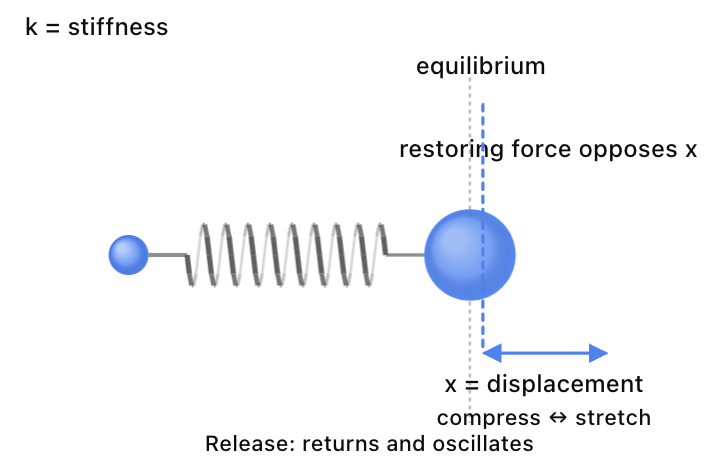
The negative sign shows that the restoring force acts in the opposite direction to the displacement.

When we are interested only in the magnitude of the force, Hooke's Law is commonly written:

F = kx

where:

  • F = elastic force in newtons (N)
  • k = spring constant in newtons per metre (N/m)
  • x = extension or compression in metres (m)

This relationship works while the spring is behaving elastically and remains within its appropriate elastic range.


What Is Extension?

Extension is the increase in length of an object compared with its original length.

It is calculated using:

Extension = stretched length − original length

or:

x = L − L₀

where:

  • x = extension
  • L = stretched length
  • L₀ = original length
https://images.openai.com/static-rsc-4/ZecVQAHYjRsxc9bnd6XNiTiCRn0LBR4_PqWu29Nmywu3cqGHUmyD5wiTKdkKTWpZ39PbdsS-bdUxu6Xchkp4dwZaplz6UFfyFy48wMSN3Mtqt1SXyv2R-4ErG23DUQSg_1bwURX-rlWyOwakbwt7AiMEFyJKn4oAzGCKogv-8Td1Rom2_O3WKui-R7aqPtMF?purpose=fullsize
 
https://images.openai.com/static-rsc-4/Kr6TvqphnPo4sCqLVwwFKvtWaKEGJrG1Bkn1uaPlTW-DMFIVVJpNJHTzcX4-SZagoms5QtEmX3WUAOAlCr3HaAYOd4iszSSG1zoNV4mW0K0YTLVHACc0A4YV3-7qOuEaqjaoQy8oMmrS6ptq7wlbGYi16BrM5d1sg7Jhd9l7SzCG-jRZGnR4lCZQ5gZF_ay0?purpose=fullsize
 
https://images.openai.com/static-rsc-4/G_73WJMM3q6gFDADJOfdH3PFjlCXchKqP2_bTYYdR2Dkmhky-c_SiVAaSUjSvOM86eteTLeCdf4HK0BZ4I4SSrCqrpjwN-ovRdf_TXsW1E_tsgINBHjmUzTLkulCSMoczTdZsaYJiG1zVo2vkqDtTilyOWAeEhn7HLCxkPX2ufGh7XDubkB-QpqN4Gac4iy2?purpose=fullsize
 
5

For example, suppose a spring has an original length of 20 cm.

After a force is applied, its length becomes 26 cm.

Extension:

x = 26 − 20

x = 6 cm

For calculations using a spring constant in N/m, convert this to metres:

6 cm = 0.06 m

This unit conversion is extremely important in Hooke's Law calculations.


The Spring Constant

The spring constant, represented by k, tells us how stiff a spring is.

Its unit is:

N/m

A spring with a large spring constant is stiff.

A spring with a small spring constant is easier to stretch or compress.

https://images.openai.com/static-rsc-4/6ssZzAvFt30JlQlOKyruG4hnAqy_OkQ-REBmQ4WqAMsngj9eG0S7SCjzSxc3RuI3xMmbIdf0gvLAK4e6OnY8NQe_8BAz9daD8O5bhLrl7_1AR-k6W5Ga0Agb4clVWN38B6cJi3kqxhAimZPTX_hy2TU_ooVlTLCPVlXnBKy_bkTdKOS5wSPVhUwqxeVwyF29?purpose=fullsize
 
https://images.openai.com/static-rsc-4/-Uuyl-RwQ0zrzzfL-ZL77P8L4WemRjSduk0iSH8nTEu_IhomFawmQzagdMyEWicI2xfG5P-yV1IsQkmn1_bXLKKZ12k1BOKn-oRKo7WNcqIIApQy75YWSn_FeCjCygHBiFL7_ruGZK_QKteNeC5a-KsW-aBVX5dirtWCeOu690SGpjzrqLHcZk-Ls_AWRByG?purpose=fullsize
 
https://images.openai.com/static-rsc-4/Cat9kK0kgvZwPLj30zfxLPYyRoZwhZ0bQHlYjB4YoRkKQesmJNva5kjuaXPcwj7LLQaNfexCj0-icHS8uv2wX6mMew5Q9_Lni0yk3nzDMlxpJsOzhYz62nbbIPOshw0b2l0Ob_V-UmU2lIZNxBD2VAK_5MVh1NEZwxJtU5u8jKEDtOqQ4GhJEv9Bb_h91pEe?purpose=fullsize
 
5

For example:

Spring A:

k = 100 N/m

Spring B:

k = 500 N/m

Spring B requires much more force to produce the same extension.

Therefore:

larger k → stiffer spring


Worked Example 1: Calculating Elastic Force

A spring has a spring constant of 250 N/m and is stretched by 0.08 m.

Calculate the elastic force.

Use:

F = kx

Substitute:

F = 250 × 0.08

F = 20 N

The magnitude of the elastic force is:

20 N

The restoring force acts opposite to the direction in which the spring was stretched.


Worked Example 2: Calculating Extension

A force of 15 N stretches a spring with a spring constant of 300 N/m.

Calculate the extension.

Start with:

F = kx

Rearrange:

x = F ÷ k

Substitute:

x = 15 ÷ 300

x = 0.050 m

or:

x = 5.0 cm


Worked Example 3: Calculating the Spring Constant

A force of 24 N causes a spring to extend by 0.12 m.

Calculate the spring constant.

Use:

F = kx

Rearrange:

k = F ÷ x

Substitute:

k = 24 ÷ 0.12

k = 200 N/m

The spring constant is:

200 N/m


Force-Extension Graphs

Hooke's Law can be investigated experimentally by adding different forces to a spring and measuring its extension.

The results can then be plotted on a force-extension graph.

https://images.openai.com/static-rsc-4/fDEEs_4jx0zEiZMWsp_n3-S2ddnYNMdcaynxwb4sediY4zR14ZIG9wijbBu0JUYdGhjN3EyDBCrLaGuFQ78gnQuA9z_vR8gUWBI-xXhkrgx9IOgSuhSNDKOwFPWqOKG2TSTJDEZA4-DP2xI6GQFP3HoF6nmwYxnV_euY3yO1RpINzcsnCSL_qfKWqJUDbzKb?purpose=fullsize
 
https://images.openai.com/static-rsc-4/mYTYMJzaXwskzB-ibnx8f_6azRFZvxnMBxFFJP_jxHFT--1WDq711x5t9U2t5cuFnS6O_7JQ4AAgp1oJNOwxy0JUaIy_4XCcvHZe_nsudSXyA9KC6oJFLYUpHBn2VUW5oms_KFZkjJRiDfkuK__3Cm41yDwVr2BNaKSaT5EqV6z_yy6Wt_GD_RirKameQyAQ?purpose=fullsize
 
https://images.openai.com/static-rsc-4/hpt7VOym-9gp-XlBe9jcf3KEEzuUuoAUyXacHdzk6WUJu26M3zcrpIHCm0WIXIR-d4IDl9uQSxnEhIjYdiofL60ocI87pS32ssqpdH95T_tHDkM_fhHsvtqDby_sABFhsDVJkt1KiG6R5Nk8pymQkYq-N6p2ngein2VdZNYg21BMuSxTIMSH4_5oXAW74Bhe?purpose=fullsize
 
5

For a spring obeying Hooke's Law, force is directly proportional to extension.

Therefore, a graph of force against extension is a straight line through the origin.

For example:

Extension (m) Force (N)
0.00 0
0.02 4
0.04 8
0.06 12
0.08 16
0.10 20

For these data:

k = 200 N/m

As extension doubles, force doubles.

As extension triples, force triples.

This is direct proportionality.


Finding the Spring Constant from a Graph

If force is plotted on the vertical axis and extension on the horizontal axis, the gradient of the straight-line section gives the spring constant.

Gradient = change in force ÷ change in extension

Therefore:

k = ΔF ÷ Δx

Suppose the graph contains the point:

x = 0.10 m

F = 30 N

Then:

k = 30 ÷ 0.10

k = 300 N/m

A steeper force-extension graph therefore represents a stiffer spring.


Comparing Springs Using Graphs

Imagine two springs producing different force-extension lines.

https://images.openai.com/static-rsc-4/PKgCvlH_7H4B_mPjevz8-3IRLPEjqUXk0EiOv4pLf1SZmcS65NFmICQXKcyWhCuzMwxxgdM1XYMtV3oav4g4x4CUXnCgHMykZkBtX7nvZjPhaTJOeD8zc2Zo1Ec8M87t1Tjf6TbTwf8texu5xbCKJ_9UAYSpHrB3H4SZO1qrcgosQaeZpeqHvs97fzOiTnoR?purpose=fullsize
 
https://images.openai.com/static-rsc-4/lYkVJVpVbf3M14ri2xGAI9zKLBZyiikP295VShFG1fFKb3WG4ov3xAV5JVG9mmXjc2eZE8xhCVFOGGJlztKT2po2g1GnTT4ltCOn6O3sSXgSqaT5no3kpbUiJyO5p_1_0s6BKmf35M1f5KgylJnW6knLL05In69o1tmIyePwzqlZNgOoe69s7F4HEVB6qXyS?purpose=fullsize
 
https://images.openai.com/static-rsc-4/6ssZzAvFt30JlQlOKyruG4hnAqy_OkQ-REBmQ4WqAMsngj9eG0S7SCjzSxc3RuI3xMmbIdf0gvLAK4e6OnY8NQe_8BAz9daD8O5bhLrl7_1AR-k6W5Ga0Agb4clVWN38B6cJi3kqxhAimZPTX_hy2TU_ooVlTLCPVlXnBKy_bkTdKOS5wSPVhUwqxeVwyF29?purpose=fullsize
 
5

If Spring A has a steeper line than Spring B:

kA > kB

Therefore Spring A is stiffer.

This allows engineers and scientists to compare materials or springs using experimental data rather than simply observing them.


The Limit of Proportionality

Hooke's Law does not necessarily apply to a spring under every possible force.

At first:

F ∝ x

Force and extension are directly proportional.

Eventually, however, the graph may begin to curve.

The point where force and extension stop being directly proportional is called the limit of proportionality.

https://images.openai.com/static-rsc-4/AIxHqfNTK5aPKe2DXyTjkjlhitCsHe_5fI6SHCcvpgD4_1FaqbWI5a33M3xc4x3tVZb2m9uwI5u-ffRMWhQkxuwbMh00IAR7EC17J7q-o0Y3r5vIg13LwOnzMxb-IKuY07I-vBGUU0L2i8x-DT794STbdIo1FRU4saXmVMX4ua91OQXIR4oOtL4LqJps8DIr?purpose=fullsize
 
https://images.openai.com/static-rsc-4/kc5nZm7w2vAxSW2wOhua42nvupH6P4EcatZuo6xV2dfbkMhNehJOAXmc7dTK2UeteCzZQNUbP_cFlKwJwbVMa2y4i3EaIv43kH_5UyIGA4TAcxDrtuSRhmB4LfktE4iK2vvWpKdFm7FW97xrb0qsyXU2jXoWdcJeP1woe1wbd-_78HWoHnyiYyTaHz3-KCtV?purpose=fullsize
 
https://images.openai.com/static-rsc-4/iHnLeuxo1M6qcgpytjKB2To9630U2OA0-1eOVS2teeBUNG_SMwdbWLxWb6xPrKq_ac1iJocrwZ7bIrVMr8khyB5K9ET-FsfBIcyHCKMnnuqSs73VCZDMsdxn1MUKQ5iMvGMjK7qy_Y4NO005dlyPX3eNzA3X0FCa9umFWFDYi37eqL-Ar6Y3UkOQ7rDEUMUq?purpose=fullsize
 
5

Before this point, the force-extension graph is linear.

Beyond this point:

F is no longer directly proportional to x.

Therefore, the simple Hooke's Law relationship no longer accurately describes the spring's behaviour.


Elastic Limit and Permanent Deformation

If an object is stretched too far, it may not return completely to its original shape.

This is called plastic deformation or permanent deformation.

https://images.openai.com/static-rsc-4/R_5tXYq78KMmglef_fMv8KMGKgMiTizAn9EVDJFDsVp3FHKUuxV_OI2TSl5ET51vUd8mRefkYsSGDs3kTEMSd7mVKqNfVpA-4fVNezLMhRd9nEXHNt0Q5KOrmJ3P67y6NXzLOvPGDaNp0Wdb3MZZyNfwYNgjhotwcX2tLD7-eKBGcmHgSmDggsxQB5XeL_SY?purpose=fullsize
 
https://images.openai.com/static-rsc-4/2ZotknzBy9aOHrSbf6Yw0jHNFXmLtPBgGgXegiK92tcJxZAxrNqsVP_aE7bwwbhAKsZw7JADm6lxFxLCWePnS_tfpHwxPS6vakfX-mF4Dufd31iruGa109LiIn2AlDypFR_gC8zTRJghFUPyiNf2S5-ERiXKUJtVavPrmAs9ZOTOALbmB9V6XmvQkWXJw0fx?purpose=fullsize
 
https://images.openai.com/static-rsc-4/Dyyza4pg29GuCaFIVXgauVUnVcSH7Qu61xAK3xqRPdHHPXou5XYy6CI3YztJvqTrUDy9Tkr3QcCPaegVlJrLNxe7e0rsC5oB51sHq5N0ewA4FmVLCDPBH9-eEhRh_XN5t6JlNF10DK-faKDxZwjnFkI1mtLKEBGovp-eAEuUh_U7Ex3HYQIBWeRGxFOkYXAR?purpose=fullsize
 
4

Elastic deformation:

Force removed → object returns to original shape.

Plastic deformation:

Force removed → object remains permanently deformed.

The elastic limit is associated with the maximum deformation from which an object can still return to its original shape.

The limit of proportionality and elastic limit are related ideas, but they are not necessarily exactly the same point.


Hanging Masses and Springs

A common experiment involves hanging masses from a vertical spring.

https://images.openai.com/static-rsc-4/KxaupiMkNVDjfKhI7YNWW8mggTXeVhsPTL7smyH-y3XMOybIwGiu7SVcz5bmUBGt1fVs2Ac35dcvWi0F6FWPafDbCu2P4jEtasetAleF4AbPs__ARF-TWqI0fhRkz0mD_Ti9bYA9tDyn1QCYjSu_dOLxEkE7HP-0otdIGBPKH2T6oDhdxETgJ8T2PnFN5uNn?purpose=fullsize
 
https://images.openai.com/static-rsc-4/ZecVQAHYjRsxc9bnd6XNiTiCRn0LBR4_PqWu29Nmywu3cqGHUmyD5wiTKdkKTWpZ39PbdsS-bdUxu6Xchkp4dwZaplz6UFfyFy48wMSN3Mtqt1SXyv2R-4ErG23DUQSg_1bwURX-rlWyOwakbwt7AiMEFyJKn4oAzGCKogv-8Td1Rom2_O3WKui-R7aqPtMF?purpose=fullsize
 
https://images.openai.com/static-rsc-4/X02xkNaPlvVjyu5N061WAQGC_KLVG_jP6YE9KBAeO_o_dFLjDN8wStR03Iogdk4CUfLxJjPDr9AB-tIdVS39FO1rYNBZM8bsDU4LdHSRqRhIa7YFRjWwHBCT8XIDcycErDlsTGqqoIiOJosMaFK4hX_9GGs73JIP4JIDC5ZZuUhCduXPi8xSrAAsM3g7EM-i?purpose=fullsize
 
5

The hanging mass experiences gravity:

Fg = mg

The spring produces an upward elastic force.

When the mass is stationary:

Fspring = Fg

Therefore:

kx = mg

This relationship allows us to calculate the extension of a vertical spring.


Worked Example 4: Hanging Mass

A 0.50 kg mass hangs from a spring with a spring constant of 100 N/m.

Calculate the extension.

First calculate the weight:

Fg = mg

Fg = 0.50 × 9.8

Fg = 4.9 N

At equilibrium:

Fspring = Fg

Therefore:

kx = 4.9

100x = 4.9

x = 0.049 m

Extension = 0.049 m

or:

4.9 cm


Springs and Free-Body Diagrams

Spring forces can also be represented on free-body diagrams.

For a mass hanging from a spring:

↑ Elastic force

●

↓ Weight

https://images.openai.com/static-rsc-4/aQsxU3czEJVtL7-T_GFYFNnBQ46wrMpZoYLBn8nSYr_vlJMcyE1WTt8c5KQNXSC7n9cIr4ya-vENGV3ikuweP9xOBfuSI_7UU4FOK-2PpZd_WYwGEMGiLooqZYYdOkxvLLiQTYX9moccwKigEC2aONpx16pRwpHDeSNpniUZJ7CXAQEsZDNGTu1yWg4TCGI4?purpose=fullsize
 
https://images.openai.com/static-rsc-4/wosWmxZ2rsNTEbTWY4dVW1PZxYyHadMYxuG7ZYIVqKJC22v45gMkvQkeMURvj3iYHAr3QKPfYefRFxk1Z6CjC6qbg3Yg8kk--MURwrHYZ8BGu0EIxLRRO9SkgG_hukV2SiPvQr0NJaeAHwj-9yEXWLSPH4jW8WYRvmOQ-RgBMcHU2s-NbapJaxbdmsi3gxwz?purpose=fullsize
 
https://images.openai.com/static-rsc-4/F5puwrtZpha8w9Q5jM62PIx43uRNq-09uuG0DDdKrcAPV-Daaowjxdzg_DyLBMwEJ6P9yAsNkMSqe48oF9ti_-oEh3b8A7n9_yW21aI0IKS-Ra6EqeFLENs-fKGIHOEVCSDr8Kdhdf4fqkmHl1lmn1A-l-7T1mdJv2T1S4xYJsWX--EGAMrpLutSGCYgDM-t?purpose=fullsize
 
6

If the mass is stationary:

Fnet = 0

Therefore:

Fspring = Fg

If the forces are not equal, the mass accelerates according to:

Fnet = ma

This connects Hooke's Law with Newton's Laws of Motion.


Elastic Potential Energy

A stretched or compressed spring can store energy.

This stored energy is called elastic potential energy.

When the spring is released, this energy can be transferred into kinetic energy or other forms.

Examples include:

  • bows and arrows
  • spring-loaded toys
  • trampolines
  • mechanical clocks
  • suspension systems
  • spring launchers
https://images.openai.com/static-rsc-4/nRynrBtYQ_vp8GtQxmheJz4aJVI-faLXAsbalzQ1WzENyBWdZxAlAFvtfPHuLQOB1pEw7Alveys9462KkmacKuhhkxVKzC2RmPtGCFyp3nOLGaxx-JOMotcpgfiB_ONMTFu4jO18lGfXjH7-qSU1tycnS52IA7diRDV1dmNwlwAZDdaa8kmDJfubL22BSTCi?purpose=fullsize
 
https://images.openai.com/static-rsc-4/rRa1LRN1qBxIY5fI6-saLQK3OzZtUKFlKaUP9y4UuC5wDqAN2fm058Gv0HD4qfKCc9_rYhQhysVgCcn_AJA1Z0rUpmArWOQcbjWqJgElPMEmf7xIG6LF6_d9pthpJiP4Yj2ThnI4haH9tfaiqhiq4AtM807xSLmhNYRhQEqeuNpvqMiwMzYfQeT6FM8m07jx?purpose=fullsize
 
https://images.openai.com/static-rsc-4/SsRcvaICnYlAqKq0Rvuj5N7LJsY2Mcck5MkzyxnIJrL8yPSj_lBh1OYcgPALYMgKZrY6VD_qpx0eLLhsY8HA3_jOkX237KF5GTqNL2o8BOc9ruBDJfDELyuBcaN2s-VLD3rlXL9sF3QXdbHvr7kr4PXyHEeVtuLTFi6ej3ygXAY9sPhJyHN7EBFw_2J4fmcB?purpose=fullsize
 
7

For a spring obeying Hooke's Law:

Elastic potential energy = ½kx²

or:

Eelastic = ½kx²

where:

  • Eelastic = elastic potential energy (J)
  • k = spring constant (N/m)
  • x = extension or compression (m)

Notice that extension is squared in this equation.


Worked Example 5: Elastic Potential Energy

A spring has:

k = 400 N/m

and is compressed by:

x = 0.10 m

Calculate the stored elastic potential energy.

Use:

Eelastic = ½kx²

Eelastic = ½ × 400 × (0.10)²

Eelastic = 200 × 0.01

Eelastic = 2.0 J

The spring stores 2.0 J of elastic potential energy.


Energy from a Force-Extension Graph

The area under a force-extension graph represents the work done stretching or compressing the spring.

For a spring obeying Hooke's Law, the graph forms a triangle.

Therefore:

Area = ½ × base × height

So:

Eelastic = ½ × x × F

Since:

F = kx

we obtain:

Eelastic = ½kx²

https://images.openai.com/static-rsc-4/Q8FuXyzdEUFuPHWq9NCfwprqhCpdDnO1ry49m8ycDsoW_6zlB9aLiGovLN4pdFIMkL50pe6Ra_xNLfHoJPOeDmHtfROgdCqfOuyj4P5qVCD9V05W_28IFr8yq3ydNMjXfssceWtqByNtSMLCa8my63DGGldZu2ENS1PvrOK37QbtedjqMMQ2bU9HHW-A0n_f?purpose=fullsize
 
https://images.openai.com/static-rsc-4/N3VmQLZ2jbhiIY_wNHs7_Rb46vWkRhX1ZLotdyQxyHXL_xDhl7CPNFfSi8zu0QE6agyi17__ImsERCWHy2AsZRfP0E5-mcEOK2sEddMS5Vby63aqo9DMWQunXv1ImAQ3ZDW43kQmkvA2RgEKCnCuQLDAPVnLlei42AXYyCrXr-8Xr0RmwORhFkPxx20BEJgb?purpose=fullsize
 
https://images.openai.com/static-rsc-4/Iq2pxagcKupIh7fOGgGWf73yEHLfwKCVas812i-jUctPIJTg5RFwA3NGB_LqgxD8xuUciq_4gSj5R52SVzcdQTLR2tolPRezyEsAjakwT6henRxVtUscIyqWfehy36V2_rAJnGtd5D_H4IrZJnO0HlQ3XhVRIk69ksE7PsdZql1MA5mHa4dwS12x8RJH0r2y?purpose=fullsize
 
5

This provides an important connection between forces, graphs, work, and energy.


Springs in Vehicle Suspension

Springs are widely used in vehicle suspension systems.

When a wheel moves over a bump, the spring compresses. The spring then produces a restoring force that attempts to return it toward its equilibrium position.

https://images.openai.com/static-rsc-4/piuSmUMqP5wfLZPYSANBSvsnbShkO6dZSxnWQbOqgDRJIJUo93f5Fen3TugGEvqAC4gUd7UEAe-KQNpudMRH9qRvmFWohdHYVvvXcGDV_XMhE9HlDt1w_rqUYyAijpuQj7imuG4z5RhmD_l3ZC8uDVW0FGRd0TH4dnrE6I_Te9X_7EGbn6rqrYolTvLlNXUf?purpose=fullsize
 
https://images.openai.com/static-rsc-4/J_-gO93fX0yqkrOpHEZRpNQSudYPCqUX0VU2QCNksjPzw-y5Gc0E70TCnE83uyRmAigwJbKRSt6ooQS29pBYPGx1B-rLG9rTL3EgyURlJv81s1KAC9REsModQ_9E07AsuJEkPvjPSUbzmWyT41eb8L4QMywo36vfKYFst13ctozz3dXb4Yi5PqMU-qNkkfnk?purpose=fullsize
 
https://images.openai.com/static-rsc-4/G6Wyg-Cdq7kpQsf7IRiIEjbolQV7p08wOyd6CQgvE9mGbrSISaGJxKaVvY6M3nt7P_sPXcfFZKUNALtGESc0OUiZ5xLXuy_X6QvNVMwdPtgZjLT9faDoa9XmGCvAN9WAvrS8ZG7aDOMTwgv2rNRsHgHRbgIAYRlcYdThPvVbttCM_6KB_597IToaS6WylVg0?purpose=fullsize
 
5

Vehicles also use dampers, commonly called shock absorbers, to reduce repeated bouncing.

Without appropriate suspension, much more of the movement caused by bumps would be transferred directly to the vehicle and its passengers.


Other Uses of Elastic Forces

Elastic forces are important in many technologies and everyday objects.

https://images.openai.com/static-rsc-4/7iFLvvSutqYZLv96X1ViR0BpLqoeoNmQtff3cm1RZm4yUZOo_zSdWi20miajcJKVM8VmElWNIV-RWoODC0JvQDWG1v9uvsNX5AZFv9wXS79tDV0LH2Fqr-iEO5_YOhwkd6JwdaBCKctdm-srnFZ8DcjD_I_6vzJ0T0oUlJQ-cKofKpNGsGXdh5eZnbClzmou?purpose=fullsize
 
https://images.openai.com/static-rsc-4/mLTYXrwkhVR37fb7BOLC30IOq3vW_AOz5W4b82bsHvIYw38g2SuwdsxW7GSpg9-z4zzcRLoqn2trF5LlKVtJc9Ogpqw1a2A5MuxPX7o_gawU4I6TC7B-YeDGQG6S142opEk04jiBU9VGWz0zM5kEsM3wfZbjjaSBtaSqIdJXQ7DBHvI12duWdw84XQkMeCFo?purpose=fullsize
 
https://images.openai.com/static-rsc-4/YCBP8ebak0AeG2UKWf-oprBjQ7Nn-QtDU9NHk7mP2SEPKdL4o6HRlNS-vqQhIyZj3xgV0SPqPuosgIeQzuO_mLeJ5QGsuow7L8jRX5ToSr-TgWZVziHpkVJpKsKzgU3pnwLVmjYunB5HhGJ7n3DQSa07m40_kSJqQF_wauU_g4RlO_MFUmci8iwKr4dPhrhF?purpose=fullsize
 
4

Examples include:

  • spring balances
  • mattresses
  • trampolines
  • bows
  • vehicle suspension
  • mechanical watches
  • door closers
  • exercise equipment
  • vibration-control systems

Engineers select springs according to the required spring constant, maximum force, deformation range, and intended use.


Did You Know?

A traditional spring balance measures force using Hooke's Law.

When an object pulls on the spring, the spring extends. If the spring has been calibrated, the amount of extension can be converted directly into a force reading.

https://images.openai.com/static-rsc-4/ndL42WoocU0ycxC3TN9F1IA1oS0ajhYs6OTqsXH6HKwNYX46lOY4lR4oEbxh0UJIfPw8VNR_ooTJRaSkGnwokKVPXx2yfZJ8iOG57pGTstHVwZH6hfc1ARoXLBj7ziPJLQO8RtsxiSKgvvfkrayLo_Gro-wMk2VV4M68FRxXGATj2H7gzFIxyf7lJxiH4Qys?purpose=fullsize
 
https://images.openai.com/static-rsc-4/AD61HUbV57f1sXADkE2ULW7B8Ooaug0QmB75yHbYTOpXTf5T-39Si95NQMcTe0K9_WX8s19OIWPLIOkqmR3ZB--2AfhHxTdBnWdiLWXNGm4odjL55my_DM4nxN7CfL3rYjSQVrp-yaFJI3fAUiH0DiB7dRZyzuwFUE5Sbio8KNZkl266nnPJPmutf8Zj4FpC?purpose=fullsize
 
https://images.openai.com/static-rsc-4/u9sl0p2MsuIBhG7FTwPkVoGWg8cQy6D4yW_Ld_toLeqm17L2_8iF1D0rO7USf0R7mF3EFGSlIVmqO6Bs4tFPrm3uo616yxenf5xic21zckwuYKE_vl_KhZPYXJlMpA84MMzfeiTHokq-8KKEjfg_2wKwF6ZWlCSy3Q4y-XQ58jC_VJ8vNgCSbFz7LqVqfWAA?purpose=fullsize
 
4

This means that a relatively simple mechanical device can measure forces because of the predictable relationship between force and extension.


Common Mistakes

Mistake 1: Using total length instead of extension

Hooke's Law uses the change in length, not the total stretched length.

Mistake 2: Forgetting to convert centimetres to metres

If:

x = 8 cm

then:

x = 0.08 m

not 8 m.

Mistake 3: Assuming every force-extension graph remains linear

Hooke's Law applies only while force and extension remain proportional.

Mistake 4: Confusing stiffness with extension

A larger spring constant means a stiffer spring, so the same force produces a smaller extension.

Mistake 5: Ignoring the direction of the restoring force

The restoring force acts opposite to the displacement from equilibrium.


Solving Hooke's Law Problems

A useful strategy is:

  1. Identify the known quantities.
  2. Determine whether you need force, spring constant, or extension.
  3. Calculate extension if only the original and final lengths are provided.
  4. Convert extension into metres when necessary.
  5. Use F = kx.
  6. Rearrange the equation if required.
  7. Substitute the values with units.
  8. Check whether the answer is physically reasonable.

For graph questions, first check which variable is on each axis before calculating the gradient.


Key Terms

Deformation: A change in the shape or size of an object.

Elastic deformation: A temporary deformation in which an object returns to its original shape after the force is removed.

Plastic deformation: A permanent change in shape after a force is removed.

Restoring force: A force that acts toward an object's equilibrium position.

Equilibrium position: The position where an object is not displaced from its normal state.

Extension: The increase in length compared with the original length.

Spring constant (k): A measure of the stiffness of a spring.

Limit of proportionality: The point beyond which force and extension are no longer directly proportional.

Elastic limit: The maximum deformation from which an object can return to its original shape.


Key Equations

Hooke's Law, magnitude:

F = kx

Extension:

x = stretched length − original length

Spring constant:

k = F ÷ x

Elastic potential energy:

Eelastic = ½kx²

Weight:

Fg = mg

For a stationary mass hanging from a spring:

kx = mg


Key Takeaways

  • Forces can cause objects to deform.
  • Elastic deformation is temporary; the object returns to its original shape when the force is removed.
  • Springs produce a restoring force toward their equilibrium position.
  • The restoring force acts opposite to the displacement.
  • Hooke's Law relates elastic force, spring constant, and extension.
  • F = kx can be used when considering the magnitude of the elastic force.
  • The spring constant k measures the stiffness of a spring.
  • A larger spring constant means a stiffer spring.
  • Extension is the change in length, not the total length.
  • A force-extension graph is linear while force and extension are directly proportional.
  • The gradient of a force-versus-extension graph gives the spring constant.
  • Beyond the limit of proportionality, Hooke's Law no longer applies directly.
  • Excessive deformation can produce permanent or plastic deformation.
  • Stretched and compressed springs can store elastic potential energy.

5. Drag Forces and Terminal Velocity

Learning outcomes
  • I can describe drag forces in fluids.
  • I can explain how drag depends on speed.
  • I can define terminal velocity.
  • I can analyze motion involving drag.
  • I can explain factors that influence terminal velocity.

Introduction

Objects moving through fluids experience a force that resists their motion. This force is called drag.

A fluid is any substance that can flow, including:

  • Liquids
  • Gases

Examples of drag include:

  • Air resistance acting on a falling parachutist.
  • Water resistance acting on a swimmer.
  • Air resistance slowing a moving car.
  • Water resistance acting on a boat.

Drag affects how objects accelerate and can eventually cause them to move at a constant speed called terminal velocity.


What is Drag?

Drag is a force that opposes the motion of an object through a fluid.

Drag always acts:

In the direction opposite to the object's motion relative to the fluid.

For example:

  • A falling object moves downward, so air resistance acts upward.
  • A swimmer moves forward, so water resistance acts backward.
  • A rising bubble moves upward, so water resistance acts downward.

Drag is a contact force because it results from interactions between the moving object and the particles of the fluid.


https://images.openai.com/static-rsc-4/nrcUGMIhJpM-ff8IbOIJ1C_xUL40HxRwjNm8MOL0xOwkHA97tmI_hfMkDK-0edww0bMpCTtQtb2LgeJ3i6yJ_65u-jXnNdZUaHCgxmRhQ5UyMqTZHo5cWFVx-k6W_mjUK-U0HoUfyQoiOxkDcOlJP9mU0Bmy-1auImmwEZwd0LbD1TTGjF-dnun6XKf2EdEn?purpose=fullsize
 
https://images.openai.com/static-rsc-4/X64p9cW9IZmJONO49YBvIDK0VPPiHRCbf6TPmfP_ab9eJGZOu4VI-pCJmd6jcFGa74yS9-bwHuWT-hB2eFkvr_Z1VcvsA7mJ_DJj2ZpyoDDm74hIs9iUZG9qMXibH_27zRPtk_VdwiyvFcSJS4Gu8FcY9yT3C5kgeXvDe4o2f_Wi-D6RIQaFFEkwp9gW404V?purpose=fullsize
 
https://images.openai.com/static-rsc-4/Px4i7csmH3hmwpcbmm4bbWAtpMTDCiOm64NAtOuMgqF1-Y7L1WWEapamCHAFUv9nxTNF-Luk4w91aIliMOpGhI7_DJ9s6za1PpuS-PxmD2ZKS5_QWVgA2TW2t4nrKN6eJvCeAALlRVrYN7Ikvs-rGi1VAv89Fg2UZy42EkwF8WYvwdnrcq8ZhyoyZHL1n12x?purpose=fullsize
 
6

What Is Drag?

Drag is a resistive force that acts on an object moving through a fluid.

A fluid is a substance that can flow. Both liquids and gases are fluids, so drag can occur when objects move through:

  • air
  • water
  • oil
  • other liquids
  • other gases

When an object moves through a fluid, drag generally acts in the direction opposite to the object's motion relative to the fluid.

For an object falling through still air:

↓ Motion

↑ Drag

↓ Weight

For a car moving forward through still air:

Car →

← Air resistance

Air resistance is a type of drag force.


What Causes Drag?

As an object moves through a fluid, it interacts with the particles of that fluid.

The object must push fluid particles out of the way. The fluid also exerts forces on the object's surface.

These interactions produce a force that resists the object's motion.

https://images.openai.com/static-rsc-4/ZLudUIwI7ECTfVjHntFExzQ5JzhYI2gDJ-1V3CZF4a7qkixJcS6Etnt-Dm1d98AfAM0rZMf0FlnyLX5PTCbOK-7t3gROpsRlKYOXpwZiobpgP6aXq4i328cRdq7Gntg5dad-UAsZvDdueAGh8X7WCJJoY6Cy8xOWE3gauEKipHd4GW7ypd6vB0CNE5x1-81E?purpose=fullsize
 
https://images.openai.com/static-rsc-4/JuBjPCU5V0FS17lC42FzzqMI2PrAE1DCMCIszje8-Ny6h-MkCFy989czMMBAGcXLcAGtPRZGWrP7xShPOQGUuAnRROTw1bImiceiFWIpz31Ogm6_mjBge92R9sxwGxvvvsQiaF35jvWflpVB9I8882aK9dTo_gUBD1hoC_4ZemgJGUvAdmycMQwYzhou9Csh?purpose=fullsize
 
https://images.openai.com/static-rsc-4/jcE_Imr-ULBJOgk7j39OD55VuYi_ZK0NtqYDlnGvbhQ5uuoYVWEX09YGQ3mc3zkK1j2AgGRWrIWS2-AYtKV5AxIXkIysdqI3LaK0xUOW8mZk-5TS-C-NkG9kqm3O2MRB0Wfav4Pfz-KUq2tgiaP_XneuXWcZgpKQjMNra4YsWn3AKZexgIyth7O5KQF36S5X?purpose=fullsize
 
5

Drag is therefore caused by interactions between the moving object and the surrounding fluid.

Unlike ordinary friction between two solid surfaces, drag occurs when an object moves relative to a liquid or gas.


Direction of Drag

Drag acts opposite to the relative motion between an object and the fluid.

If an object falls downward through still air:

Drag acts upward.

If an object rises upward through water:

Drag acts downward.

If a cyclist moves forward through still air:

Drag acts backward.

https://images.openai.com/static-rsc-4/9ZYulyPsgPK8v9VI2E_w00Baza0KY-mxF0PmfrxonJ1wzO84jw8htLFOIFvU2UkITmi1GTk2zQll_c6FWapge0IEmIzl309FXvpBKA0TIWkos24FMs-Uk45jxnZWZsUSo_BHQ5afXMu9erE_o65S72hzwk35x8Al64bktUCWx8_y_xkfc9NjZ6QZkUCm6syl?purpose=fullsize
 
https://images.openai.com/static-rsc-4/6Pd5CIXuomKViy3SCifVf3juMwzFWcXedsdyTl1sOclVXcLEMa-EA2rodcMVNiBuSM8xRJ1Ebee9w3Or8ewPkhI0NTqucxI75ywuCwEw8ar-tYrYmDvp3-YIayR9NKaghsOjWcG0przTusO7ySrdKO0_RydyeQvSrqlnN94vYoloKa4m01aUBMS0rdJ0_50U?purpose=fullsize
 
https://images.openai.com/static-rsc-4/0c3z0st9J6p8-AjhpAezViUlajyEVzem_8Yg8btxEbIg-x12D8DhFNqVWFcysn5JivWq7F30b1RC7BHJc3bW4nmVqA3XmwU4b18FykRcIx5G2KlFJmX2vf94yiFKcwjoTjFL6D1H0ByQ8u0JNPvzAlomkpOTiTCrRpQwTpGthssWxY0ptk68fRNBeAzZiGVn?purpose=fullsize
 
5

This is similar to friction: drag resists relative motion.


Drag Depends on Speed

One of the most important factors affecting drag is speed.

Generally:

Greater speed → greater drag

When an object moves slowly through a fluid, it interacts with relatively little fluid each second.

When it moves faster, it must push more fluid out of the way each second, and the interactions become stronger.

Therefore, drag increases.

https://images.openai.com/static-rsc-4/ES6ZGa3pIaF1Sd4f-mQiWCPTrnTQWWOZz12L2tPtCjKbyf2c4OIiUPRvnSU49cwgDev7RsPIZsoB17vaTsBOxrwBlVUnlM1c-rtOnjfWXhhrxPpRsj3gO-WAO7yq0KR9fRPSn_HBcNTff6PLjUjGkiHG6UGfZXEDnzNZchp2nfwnfhMnep4IzVxcsWlj5VoE?purpose=fullsize
 
https://images.openai.com/static-rsc-4/HmRAwyohyPMCVJ0AGsUVlj6p532YO1v9_OEmj38eRQou0g0mfG6znMpk1Iq_cPmPkypVSFk7KYV5UR0PkNOEpIjZ9Xv1WbrDTUYwCNOl58duEREud8_OMSoa6Pi-H0RoooxifZegnIEPWB76pB7M2Kw0lBgZMVWk-UOonuU_D0ERno3keO7vFo1VeNH7cZpD?purpose=fullsize
 
https://images.openai.com/static-rsc-4/uEy6P5AJ4Ptd_p-B0nwand7w679CENVZa6tVmFmpKTY3GVDfEA_nzYxuLvxsalnnVDBEdzwbEc45fyLxMQ9VWHFLn8tIrgNNxqpZ7D8m5yjYQa1lKvLFRgeqKcwToKwRo3RI5_uYw_HHl2a1f2zz-AcTuruLx9T6oCqzUqm7AWJfJLtqNkT3il9-6hVTRVDv?purpose=fullsize
 
5

For many objects moving through air at moderate or high speeds, drag can be approximately related to the square of speed:

Fd ∝ v²

This means that doubling speed can produce roughly four times as much drag under conditions where this model applies.

However, the exact relationship between drag and speed depends on the situation and the way the fluid flows around the object.


A Common Drag Equation

For many objects moving through fluids, drag can be modeled using:

Fd = ½ρCdAv²

where:

  • Fd = drag force (N)
  • ρ = density of the fluid (kg/m³)
  • Cd = drag coefficient
  • A = cross-sectional area (m²)
  • v = speed relative to the fluid (m/s)

You do not always need to calculate drag using this equation, but it reveals the main factors affecting it.

Drag depends on:

fluid density, shape, area, and speed.


Cross-Sectional Area

The cross-sectional area is the area of an object facing the flow of the fluid.

A larger area usually produces more drag.

https://images.openai.com/static-rsc-4/g24tCYSXHnHIhjkXFDDY88OQCaWw4SR2AlqY8lyPlf0iitXm7vwj2aP_UNqrRiC7rLuiZa6WY8B6hQ5KmK037athbiW9VP_KxryVMNwr_H5acvdfwkwCI3A5IonK0e0vvkVZwitltjWeaIzPj6M0_mUHONISewJS6RTkxozRE0-noTW55jMuf3mDZapg7cnj?purpose=fullsize
 
https://images.openai.com/static-rsc-4/orqK4icRuym-p21WEkorOUmW2EkElXrodKkgnCvet2oJmV4GOY5z9fTJgbt9FVPDKbY-xqE4T0TAgCz1p2sVzVd5S6ILAJcZe8Z1NR9ibsSU4gBG6Qjj9jqRdgse2gBLRGTkPqr_BdO5pIQ-CMVyu5o5wK03dlI0oauqN_Ifv9EP82vgrU3_wab-_67LI11G?purpose=fullsize
 
https://images.openai.com/static-rsc-4/M6LhSweKyUeHkklHr4ZzoxKydkp_ETW1Ki1YHR295FEReIkhrfaxZi-KySMJ5wZf_BmOlcPHUtr1M63KGWptrsSrrT5eiRHI9OG4OuFitNiMyHfX-Ilk-W9JuskGwQRqLnXc44pkaC2sXqJH2iynah4mPWd8c8dgbwch-LrUkHV6kwH-ErQyhcfJAerlcxgO?purpose=fullsize
 
6

Compare a skydiver in two positions.

A skydiver with arms and legs spread out presents a large area to the airflow.

Larger area → greater drag

A skydiver with the body tucked into a streamlined position presents a smaller area.

Smaller area → less drag

This allows skydivers to control their falling speed by changing body position.


Shape and Drag

The shape of an object strongly influences drag.

A streamlined shape allows fluid to flow around an object more smoothly.

This usually reduces drag.

https://images.openai.com/static-rsc-4/z71B1Z36_dSXb_76LU_3IzUSaQlDTLrrbMfFP-Y9529ciFrKaiP-N-iXvWQ9OYO5X9wOqDJpUiB6ItVAGGagiGJD1TPRwcaJTPEZWfdc0G03rEG0rknIPXTBA2DgH4TMcV8DROelxngeF1n0xLt-oSGwJ7WNuE-TQHdY31rr1ZhJHU_c-P4w8E-DqTFc1S30?purpose=fullsize
 
https://images.openai.com/static-rsc-4/7BJoTaWvFqebj93SS8Ii_y9s44D5a09rEBkOEgSF0p0zOlPfoH3_UxaKrzUZes67bXNJffOCAyNTNUsB-1Q7402Q0g0CSzJT-zIXFJI6YMQ-O6AqrG36W5IbuvDAX3K_t1ackcjkXsuSGE0y_raLsZjT49FiJhWymezPbqtrNn8sAEWW9uiz4oY1MTpl_SFH?purpose=fullsize
 
https://images.openai.com/static-rsc-4/vt2tLGLE0Hvc0AF21ekNT0XHGiKXcOAd8eaikTzGqktDCGVwdTaXOkx9a58TwlOTGROA5WdRNXh3EflmYHKQF5bk4y-gO59D19tu2x1tpgtH7MI0NKEFq0oYaQe5N2zJ0zwEIpyiofqkma2yawTOswWthBH8h_vDYh6wT4c7srMX8EP8spu6DUoVabUtP4fn?purpose=fullsize
 
6

Streamlining is important in the design of:

  • aircraft
  • cars
  • racing bicycles
  • trains
  • submarines
  • boats
  • swimming equipment

Engineers try to reduce unnecessary drag because drag can decrease speed and increase energy consumption.


Fluid Density

Drag also depends on the density of the fluid.

Generally:

Greater fluid density → greater drag

Water is much denser than air, so moving quickly through water usually produces much greater resistance than moving at the same speed through air.

https://images.openai.com/static-rsc-4/ukhrt8ZIo1Zi2lwgXTPCnDb-GrvN6UsvfoGfk5GHP7rza3ZujtL8To3IaEwiOyhJ5Y61VCY4aL8FNwcbRz1jB6_BcszS67gPTbCEbzLZD_MdunzzkFMA-NPLbWrTxrdovCA3fxt_Fy49GI5eMwUmuguB4ZD_EmkIuMcYsgwsRz3b24oxh4NNBn5QaAJZHkLr?purpose=fullsize
 
https://images.openai.com/static-rsc-4/YI9JZENRrmZKvI1ATzyICYOmImmWKZkvIODa8SUh9R9-rwjetJ639taVb4NXUQJ_85HBVECL1HktuaBveZGNf7Mb5lOjDkQfUvxdPueKrYdxeVuNRdmYZLKYGzRpNYJUUDV3wIMdHi7TpQ4P2y9ez_AB1RDZVfmaPy3xVwSlAGzDX2Kgzs4WursvXw1B54W_?purpose=fullsize
 
https://images.openai.com/static-rsc-4/rKFF7arh3XzwRKmIb_3LBbGP6XhJD-XyChJ81DdqEFaM2jah8UKJxfppPlpeayXo3dFuc-uo4TXJ5jCIFP_jxxJg50C2jmDRXUN-v0941rTa-V1SvxlADcY6R8hd-kGGHXqVS_wFdl-bmi58Dkr-cI1T43JSvOF_zNFPzfAr0pDxvlJfjRy52ZxrzvxAnnlU?purpose=fullsize
 
6

You can experience this easily by moving your hand quickly through water compared with moving it through air.


Falling Objects

Drag becomes particularly important when analyzing objects falling through the atmosphere.

Imagine dropping an object from a large height.

Two important forces act on it:

↑ Drag

●

↓ Weight

Weight is:

Fg = mg

Immediately after release, the object has almost no speed.

Therefore, drag is initially very small.

Weight is much greater than drag.

So:

Fnet downward > 0

and the object accelerates downward.

https://images.openai.com/static-rsc-4/6Pd5CIXuomKViy3SCifVf3juMwzFWcXedsdyTl1sOclVXcLEMa-EA2rodcMVNiBuSM8xRJ1Ebee9w3Or8ewPkhI0NTqucxI75ywuCwEw8ar-tYrYmDvp3-YIayR9NKaghsOjWcG0przTusO7ySrdKO0_RydyeQvSrqlnN94vYoloKa4m01aUBMS0rdJ0_50U?purpose=fullsize
 
https://images.openai.com/static-rsc-4/X64p9cW9IZmJONO49YBvIDK0VPPiHRCbf6TPmfP_ab9eJGZOu4VI-pCJmd6jcFGa74yS9-bwHuWT-hB2eFkvr_Z1VcvsA7mJ_DJj2ZpyoDDm74hIs9iUZG9qMXibH_27zRPtk_VdwiyvFcSJS4Gu8FcY9yT3C5kgeXvDe4o2f_Wi-D6RIQaFFEkwp9gW404V?purpose=fullsize
 
https://images.openai.com/static-rsc-4/pDq1oY1rsLejP6IRgwuV9OpNub9EuiiFg9qD3Etc-zBHEAAXqJlORKzU1CISYOYrpKOcwQ5JLx-RdWIOcxR0SKsjKY43_1gRv4SQBA8xbaDWpE0y5uFk-K-SkAIWlRPAdID1gzJbAeFbzyV21mKXXd26rnVza3yEforV_vC_gPm-9v4fA_elUbnNGfJMxhQ6?purpose=fullsize
 
6

Stage 1: Beginning to Fall

At the moment the object is released:

Speed ≈ 0

Therefore:

Drag ≈ 0

Weight acts downward:

↓ Fg

The object experiences a large downward resultant force.

Using Newton's Second Law:

Fnet = ma

the object accelerates downward.

Its speed begins to increase.


Stage 2: Speed Increases

As the object falls faster:

Speed increases → drag increases

Weight remains approximately constant, but drag becomes larger.

For example:

↑ Drag = 200 N

●

↓ Weight = 700 N

The net force is:

Fnet = 700 − 200

Fnet = 500 N downward

The object is still accelerating downward.

However, because the net force has become smaller, its acceleration is also smaller.


Stage 3: Drag Continues to Increase

As speed continues increasing, drag continues increasing.

Eventually:

↑ Drag = 500 N

●

↓ Weight = 700 N

Net force:

Fnet = 200 N downward

The object is still speeding up, but its acceleration is becoming smaller.

This process continues until drag equals weight.


Terminal Velocity

Eventually, the drag force becomes equal in magnitude to the object's weight.

↑ Drag

●

↓ Weight

When:

Fd = Fg

the forces are balanced.

Therefore:

Fnet = 0

From Newton's Second Law:

Fnet = ma

so:

a = 0

The object stops accelerating.

However, it does not stop moving.

Instead, it continues falling at a constant velocity.

This constant falling velocity is called terminal velocity.

https://images.openai.com/static-rsc-4/NYk1l3LikvrNaYNuwRqr4x2FhHVt55J7avg3pV0v7alOj4NQC274fJ5zCfysNPOGvoVZuVgmNuteLHReEqI-_O_PvDwI-7x3N7Pqjw9X5Vh-8BSrFVlA_ZjXKTfHiJOTSpwF36ViAZtVD3Try850H9e7OKnVNWiBmUEtk_xNZoiyNmqlFWP8uGWboCR0xgpz?purpose=fullsize
 
https://images.openai.com/static-rsc-4/CUuBtRmJCKLy6GhPt-7TBQij6YD6ny-C81dFWeKVUs2IC6Mcgw3HTOguahxwHtKX4-P1mwzSZFXrAcL1ThoWTHvhdwpxw19fGwDodtHahdzerOG_SZ328YNfXCglrYMtmgd9Au5Dz6gnHBAnL3y1JQSDEki7a0kl10sNERuqX93l24arcks25QlmugGp6fZa?purpose=fullsize
 
https://images.openai.com/static-rsc-4/bLWZa4lwmltxaRX1swrhntz9x4fQ8io4DscRuZGA-2P7pE32b0QHmwbd1LUx35J2W5X-ps6EQimXN1xXDV85jLgCoYDgk892D2SHhg0kLUlZ8ECH2VntrHcMn5RJybIDiowpqDOAZ538KF7QH4bCNNIUh5GbozH9PhK8-cfEqa743Y2nuFWNZfNRspsrsvYf?purpose=fullsize
 
5

Terminal velocity is the constant velocity reached when the resultant force on a moving object becomes zero because the forces acting on it are balanced.

For a falling object:

Drag = Weight


Terminal Velocity Does Not Mean Zero Velocity

This is one of the most common misunderstandings.

At terminal velocity:

velocity ≠ 0

Instead:

acceleration = 0

The object continues moving at a constant velocity.

Newton's First Law tells us that an object with zero resultant force continues moving at constant velocity.

Therefore:

Fnet = 0 does not mean v = 0.

It means:

a = 0.


Velocity-Time Graph for a Falling Object

The motion of a falling object approaching terminal velocity can be represented using a velocity-time graph.

https://images.openai.com/static-rsc-4/wnuUoHVsp-RLSH93_EAnZMGJgEwEpBYCbK2d0n_AvKJ-nrUp9edw3ctmwKFYR2aI9-wy2hsv91mulY05hoMFfEBVm9-EvgQPWaKkefVmDTbOmuSQTwH5b7rSKPStO1tiy_w_b_zOONU3C83piQN_1AY_ry1j2GoFjWpsEmUiimROdy6iiPepxgmLQz52DhyS?purpose=fullsize
 
https://images.openai.com/static-rsc-4/cWpM2JSaa5TWHQ_c4BnSV-rkQ9rqVCG4EL2Hj8mBvlA-JSahJkg3VW9b6nfhyqvrSmvDlNZhrmgvyr1FNAKFFx0k0lvpCPZdIdvSUlKEQVDZlFjExkkPuQVyRaD_kpVWHIudz30irohyrFNBj3WJZepXOQ9v0AhpAyAcy7x7BqY2TiyQp8KL3xnhVW9FT-D_?purpose=fullsize
 
https://images.openai.com/static-rsc-4/pDq1oY1rsLejP6IRgwuV9OpNub9EuiiFg9qD3Etc-zBHEAAXqJlORKzU1CISYOYrpKOcwQ5JLx-RdWIOcxR0SKsjKY43_1gRv4SQBA8xbaDWpE0y5uFk-K-SkAIWlRPAdID1gzJbAeFbzyV21mKXXd26rnVza3yEforV_vC_gPm-9v4fA_elUbnNGfJMxhQ6?purpose=fullsize
 
6

At first, velocity increases rapidly.

As drag increases, acceleration decreases.

The graph gradually becomes less steep.

Eventually the graph becomes horizontal.

A horizontal section means:

constant velocity

Therefore:

acceleration = 0

This horizontal velocity represents terminal velocity.


Acceleration During the Fall

Remember that the gradient of a velocity-time graph represents acceleration.

At the beginning:

large gradient → large acceleration

Later:

smaller gradient → smaller acceleration

At terminal velocity:

gradient = 0 → acceleration = 0

This connects drag forces directly to motion graphs.


Skydiving and Terminal Velocity

Skydiving provides a useful example of terminal velocity.

https://images.openai.com/static-rsc-4/Z8f4rou_gAVy9lHdn4tyz4CceivgEO3v9f6C5yI4rTAk9TSsdJCtFt8bNYRs9qzXD_7BuObo8vujEeRiptxY4z9ncawRyc8S0UINc3Cza9iP1E4xY7sPp7flNadAhHhCXCTYOJkDWCLJPCRwphYdl5ffBp2TTqT3TXyd_T_Lb12IF5BLpbHS0gepFWOsbYWP?purpose=fullsize
 
https://images.openai.com/static-rsc-4/C2-tN89YLO8Ovek3oxCBvb1BA6JesrF4DW616T-WEJPZlPs-ZrcL471Vd0aeQijDImIEEhG536yu5Mu5poVMOWrzuEY1vhFObBbUDTpFe3LEAQ_FSERSiluLehvcUwOqmPWFJqJ-5OvDqWn1yMNAYJSIIt6WA1ox50chblewCfOHBGhtDSHjJtpWEzXnPkgf?purpose=fullsize
 
https://images.openai.com/static-rsc-4/jQeKpRNzhFaLBFITT7e26lbCL5v7GBGcv6KzFj_DONbfmMJuFbRUmpa7mIVDsa-z0xctRNTpBme3QGcmgB6GCfYkBhoVdyZ2KO5KenVQu4JDPX2BVGNfrRe0-0foatFvW56ir2_-lCQVAe5U4fMZr739B3mkkx5N_-8aXhDtJLE0iq3GK7QWBhLmS006B0f_?purpose=fullsize
 
6

When the skydiver first jumps:

Weight > Drag

The skydiver accelerates downward.

As speed increases:

Drag increases

Eventually:

Drag = Weight

The skydiver reaches terminal velocity.

The skydiver continues falling at a constant speed.


What Happens When the Parachute Opens?

When the parachute opens, the skydiver's cross-sectional area increases dramatically.

Therefore:

Area increases → drag increases

Immediately after the parachute opens:

Drag > Weight

The net force is now upward.

https://images.openai.com/static-rsc-4/UtAjUFz222uAJ9plBbcd2Xqbegz1C8I-k0nweGH0iBn7FlhH8jlxWlTaB-6Tw451YtfCUXSYuY4g18czXncFQkAUM1mDmDx0lMAT6Ph72jsrFbzf0v2UEcNJJ6DzrcOhij5VGNpxtrsbYdAtCpTuuOfZHp9xsf9g3dWuXuB6Fk821e2nydIkVp3Eo8_v7yyS?purpose=fullsize
 
https://images.openai.com/static-rsc-4/Z8f4rou_gAVy9lHdn4tyz4CceivgEO3v9f6C5yI4rTAk9TSsdJCtFt8bNYRs9qzXD_7BuObo8vujEeRiptxY4z9ncawRyc8S0UINc3Cza9iP1E4xY7sPp7flNadAhHhCXCTYOJkDWCLJPCRwphYdl5ffBp2TTqT3TXyd_T_Lb12IF5BLpbHS0gepFWOsbYWP?purpose=fullsize
 
https://images.openai.com/static-rsc-4/3UXxB4dM5AwuF7fE0SpueQS0B-msgHr0XUP-b4kAwq6UcG6N1UjyRWvoqUTtu9qtNuwb_UAGa3op2dzn19Mb22GJkdxwyEmxsdVj9GVQQWKGr_5YXzCfJF3SiBsiOEnS96oNonEkPyPy1verccEKOWwK1d5S9dxbbDp94KilWQ4z6yZv6H1Wb4gUhj9X4tRN?purpose=fullsize
 
5

Because the skydiver is still moving downward but has an upward acceleration, the skydiver slows down.

As the downward speed decreases, drag decreases.

Eventually:

Drag = Weight again

The skydiver reaches a new terminal velocity.

This second terminal velocity is much lower because the open parachute produces much more drag at a given speed.


Terminal Velocity and a Parachute

We can summarize the process:

Before parachute opens

Small area → less drag → higher terminal velocity

After parachute opens

Large area → more drag → lower terminal velocity

The parachute does not remove gravity.

Instead, it increases drag enough that the skydiver reaches a much lower terminal velocity.


Factors Affecting Terminal Velocity

Terminal velocity depends on several factors.

1. Mass and Weight

A larger mass produces a larger gravitational force:

Fg = mg

A larger drag force is therefore required to balance the weight.

Because drag increases with speed, a heavier object with otherwise identical shape and area generally needs to fall faster before drag becomes large enough to balance its weight.

Therefore, under otherwise identical conditions:

Greater mass → higher terminal velocity


2. Cross-Sectional Area

A larger area creates greater drag at a given speed.

Therefore:

Larger area → lower terminal velocity

This is the principle behind parachutes.

https://images.openai.com/static-rsc-4/orqK4icRuym-p21WEkorOUmW2EkElXrodKkgnCvet2oJmV4GOY5z9fTJgbt9FVPDKbY-xqE4T0TAgCz1p2sVzVd5S6ILAJcZe8Z1NR9ibsSU4gBG6Qjj9jqRdgse2gBLRGTkPqr_BdO5pIQ-CMVyu5o5wK03dlI0oauqN_Ifv9EP82vgrU3_wab-_67LI11G?purpose=fullsize
 
https://images.openai.com/static-rsc-4/o01EJ9R110rQ29J3Bi04RA3cUwToVM_dLvYOV71BQPsRV4PcyLXA8RxQu8YD1--eVsCOJlvJAsc-fg_DCocJ1A_KrR_hxQ5e-H3bxP_ObcE6Xa96eZ6vY2p6oxgeNv5gemPsJwoeEY3bKo77-FPN73MmIfcu5foQZfaLD8BW4sha-FGtHCMbDaVePc0vpFnt?purpose=fullsize
 
https://images.openai.com/static-rsc-4/Z8f4rou_gAVy9lHdn4tyz4CceivgEO3v9f6C5yI4rTAk9TSsdJCtFt8bNYRs9qzXD_7BuObo8vujEeRiptxY4z9ncawRyc8S0UINc3Cza9iP1E4xY7sPp7flNadAhHhCXCTYOJkDWCLJPCRwphYdl5ffBp2TTqT3TXyd_T_Lb12IF5BLpbHS0gepFWOsbYWP?purpose=fullsize
 
5

3. Shape

More streamlined objects generally experience less drag.

Therefore:

More streamlined shape → potentially higher terminal velocity

A broad or less streamlined object usually experiences greater drag and reaches a lower terminal velocity under otherwise similar conditions.


4. Fluid Density

Denser fluids produce greater drag at the same speed.

Therefore:

Greater fluid density → lower terminal velocity, all else being equal.

This is one reason objects behave differently when falling through water compared with falling through air.


Estimating Terminal Velocity

If drag is modeled by:

Fd = ½ρCdAv²

then at terminal velocity:

Fd = mg

Therefore:

mg = ½ρCdAvt²

Rearranging:

vt = √(2mg / ρCdA)

This equation shows clearly how different factors affect terminal velocity.

Increasing m tends to increase terminal velocity.

Increasing ρ, Cd, or A tends to decrease terminal velocity.


Worked Example 1: Identifying Terminal Velocity

A falling object has a weight of 500 N. At a particular speed, the drag force is 500 N upward.

What happens to the object?

Weight = 500 N downward

Drag = 500 N upward

Therefore:

Fnet = 500 − 500

Fnet = 0 N

So:

a = 0 m/s²

The object continues falling at constant velocity.

It has reached terminal velocity.


Worked Example 2: Calculating the Net Force

A skydiver has a weight of 750 N. The upward drag force is currently 450 N.

Calculate the net force.

Fnet = Weight − Drag

Fnet = 750 − 450

Fnet = 300 N downward

The skydiver is therefore accelerating downward.


Worked Example 3: Calculating Acceleration

A falling object has:

Mass = 60 kg

Weight = 588 N

Drag = 348 N

Calculate its acceleration.

First find the net force:

Fnet = Weight − Drag

Fnet = 588 − 348

Fnet = 240 N downward

Now use:

Fnet = ma

240 = 60a

a = 4.0 m/s²

Acceleration = 4.0 m/s² downward


Worked Example 4: Parachute Opens

A skydiver has a weight of 700 N. Immediately after the parachute opens, the upward drag force is 1,900 N.

Calculate the resultant force.

Taking upward as positive:

Fnet = Drag − Weight

Fnet = 1900 − 700

Fnet = 1200 N upward

The skydiver is still moving downward, but the acceleration is upward.

Therefore, the skydiver slows down.

This demonstrates an important idea:

The direction of acceleration does not have to be the same as the direction of motion.


Drag in Vehicles

Cars experience air resistance as they move through the atmosphere.

At higher speeds, aerodynamic drag becomes increasingly important.

https://images.openai.com/static-rsc-4/TAvryV1gje2hVWkV0y5EMWvKN4VTzkUjUdPee7VGOXcYn3wNtgndDLHIiWTPdDXHEkc0m-0m_7Ye_tXRnIMIxK_Oiie5VgFxzaVDGIkKIWQZhFVZ2M-B4wcI43hcff4RaJYdKJBJbSFogu3iKxe0uy4JZjSW6I9_HULascp3Qi9kyt1EKGRH-TemRRsNtBrA?purpose=fullsize
 
https://images.openai.com/static-rsc-4/1kcPeFWTurELH321y1MKvvu1canPsHbqT-XZPBPbkoZdNvxPWjy5OwWDxvHI9nIDpXMLx12TkkUlnOne6f6VB_ykvKPobRECOeWxEkMn8PYL5uOAuyUaK8bY1aCJLfIV6FGYVdIXMWtE88VAiHVEeJ8i2364OpNZpHysOO9FVPxvD15rPPcUrd_SPqR5jTzq?purpose=fullsize
 
https://images.openai.com/static-rsc-4/oSkDbIaV4HJcmaoN0V91HT8QZpmD-NDkXg3Hbyoq9I5gHZAKbWzx1y0OTh2gUvsxOmvhyNSYdqGyWat98quTApH8ckMPpW2owX8VgaDgE5flU97j_Vfv9FOHsOMCss0MuNK_57fF-KETSfkeDjIKTmoXmUizs_xID38FxReNcIMMc266mgbD_E40oi-BWmDD?purpose=fullsize
 
5

Engineers reduce drag by designing cars with:

  • streamlined shapes
  • smooth body surfaces
  • carefully designed front ends
  • controlled airflow underneath the vehicle
  • reduced unnecessary frontal area

Reducing drag can decrease the energy required to maintain high speeds.

This can improve fuel economy or increase the driving range of electric vehicles.


Drag in Cycling

Cyclists also experience substantial air resistance.

https://images.openai.com/static-rsc-4/T2TmYCzForyW9c0HIs9kEI5GoPsAARsmpusSoUFBvPq2NyJ_W645Xhg3oNB5KGLPTwVlTYqZ-o68aAjlKzfiSTk8Daxt1MOVva-Pa2geetgaZxAiiTAgPpX_NOa7Ur_33EWmhj_VtY8if-kj883IVx2iyVJyBgWrO172pnY0ozxIA5lea7B0-b7etPyec23W?purpose=fullsize
 
https://images.openai.com/static-rsc-4/QE_NDoWDIffinZYolSZRBiMzmg0W-AjHx2n6zGJY4c8Q-CXcXbBXFr-hz4MTKcICBKvsHbVM3xo655QeXlirs3fHxp0LEhs21Ym88DNgBaa-p21UqHoNoZIkcss8oSCL_bOeq3qsOF9T81M1GXrL7C0-zIUh7wrkJJNj7P02DG_MsiVMEw6KpSTAmxJs6qGz?purpose=fullsize
 
https://images.openai.com/static-rsc-4/sIQ0VIRNL3RC8Z0x9PsmIF8AP3cFhrlbqqTxSb0nhk_NrlOoFWoKUVQ4pYfmiqzsXJ20INeJi9CDi0ktklwywhDPaTKesTIbr9R497P5S44k3sRJ4VLlgsFPmKx6urDEIU99CQQ6tOVIS1EieZYV_oigHfT7IpL3Zfrh1nuDIAhErCpVQQeZKsCx3gY8VKay?purpose=fullsize
 
6

Competitive cyclists reduce drag by:

  • lowering their body position
  • wearing tight clothing
  • using aerodynamic helmets
  • using streamlined bicycles
  • riding behind other cyclists

Riding behind another cyclist is called drafting. The leading cyclist changes the airflow, allowing the following cyclist to experience reduced aerodynamic resistance.


Drag in Water

Drag is also extremely important for swimmers, boats, submarines, and aquatic animals.

https://images.openai.com/static-rsc-4/YI9JZENRrmZKvI1ATzyICYOmImmWKZkvIODa8SUh9R9-rwjetJ639taVb4NXUQJ_85HBVECL1HktuaBveZGNf7Mb5lOjDkQfUvxdPueKrYdxeVuNRdmYZLKYGzRpNYJUUDV3wIMdHi7TpQ4P2y9ez_AB1RDZVfmaPy3xVwSlAGzDX2Kgzs4WursvXw1B54W_?purpose=fullsize
 
https://images.openai.com/static-rsc-4/ld1ENnNAK_v2RQfrShIPvNDZLVgDlT2KFj5GrTb2K37XakFA1skbnv8tms5ufyPLxb9DlaOdCqrxlSpwZ5OG62DjRFUQOdB_rzuWKUjIurP9-8VKrQMbC8fNlRE5qD5aygeaoqGIlDCNdIN74oMjsNn2NhqOsfqrlLtLmXe6sMwkMxhq3q-aI85IoSu31YS2?purpose=fullsize
 
https://images.openai.com/static-rsc-4/tHvPiqdDyB1kiFwYRA9LeJP6Jvd6uUsycnDEocBIFKJML3ofgEp5t1Gu2a_amHpTLGMTfbvPLHm5ybT38aWQqSPAOQlhOlsb16eBd9hgb6egnh8HdbMviVasiFQeQM-V_8dz6u-XaMKb4GeaaQPOObF0J1kX4F7EvemUAeli4asY2qDxCf6hqNmXU36D1ivb?purpose=fullsize
 
6

Swimmers reduce drag by keeping their bodies streamlined.

Fish have evolved body shapes that allow them to move efficiently through water.

Submarines are similarly designed to reduce resistance while moving through water.


Falling Through Liquids

Terminal velocity does not occur only in air.

Small objects falling through liquids can also reach terminal velocity.

For example, a ball bearing falling through oil experiences:

  • weight downward
  • drag upward
  • buoyancy upward
https://images.openai.com/static-rsc-4/3TYpDFW7ZJ7oDqzqJXwD54fTq3V88NGbUdfyeCCw8VD-6XVI1QvW2TYZr46CnZXgLiDwP5Z43mSy8J5XJQo97u46sTxmYwVc6QGXD5to_YhH973Zw01177wjqrUUDMCIYt6ANskE8dqxA01CEYy7-zMYXnZcK_qxt9fP7KB1ONLfgmWuTain-f4aEfEEz_Zt?purpose=fullsize
 
https://images.openai.com/static-rsc-4/ep9ajbXAV5JHjpgye6CTzCds26HJRl-jQNev0fM75qYxG6Y6CZrnCXUqSWsQIdJZSIvPgY_ISrFdGNsh8CmFMlVr1XKIaMgnHSxgLj_ld2xxlS2ydnGfDWHlZFIv8x4yIPcmQdQ-VjUpf76sIxiQgLNyGTWeQPfqz7yTDAkIrWrKvn_XTCzLWiUVTKn81WVQ?purpose=fullsize
 
https://images.openai.com/static-rsc-4/rl-2ARVgOW0ecVS5__n1D_LkU2NmrVpQ9KmgGGnNdBglQ4EgSlX7n4P9xHrIjhSVYTITu_ZUrXc49hzAaaotkiPq5Js5WPJ78MimZ9DvaGpwD-IIi5RWpYiG9JpYTHayDCIkrZBVTJt9UfkdmYZ3clgfSDtDw9gGatMYvqw7gsewTef9wmHS5SKnz_3i364V?purpose=fullsize
 
5

As the ball speeds up, drag increases.

Eventually the upward forces balance the downward weight.

The ball then falls at constant velocity.

Experiments like this can be used to investigate the viscosity of liquids.


Drag and Energy

Drag transfers energy.

For example, when a car moves through air, some of the car's mechanical energy is transferred to the surrounding air and eventually becomes thermal energy and turbulent motion.

Similarly, a falling object loses gravitational potential energy.

Some of this energy becomes kinetic energy while the object accelerates, and some is transferred to the surroundings because of drag.

At terminal velocity, the object's kinetic energy remains constant because its speed is constant, while gravitational potential energy continues to decrease and energy continues to be transferred to the surroundings.


Did You Know?

A skydiver can change terminal velocity without changing mass simply by changing body position.

https://images.openai.com/static-rsc-4/sngz5CWrwXXaf0_6UTBl9xTDD8kIgPsJFMowU3iUFpiSXe2iTW6PUFuSbPExS0g3voy6t2UQfLTgLXE_KVHeAeVeBjwzrji6OMyBujF7bYitUTzgFV1xY7JjGu81KDN0vzoyV235PzzeCqZsZJrRoUiZIDjDF8Gw4ptGtfs0xG0yj9yPEj12RR0dcuaSkgQj?purpose=fullsize
 
https://images.openai.com/static-rsc-4/EbD2lfd2cUWvMbAHI7cFwukqlfLdUiaJv_N1j_KZF87sszO_Ez7-CUtzrSQPzIBT0Oa1b951rweOFqjNgUqFudgHqfxn4_necsBTfWPLK4fTolMIqrAe5bdqzAkRmYRGYr8PWUIKFBr8zasDo1YcCWd8WnRLNj_Edt7bFe_5WeamPD5bD4Hz4Yaa7Otb2RfZ?purpose=fullsize
 
https://images.openai.com/static-rsc-4/X64p9cW9IZmJONO49YBvIDK0VPPiHRCbf6TPmfP_ab9eJGZOu4VI-pCJmd6jcFGa74yS9-bwHuWT-hB2eFkvr_Z1VcvsA7mJ_DJj2ZpyoDDm74hIs9iUZG9qMXibH_27zRPtk_VdwiyvFcSJS4Gu8FcY9yT3C5kgeXvDe4o2f_Wi-D6RIQaFFEkwp9gW404V?purpose=fullsize
 

Spreading the arms and legs increases the effective area and drag.

A more streamlined, head-down position reduces drag and allows a higher falling speed.

This means terminal velocity is not simply a property of an object's mass—it depends on how the object interacts with the surrounding fluid.


Common Mistakes

Mistake 1: Saying drag is always constant

Drag generally changes with speed.

Mistake 2: Saying terminal velocity means the object stops

At terminal velocity, the object continues moving at constant velocity.

Mistake 3: Saying there are no forces at terminal velocity

Forces still act. They are simply balanced.

For a falling object:

Drag = Weight

Mistake 4: Saying acceleration is constant throughout the fall

As drag increases, the net force decreases, so acceleration also decreases.

Mistake 5: Assuming drag always points upward

Drag acts opposite to relative motion through the fluid. It points upward for an object falling through still air, but not in every situation.


Analyzing Drag Problems

A useful strategy is:

  1. Identify the direction of motion.
  2. Draw a free-body diagram.
  3. Identify weight, drag, and any other forces.
  4. Determine the direction of the net force.
  5. Use Fnet = ma if calculations are required.
  6. Decide whether the object is speeding up, slowing down, or moving at constant velocity.
  7. Check whether the forces are balanced.

Remember:

Weight > drag → downward acceleration

Weight = drag → zero acceleration

Drag > weight → upward acceleration

The object's actual direction of motion must also be considered when deciding whether it is speeding up or slowing down.


Key Terms

Fluid: A substance that can flow, including liquids and gases.

Drag: A resistive force acting against relative motion through a fluid.

Air resistance: Drag produced by motion relative to air.

Terminal velocity: The constant velocity reached when the resultant force becomes zero.

Cross-sectional area: The area of an object presented to the fluid flow.

Streamlined: Shaped to reduce drag as fluid flows around an object.

Drag coefficient: A number describing how strongly an object's shape contributes to aerodynamic or fluid drag.

Fluid density: Mass per unit volume of a fluid.


Key Equations

Newton's Second Law:

Fnet = ma

Weight:

Fg = mg

For a falling object:

Fnet = Fg − Fd

At terminal velocity:

Fd = Fg

Therefore:

Fnet = 0

and:

a = 0

A common model for drag:

Fd = ½ρCdAv²

Terminal velocity under this model:

vt = √(2mg / ρCdA)


Key Takeaways

  • Drag is a resistive force produced when an object moves relative to a fluid.
  • Both liquids and gases are fluids.
  • Air resistance is a type of drag.
  • Drag acts opposite to relative motion through the fluid.
  • Drag generally increases as speed increases.
  • Drag is affected by speed, shape, cross-sectional area, and fluid density.
  • A falling object initially accelerates because its weight is greater than drag.
  • As its speed increases, drag increases and its acceleration decreases.
  • Terminal velocity occurs when the forces become balanced.
  • At terminal velocity, net force = 0 and acceleration = 0.
  • An object at terminal velocity is still moving.
  • Increasing cross-sectional area generally lowers terminal velocity.
  • Increasing mass generally raises terminal velocity when other factors remain unchanged.
  • Parachutes work by greatly increasing drag and producing a much lower terminal velocity.
  • Drag forces are important in the design of vehicles, aircraft, sports equipment, boats, and many other technologies.