Bond Energies and Energy Calculations
1. Breaking Chemical Bonds
Learning Outcomes
- I can explain why breaking chemical bonds requires energy.
- I can describe bond breaking as an endothermic process.
- I can interpret bond energy values.
- I can compare the strengths of different chemical bonds.
- I can explain the role of bond breaking in chemical reactions.
What Is a Chemical Bond?
A chemical bond is an attractive interaction that holds atoms or ions together.
In a covalent bond, electrons are shared between atoms. The positively charged nuclei are attracted to the shared electrons, helping hold the atoms together.
Because bonded atoms attract one another, separating them requires energy.
The central idea for this topic is:
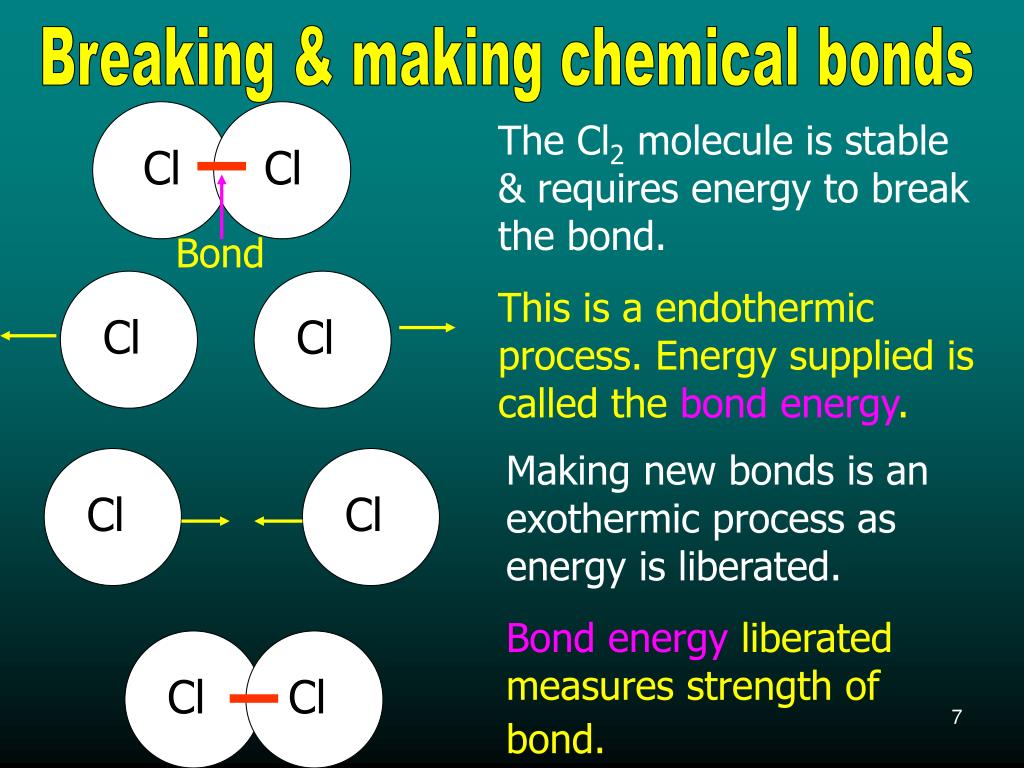
Breaking bonds requires energy.
Therefore:
bond breaking = endothermic
This is one of the most important rules in chemical energetics.
If the image above does not load from the source, the potential-energy diagram below shows the same principle particularly clearly.
Why Does Breaking a Bond Require Energy?
Imagine two atoms joined by a chemical bond.
At the normal bond distance, attractive interactions hold the atoms together. To separate the atoms, we must work against these attractions.
That requires an input of energy.
As the atoms move farther apart, the potential energy of the system increases until the atoms are effectively separated.
Therefore:
bonded atoms + energy → separated atoms
The chemical system has gained energy.
That is why bond breaking is an endothermic process.
Notice the upward arrow labelled energy absorbed when bond breaks. Moving upward out of the potential-energy well requires energy.
The Potential-Energy Well
A useful way of understanding a chemical bond is to imagine the bonded atoms sitting in an energy well.
At the bottom of the well, the atoms are at their most stable separation.
To separate them completely, energy must be supplied to move the system out of the well.
For the H–H bond, the minimum occurs at a bond length of approximately 74 pm.
The vertical distance from the minimum to the separated-atoms energy level represents the bond dissociation energy. For H₂, this is about 436 kJ mol⁻¹.
A useful general rule is:
deeper energy well → more energy required to escape → stronger bond
Bond Breaking Is Endothermic
An endothermic process absorbs energy from its surroundings.
Breaking a chemical bond requires exactly this kind of energy input.
For example:
H₂(g) → 2H(g)
requires approximately:
+436 kJ mol⁻¹
The positive value indicates that energy has entered the chemical system.
The same principle applies to every covalent bond:
A–B + energy → A + B
Bond breaking always requires energy.
Bond Breaking and Bond Formation Are Opposites
Now imagine the reverse process.
Instead of separating bonded atoms, two separated atoms move together and form a bond.
When the bond forms, the system moves into a lower-energy, more stable arrangement.
Energy is released to the surroundings.
Therefore:
Breaking bonds → energy absorbed
Forming bonds → energy released
For hydrogen:
H₂ → 2H
requires approximately:
+436 kJ mol⁻¹
The reverse process:
2H → H₂
releases approximately:
−436 kJ mol⁻¹
Bond breaking and bond formation are opposite processes.
A Very Important Misconception
One of the most common mistakes in chemical energetics is saying:
"Breaking bonds releases energy."
It does not.
Breaking bonds always requires energy.
Students sometimes develop this misconception because reactions such as combustion release large amounts of energy.
But the energy released by combustion does not come from breaking the reactant bonds.
During a reaction:
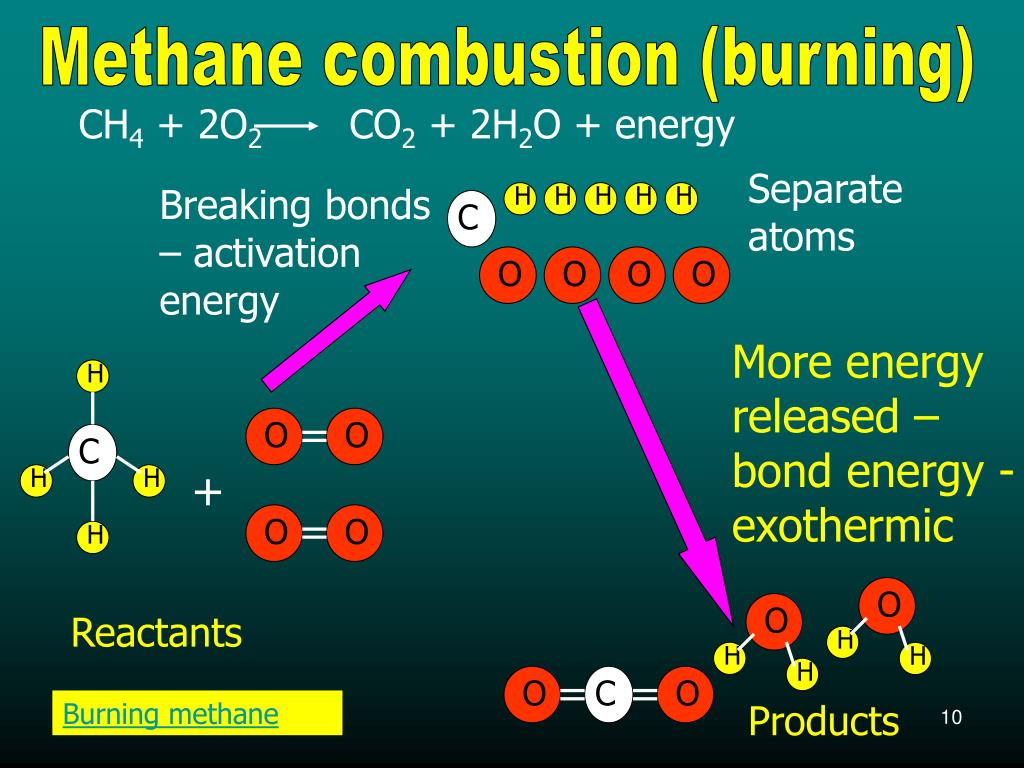
Energy IN → break reactant bonds
Energy OUT → form product bonds
If more energy is released during bond formation than was required for bond breaking, the overall reaction is exothermic.
This distinction becomes extremely important when we begin calculating reaction energies.
What Is Bond Energy?
The strength of a covalent bond can be described using its bond energy.
Bond energy is the energy required to break one mole of a particular type of covalent bond in gaseous molecules.
Bond energies are usually expressed in:
kJ mol⁻¹
For example:
H–H = 436 kJ mol⁻¹
This means approximately 436 kJ of energy must be supplied to break one mole of H–H bonds.
The stronger the bond, the more energy is required to break it.
Therefore:
large bond energy → strong bond
small bond energy → weaker bond
Interpreting Bond Energy Values
Consider some approximate average bond energies:
| Bond | Average Bond Energy (kJ mol⁻¹) |
|---|---|
| Cl–Cl | 243 |
| C–C | 345 |
| C–H | 413 |
| H–Cl | 431 |
| H–H | 436 |
| O–H | 463 |
| O=O | 498 |
| C=C | 611 |
| C≡C | 837 |
| N≡N | 945 |
Bond-energy values allow us to compare the strengths of different bonds.
For example:
N≡N = 945 kJ mol⁻¹
while:
Cl–Cl = 243 kJ mol⁻¹
Much more energy is required to break the N≡N bond.
Therefore:
N≡N is much stronger than Cl–Cl.
What Does 436 kJ mol⁻¹ Actually Mean?
Consider hydrogen gas.
Each H₂ molecule contains one H–H bond.
H–H bond energy ≈ 436 kJ mol⁻¹
Therefore:
H₂(g) → 2H(g)
requires:
436 kJ for every mole of H–H bonds broken
The bond-energy value is positive when describing bond breaking because energy must be supplied.
Average Bond Energies
Many bond-energy tables actually contain average bond energies.
A particular bond type does not have exactly the same strength in every molecule.
For example, the energy required to break a C–H bond depends somewhat on the other atoms surrounding that bond.
Chemists therefore use average values obtained from many compounds.
This is why calculations using average bond energies usually provide an estimate of the reaction enthalpy rather than a perfectly exact value.
Comparing Single, Double and Triple Bonds
Bond order affects bond strength.
Consider carbon-carbon bonds:
C–C ≈ 345 kJ mol⁻¹
C=C ≈ 611 kJ mol⁻¹
C≡C ≈ 837 kJ mol⁻¹
Therefore:
C≡C > C=C > C–C
in bond strength.
In general, for bonds between the same pair of elements:
single bond → weaker
double bond → stronger
triple bond → strongest
However, a double bond is not exactly twice as strong as a single bond, and a triple bond is not exactly three times as strong.
Bond Strength and Bond Length
Bond strength is also related to bond length.
For carbon-carbon bonds, approximate values are:
| Bond | Bond Length | Bond Energy |
|---|---|---|
| C–C | 1.54 Å | 345 kJ mol⁻¹ |
| C=C | 1.34 Å | 611 kJ mol⁻¹ |
| C≡C | 1.20 Å | 837 kJ mol⁻¹ |
As bond order increases:
bond length decreases
and:
bond strength increases.
So the overall trend is:
C–C → longest and weakest
C=C → shorter and stronger
C≡C → shortest and strongest
The bond length corresponds to the stable separation of the two nuclei near the bottom of the energy well.
Why Is the N≡N Bond So Strong?
Nitrogen gas consists of two nitrogen atoms joined by a triple covalent bond:
N≡N
Its bond energy is approximately:
945 kJ mol⁻¹
This is one of the strongest common covalent bonds.
A large amount of energy must therefore be supplied to separate the nitrogen atoms.
The strength of this bond helps explain why atmospheric nitrogen is relatively unreactive under ordinary conditions.
Strong Bonds Require More Energy to Break
Imagine two bonds:
Bond A = 250 kJ mol⁻¹
Bond B = 700 kJ mol⁻¹
Bond B requires much more energy to break.
Therefore:
Bond B is stronger.
The difference is:
700 − 250 = 450 kJ mol⁻¹
So breaking one mole of Bond B requires 450 kJ more energy than breaking one mole of Bond A.
This gives us a simple way of interpreting bond-energy tables:
higher number = stronger bond
Worked Example 1: Breaking Hydrogen Bonds
Consider:
H₂ → 2H
One H–H bond must be broken.
H–H bond energy:
436 kJ mol⁻¹
Therefore:
Energy required = 436 kJ mol⁻¹
Because energy enters the system:
ΔH = +436 kJ mol⁻¹
The process is:
endothermic
Worked Example 2: Breaking Chlorine Bonds
Consider:
Cl₂ → 2Cl
Cl–Cl bond energy:
243 kJ mol⁻¹
Therefore:
Energy required = 243 kJ mol⁻¹
So:
ΔH = +243 kJ mol⁻¹
Again:
bond breaking is endothermic
Comparing H–H and Cl–Cl
H–H:
436 kJ mol⁻¹
Cl–Cl:
243 kJ mol⁻¹
Which bond is stronger?
H–H
Which requires more energy to break?
H–H
Difference:
436 − 243 = 193 kJ mol⁻¹
Therefore, approximately 193 kJ mol⁻¹ more energy is required to break H–H bonds than Cl–Cl bonds.
Breaking Several Bonds
Chemical reactions often require many bonds to be broken.
If several bonds must be broken, their energies can be added.
Suppose we need to break:
2 C–H bonds
and:
1 C–C bond
Using:
C–H = 413 kJ mol⁻¹
C–C = 345 kJ mol⁻¹
Energy required:
2(413) + 345
= 826 + 345
= 1171 kJ mol⁻¹
Because these bonds are being broken, this represents an energy input.
Bond Breaking During Chemical Reactions
Chemical reactions rearrange atoms.
Existing bonds in the reactants are disrupted, and new bonds form to produce the products.
A simplified reaction might be represented as:
AB + CD → AC + BD
First:
A–B and C–D bonds are broken
Energy is required.
Then:
A–C and B–D bonds form
Energy is released.
The overall energy change depends on the balance between these two processes.
The Energy Balance of a Reaction
The overall reaction energy can be estimated using:
ΔH ≈ ΣE(bonds broken) − ΣE(bonds formed)
In words:
reaction energy = energy required to break bonds − energy released when bonds form
If breaking bonds requires more energy than bond formation releases:
ΔH > 0
The reaction is:
endothermic
If forming bonds releases more energy than was required for bond breaking:
ΔH < 0
The reaction is:
exothermic
Example: Combustion of Methane
Consider the combustion of methane:
CH₄ + 2O₂ → CO₂ + 2H₂O
This reaction involves both breaking and forming bonds.
Before the products can form, bonds in the reactants must be disrupted.
These include:
C–H bonds in CH₄
and:
O=O bonds in O₂
Breaking these bonds requires energy.
Then new bonds form:
C=O bonds in CO₂
and:
O–H bonds in H₂O
Forming these bonds releases energy.
More energy is released when the product bonds form than is required overall to break the reactant bonds.
Therefore methane combustion is exothermic.
But notice:
breaking the bonds was still endothermic.
The overall reaction becomes exothermic because of the energy released during bond formation.
Where Does the Energy of Combustion Come From?
It is tempting to say that fuels contain bonds that "release energy when broken."
That explanation is misleading.
Breaking the C–H bonds in methane requires energy.
Breaking O=O bonds also requires energy.
The large energy release occurs because the products contain a very stable set of bonds, particularly strong C=O and O–H bonds.
Formation of these product bonds releases a large amount of energy.
So:
energy absorbed breaking reactant bonds
is smaller than:
energy released forming product bonds
The difference is transferred to the surroundings.
Bond Breaking and Activation Energy
Bond breaking also helps us understand activation energy.
At the beginning of many reactions, existing bonds must stretch, distort or partially break as the reacting particles move toward the transition state.
This requires energy.
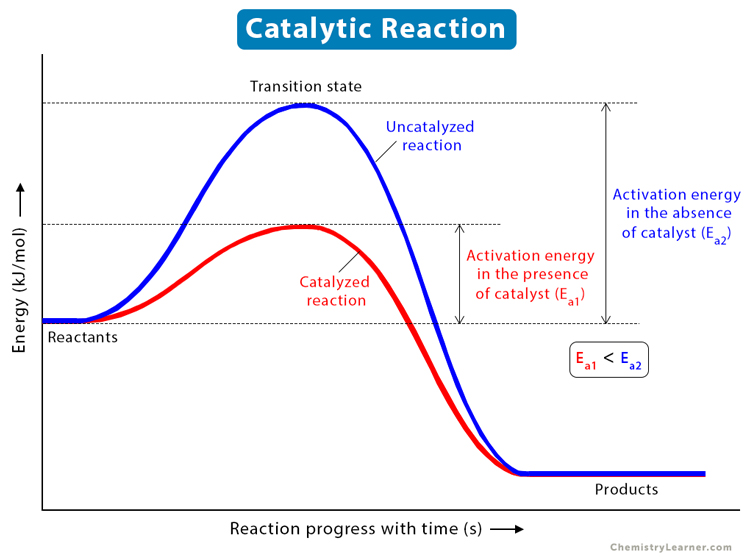
The reaction profile therefore initially rises toward the transition state.
However, there is an important distinction:
Activation energy is not simply the energy required to completely break every bond in the reactants.
Activation energy is the energy barrier required to reach the transition state.
Some bonds may only be partially broken at this point while new interactions may already be developing.
Bonds and Molecular Stability
Strong bonds generally require large amounts of energy to break.
This can contribute to the stability of molecules.
For example, the very strong N≡N bond helps make nitrogen gas relatively unreactive.
However, we should not judge the reactivity of an entire substance from just one bond.
Reactivity also depends on:
- all the bonds involved
- molecular structure
- possible products
- temperature
- reaction mechanism
- catalysts
- activation energy
Bond energy is therefore one important part of understanding chemical reactions.
Energy Is Conserved
Energy is not created or destroyed during a chemical reaction.
Instead, energy is transferred and transformed.
During bond breaking:
energy enters the chemical system
During bond formation:
energy leaves the chemical system
The overall reaction energy depends on the difference between these transfers.
This is an application of the law of conservation of energy.
Did You Know?
The N≡N bond in nitrogen gas has an average bond energy of about:
945 kJ mol⁻¹
That enormous bond strength creates an interesting biological problem.
Earth's atmosphere contains a huge amount of nitrogen gas, but most organisms cannot directly use N₂ because breaking and rearranging the N≡N bond is difficult.
Special processes called nitrogen fixation convert atmospheric nitrogen into compounds that living organisms can use.
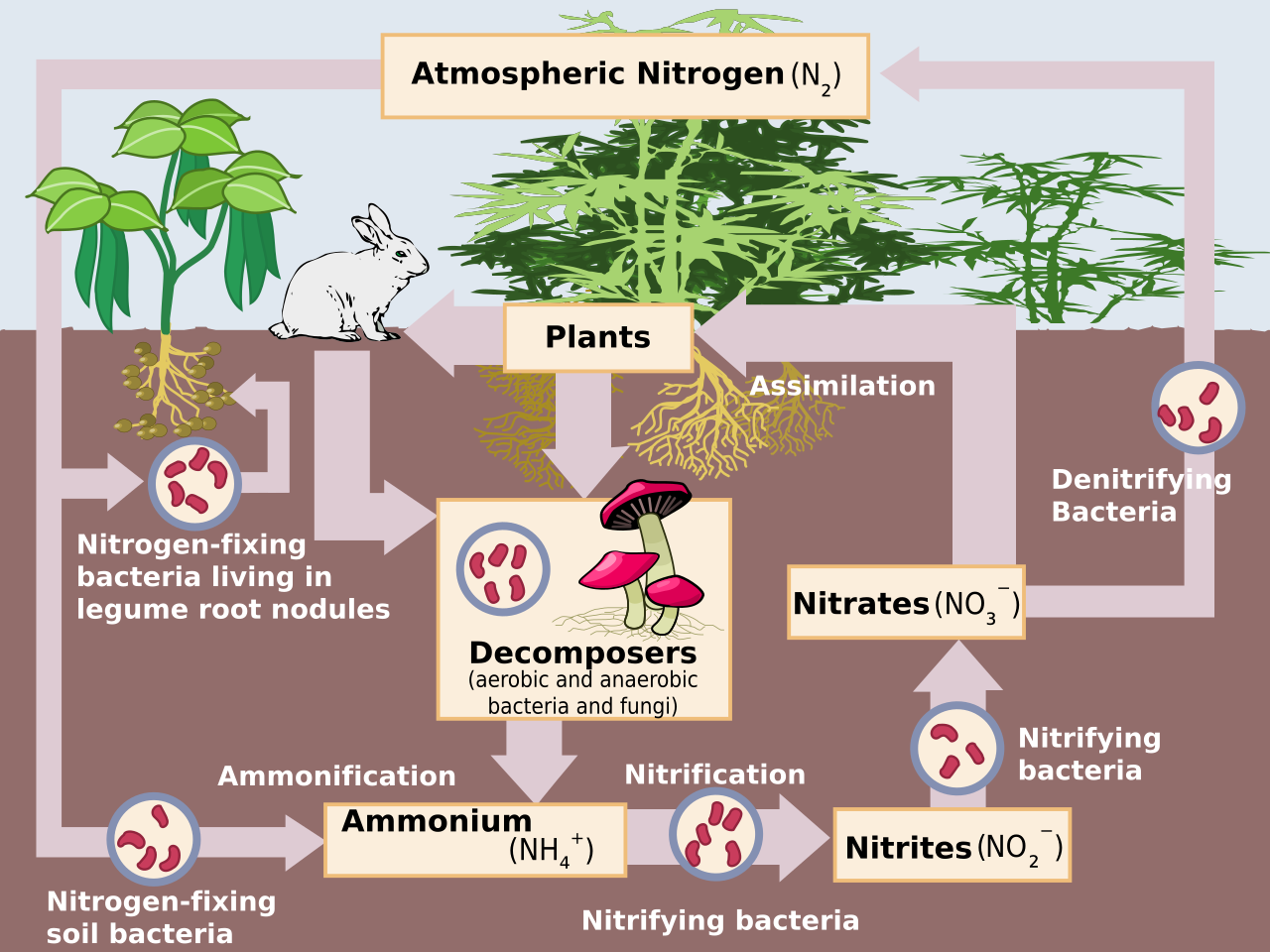
This is why nitrogen-fixing bacteria are so important in ecosystems and agriculture.
Common Misconceptions
"Breaking bonds releases energy."
Incorrect. Breaking bonds requires energy.
"Strong bonds contain more energy, so they release more energy when broken."
Incorrect. Strong bonds require more energy to break.
"A double bond requires exactly twice the energy of a single bond."
Incorrect. Bond energies do not increase in simple whole-number ratios.
"Bond energy is identical in every molecule."
Not usually. Many tabulated values are average bond energies because the molecular environment affects bond strength.
"If a reaction releases energy, breaking the reactant bonds must have released it."
Incorrect. Bond breaking absorbs energy. Energy is released when new bonds form.
"Activation energy is the energy needed to completely break every bond in the reactants."
Incorrect. Activation energy is the barrier to reaching the transition state.
Key Terms
Chemical bond – An attractive interaction that holds atoms or ions together.
Bond breaking – Separation of bonded atoms, requiring an input of energy.
Endothermic process – A process in which the system absorbs energy.
Bond energy – Energy required to break one mole of a particular type of covalent bond in gaseous molecules.
Average bond energy – An average energy required to break a particular bond type across different molecular environments.
Bond strength – A measure of how strongly two atoms are held together.
Bond length – The equilibrium distance between the nuclei of two bonded atoms.
Bond order – The number of bonding interactions between two atoms, such as single, double or triple.
Activation energy – The energy barrier that must be overcome for a reaction to proceed.
Transition state – A temporary high-energy arrangement of atoms along a reaction pathway.
Key Takeaways
- Breaking chemical bonds requires energy.
- Bond breaking is an endothermic process.
- Energy must be supplied to overcome the attractive interactions holding bonded atoms together.
- Bond formation releases energy.
- Bond energy is usually measured in kJ mol⁻¹.
- A larger bond energy generally indicates a stronger bond.
- Stronger bonds require more energy to break.
- Average bond energies are approximations because bond strength depends somewhat on molecular environment.
- For the same pair of atoms, triple bonds are generally stronger and shorter than double bonds, which are generally stronger and shorter than single bonds.
- Chemical reactions involve both breaking reactant bonds and forming product bonds.
- The overall energy change can be estimated using:
ΔH ≈ ΣE(bonds broken) − ΣE(bonds formed)
- Exothermic reactions do not release energy because bonds are broken.
- They release energy overall when forming the new bonds releases more energy than breaking the original bonds requires.
- Bond breaking and bond distortion contribute to the energy requirements involved in reaching a reaction's transition state.