Electric fields are invisible, making them difficult to visualize directly. To help represent electric fields, physicists use electric field lines, also known as lines of force. These lines provide a visual way of showing both the direction and strength of an electric field.
Field lines do not physically exist. They are simply a useful model that helps us understand how electric fields behave and how charged particles interact.
The Direction of Field Lines
Electric field lines always show the direction that a positive test charge would move if placed in the field.
This leads to an important rule:
- Field lines point away from positive charges.
- Field lines point toward negative charges.
For a single positive charge, the field lines radiate outward in all directions.
For a single negative charge, the field lines point inward from all directions toward the charge.
Because field lines indicate direction, arrows are always included on field diagrams.
Field Lines Around Isolated Charges
A positive point charge creates a radial electric field that spreads outward uniformly in all directions.
A negative point charge creates a radial electric field that converges inward toward the charge.
These patterns are symmetrical because the field strength is the same at all points located the same distance from the charge.
Field Lines Between Opposite Charges
When a positive charge and a negative charge are placed near one another, a pattern called an electric dipole is formed.
In a dipole:
- Field lines begin on the positive charge.
- Field lines end on the negative charge.
- The field is strongest in the region between the charges.
The curved field lines illustrate how a positive test charge would move through the electric field.
This pattern helps explain why opposite charges attract each other.
Field Lines Between Like Charges
When two positive charges are placed near each other, their electric fields interact.
Because both charges repel positive test charges:
- Field lines spread outward from both charges.
- The lines bend away from the space between them.
- No field lines connect the two charges.
A similar pattern occurs for two negative charges, except the field lines point inward toward both charges.
These diagrams help explain why like charges repel one another.
Field Line Density and Field Strength
Field lines also provide information about the strength of an electric field.
The closer the field lines are together, the stronger the electric field.
The farther apart the field lines are, the weaker the electric field.
This relationship exists because a greater concentration of field lines indicates a larger force acting on charges placed in that region.
For example:
- Near a charge, field lines are closely packed.
- Far from a charge, field lines spread apart.
This reflects the fact that electric fields weaken with distance.
Rules for Drawing Electric Field Lines
Physicists follow several conventions when drawing electric field diagrams:
Rule 1: Field Lines Begin on Positive Charges
Field lines always originate from positive charges.
Rule 2: Field Lines End on Negative Charges
Field lines terminate on negative charges.
Rule 3: Field Lines Never Cross
Electric field lines can never intersect.
If field lines crossed, the electric field would have two different directions at the same location, which is impossible.
Rule 4: Line Density Indicates Strength
Closer spacing means a stronger field.
Rule 5: Arrows Show Direction
Arrows always point in the direction a positive test charge would move.
Uniform Electric Fields
Not all electric fields are created by point charges.
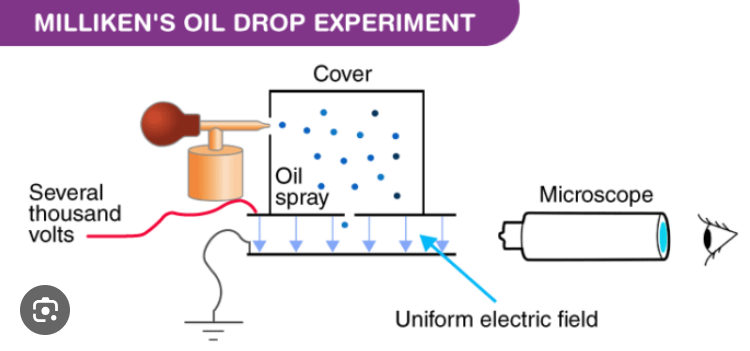
Between two large parallel conducting plates carrying opposite charges, a nearly uniform electric field is produced.
A uniform electric field has:
- Parallel field lines
- Equal spacing between lines
- Constant field strength throughout the region
Uniform electric fields are commonly used in laboratories and particle accelerators.
Electric Fields and Potential Energy
Field lines can also help us understand energy.
A positive charge naturally moves in the direction of the electric field, reducing its electric potential energy.
Moving a positive charge against the field requires work, increasing its electric potential energy.
This idea is similar to lifting an object upward in a gravitational field.
Comparing Electric and Gravitational Field Lines
Electric and gravitational field diagrams share some similarities.
| Electric Fields |
Gravitational Fields |
| Produced by charges |
Produced by masses |
| Can attract or repel |
Always attract |
| Lines may point inward or outward |
Lines always point inward |
| Strength shown by line density |
Strength shown by line density |
Both use field lines to represent invisible forces acting at a distance.
Key Ideas
Field Line Direction
- Positive → outward
- Negative → inward
Field Strength
- Close lines = strong field
- Widely spaced lines = weak field
Drawing Rules
- Begin on positive charges
- End on negative charges
- Never cross
- Use arrows to show direction
Suggested Diagrams
Diagram 1: Field lines around a single positive charge.
Diagram 2: Field lines around a single negative charge.
Diagram 3: Electric dipole showing field lines connecting positive and negative charges.
Diagram 4: Field lines between two positive charges illustrating repulsion.
Diagram 5: Uniform electric field between parallel plates.
Summary
Electric field lines provide a visual representation of electric fields, showing both their direction and strength. Field lines point away from positive charges and toward negative charges, while the density of the lines indicates the strength of the field. Field line diagrams help physicists understand how charges interact, explain attraction and repulsion, and predict the motion of charged particles. Although field lines are only a model, they are one of the most useful tools for visualizing electric fields and understanding electrostatic phenomena.