Thermal Energy and Calorimetry
2. Latent Heat and Phase Changes
Learning outcomes
- I can distinguish between sensible heating and latent heating.
- I can explain why temperature remains constant during a phase change.
- I can describe the processes of melting, freezing, boiling, condensation, sublimation, and deposition.
- I can calculate the energy required for a phase change using latent heat.
- I can relate evaporation and condensation to latent heat transfer.
Latent Heat and Phase Changes
Sensible Heating and Latent Heating
When thermal energy is transferred to or from a substance, two different things can happen:
- its temperature can change
- its state can change
These processes are described as sensible heating and latent heating.
Sensible heating occurs when energy transfer changes the temperature of a substance without changing its state.
For example:
20°C liquid water → 60°C liquid water
The water remains liquid, but its temperature increases.
The energy transferred can be calculated using:
Q = mcΔT
Latent heating occurs when energy is transferred during a change of state without changing the temperature.
For example:
0°C ice → 0°C liquid water
Energy is absorbed, but the temperature remains constant while the ice melts.


Why Temperature Remains Constant During a Phase Change
Temperature is related to the average kinetic energy of particles.
During ordinary heating within a single state:
energy added → average kinetic energy increases → temperature increases
During a phase change, however, the transferred energy is used mainly to change the potential energy associated with interactions between particles.
For example, when a solid melts, energy is required to overcome some of the forces holding particles in their fixed arrangement.
Therefore:
energy is transferred
but:
average kinetic energy does not increase significantly
so:
temperature remains constant during the phase change for a pure substance at constant pressure.
Once the phase change is complete, further energy transfer can again increase the temperature.
Changes of State
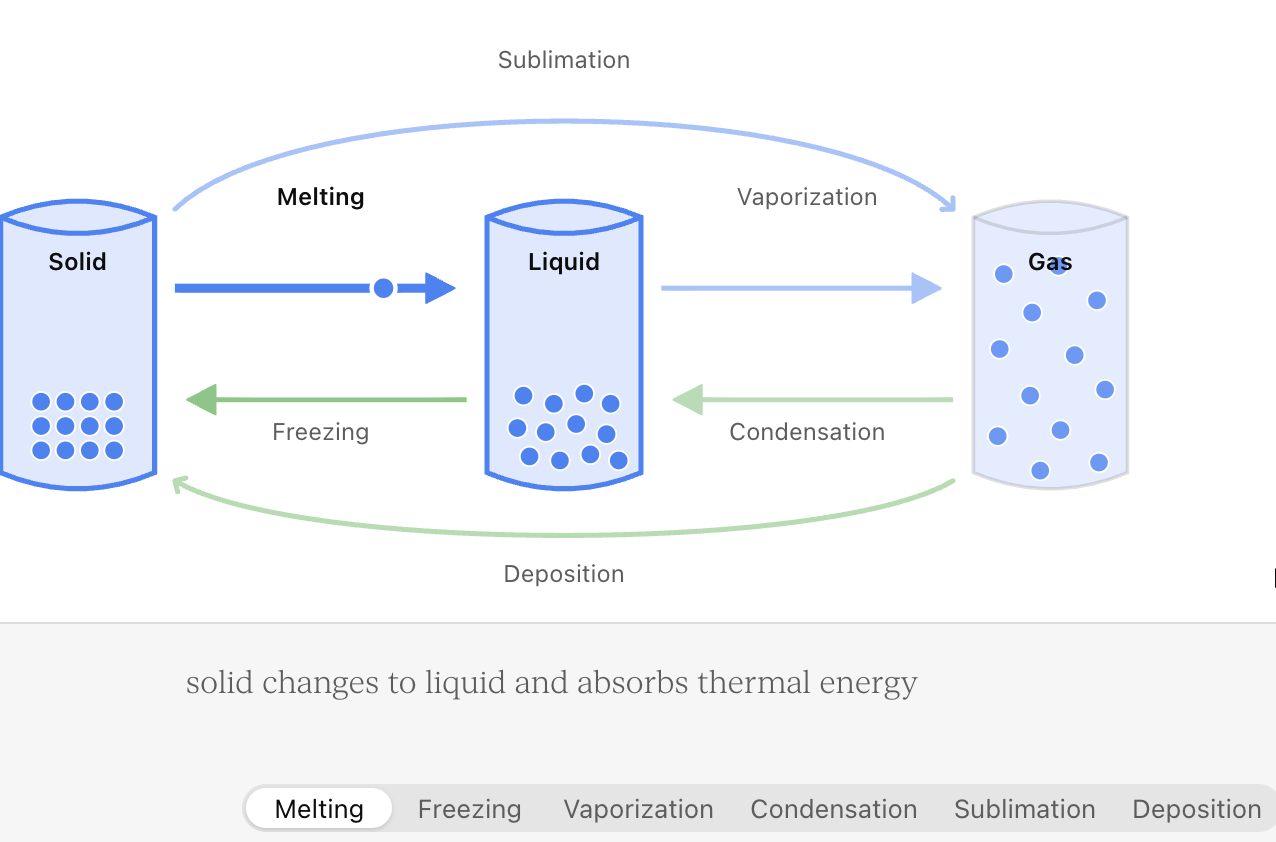
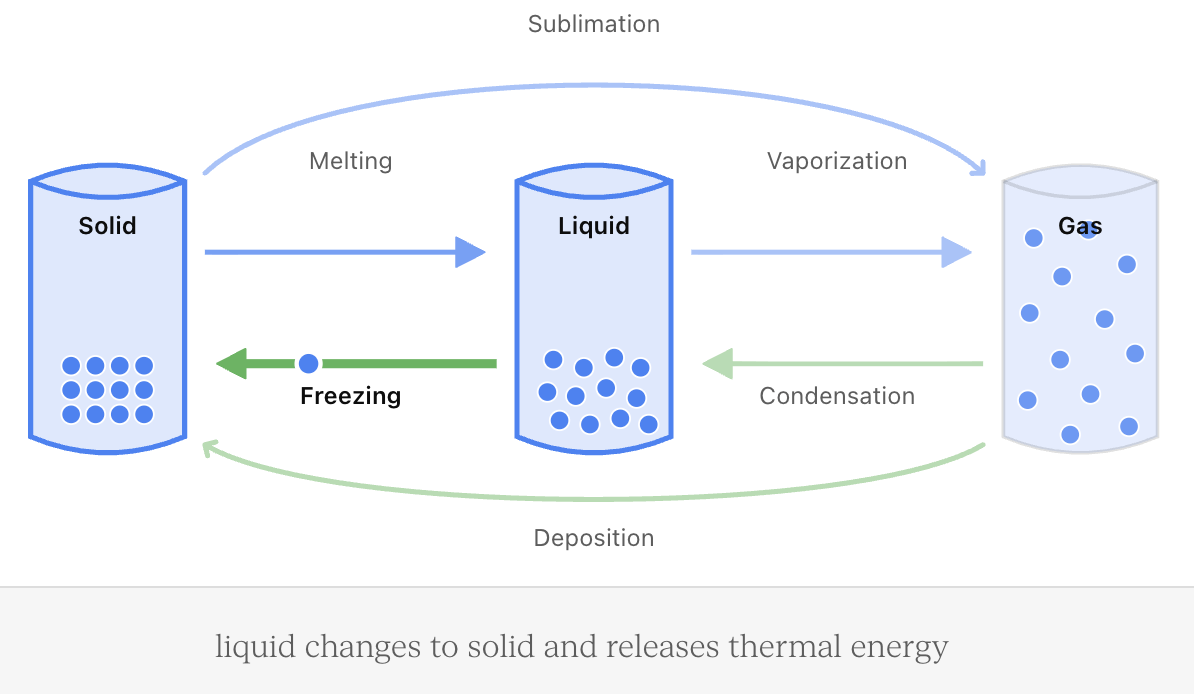
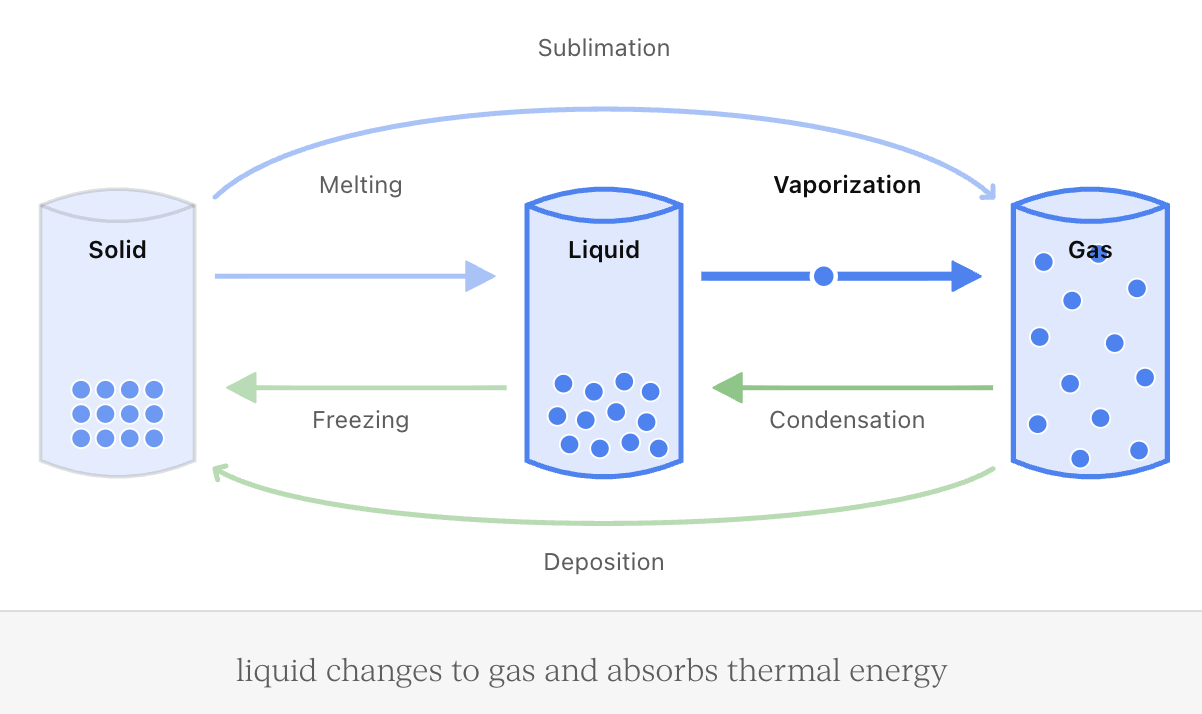
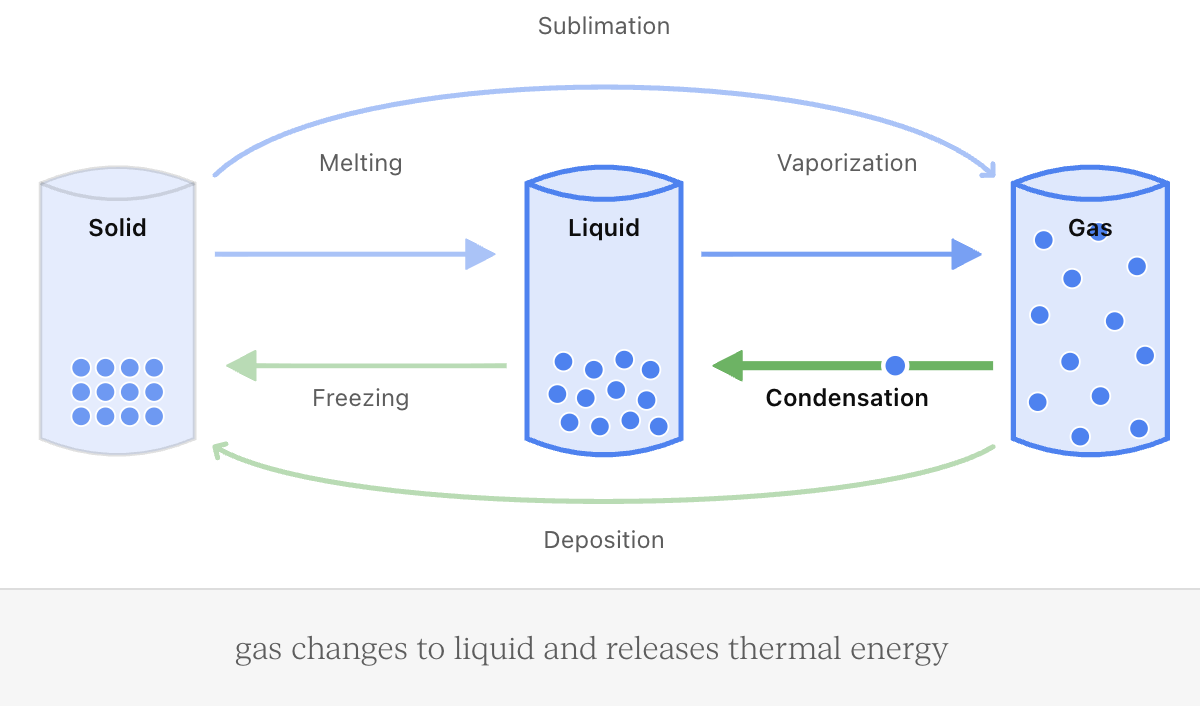
Matter can change between solid, liquid and gas.
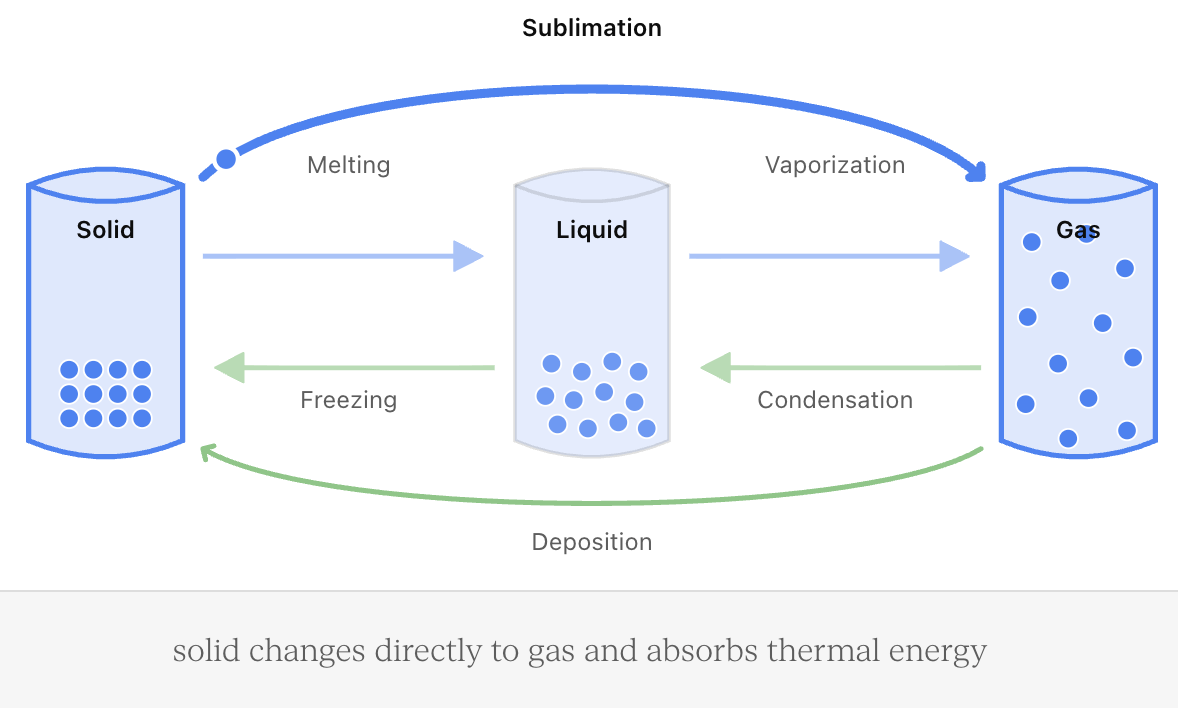
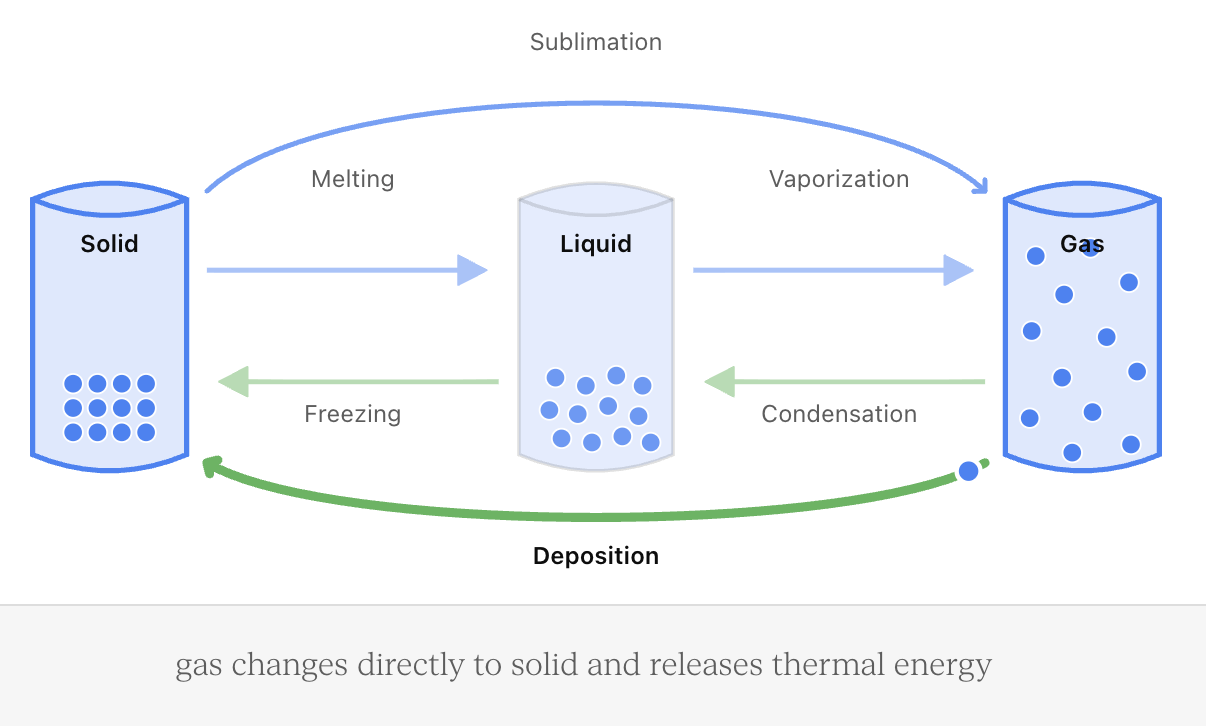
The six major changes are:
| Phase change | Change |
|---|---|
| Melting | Solid → Liquid |
| Freezing | Liquid → Solid |
| Vaporization | Liquid → Gas |
| Condensation | Gas → Liquid |
| Sublimation | Solid → Gas |
| Deposition | Gas → Solid |
The complete cycle can be explored here: