Biological Molecules and Enzymes Notes
1. Biological Molecules
1.1. Special Tests
Ethanol test
Brief overall explanation:
The Ethanol Emulsion utilises a test tube, which you first place in the food sample of choice, if its solid crush it if its a liquid put a few drops in. Then you add Ethanol to it and shake thoroughly. Now pour it into an equal amount of cold water in a different test tube.
What does it test for:
The Ethanol Emulsion test is used to detect the presence of fats and oils.
How do you know:
If there is no fat in the food sample there will be no emulsion, however there will be emulsion if there is fat.
Iodine Test
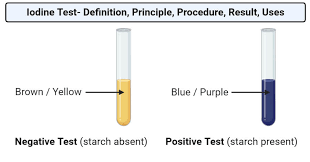
This is a test to find out if starch is present in the item,
We will know if it has iodine, if we put the iodine inside the potato for example. If it turns blue/purple, that means that starch is present
The Benedict's Test for Reducing Sugars
The Benedict's test is a common chemical test used to detect the presence of reducing sugars (like glucose, fructose, and maltose) in a solution.
What Does it Test For?
-
Analyte: Reducing Sugars
-
Examples: All monosaccharides (e.g., glucose, fructose) and some disaccharides (e.g., maltose, lactose).
-
Note: Non-reducing sugars like sucrose will not give a positive result unless they are first broken down (hydrolyzed) into their component monosaccharides.
How Do You Know the Result? (Interpretation)
The test is identified by a distinct color change upon heating the sample with Benedict's reagent.
|
Initial State (Negative Result) |
Positive Result (Range) |
|
Clear Blue solution |
Color changes to Green, Yellow, Orange, or Brick-Red precipitate |
|
(Benedict's reagent is naturally blue due to Cu2+ ions) |
(A color change indicates a positive result, and the final color/intensity indicates the concentration of the reducing sugar.) |
How does this work? (short description)
The test is a redox response (discount oxidation) that calls for warmth and an alkaline environment.